Tesla Model S Mileage Range: EPA vs. Real-World Numbers
The 2026 Tesla Model S Long Range carries an EPA-estimated 402 miles of range from its ~100 kWh (usable) battery pack. The performance-oriented Model S Plaid, which trades some efficiency for 1,020 horsepower and a 1.99-second 0–60 mph time, is rated at 359 miles. Those are impressive sticker figures, but any seasoned EV owner will tell you that real-world mileage depends heavily on speed, temperature, and terrain.
- EPA sticker: 402 miles
- Mixed real-world driving (55–70 mph, moderate climate): ~340–370 miles
- Sustained highway (75+ mph): ~300–330 miles
- Cold weather (below 32°F / 0°C): ~260–310 miles (20–35% reduction)
Sources: fueleconomy.gov, owner-reported data.
The Model S achieves roughly 3.0–3.3 miles per kWh in mixed driving, which translates to an EPA-rated 120 MPGe combined. That efficiency figure matters because it directly determines how quickly any charger — Level 1, Level 2, or DC fast — can replenish your miles.
Charging Levels Explained: kW, Miles Per Hour, and Charge Times
Before plugging in, it is essential to understand the difference between kW (kilowatts) and kWh (kilowatt-hours). kW measures power — the rate at which energy flows into your car. kWh measures energy — the total capacity of your battery, like gallons in a fuel tank. A 100 kWh battery charged at 10 kW would theoretically take 10 hours from empty to full (ignoring losses and taper).
| Level | Voltage / Amps | Power (kW) | Miles Added per Hour (Model S) | Typical Use |
|---|---|---|---|---|
| Level 1 | 120V / 12A | ~1.4 kW | ~4–5 mi/hr | Emergency / overnight trickle |
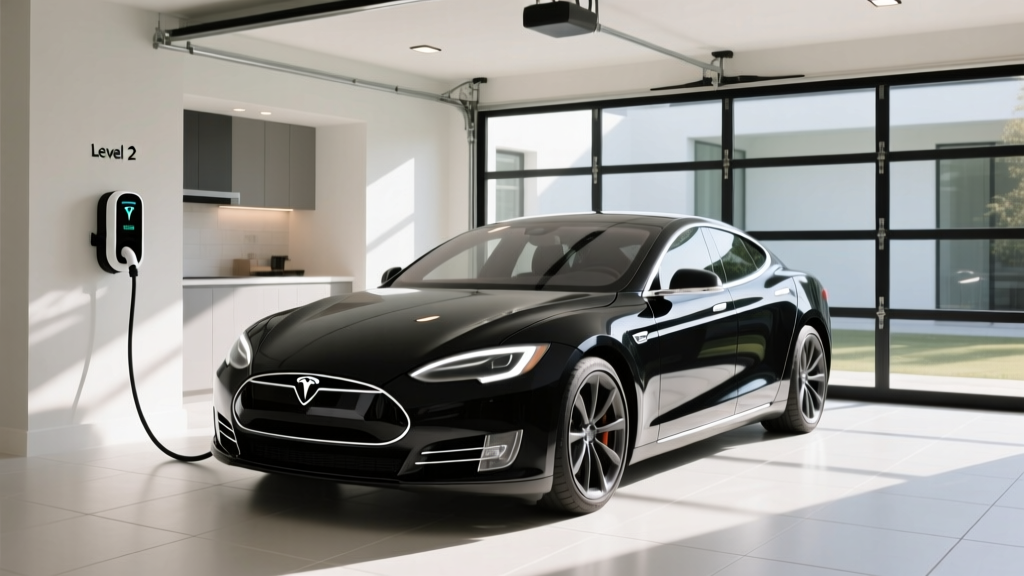
| Level 2 | 240V / 48A | ~11.5 kW | ~34–38 mi/hr | Daily home charging |
| Level 2 (high-power) | 240V / 80A | ~19.2 kW | ~57–64 mi/hr | Tesla Wall Connector on 100A circuit |
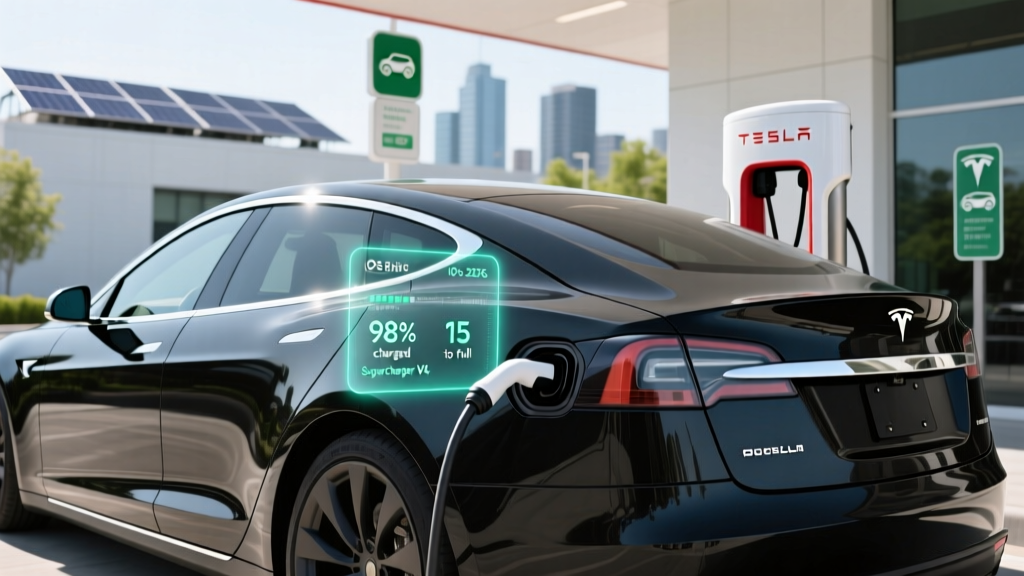
| DC Fast (V3 Supercharger) | 400V architecture | Peak 250 kW | ~180 mi in 15 min | Road trips |
Real-world 10–80% charge times for the Model S (~100 kWh usable):
- Level 2 at 11.5 kW (48A): ~6 hours (not typically done 10–80% in one session; owners plug in overnight)
- Level 2 at 17.3 kW (Tesla Wall Connector, 72A): ~4 hours
- V3 Supercharger (250 kW peak): ~25–30 minutes (charge curve tapers significantly above 50–60% SoC)
Charge curve taper is the reason a "250 kW" Supercharger does not deliver 250 kW for the entire session. The Model S typically sustains peak rates only between roughly 10–30% State of Charge, then ramps down to protect the battery. By 80%, you may see 50–70 kW. This is normal physics, not a defect.
Home Charger Installation: Electrical Requirements and Costs
Most Model S owners will want a 240V Level 2 home charger. The Tesla Wall Connector is the natural first choice, but third-party J1772 chargers also work with a simple adapter (included with every Tesla since 2018, though newer NACS-standard Teslas may need a J1772-to-NACS adapter for non-Tesla units).
Electrical Requirements for a Typical Level 2 Install
- Circuit: Dedicated 60A breaker for a 48A continuous charge (NEC requires 125% overhead — a 48A load needs a 60A circuit)
- Wire: 6 AWG copper THHN in conduit, or 4 AWG for longer runs
- Panel capacity: Your main panel must have at least 60A of spare capacity. A 200A panel serving a home with electric HVAC, dryer, and range may be near its limit.
- Permit: Required in virtually all US jurisdictions; expect $50–$250 depending on locality
- GFCI protection: NEC 2020 and later require GFCI for receptacle-based EV chargers; hardwired units like the Wall Connector may be exempt in some areas, but check with your electrician
Panel Upgrade: The Hidden Cost
If your home has a 100A or older 150A main panel, adding a 60A EV circuit may require a panel upgrade to 200A — or even a service upgrade from the utility. This is one of the most underestimated costs in EV ownership. A panel upgrade alone can run $1,500–$4,000, and a full service upgrade (new meter, utility transformer work) can exceed $5,000 in some regions.
| Component | Cost Range | Notes |
|---|---|---|
| Level 2 Charger (equipment) | $400–$700 | Tesla Wall Connector ~$475; ChargePoint Home Flex ~$699 |
| Electrician labor (standard install) | $500–$2,000 | Depends on run length, conduit, wall type |
| Permit fee | $50–$250 | Varies by city/county |
| Panel upgrade (if needed) | $1,500–$4,000 | 200A upgrade from 100A/150A panel |
| Full service upgrade (if needed) | $3,000–$7,000+ | Utility coordination, new meter, transformer |
| Total (no panel upgrade) | $950–$2,950 | Typical scenario for modern homes |
| Total (with panel upgrade) | $2,450–$6,950 | Older homes with limited panel capacity |
Always get at least two quotes from licensed electricians. Some utilities offer rebates of $250–$1,000 for Level 2 installations — check your provider before work begins.
Connector Compatibility: NACS, CCS, and Adapter Realities
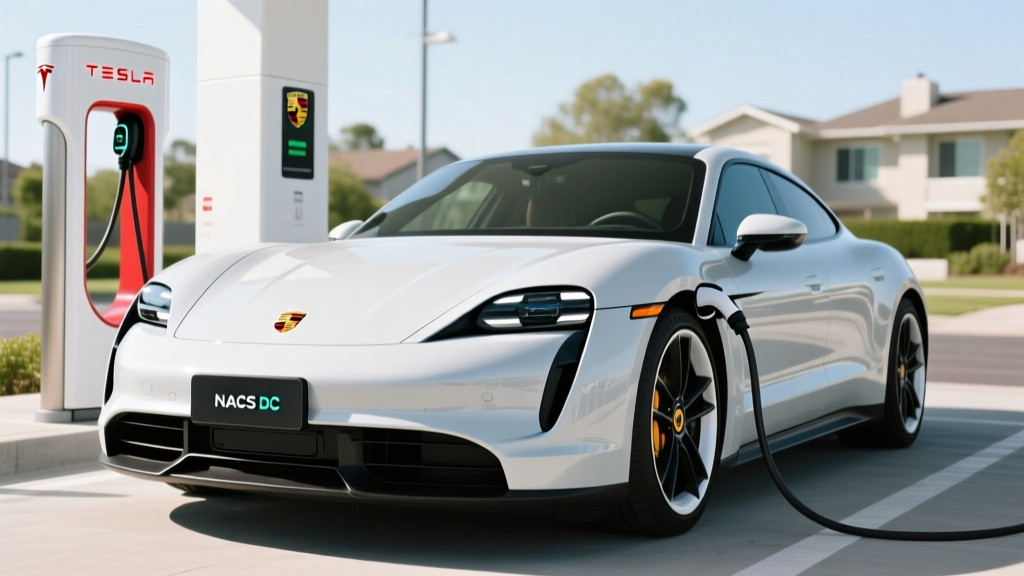
Tesla designed the North American Charging Standard (NACS), which has now been adopted by Ford, GM, Rivian, Volvo, and most major automakers. For the 2026 Model S, NACS is the native connector — no adapter needed at Tesla Superchargers or the growing number of NACS-equipped public stations.
| Connector | Used By | Tesla Model S Compatibility |
|---|---|---|
| NACS (Tesla) | Tesla, Ford, GM, Rivian, Volvo, others (2025+) | Native — no adapter needed |
| CCS1 | Most non-Tesla EVs pre-2025, Electrify America stations | Requires CCS-to-NACS adapter (~$175–$250) |
| CHAdeMO | Nissan Leaf (legacy), some older public stations | Not compatible — avoid; network is shrinking |
| J1772 (Level 2 AC) | All non-Tesla EVs, public Level 2 stations | Use included J1772-to-NACS adapter |
If you plan to use Electrify America or other CCS-heavy networks on road trips, budget for a quality CCS-to-NACS adapter. Tesla sells one, and third-party options from Lectron and A2Z are available. Verify that any adapter is rated for the DC fast-charge kW you expect to use.
Cost to Charge: Home vs. Public vs. Gas Comparison
One of the strongest ownership arguments for the Model S is the per-mile fuel cost. Here is how it breaks down using the car's real-world efficiency of ~3.1 miles per kWh (or ~32 kWh per 100 miles):
| Scenario | Rate ($/kWh) | Cost per 100 Miles | Cost per Mile |
|---|---|---|---|
| Home (off-peak utility rate) | $0.12 | $3.84 | $0.038 |
| Home (average US residential) | $0.17 | $5.44 | $0.054 |
| Public Level 2 (ChargePoint, EVgo) | $0.25–$0.40 | $8.00–$12.80 | $0.08–$0.13 |
| Tesla Supercharger (V3, average) | $0.28–$0.36 | $8.96–$11.52 | $0.09–$0.12 |
| Gas equivalent (30 MPG sedan, $3.40/gal) | — | $11.33 | $0.113 |
| Gas equivalent (22 MPG SUV, $3.40/gal) | — | $15.45 | $0.155 |
Home charging on an off-peak rate saves roughly $5–$10 per 100 miles compared to a gasoline vehicle. Even at Supercharger rates, the Model S is typically cheaper per mile than a 22–25 MPG gas car. Over 15,000 miles per year, home-charging savings can total $800–$1,500 annually versus gasoline, depending on local electricity and fuel prices.
Equipment Picks: Best Level 2 Chargers for Your Model S
- Power: Up to 48A (11.5 kW) on a 60A circuit; supports up to 80A (19.2 kW) on a 100A circuit where the vehicle supports it
- Connector: NACS native
- Cable length: 24 ft
- Smart features: Wi-Fi firmware updates, load sharing between multiple units, access control
- Price: ~$475
- Best for: Tesla-only households wanting maximum simplicity
- Power: Up to 50A (12 kW) on a 60A circuit (configurable down to 16A for lower-capacity panels)
- Connector: J1772 (use Tesla's included adapter) or NACS version available
- Cable length: 23 ft
- Smart features: Alexa integration, scheduling, energy tracking via app, Alexa/Google Home
- Price: ~$699
- Best for: Multi-EV households (Tesla + non-Tesla) or smart-home integration
- Power: Up to 48A (11.5 kW) on a 60A circuit
- Connector: J1772 (adapter needed for NACS Teslas)
- Cable length: 24 ft
- Smart features: Real-time energy monitoring, solar integration with Emporia Vue, scheduling
- Price: ~$399
- Best for: Budget-conscious buyers who want energy monitoring
All three chargers are hardwired or NEMA 14-50 plug compatible. Hardwired installations avoid the NEC GFCI breaker requirement that applies to receptacle-based setups — a $75–$150 savings on the breaker alone, plus fewer nuisance trips.
Safety, Code, and Longevity Considerations
Beyond the electrical basics, a few often-overlooked items protect your investment:
- Dedicated circuit: Your EV charger must be on its own circuit — never share with a dryer, HVAC, or workshop outlet. Shared circuits risk breaker trips and fire hazards.
- Outdoor rating: If your charger is mounted outside, ensure it carries a NEMA 4 or IP65 rating. The Tesla Wall Connector and ChargePoint Home Flex both qualify.
- Cable management: A retractable reel or wall hook prevents tripping hazards and cable damage from UV exposure or being run over.
- Surge protection: A whole-home surge protector ($200–$400 installed) shields your charger and vehicle onboard charger from lightning and grid spikes.
- Battery longevity tip: For daily driving, set your Model S charge limit to 80% (or the recommended limit for your battery chemistry). Reserve 100% charges for road trips. This practice slows long-term degradation — Tesla's battery warranty guarantees 70% capacity retention over 8 years / 150,000 miles.
Frequently Asked Questions
How much does it cost to install a home EV charger for a Tesla Model S?
A standard Level 2 installation with a Tesla Wall Connector on an existing 200A panel typically costs $950–$2,950 total (equipment, electrician labor, and permit). If your home requires a panel upgrade, add $1,500–$4,000. Always get multiple quotes and check for utility rebates.
How fast will each charging level add range to my Model S?
Level 1 (120V) adds roughly 4–5 miles per hour — adequate only for emergencies or very low daily mileage. Level 2 at 48A (240V) adds ~34–38 miles per hour, enough to fully replenish a day's driving overnight. DC fast charging at a V3 Supercharger (250 kW peak) can add ~180 miles in about 15 minutes, though the charge curve tapers above 50–60% SoC.
Which connector and charger is compatible with the 2026 Tesla Model S?
The 2026 Model S uses NACS natively. The Tesla Wall Connector plugs in directly. For J1772 public Level 2 stations, use the J1772-to-NACS adapter included with your vehicle. For CCS1 DC fast chargers (Electrify America, etc.), you will need a CCS-to-NACS adapter.
How much does charging a Model S cost per mile compared to gas?
At the US average residential electricity rate of ~$0.17/kWh, the Model S costs about $0.054 per mile. A comparable 25 MPG gasoline sedan at $3.40/gallon costs $0.136 per mile — roughly 2.5× more. Home off-peak rates can push EV costs below $0.04 per mile.
What electrical upgrades might I need before installing a Level 2 charger?
If your main electrical panel lacks 60A of spare capacity (common in homes with 100A or 150A service that already powers electric HVAC, a dryer, and an oven), you may need a panel upgrade to 200A — costing $1,500–$4,000. In rare cases, a full utility service upgrade ($3,000–$7,000+) is required. An electrician can perform a load calculation to determine your exact needs. Some homeowners opt for a smart panel device like the Sense monitor or a Span smart panel to avoid costly upgrades by managing circuit loads dynamically.
Does the Model S battery warranty cover degradation?
Tesla's battery and drive unit warranty covers 8 years or 150,000 miles (Long Range) with a minimum 70% capacity retention threshold. If your battery falls below 70% State of Health within that window, Tesla will repair or replace it. Real-world data from Tesla's Impact Report shows average degradation of roughly 12–15% after 200,000 miles — well within warranty limits for most owners.
For official range and efficiency figures, always cross-reference fueleconomy.gov. For federal tax credit eligibility on new EV purchases (up to $7,500 under IRS §30D, subject to MSRP caps, buyer income limits, and battery-sourcing requirements), consult the IRS clean vehicle credits page or a qualified tax professional.