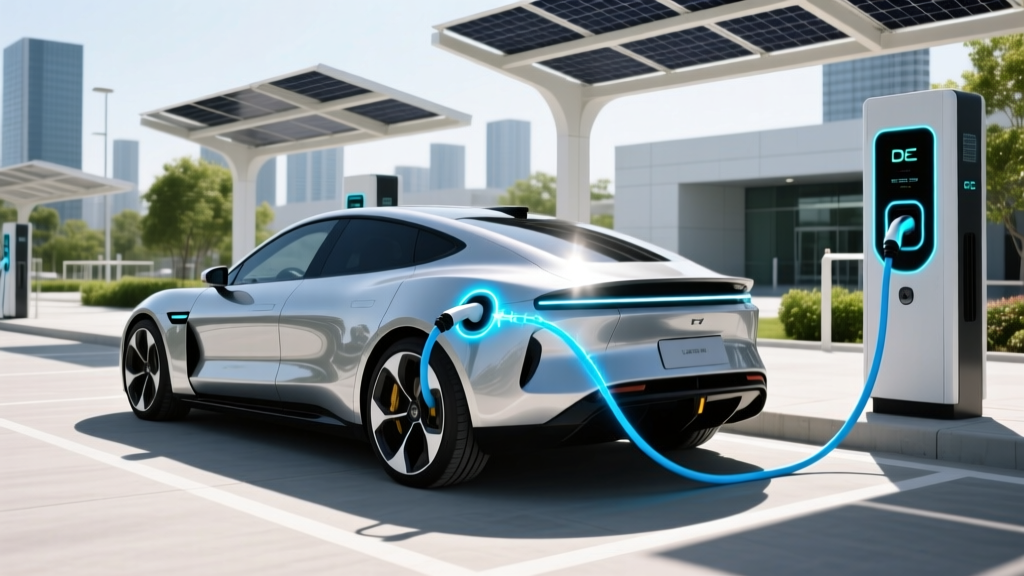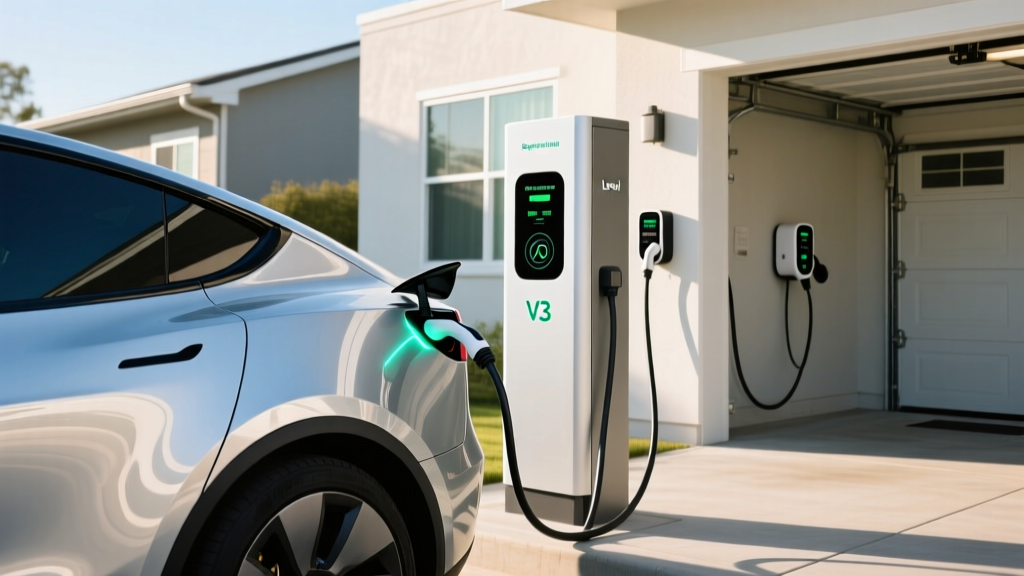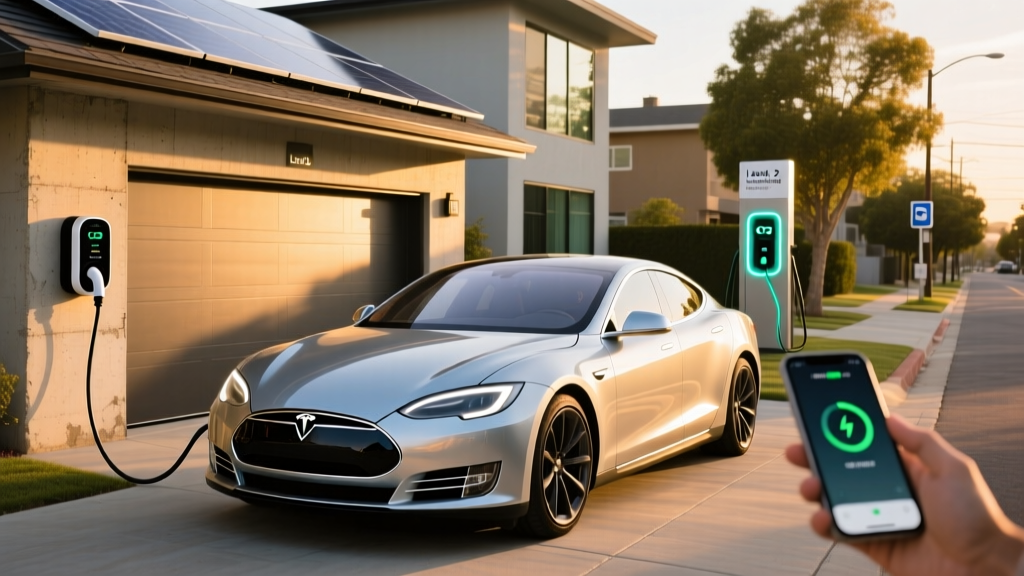
If you own or are considering a 2025 Tesla Model S, understanding how charging infrastructure affects your real-world Tesla Model S mile range is the single most important factor in daily satisfaction. The EPA rates the current Long Range Model S at 402 miles, and the Plaid at 396 miles, but those numbers assume optimal conditions. In practice, highway driving at 75 mph, cold weather, and charging habits all compress that figure. The good news? With the right home and public charging setup, range anxiety virtually disappears — and your cost per mile drops to a fraction of what a comparable gas sedan demands.
This guide breaks down exactly how to charge a Model S at every level, what equipment you need, what installation actually costs in 2026, and how to calculate your per-mile fueling cost against a gas alternative like the BMW 5 Series or Mercedes E-Class.
Understanding the Tesla Model S Mile Range: EPA vs. Reality
- EPA Estimated: 402 miles (Long Range, 19" wheels) / 396 miles (Plaid)
- Real-World Highway (75 mph, 70°F): ~310–340 miles
- Cold Weather (20°F, highway): ~250–280 miles
- Usable Battery: ~95 kWh (NMC chemistry, ~100 kWh gross with buffer)
- Efficiency: 120 MPGe combined (Long Range) per fueleconomy.gov
The Model S uses an NMC (nickel-manganese-cobalt) lithium-ion pack, which delivers high energy density for maximum range but is more sensitive to sustained 100% charges and extreme heat than LFP chemistry. Tesla recommends daily charging to 80–90% for NMC packs, reserving 100% for road trips. This means your practical daily range is closer to 320–360 miles — still best-in-class for a luxury sedan.
| Spec | Long Range | Plaid |
|---|---|---|
| EPA Range | 402 mi | 396 mi |
| Battery (usable) | ~95 kWh (NMC) | ~95 kWh (NMC) |
| Peak DC Charge Rate | 250 kW | 250 kW |
| 10–80% DC Fast Charge | ~27 min | ~27 min |
| Level 2 Charge Rate (onboard) | 11.5 kW (48A) | 11.5 kW (48A) |
| 0–60 mph | 3.1 sec | 1.99 sec |
| Horsepower | 670 hp | 1,020 hp |
| Base MSRP | $79,990 | $94,990 |
| Battery Warranty | 8 yr / 150,000 mi | 8 yr / 150,000 mi |
Charging Levels Explained: How Fast Will Each Add Range?
The distinction between kW (kilowatts, a measure of power or charge rate) and kWh (kilowatt-hours, a measure of energy stored in the battery) is the most common point of confusion for new EV owners. Think of kW as the speed of water flowing through a hose, and kWh as the total volume in the bucket. A higher kW rating means faster charging; the kWh rating of your battery is how much energy it holds.
| Level | Voltage / Amperage | Max Power (kW) | Miles of Range Added per Hour | Best Use Case |
|---|---|---|---|---|
| Level 1 | 120V / 12A | ~1.4 kW | ~3–4 mi/hr | Emergency/overnight trickle |
| Level 2 (Home/Public) | 240V / 48A | 11.5 kW | ~34–38 mi/hr | Daily home charging |
| Level 2 (Lower Amp) | 240V / 32A | 7.7 kW | ~23–26 mi/hr | Budget home install |
| DC Fast (Supercharger V3) | 400V+ DC | 250 kW peak | ~200 mi in 15 min | Road trips |
| DC Fast (Supercharger V4) | 800V+ DC | 350+ kW (future) | TBD — faster taper | Next-gen Superchargers |
At Level 1, a full charge from empty would take over 60 hours — impractical for daily use. Level 2 at 48 amps (the Model S onboard charger maximum) replenishes roughly 34–38 miles of range per hour, meaning an overnight session of 8–10 hours fully tops off even a depleted pack. DC fast charging at a V3 Supercharger peaks at 250 kW but tapers significantly above 80% State of Charge (SoC) to protect the battery — the 10–80% sprint takes about 27 minutes, but 80–100% can take nearly as long.
Home Charger Installation: Electrical Requirements and Costs
Installing a Level 2 home charger is the single highest-impact upgrade for any Model S owner. Here is what the installation actually involves and what you should budget.
Electrical Requirements
The Model S onboard charger accepts up to 11.5 kW (48 amps at 240V). To deliver this, you need a dedicated 60-amp circuit (EV chargers are considered continuous loads under NEC Article 625, so the circuit must be rated 125% above the charger's max draw — 48A × 1.25 = 60A breaker).
- Ideal setup: 240V / 60A dedicated circuit, NEMA 14-50 outlet or hardwired
- Minimum viable: 240V / 40A circuit (delivers ~9.6 kW / ~28 mi/hr)
- Wire gauge: 6 AWG copper for 60A; 8 AWG for 40A
- Panel capacity: Minimum 200A main panel recommended; older 100A panels often require an upgrade
Panel Upgrade Reality
Homes built before 1990 frequently have 100-amp or 150-amp electrical panels. Adding a 60-amp EV circuit may exceed available capacity, especially if you also run electric dryer, oven, and HVAC. A panel upgrade to 200A typically costs $1,500–$3,000. In some cases, a load-management device (like the Emporia Smart Load Manager) can avoid a full panel upgrade by dynamically reducing charger amperage when other appliances draw power.
| Component | Cost Range | Notes |
|---|---|---|
| Level 2 Charger (Equipment) | $350–$700 | Wall Connector, ChargePoint, Emporia |
| Electrician Labor (standard install) | $500–$1,500 | Depends on run length from panel |
| Permit & Inspection | $50–$250 | Varies by municipality |
| Panel Upgrade (if needed) | $1,500–$3,000 | 100A → 200A service upgrade |
| Conduit / Wiring (long runs) | $200–$800 | If panel is far from garage |
| Total (no panel upgrade) | $900–$2,450 | Most homes with 200A panel |
| Total (with panel upgrade) | $2,400–$5,450 | Older homes with 100A service |
Always hire a licensed electrician and pull a permit. Unpermitted EV charger installs can void homeowner's insurance claims and create fire risk. The NEC requires GFCI protection for outdoor receptacles and recommends it for garage installations as well.
Connector Compatibility: NACS, CCS, and Adapters
Tesla's North American Charging Standard (NACS) has become the dominant connector in North America as of 2025–2026. The Model S uses NACS natively — no adapter is needed at any Tesla Supercharger or destination charger. However, as non-Tesla public networks (Electrify America, EVgo, ChargePoint) increasingly deploy NACS cables, adapter needs are shrinking.
| Connector Type | Native on Model S? | Adapter Needed? | Where You'll Find It |
|---|---|---|---|
| NACS (Tesla) | Yes | No | Superchargers, Destination Chargers, growing public networks |
| CCS1 | No | Yes — Tesla CCS Adapter (~$175) | Electrify America, EVgo, some ChargePoint stations |
| CHAdeMO | No | Yes — third-party adapter ($300+) | Largely legacy; being phased out |
| J1772 (Level 2) | No | Yes — included with Model S | Public Level 2, hotels, workplaces |
For Model S owners, the CCS adapter is the only meaningful purchase. It unlocks roughly 15–20% more public DC fast chargers, particularly in areas where Supercharger coverage is sparse. Tesla sells the official adapter through its shop, and it supports up to 250 kW at compatible CCS stations.
Cost to Charge: Home vs. Public vs. Gas
One of the strongest ownership arguments for the Model S is fuel cost. Let's compare real numbers using the Model S Long Range (3.0 mi/kWh efficiency) against a BMW 540i (28 MPG combined) on 2026 energy prices.
| Scenario | Rate | Cost per kWh or Gallon | Cost per Mile (Model S) | Cost per Mile (BMW 540i, 28 MPG) |
|---|---|---|---|---|
| Home Off-Peak (utility rate) | $0.09/kWh | $0.09 | $0.030 | — |
| Home Average (national) | $0.16/kWh | $0.16 | $0.053 | — |
| Public Level 2 | $0.25/kWh | $0.25 | $0.083 | — |
| Supercharger V3 (avg) | $0.32/kWh | $0.32 | $0.107 | — |
| Electrify America DC | $0.48/kWh | $0.48 | $0.160 | — |
| Gasoline (national avg) | — | $3.40/gal | — | $0.121 |
At home on an off-peak utility rate, the Model S costs roughly 3 cents per mile — about one-quarter the cost of fueling a gas sedan. Even at Supercharger rates, the Model S undercuts or matches gasoline on a per-mile basis. Over 15,000 annual miles, home charging saves approximately $1,300–$1,500 per year compared to premium unleaded.
Important caveat: If you rely exclusively on DC fast charging at public rates ($0.32–$0.48/kWh), your per-mile cost can exceed gasoline. Home charging access is the economic linchpin of EV ownership. According to the IRS, the federal §30D tax credit for home charger installation (30% up to $1,000, under the Alternative Fuel Vehicle Refueling Property Credit) expired for most taxpayers after 2025 — check current eligibility with a tax professional.
Recommended Home Charging Equipment for Model S
Not all Level 2 chargers are equal. Here are three proven options matched to the Model S's 11.5 kW onboard charger capability.
Tesla Wall Connector (Gen 3)
- Power Output: Up to 11.5 kW (48A at 240V)
- Connector: NACS (native Tesla)
- Cable Length: 24 ft
- Smart Features: Wi-Fi updates, power sharing between two units, access control
- Price: ~$475
- Best For: Tesla-only households; cleanest integration with Model S
Emporia Level 2 EV Charger
- Power Output: Up to 11.5 kW (48A at 240V)
- Connector: J1772 (NACS via included adapter or native on newer units)
- Cable Length: 24 ft
- Smart Features: Load management, solar integration, energy monitoring, time-of-use scheduling
- Price: ~$399
- Best For: Homes with solar panels or those needing load management to avoid panel upgrades
ChargePoint Home Flex
- Power Output: Up to 12 kW (50A at 240V, configurable down)
- Connector: J1772 (NACS adapter included in 2025+ units)
- Cable Length: 23 ft
- Smart Features: Alexa integration, scheduling, charge history, flexible amperage
- Price: ~$549
- Best For: Multi-EV households (Tesla + non-Tesla); adjustable amperage fits any panel
All three units support the Model S's maximum 11.5 kW Level 2 rate when installed on a 60A circuit. If your panel is limited to 40A, configure the charger to 32A (7.7 kW) — still sufficient for overnight full charges.
DC Fast Charging: Maximizing Road Trip Range Recovery
The Model S's 250 kW peak DC fast charge rate is impressive, but the charge curve matters more than the peak number. Here is what a typical Supercharger V3 session looks like:
- 10–30% SoC: Sustains near 250 kW peak — adds ~100 miles in ~10 minutes
- 30–60% SoC: Tapers to ~180–200 kW — still very fast
- 60–80% SoC: Tapers to ~120–150 kW
- 80–100% SoC: Drops below 50 kW — charging above 80% is slow and rarely worth the wait
Pro tip: Use the Model S navigation to route to Superchargers — the car automatically preconditions the battery (warming it to optimal temperature) before arrival, which significantly improves charge speed, especially in cold weather. Without preconditioning, a cold battery at a Supercharger in winter may peak at only 100–130 kW instead of 250 kW.
For road trips, the practical strategy is to charge from 10–80% (about 27 minutes), then drive the next 200–250 miles. This is faster than charging to 100% and driving farther, because the last 20% of the battery takes nearly as long as the first 70%.
Safety, Electrical Code, and Best Practices
Level 2 EV charging draws sustained high current for hours — this is not like plugging in a phone. Safety and code compliance are non-negotiable.
- Dedicated circuit: Your EV charger must have its own dedicated breaker — never share a circuit with other appliances.
- GFCI protection: Required for outdoor outlets (NEC 2023+). Hardwired installations may exempt this in some jurisdictions — check with your inspector.
- Outdoor rating: If mounting outside, ensure the charger is rated NEMA 4 (weatherproof). The Tesla Wall Connector and ChargePoint Home Flex both carry this rating.
- Cable management: Use a holster or retractable reel to prevent tripping hazards and cable damage.
- Surge protection: A whole-home surge protector ($200–$400 installed) protects the charger and vehicle onboard electronics from voltage spikes.
- Never use extension cords: If the charger cable doesn't reach, have an electrician move the outlet or install a longer-run hardwired unit.
According to NHTSA and the National Electrical Code, improper EV charger installation is a leading cause of residential electrical fires related to EVs. The permit and inspection process exists to protect you — budget for it and don't skip it.
Frequently Asked Questions
How much does it cost to install a home EV charger for a Tesla Model S?
A standard Level 2 installation with a 60A circuit, no panel upgrade, and a short wire run typically costs $900–$2,450 (equipment + electrician + permit). If your home needs a 200A panel upgrade, add $1,500–$3,000. Always get at least two quotes from licensed electricians.
How fast will each charging level add range to my Model S?
Level 1 (120V) adds about 3–4 miles per hour — only useful for emergencies. Level 2 at 48A (240V) adds roughly 34–38 miles per hour, fully recharging overnight. DC fast charging at a V3 Supercharger adds up to 200 miles in 15 minutes, but only from a low state of charge; the rate tapers significantly above 60%.
Which connector and charger is compatible with my Tesla Model S?
The Model S uses NACS natively for all DC fast and Level 2 Tesla chargers. For non-Tesla CCS public chargers, you need the Tesla CCS Adapter (~$175). For J1772 Level 2 public chargers, Tesla includes a J1772-to-NACS adapter with every new Model S. CHAdeMO is effectively legacy and requires an expensive third-party adapter.
How much does charging a Model S cost per mile compared to gas?
At a national average home electricity rate of $0.16/kWh, the Model S costs about 5.3 cents per mile. A comparable gas sedan at 28 MPG and $3.40/gallon costs about 12.1 cents per mile. Home charging saves roughly $1,000–$1,500 annually over 15,000 miles. Public DC fast charging at $0.32–$0.48/kWh narrows or eliminates that advantage.
What electrical upgrades might I need for a home charger?
The most common upgrade is a panel replacement from 100A to 200A service ($1,500–$3,000). You may also need new conduit runs if the panel is far from the garage, or a load-management device if you want to avoid a panel upgrade entirely. A licensed electrician can perform a load calculation to determine if your current panel has capacity for a 60A EV circuit.
Should I charge my Model S to 100% every night?
No. The Model S uses an NMC battery, and Tesla recommends setting the daily charge limit to 80–90% to maximize long-term battery health. Reserve 100% charges for road trips. LFP batteries (used in some Model 3/Y Standard Range) tolerate daily 100% charges, but this does not apply to the Model S. The battery warranty covers 8 years or 150,000 miles with a minimum 70% capacity retention threshold.
Does cold weather affect my Model S charging speed and range?
Yes, significantly. At 20°F, expect 25–35% range reduction on the highway due to cabin heating and battery resistance. Cold batteries also charge more slowly — a Supercharger session may peak at 100–130 kW instead of 250 kW unless you use in-car navigation to precondition the battery before arrival. A heat pump (standard on current Model S) mitigates but does not eliminate cold-weather losses.
For the latest EPA range and efficiency data, always cross-reference fueleconomy.gov, and for current federal tax credit eligibility, consult the IRS Clean Vehicle Credits page. The Model S remains one of the longest-range EVs on the market, and with a properly installed home Level 2 charger, its real-world usability is exceptional — provided you understand the numbers behind the sticker.