Charging the Tesla Model S Long Range Plus: What You Need to Know
The Tesla Model S Long Range Plus remains one of the most range-capable sedans on the road, with an EPA-estimated 405 miles of range from its ~100 kWh battery pack. But that massive battery also means charging logistics matter more than on smaller EVs — a full charge from empty at Level 2 takes over 10 hours, and DC fast-charging behavior is nuanced. Whether you're a current owner optimizing your setup or a prospective buyer planning ahead, this guide breaks down every charging scenario with exact numbers.
Before we begin, a critical distinction: kW (kilowatts) measures power — the rate at which energy flows. kWh (kilowatt-hours) measures energy — the total capacity of the battery. Think of kW as the width of a pipe and kWh as the size of the tank. A 250 kW charger fills your 100 kWh battery faster than an 11.5 kW home charger, but both ultimately deliver the same kWh of energy.
Charging Levels Explained: Speeds and Range Added
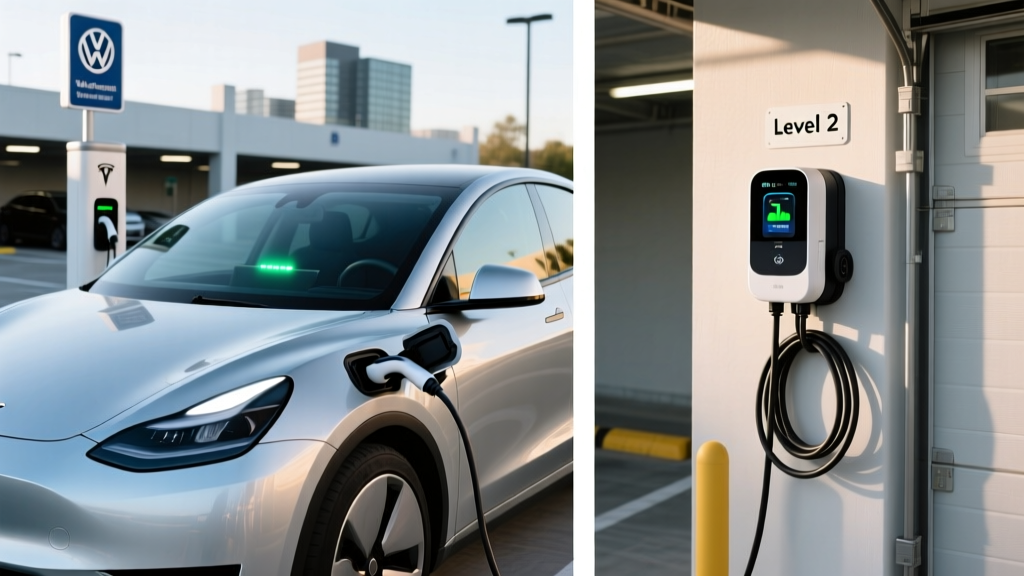
The Model S Long Range Plus supports three charging tiers. Here's what each delivers in real-world terms:
| Level | Voltage | Max Power (kW) | Miles of Range Added Per Hour | Typical Use Case |
|---|---|---|---|---|
| Level 1 | 120V AC | ~1.4 kW | ~3-4 mi/hr | Emergency/trickle only |
| Level 2 | 240V AC | 11.5 kW (48A) | ~30-34 mi/hr | Daily home charging |
| DC Fast Charging | 400V+ DC | 250 kW peak | ~200 mi in 15 min (10-80%) | Road trips, Superchargers |
Real-world note: Level 1 charging on a standard 120V household outlet is essentially useless for a 100 kWh battery — it would take over 70 hours for a full charge. Level 2 at home is the practical baseline for daily ownership. The Model S onboard charger maxes out at 11.5 kW (48 amps), meaning a 60-amp circuit with a 48A-capable wall connector is the optimal home configuration.
Home Charger Installation: Electrical Requirements and Costs
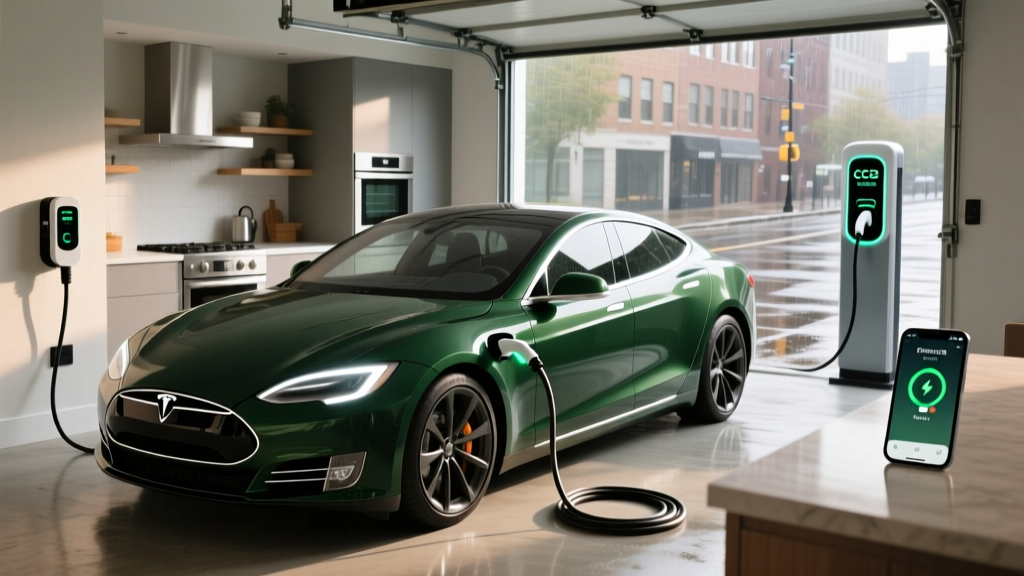
Installing a Level 2 home charger for the Model S Long Range Plus requires a dedicated 240V circuit. Because the vehicle can accept up to 11.5 kW (48 amps continuous), the National Electrical Code requires the circuit breaker to be rated at 125% of continuous load — meaning you need a 60-amp breaker on a dedicated circuit.
Electrical Panel Considerations
Most modern homes with 200-amp electrical service can accommodate a 60-amp EV circuit without a panel upgrade. However, older homes with 100-amp service or panels already near capacity (common with electric dryers, ovens, and HVAC) may require a panel upgrade to 200 amps. This is one of the largest variables in installation cost.
A licensed electrician will perform a load calculation per NEC Article 220 to determine if your panel can handle the additional draw. If an upgrade is needed, expect to add $1,500-$3,000 to your project.
| Component | Cost Range | Notes |
|---|---|---|
| Level 2 Charger (equipment) | $400-$750 | Tesla Wall Connector ~$475; third-party options vary |
| Electrician labor (standard install) | $500-$1,500 | Depends on run length from panel to garage |
| Electrical permit | $50-$200 | Varies by municipality |
| Panel upgrade (if needed) | $1,500-$3,000 | 100A to 200A upgrade; not always required |
| Total (no panel upgrade) | $950-$2,450 | Typical range for most homes |
| Total (with panel upgrade) | $2,450-$5,450 | Older homes or high-load panels |
Pro tip: Some utilities offer rebates of $200-$500 for Level 2 charger installation, and the federal Residential Clean Energy Credit (as outlined by the IRS) may cover 30% of charger equipment and installation costs up to $1,000 through 2032. Check your utility's EV programs before scheduling work.
Safety and Code Requirements
- Dedicated circuit: Your EV charger must have its own dedicated breaker — it cannot share a circuit with other appliances.
- GFCI protection: NEC 2020 and later require GFCI protection for outdoor receptacles; hardwired chargers may be exempt in some jurisdictions but GFCI breakers are recommended regardless.
- Outdoor rating: If installing outside, ensure the charger carries a NEMA 4 or NEMA 4X rating for weather resistance. The Tesla Wall Connector is rated for indoor and outdoor use.
- Wire gauge: A 60-amp circuit requires 6 AWG copper wire (or 4 AWG aluminum) for runs up to ~100 feet. Longer runs may need thicker wire to prevent voltage drop.
Connector Compatibility: NACS, CCS, and Adapters
The Tesla Model S Long Range Plus uses the North American Charging Standard (NACS) connector natively — the same proprietary Tesla connector that has since been adopted as the industry standard by most major automakers starting in 2025. This means you have direct access to the entire Tesla Supercharger network without any adapter.
| Connector Type | Native Support? | Adapter Needed? | Network Access |
|---|---|---|---|
| NACS (Tesla) | Yes | No | Tesla Superchargers, Destination Chargers |
| CCS1 | No | Tesla CCS Adapter (~$175) | Electrify America, EVgo, ChargePoint DC stations |
| CHAdeMO | No | Third-party adapter (~$300-$400) | Limited; mostly legacy stations |
| J1772 (Level 2 public) | No | Tesla J1772 Adapter (included) | Public Level 2 stations everywhere |
The Model S ships with a J1772-to-NACS adapter in the trunk for public Level 2 stations. For DC fast charging on non-Tesla networks, you'll need the Tesla CCS1 adapter, which Tesla sells directly. However, with the Supercharger network now exceeding 6,000 U.S. stations and V3/V4 stalls offering 250-350 kW, most owners rarely need non-Tesla DC charging.
Cost to Charge: Home vs. Public vs. Gas Comparison
One of the strongest ownership arguments for the Model S Long Range Plus is fuel-cost savings. Here's how the math breaks down across common charging scenarios, based on the vehicle's EPA-rated efficiency of approximately 28 kWh per 100 miles (roughly 120 MPGe combined, per fueleconomy.gov):
| Scenario | Cost per kWh | Cost per 100 Miles | Cost per Mile |
|---|---|---|---|
| Home (off-peak utility rate) | $0.10 | $2.80 | $0.028 |
| Home (national avg. residential) | $0.17 | $4.76 | $0.048 |
| Tesla Supercharger (avg.) | $0.30 | $8.40 | $0.084 |
| Third-party DC fast (EA, EVgo) | $0.40-$0.48 | $11.20-$13.44 | $0.112-$0.134 |
| Gasoline car (25 MPG, $3.50/gal) | — | $14.00 | $0.140 |
At home off-peak rates, the Model S Long Range Plus costs roughly 5x less per mile than a comparable gasoline sedan getting 25 MPG. Even at Supercharger rates, you're saving ~40% per mile vs. gas. The breakeven point shifts if you rely exclusively on expensive third-party DC fast charging — at $0.48/kWh, costs approach gasoline parity. This is why home charging access is the single most important economic factor in EV ownership.
Recommended Home Charging Equipment
Because the Model S Long Range Plus can accept up to 11.5 kW (48 amps), you'll want a charger that can deliver at least that much to maximize overnight charging speed. Here are the top options:
Tesla Wall Connector
Power: Up to 11.5 kW (48A)
Connector: NACS (native)
Cable length: 24 ft
Smart features: Wi-Fi, OTA updates, power-sharing with second unit, Tesla app integration
Price: ~$475
Verdict: The obvious first choice for Tesla owners. Seamless integration, cleanest install, and the 24-foot cable reaches most garage configurations. No adapter needed.
ChargePoint Home Flex
Power: Up to 12 kW (50A), configurable down to 16A
Connector: J1772 (NACS adapter required)
Cable length: 23 ft
Smart features: Wi-Fi, Alexa, scheduling, energy tracking, ChargePoint app
Price: ~$699
Verdict: Best third-party option if you own multiple EV brands. The adjustable amperage (16A-50A) is ideal for homes with limited panel capacity. Requires the Tesla J1772 adapter for daily use.
Emporia Vue Level 2 Charger
Power: Up to 11.5 kW (48A)
Connector: J1772 (NACS adapter required)
Cable length: 24 ft
Smart features: Wi-Fi, energy monitoring, solar integration, Emporia app
Price: ~$399
Verdict: Budget-friendly smart charger with excellent energy monitoring. Great if you have solar panels and want to charge only on excess production. Requires Tesla J1772 adapter.
For Model S Long Range Plus owners, the Tesla Wall Connector is the strongest recommendation. It delivers the vehicle's maximum 11.5 kW AC rate, requires no adapter, and the hardwired installation eliminates the 240V receptacle (which some jurisdictions require GFCI breakers for, adding cost).
DC Fast Charging Times: What to Expect on Road Trips
The Model S Long Range Plus supports up to 250 kW peak DC fast charging at Tesla V3 Superchargers. Here are realistic session times based on the ~100 kWh battery:
- 10-80% at 250 kW V3 Supercharger: ~25-30 minutes
- 10-80% at 150 kW V2 Supercharger: ~40-45 minutes
- 10-80% at 50 kW CHAdeMO (with adapter): ~80-90 minutes
- 10-90% at 250 kW V3 Supercharger: ~40-45 minutes (taper above 80% is steep)
Preconditioning matters. When you navigate to a Supercharger in the Tesla's built-in navigation, the vehicle automatically begins warming the battery to optimal charging temperature ~15-30 minutes before arrival. This can improve peak charge rates by 20-40% in cold weather. Always navigate to your charging stop rather than relying on third-party apps to find stations — the preconditioning benefit alone is worth it.
In cold weather (below 32°F), expect both range and charging speed to decrease. Real-world winter range for the Model S Long Range Plus typically falls to 300-340 miles (vs. the 405 EPA estimate), and DC fast charging sessions may take 5-10 minutes longer due to slower initial charge acceptance until the battery warms.
Frequently Asked Questions
How much does it cost to install a home EV charger for the Model S?
A standard Level 2 installation with a Tesla Wall Connector typically runs $950-$2,450 including equipment, electrician labor, and permit. If your home needs an electrical panel upgrade (common in pre-1990 homes with 100A service), add $1,500-$3,000. Always get a load calculation from a licensed electrician before committing.
How fast will each charging level add range to the Model S Long Range Plus?
Level 1 (120V) adds roughly 3-4 miles per hour — impractical for daily use with a 100 kWh battery. Level 2 (240V, 48A) adds approximately 30-34 miles per hour, fully replenishing the battery in about 10-11 hours. DC fast charging at 250 kW can add up to 200 miles in about 15 minutes during the peak portion of the charge curve.
Which connector is compatible with my Tesla Model S Long Range Plus?
The vehicle uses the NACS (Tesla) connector natively. It works directly with all Tesla Superchargers and Destination Chargers. For J1772 public Level 2 stations, use the included J1772-to-NACS adapter. For CCS1 DC fast stations, purchase Tesla's CCS1 adapter (~$175). CHAdeMO adapters exist from third parties but are rarely needed given the Supercharger network's coverage.
How much does charging cost per mile vs. gasoline?
At the national average residential electricity rate of ~$0.17/kWh, the Model S Long Range Plus costs about $0.048 per mile to charge at home — roughly one-third the cost of a 25 MPG gasoline car at $3.50/gallon ($0.14/mile). Off-peak utility rates can push charging costs as low as $0.028/mile. Supercharger rates (~$0.30/kWh) bring the cost to ~$0.084/mile, still well below gasoline.
What electrical upgrades might I need for a home charger?
You need a dedicated 60-amp, 240V circuit for optimal Level 2 charging. Homes with 200-amp panels usually accommodate this without issue. Homes with 100-amp service or panels already near capacity may need a panel upgrade ($1,500-$3,000). If your garage is far from the electrical panel, longer wire runs increase labor and material costs. A licensed electrician will assess all of this during a site visit.
Can I charge the Model S Long Range Plus on a regular 120V outlet?
Yes, but it's not practical as a primary charging method. At ~1.4 kW (12 amps), you'll add only 3-4 miles of range per hour — meaning a full charge from empty would take over 70 hours. Level 1 works for overnight top-ups if you drive less than 30-40 miles per day, but any owner should prioritize installing Level 2 for a usable daily experience.