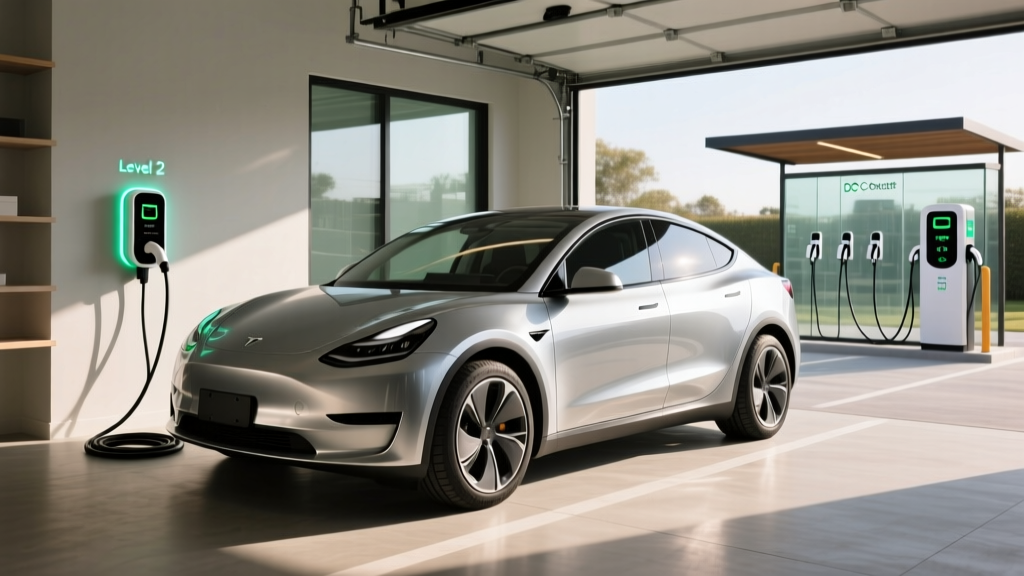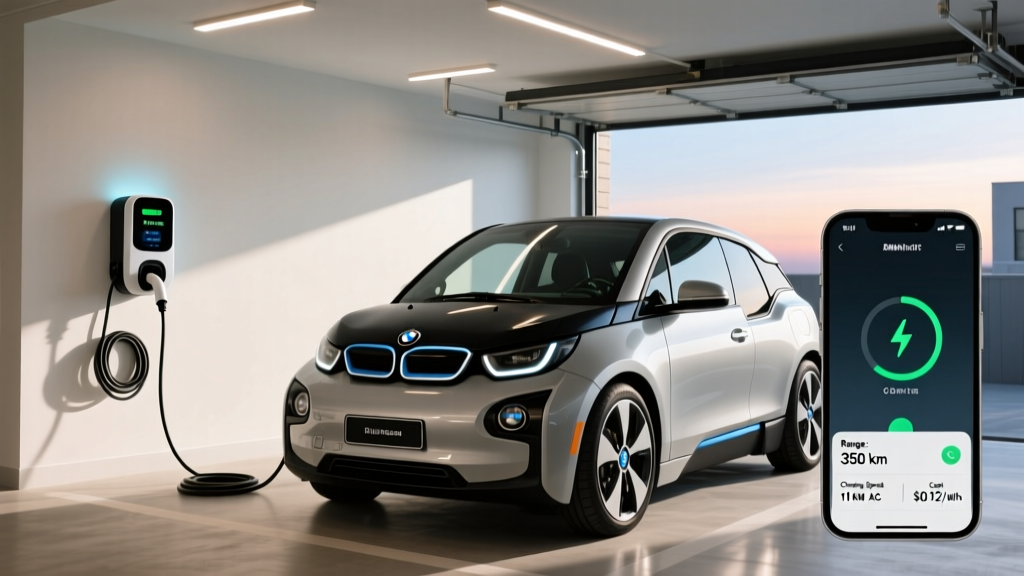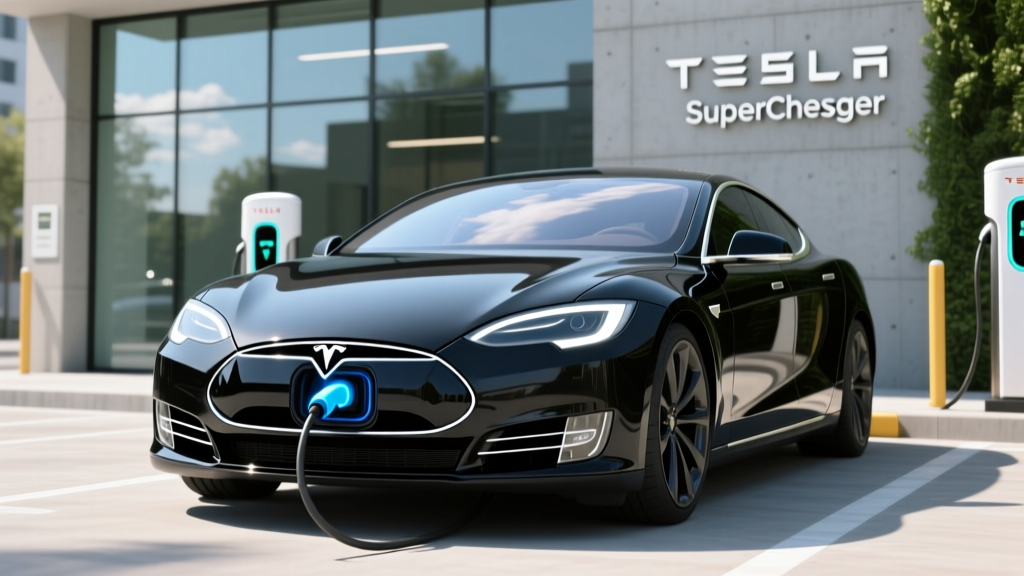
If you have been browsing used-EV listings and spotted the phrase Tesla Model S free Supercharging for sale, you are not alone. Free, transferable Supercharging has long been one of the most sought-after perks in the secondhand Tesla market. But in 2026, the landscape of Tesla's Supercharger network, home-charging economics, and EV ownership costs has shifted significantly. Before you pay a premium for a used Model S advertised with this perk, you need to understand exactly what you are getting, how charging actually works across all levels, and whether that free-charging badge truly saves you money compared to installing a home Level 2 charger.
This guide breaks down everything a prospective buyer or new Model S owner needs to know: from deciphering free Supercharging transferability to planning a home charging setup, understanding connector standards, and calculating real cost-per-mile figures.
What "Free Supercharging" Actually Means on a Used Tesla Model S
Tesla has offered free Supercharging in several forms over the years. The two most common types found on used Model S listings are:
- Free Supercharging tied to the vehicle (VIN-attached): This is the gold standard. It stays with the car regardless of ownership changes. Common on 2012–2016 Model S vehicles sold under Tesla's original promotional programs.
- Free Supercharging tied to the original owner: This does not transfer. Some 2017–2019 Model S vehicles received free Supercharging that was linked to the first owner's Tesla account. When the car is sold, the benefit disappears.
In 2026, Tesla's Supercharger pricing in the U.S. averages between $0.25 and $0.48 per kWh depending on location, time of day, and whether you are driving a Tesla or a non-Tesla EV using the network (via the Tesla Supercharger open-access program). For a Model S with a 100 kWh battery pack, a 10–80% charge session could cost $17.50–$33.60 at a public Supercharger — making VIN-attached free Supercharging a meaningful savings for high-mileage drivers.
Charging Levels Explained: Speeds, Range Added, and Real-World Times
Whether your used Model S comes with free Supercharging or not, you will charge at home most of the time. Understanding the three charging levels is essential — and the single most important distinction to internalize is the difference between kW (kilowatts) and kWh (kilowatt-hours).
- kW (kilowatts) = the rate of power flow, like water pressure from a hose. It tells you how fast energy is moving into the battery.
- kWh (kilowatt-hours) = the total energy stored, like gallons in a tank. A Model S Long Range has roughly 100 kWh of usable battery capacity.
Confusing these two is the most common mistake new EV owners make. A 48-amp Level 2 charger delivers up to 11.5 kW of power (the rate). Your Model S battery stores roughly 100 kWh of energy (the capacity).
| Level | Voltage | Max Power (kW) | Miles of Range Added per Hour | Typical Use Case |
|---|---|---|---|---|
| Level 1 | 120V AC | 1.4–1.9 kW | 3–5 miles/hr | Emergency/top-off, low-mileage drivers |
| Level 2 | 240V AC | 7.2–19.2 kW | 20–60 miles/hr | Home daily charging, workplace |
| DC Fast Charge | 400–800V DC | 50–350 kW | 150–300+ miles in 20–30 min | Road trips, highway corridors |
For a Tesla Model S Long Range (2025–2026 model year, ~100 kWh usable battery, EPA-estimated 402 miles of range per fueleconomy.gov), here is what real charging times look like:
- Level 1 (120V, 12A): A full 0–100% charge takes roughly 60–70 hours. This is practical only as a trickle charge.
- Level 2 (240V, 48A / 11.5 kW): A 10–80% charge takes approximately 7–8 hours — ideal for overnight charging.
- DC Fast Charge (Tesla V4 Supercharger, 250 kW peak): A 10–80% charge takes roughly 25–35 minutes. Note that the Model S charge curve tapers significantly above 80% state of charge (SoC) to protect the battery, so charging from 80–100% can add another 20+ minutes.
How Much Does It Cost to Install a Home EV Charger?
Even with free Supercharging, most Model S owners do 80% or more of their charging at home. A proper Level 2 home charging setup is the single best upgrade you can make for EV ownership convenience.
The total cost depends on your home's electrical panel capacity, the distance from the panel to your desired charger location, and local permit fees. Here is a realistic breakdown:
| Component | Low Estimate | High Estimate | Notes |
|---|---|---|---|
| Level 2 Charger (hardware) | $400 | $800 | 40A–48A Wi-Fi-enabled units |
| Electrician labor | $500 | $2,000 | Depends on run length and conduit |
| Electrical permit | $50 | $300 | Varies by municipality |
| Panel upgrade (if needed) | $1,500 | $4,000 | Required if panel is 100A or maxed out |
| Total (no panel upgrade) | $950 | $3,100 | Most homes with 200A service |
| Total (with panel upgrade) | $2,450 | $7,100 | Older homes with 100A or 150A panels |
Electrical Requirements for a Model S Home Charger
To charge a Model S at a practical speed, you need a 240V circuit on a dedicated breaker. Here are the most common configurations:
- NEMA 14-50 outlet (50A circuit, 40A continuous): Delivers up to 9.6 kW. This is the most popular and versatile setup. A licensed electrician can install this outlet, and you can use it with a mobile connector or a wall-mounted unit.
- Hardwired 60A circuit (48A continuous): Delivers up to 11.5 kW. Required for the fastest home charging. Hardwired units do not require a GFCI breaker in most jurisdictions (unlike receptacle-based installs under NEC 2020/2023 code), which can simplify installation.
- Panel capacity check: A 50A circuit requires your electrical panel to have at least 200A total service with adequate spare capacity. If your home has a 100A panel — common in houses built before 1990 — you will likely need a panel upgrade to 200A, adding $1,500–$4,000 to the project.
The National Electrical Code (NEC) requires that continuous loads (like EV charging, which runs for 3+ hours) be limited to 80% of the circuit rating. So a 50A breaker supports 40A continuous charging; a 60A breaker supports 48A continuous.
Connector Compatibility: NACS, CCS, and What Fits Your Model S
Tesla's proprietary connector — now formally adopted as the North American Charging Standard (NACS) — is the native connector on every Tesla Model S ever sold. As of 2026, NACS has become the dominant EV charging connector in North America, with Ford, GM, Rivian, Volvo, BMW, and most other major automakers having transitioned to it.
| Connector | Brands Using It Natively | DC Fast Charging Support | Adapter Availability |
|---|---|---|---|
| NACS (Tesla) | Tesla (all years), Ford, GM, Rivian, Volvo, BMW, Mercedes, Hyundai, Kia (2025+) | Yes — up to 350 kW on compatible stations | CCS-to-NACS adapters available ($150–$300) |
| CCS1 | Legacy VW ID.4, older Hyundai/Kia, Stellantis, some Honda | Yes — up to 350 kW | NACS-to-CCS adapters available for Tesla Supercharger access |
| CHAdeMO | Nissan Leaf (discontinued in US), Mitsubishi Outlander PHEV | Yes — up to 100 kW | Limited adapter options; network shrinking |
For a used Tesla Model S buyer: Your vehicle has a native NACS port. You can use every Tesla Supercharger in North America without an adapter. If you want to use Electrify America or other CCS-based public networks, you will need a NACS-to-CCS adapter. Tesla sells an official CCS adapter for approximately $250, and it is compatible with Model S vehicles built after 2016 (with a firmware update applied to older vehicles).
Charging Cost Per Mile: Home vs. Public vs. Gas
The economics of EV charging depend heavily on where you charge. Here is a realistic cost comparison for a Model S Long Range driven 12,000 miles per year, using national average electricity and gas prices as of early 2026:
| Charging/Fueling Scenario | Rate | Cost per Mile | Annual Cost (12,000 mi) |
|---|---|---|---|
| Home charging (off-peak utility rate) | $0.12/kWh | $0.036 | $432 |
| Home charging (standard residential rate) | $0.18/kWh | $0.054 | $648 |
| Tesla Supercharger (paid, avg. rate) | $0.35/kWh | $0.105 | $1,260 |
| Free Supercharging (VIN-attached) | $0.00/kWh | $0.00 | $0 |
| Comparable gas sedan (30 MPG combined, $3.40/gal) | $3.40/gal | $0.113 | $1,360 |
The Model S achieves approximately 3.0–3.3 kWh per mile in mixed driving (roughly 109 MPGe per EPA data). At a national average residential electricity rate of $0.18/kWh, that translates to roughly $0.054/mile — about half the fuel cost of a 30-MPG gas sedan at $3.40/gallon.
What does this mean for "free Supercharging" value? If you drive 12,000 miles per year and charge exclusively on free Superchargers, you save roughly $1,260 annually compared to paid Supercharging, or about $930 compared to gas. Over five years of ownership, that is $4,650–$6,300 in savings. However, if you install a home charger and charge overnight at off-peak rates ($0.12/kWh), your annual cost drops to just $432 — making the home-charging route cheaper than relying on free Supercharging for drivers who would otherwise make special trips to Supercharger stations.
Recommended Home Charging Equipment for Tesla Model S Owners
The Tesla Model S supports up to 11.5 kW (48A) AC charging via its onboard charger. To take full advantage, you need a 60A hardwired circuit. Here are top equipment picks for 2026:
Tesla Wall Connector (Gen 4)
- Power: Up to 11.5 kW (48A)
- Connector: Native NACS
- Cable length: 24 feet
- Smart features: Wi-Fi, OTA updates, load sharing with multiple units, access control
- Price: ~$475
- Best for: Tesla-only households seeking seamless integration
ChargePoint Home Flex (NACS version)
- Power: Up to 12 kW (50A, adjustable down)
- Connector: NACS (2025+ model) or J1772 with adapter
- Cable length: 23 feet
- Smart features: Wi-Fi, app scheduling, Alexa integration, energy tracking
- Price: ~$599
- Best for: Multi-EV households or those wanting detailed energy analytics
Emporia Level 2 EV Charger
- Power: Up to 11.5 kW (48A)
- Connector: NACS or J1772
- Cable length: 24 feet
- Smart features: Wi-Fi, solar integration, real-time energy monitoring via Emporia app
- Price: ~$399
- Best for: Budget-conscious buyers or homes with solar panels
All three units are UL-listed, rated for indoor and outdoor installation (NEMA 4 enclosure), and support the full 48A charge rate the Model S can accept. The Tesla Wall Connector remains the simplest choice for Tesla-only homes, while the ChargePoint Home Flex offers the most granular app controls and the Emporia provides the best value proposition.
Safety, Electrical Code, and Installation Best Practices
EV charging involves sustained high-current draw for hours at a time. Proper installation is not optional — it is a safety requirement. Key considerations:
- Dedicated circuit: Your Level 2 charger must be on its own dedicated breaker. Sharing a circuit with other appliances (dryer, HVAC) is a code violation and a fire risk.
- GFCI protection: Under NEC 2020 and 2023, receptacle-based EV chargers (like a NEMA 14-50 outlet) require a GFCI breaker. Hardwired chargers typically do not. GFCI breakers for 50A/60A circuits cost $80–$150 and can sometimes cause nuisance tripping with certain charger models — another reason many electricians recommend hardwired installations.
- Outdoor rating: If your charger is installed outdoors (garage exterior, driveway, carport), ensure the unit carries a NEMA 4 or IP54+ rating for weather resistance. All three chargers recommended above meet this standard.
- Permit and inspection: Most U.S. jurisdictions require an electrical permit for EV charger installation. Your electrician should pull this permit and schedule an inspection after completion. Unpermitted work can void homeowner's insurance claims and cause issues during a home sale.
- Wire gauge: A 50A circuit requires 6 AWG copper wire (or 4 AWG aluminum); a 60A circuit requires 4 AWG copper. Undersized wiring is a serious fire hazard — never cut corners here.
Frequently Asked Questions
How much does it cost to install a home EV charger?
For most homes with a 200A electrical panel, a professional Level 2 charger installation costs between $950 and $3,100, including the charger hardware ($400–$800), electrician labor ($500–$2,000), and permits ($50–$300). If your home has an older 100A panel that needs upgrading to 200A, add $1,500–$4,000 to the total. Always get at least two quotes from licensed electricians.
How fast will each charging level add range to a Tesla Model S?
Level 1 (120V) adds roughly 3–5 miles of range per hour. Level 2 (240V, 48A) adds approximately 44–50 miles per hour, easily replenishing a full day of driving overnight. DC Fast Charging at a Tesla Supercharger (250 kW peak) can add up to 200 miles in approximately 15–20 minutes, though the charge curve tapers above 80% SoC, making the final 20% significantly slower.
Which connector and charger are compatible with my used Tesla Model S?
Every Tesla Model S uses the native NACS (Tesla) connector for both AC and DC charging. You can use any Tesla Supercharger or Tesla Wall Connector without adapters. For CCS-based public networks like Electrify America, you need a NACS-to-CCS adapter (~$250 from Tesla). CHAdeMO networks are largely inaccessible to Tesla vehicles.
How much does charging a Model S cost per mile compared to gas?
At a national average residential electricity rate of $0.18/kWh, a Model S costs approximately $0.054 per mile to charge at home. A comparable gas sedan averaging 30 MPG at $3.40/gallon costs $0.113 per mile. Home charging is roughly half the per-mile cost of gasoline. Public DC fast charging at $0.35/kWh brings the cost to $0.105/mile — nearly equivalent to gas, which is why home charging is the economic sweet spot.
What electrical upgrades might I need for a Level 2 charger?
The most common upgrade is a panel capacity increase. If your home has a 100A main panel with few open slots, you will likely need a 200A upgrade ($1,500–$4,000). Homes with 200A service usually have sufficient capacity for a 50A or 60A dedicated EV circuit. Your electrician will perform a load calculation per NEC Article 220 to determine if your panel can handle the additional draw. Other potential upgrades include adding a sub-panel (if the charger is far from the main panel) or replacing aluminum wiring in older homes.
Is a used Model S with free Supercharging worth the premium?
It depends on your driving patterns. If you regularly road-trip or lack reliable home charging access, VIN-attached free Supercharging can save $1,000–$1,500 per year. However, if you can install a home Level 2 charger and charge overnight at off-peak utility rates, your annual charging cost drops to $400–$500 regardless — making the free Supercharging premium (often $3,000–$8,000 added to the vehicle price) harder to justify purely on economics. Always verify the free Supercharging is transferable before paying extra.