The Truth About Tesla Model S Free Supercharging in 2026
If you've been searching for Tesla Model S free Supercharging, you've likely seen conflicting information — some owners swear by unlimited free miles, while others pay full price at every stop. The reality in 2026 is nuanced: free Supercharging still exists, but only for a shrinking pool of legacy vehicles and specific promotional transfers.
Tesla ended its unlimited free Supercharging perk for new Model S orders back in 2017, briefly revived it as a referral incentive and limited-time promotion in subsequent years, and has since settled into a pay-per-use model for virtually all new vehicles. As of 2026, new Tesla Model S buyers (starting at $74,990 MSRP for the Long Range trim) pay standard Supercharger rates unless a specific promotion is active at the time of purchase.
Here's what you need to know about who still has it, what charging actually costs, and how to set up the most cost-effective charging strategy whether you own a Model S or any other EV.
Model S (and Model X) vehicles ordered before January 15, 2017, with transferable free Supercharging retain the benefit when sold privately — but Tesla has periodically restricted transfers. Some 2017–2019 vehicles received non-transferable free Supercharging tied to the original owner. Always verify the Supercharging status in the Tesla app under "Charging" before purchasing a used Model S. Tesla's official policy can change; check Tesla's Supercharging support page for current terms.
Charging Levels Explained: kW, Speed, and What You Actually Get
Before calculating costs, let's nail down the three charging levels and how fast each adds range to a Tesla Model S (100 kWh battery, EPA-rated 402 miles for the 2026 Long Range).
kW (kilowatts) measures the rate of power delivery — think of it as the width of the pipe. kWh (kilowatt-hours) measures total energy stored — the size of the tank. A 100 kWh battery charged at 10 kW takes roughly 10 hours from empty; at 150 kW, the same energy arrives in under an hour (though charge-curve taper means real times differ).
| Level | Voltage / Amperage | Power (kW) | Miles of Range Added Per Hour | Typical Use Case |
|---|---|---|---|---|
| Level 1 | 120V / 12A | ~1.4 kW | ~4–5 mi/hr | Emergency / overnight trickle |
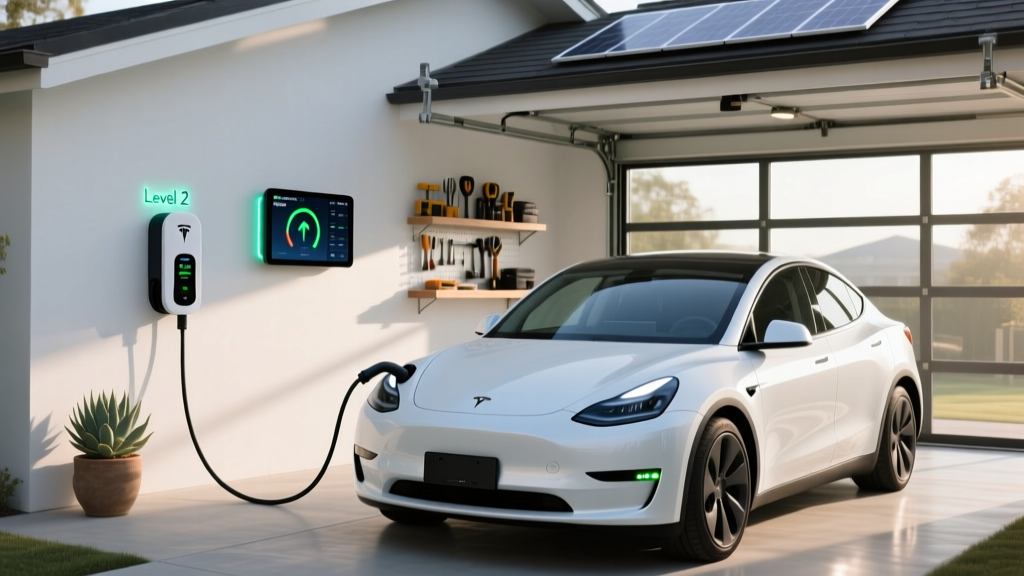
| Level 2 | 240V / 48A | ~11.5 kW | ~34–38 mi/hr | Home daily charging |
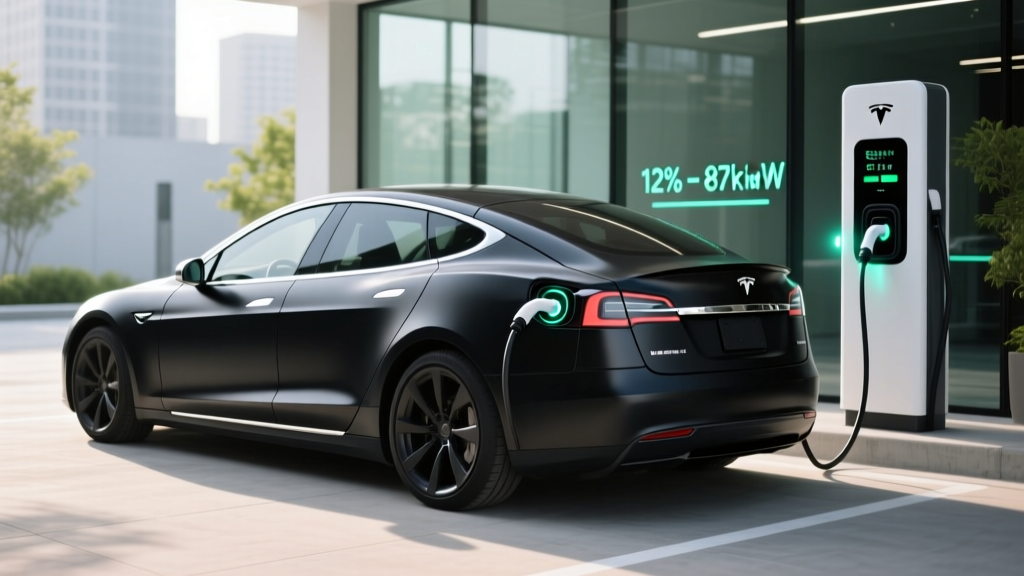
| DC Fast (V4 Supercharger) | 400V+ architecture | Peak 250 kW | ~200 mi in 15 min | Road trips |
Charge-curve reality check: The Model S peaks at 250 kW only between roughly 10–30% State of Charge (SoC). By 60%, the rate drops to ~100 kW, and above 80% it tapers sharply to protect the battery. A realistic 10–80% session on a V3/V4 Supercharger takes approximately 25–30 minutes, not the "15 minutes" often cited from peak-rate marketing.
How Much Does Charging Cost Per Mile vs. Gas?
This is where the economics of EV ownership become clear — and where free Supercharging, if you have it, represents a massive advantage.
| Charging / Fueling Scenario | Cost per kWh or Gallon | Model S Efficiency (3.5 mi/kWh) | Cost Per Mile |
|---|---|---|---|
| Home Level 2 (national avg. electricity) | $0.16/kWh | 3.5 mi/kWh | $0.046 |
| Home Level 2 (off-peak TOU rate) | $0.09/kWh | 3.5 mi/kWh | $0.026 |
| Tesla Supercharger (avg. 2026) | $0.32/kWh | 3.5 mi/kWh | $0.091 |
| Electrify America / third-party DCFC | $0.42/kWh | 3.5 mi/kWh | $0.12 |
| Free Supercharging (legacy) | $0.00 | 3.5 mi/kWh | $0.00 |
| Gas sedan (30 MPG combined) | $3.40/gal | 30 MPG | $0.113 |
At home off-peak rates, a Model S costs roughly $0.026 per mile — about one-quarter the cost of a 30 MPG gas sedan. Even at Supercharger rates, the Model S undercuts gasoline on a per-mile basis. Over 15,000 annual miles, home charging saves approximately $1,000–$1,300 per year versus gas, according to fueleconomy.gov EV cost comparisons.
Free Supercharging owners who road-trip frequently can save an additional $400–$800 annually depending on mileage, which explains why legacy Model S vehicles with transferable free Supercharging still command a price premium on the used market.
Home Charger Installation: Costs, Electrical Requirements, and Gotchas
Installing a Level 2 home charger is the single most impactful upgrade for EV ownership. Here's exactly what's involved and what it costs in 2026.
Electrical Requirements
A full-speed Level 2 charger for a Tesla Model S requires a 240V / 60A dedicated circuit (to deliver 48A continuous to the vehicle, per NEC 80% rule). This uses a NEMA 14-60 outlet or a hardwired connection. If your home's electrical panel has spare capacity (at least 60A of unused amperage on a 200A service), installation is straightforward.
Panel upgrade reality: Homes with 100A service or panels already near capacity (common in pre-1990 construction) may require a panel upgrade to 200A, adding $1,500–$3,500 to the project. Always have a licensed electrician perform a load calculation before committing to a charger circuit.
| Component | Low Estimate | High Estimate | Notes |
|---|---|---|---|
| Level 2 charger equipment | $400 | $750 | Wall Connector, ChargePoint, Emporia |
| Electrician labor (240V run) | $600 | $2,000 | Depends on distance from panel |
| Electrical permit | $50 | $250 | Varies by municipality |
| Panel upgrade (if needed) | $1,500 | $3,500 | 100A→200A service upgrade |
| Total (no panel upgrade) | $1,050 | $3,000 | Typical scenario |
| Total (with panel upgrade) | $2,550 | $6,500 | Older homes |
Federal Tax Credit for Home Charging
The IRS §30D alternative fuel vehicle refueling property credit covers 30% of home charger equipment and installation costs, up to $1,000, for equipment placed in service in 2026. This applies to your primary residence and requires the installer to provide proper documentation. Income and census-tract restrictions may apply — consult IRS guidelines on the refueling property credit and a tax professional for eligibility.
Which Connector and Charger Is Compatible With My EV?
The connector landscape has shifted dramatically. Tesla's North American Charging Standard (NACS) has been adopted by nearly every major automaker for 2025–2026 models, but millions of CCS1-equipped EVs remain on the road.
| Connector | Native Vehicles | Adapter Required For | Notes |
|---|---|---|---|
| NACS (Tesla) | Tesla Model S/3/X/Y, Rivian, Ford F-150 Lightning, GM Ultium vehicles, Volvo, Polestar | CCS1 vehicles via adapter | Standard on Tesla Superchargers |
| CCS1 | Hyundai Ioniq 5/6, Kia EV6/EV9, BMW i4/iX, VW ID.4 (2024 and earlier) | NACS chargers via adapter | Being phased out on new models |
| CHAdeMO | Nissan Leaf (legacy) | Limited network; no adapter to NACS | Effectively discontinued |
For Tesla Model S owners: Your vehicle uses NACS natively and has full access to the Tesla Supercharger network — over 60,000 stalls globally as of 2026. You can also use CCS1 stations with a Tesla CCS adapter (sold by Tesla for ~$175), opening up Electrify America and other networks for road-trip redundancy.
Recommended Home Charging Equipment for 2026
These are the chargers we recommend based on real-world reliability, power output, and feature sets. All support NACS natively or via included adapter.
Tesla Wall Connector (Gen 4)
- Power: 11.5 kW (48A at 240V)
- Connector: NACS native
- Cable length: 24 ft
- Smart features: Wi-Fi, OTA updates, power-sharing with second unit, load management
- Price: ~$475
- Best for: Tesla-exclusive households
ChargePoint Home Flex (NACS)
- Power: Up to 12 kW (50A at 240V)
- Connector: NACS (2025+ model)
- Cable length: 23 ft
- Smart features: App scheduling, Alexa/Google integration, energy tracking
- Price: ~$599
- Best for: Multi-EV households wanting app ecosystem
Emporia Vue Level 2 Charger
- Power: 11.5 kW (48A at 240V)
- Connector: J1772 (NACS adapter included)
- Cable length: 24 ft
- Smart features: Solar integration, energy monitoring, TOU scheduling
- Price: ~$399
- Best for: Budget-conscious buyers, solar homes
Safety and code note: The NEC requires a dedicated circuit for EV charging — you cannot share the circuit with other appliances. Outdoor installations require a charger rated for wet locations (NEMA 4 or IP65). GFCI protection is required for receptacle-based installations (NEMA 14-60); hardwired units have different GFCI requirements that vary by jurisdiction. Always pull a permit and have the installation inspected.
Optimizing Your Charging Strategy: Home, Supercharger, or Both?
Even without free Supercharging, a smart charging strategy keeps costs minimal:
- Charge at home 80–90% of the time. Set your Tesla to charge during off-peak hours (typically 10 PM–6 AM) using scheduled charging. At $0.09/kWh off-peak, a full 100 kWh charge costs just $9 — enough for 350+ real-world miles.
- Use Superchargers for road trips only. The Model S's 402-mile EPA range (expect ~320–340 miles real-world highway at 70 mph, less in freezing weather) means most day trips require no charging stop at all.
- Set charge limit to 80% daily. The Model S uses NMC battery chemistry, which degrades faster when held at 100%. Reserve full charges for road trips. Tesla's battery management system includes a buffer, but limiting daily SoC extends long-term State of Health (SoH).
- Precondition before fast charging. Navigate to a Supercharger in the Tesla app or navigation before arriving. The car will warm the battery to optimal temperature, enabling peak 250 kW charge rates instead of being throttled to 50–80 kW on a cold pack.
Frequently Asked Questions
How much does it cost to install a home EV charger?
Expect $1,050–$3,000 for a standard Level 2 installation on a 240V/60A circuit in a home with adequate panel capacity. If your home needs a 200A panel upgrade, total costs range from $2,550–$6,500. The federal refueling property credit can offset 30% (up to $1,000) of these costs.
How fast will each charging level add range to a Model S?
Level 1 (120V) adds roughly 4–5 miles per hour — adequate only for plug-in hybrids or emergency use. Level 2 (240V, 48A) adds 34–38 miles per hour, fully replenishing the 100 kWh battery in about 9–10 hours. DC fast charging at a V3/V4 Supercharger adds up to 200 miles in 15 minutes, though a realistic 10–80% session takes 25–30 minutes due to charge-curve taper.
Can I still get free Supercharging on a new Tesla Model S?
As of 2026, Tesla does not include free Supercharging as a standard feature on new Model S purchases. It occasionally appears as a limited-time promotional incentive (e.g., end-of-quarter delivery pushes). The only guaranteed free Supercharging exists on legacy 2017-and-earlier vehicles where the benefit was transferable. Always verify status in the Tesla app before buying used.
How much does charging cost per mile compared to gas?
Home charging at off-peak rates costs approximately $0.026 per mile for a Model S. Supercharging averages $0.091 per mile. A comparable 30 MPG gas sedan at $3.40/gallon costs $0.113 per mile. Home charging saves roughly $1,000–$1,300 annually over 15,000 miles of driving.
What electrical upgrades might I need for a home charger?
You need a 240V / 60A dedicated circuit (NEMA 14-60 or hardwired). If your electrical panel is 100A service or already near capacity, a panel upgrade to 200A may be required, costing $1,500–$3,500. A licensed electrician must perform a load calculation to determine if your existing panel can support the additional draw. Permits and inspections are required by code in virtually all jurisdictions.
Is a Tesla Wall Connector better than third-party chargers?
For Tesla-only households, the Gen 4 Wall Connector offers the cleanest integration — native NACS, power-sharing for two-unit installs, and OTA updates at $475. Third-party chargers like the ChargePoint Home Flex offer broader app ecosystems and may be preferable in mixed-EV households. Both deliver comparable 11.5 kW charging speeds.