The 2026 Tesla Model S Long Range carries an EPA-estimated 402 miles of range, but extracting every one of those miles requires understanding the relationship between charging infrastructure, battery chemistry, and driving conditions. For current owners and prospective buyers, range is only as useful as your ability to replenish it efficiently. This guide dissects the Model S charging ecosystem — from home Level 2 installations to Supercharger network speeds — and shows you exactly what to expect in real-world driving.
2026 Tesla Model S: Range, Battery, and Efficiency Specs
| Attribute | Value |
|---|---|
| EPA Range | 402 miles |
| Battery Chemistry | NMC (Nickel Manganese Cobalt) |
| Usable Battery Capacity | ~95 kWh |
| Max DC Fast Charge Rate | 250 kW peak |
| 10–80% DC Fast Charge | ~25 minutes (optimal conditions) |
| Level 2 Charge Rate | 11.5 kW (48A onboard charger) |
| EPA Efficiency | 124 MPGe combined |
| 0–60 mph | 3.1 seconds |
| Base MSRP (Long Range AWD) | $74,990 |
| Plaid MSRP | $89,990 |
| Battery Warranty | 8 years / 150,000 miles (70% retention) |
The EPA's 402-mile figure assumes a mix of city and highway driving at moderate temperatures. In sustained 75 mph highway testing, expect approximately 340–360 miles. In freezing temperatures (below 32°F), range can drop 20–30%, yielding as low as 280–310 miles before requiring a charge. Tesla's heat pump mitigates some cabin-heating loss, but battery chemistry still slows in extreme cold.
Charging Levels Explained: Speeds, Power, and Range Added
Understanding the difference between kilowatts (kW) and kilowatt-hours (kWh) is foundational. kW measures power — how fast energy flows into your battery. kWh measures energy — the total capacity of the battery itself. A 95 kWh battery charged at 11.5 kW will take roughly 8.3 hours from 0% to 100% (minus tapering losses). Here's how each level performs:
| Level | Voltage | Power (kW) | Miles Added/Hour | Best Use Case |
|---|---|---|---|---|
| Level 1 | 120V AC | 1.0–1.4 kW | 3–5 mi/hr | Overnight trickle, emergency |
| Level 2 | 240V AC | 3.3–19.2 kW | 12–70 mi/hr | Home daily charging |
| DC Fast (Tesla Supercharger V3) | 400V DC | Up to 250 kW | Up to 200 mi in 15 min | Road trips, rapid top-ups |
| DC Fast (Tesla Supercharger V4) | 800V DC | Up to 350 kW | Up to 250 mi in 15 min | Next-gen rapid charging |
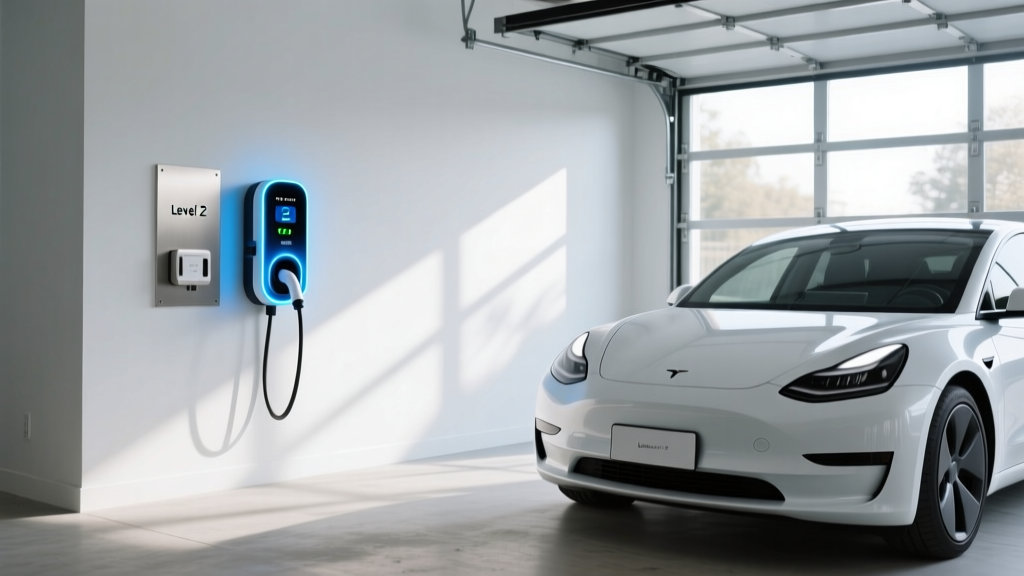
At Level 2 (240V, 48A), the Model S onboard charger accepts up to 11.5 kW, adding approximately 44 miles of range per hour. A full charge from 10% to 90% takes about 8 hours — ideal for overnight replenishment.
Home Level 2 Charger Installation: Costs, Electrical Requirements, and Permits
A dedicated Level 2 home charger is the single most impactful upgrade for daily EV ownership. For the Model S, you'll want a 240V circuit with at least a 60-amp breaker to support continuous 48A draw (National Electrical Code requires a 125% safety margin: 48A × 1.25 = 60A).
Electrical Requirements
- Circuit: Dedicated 60A, 240V breaker
- Wire Gauge: 6 AWG copper (or 4 AWG aluminum)
- Outlet Option: NEMA 14-60 receptacle (if using Mobile Connector) or hardwired wall connector
- Panel Capacity: Minimum 200A service recommended; older 100A panels may require a service upgrade ($2,000–$5,000)
- GFCI Protection: Required for outdoor installations per NEC 2020+ in most jurisdictions
Installation Cost Breakdown
| Component | Low End | High End | Notes |
|---|---|---|---|
| EVSE Equipment (Wall Connector) | $400 | $750 | Tesla Wall Connector, ChargePoint, Emporia |
| Electrician Labor | $600 | $2,500 | Depends on run length, conduit, drywall work |
| Permit Fees | $50 | $250 | Varies by municipality |
| Panel Upgrade (if needed) | $2,000 | $5,000 | 100A to 200A service upgrade |
| Total (No Panel Upgrade) | $1,050 | $3,500 | Most homes with 200A service |
| Total (With Panel Upgrade) | $3,050 | $8,500 | Older homes needing service upgrade |
Always hire a licensed electrician familiar with NEC Article 625 (EV charging systems). Some utilities offer rebates of $250–$500 for smart charger installations — check with your local provider.
Connector Compatibility: NACS, CCS, and Adapters
Tesla's North American Charging Standard (NACS) has become the dominant connector in North America, adopted by Ford, GM, Rivian, and most major automakers for 2025+ models. The Model S uses NACS natively, meaning you have direct access to the Tesla Supercharger network (20,000+ stalls in the U.S.) without adapters.
| Connector | Used By | Max DC Power | Tesla Model S Compatibility |
|---|---|---|---|
| NACS (Tesla) | Tesla, Ford, GM, Rivian, Hyundai (2025+) | Up to 350 kW | Native — no adapter needed |
| CCS1 | VW, BMW, older Ford/GM, Electrify America | Up to 350 kW | Requires CCS adapter (~$175 from Tesla) |
| CHAdeMO | Nissan Leaf (legacy), Mitsubishi | Up to 100 kW | Not supported; network declining |
If you plan to use Electrify America or other CCS-only networks, Tesla sells a CCS1-to-NACS adapter that enables DC fast charging at non-Tesla stations. Confirm adapter compatibility with your specific model year on Tesla's support site.
Charging Cost Per Mile: Home vs. Public vs. Gas Comparison
One of the strongest economic arguments for EV ownership is the lower cost per mile. Here's how the Model S stacks up against a comparable gas-powered luxury sedan:
| Scenario | Cost per kWh | Model S Cost/Mile | Gas Sedan (25 MPG @ $3.50/gal) |
|---|---|---|---|
| Home Charging (Off-Peak) | $0.12/kWh | $0.035 | $0.14/mile |
| Home Charging (Peak) | $0.25/kWh | $0.073 | $0.14/mile |
| Tesla Supercharger (Avg) | $0.30/kWh | $0.087 | $0.14/mile |
| Public DC Fast (Electrify America) | $0.43/kWh | $0.125 | $0.14/mile |
Assuming the Model S consumes approximately 0.29 kWh per mile (EPA combined), home off-peak charging costs roughly $0.035 per mile — about 75% less than a 25 MPG gas vehicle at $3.50/gallon. Even at public DC fast chargers, the Model S typically undercuts gas on a per-mile basis, though the margin narrows.
Recommended Home Chargers for Tesla Model S
Tesla Wall Connector
- Power Output: Up to 11.5 kW (48A)
- Connector: NACS (native)
- Cable Length: 24 ft
- Smart Features: Wi-Fi, OTA updates, load sharing, access control
- Price: ~$475
Best for: Tesla-only households seeking seamless integration and fastest Model S Level 2 charging.
Emporia Level 2 EV Charger
- Power Output: Up to 11.5 kW (48A)
- Connector: J1772 (requires NACS adapter)
- Cable Length: 24 ft
- Smart Features: Energy monitoring, solar integration, scheduling
- Price: ~$400
Best for: Multi-EV households or homes with solar panels seeking detailed energy tracking.
ChargePoint Home Flex
- Power Output: Up to 12 kW (50A, adjustable)
- Connector: J1772 (NACS adapter included with some bundles)
- Cable Length: 23 ft
- Smart Features: Alexa integration, scheduling, usage reports
- Price: ~$699
Best for: Users wanting flexible amperage settings and smart home ecosystem integration.
DC Fast Charging: Real-World Charge Times and Curve Behavior
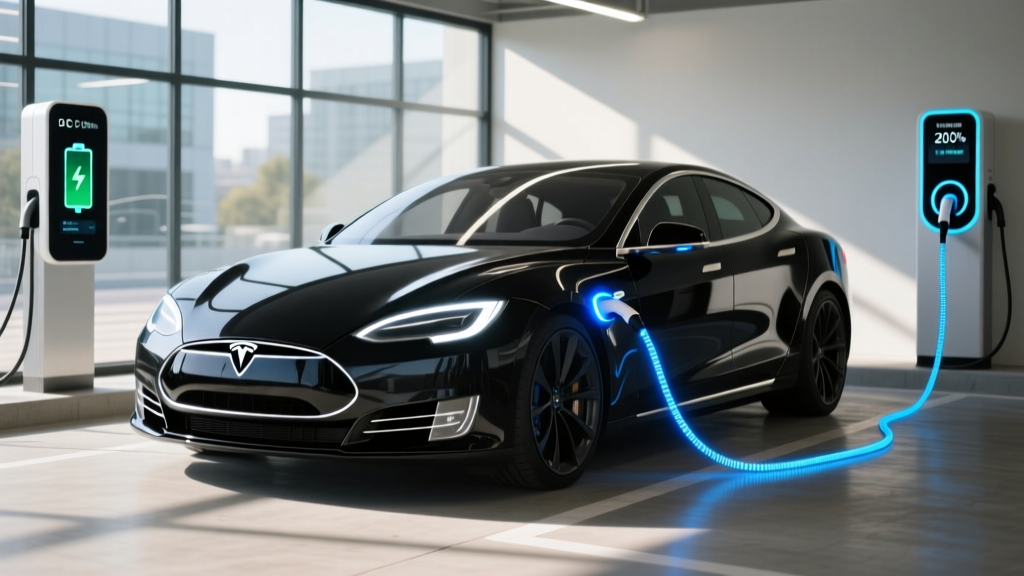
The Model S Long Range peaks at 250 kW on Tesla V3 Superchargers, but that peak is sustained only between approximately 10% and 30% state of charge. The charging curve tapers progressively:
- 10–30% SoC: Peak ~250 kW (adds ~150 miles in ~10 minutes)
- 30–60% SoC: ~150–180 kW sustained
- 60–80% SoC: ~80–120 kW (taper accelerates)
- 80–100% SoC: ~20–40 kW (slow trickle for battery health)
A 10–80% charge takes approximately 25 minutes under optimal conditions (battery preconditioned, ambient temperature 60–80°F). In cold weather, preconditioning via the Tesla app before arriving at the Supercharger is essential — without it, charge rates can be halved until the battery warms.
Frequently Asked Questions
How much does it cost to install a home EV charger for a Tesla Model S?
Expect $1,050–$3,500 if your home has a 200A electrical panel. If a panel upgrade is required, total costs range from $3,050–$8,500. Equipment (Tesla Wall Connector) costs ~$475; the remainder is electrician labor, wire, conduit, and permit fees.
How fast will each charging level add range to my Model S?
Level 1 (120V): 3–5 miles per hour. Level 2 (240V, 48A): ~44 miles per hour. DC Fast (250 kW Supercharger): up to 200 miles in 15 minutes during peak charge rates (10–30% SoC).
Which connector is compatible with the Tesla Model S?
The Model S uses NACS natively. For CCS1 stations (Electrify America, some EVgo locations), you'll need Tesla's CCS1-to-NACS adapter (~$175). CHAdeMO is not supported.
How much does charging the Model S cost per mile vs. gas?
Home off-peak charging costs ~$0.035/mile. Supercharger averages ~$0.087/mile. A comparable 25 MPG gas sedan at $3.50/gallon costs $0.14/mile. Home charging saves 60–75% per mile.
What electrical upgrades might I need for a home charger?
Homes with 100A service panels typically need an upgrade to 200A ($2,000–$5,000). Homes with 200A service usually only need a dedicated 60A breaker and appropriate wire run. A licensed electrician can assess your panel capacity during a site visit.
Safety and Code Considerations
EV charging installations must comply with NEC Article 625 and local building codes. Key safety requirements include:
- Dedicated Circuit: EVSE must be on its own breaker — no sharing with other appliances
- GFCI Protection: Required for all outdoor receptacles and hardwired installations in most jurisdictions
- Outdoor Rating: If mounted outside, the EVSE must carry a NEMA 4 or IP55+ weather resistance rating
- Permit and Inspection: Most municipalities require an electrical permit and post-installation inspection — skip this and you risk voiding homeowner's insurance coverage
- Load Management: If your panel is near capacity, consider a smart load-management device (e.g., Emporia Smart Load Center) that dynamically throttles charging to prevent breaker trips
The Tesla Model S's 402-mile EPA range is a genuine asset for road trips and daily commuting alike — but only if your charging infrastructure is sized correctly. A properly installed 60A Level 2 circuit replenishes the battery fully overnight, while Tesla's Supercharger network handles long-distance travel with 250 kW peak speeds. Plan your installation around your panel's actual capacity, factor in permit and labor costs, and you'll have a charging setup that makes the most of every kilowatt-hour.