Tesla Model S Charging at Every Level: What You Actually Get
If you own or are shopping for a Tesla Model S, understanding real charge times across every charging level is the difference between seamless EV ownership and frustrating guesswork. The 2025–2026 Tesla Model S comes with a usable battery capacity of approximately 95 kWh (the Long Range trim) and up to 100 kWh on the Plaid, paired with the North American Charging Standard (NACS) connector native to Tesla's Supercharger network.
But peak charge rates don't tell the full story. A charger rated for 250 kW doesn't deliver that rate for the entire session — the battery management system tapers charging speed as the state of charge (SoC) climbs, especially above 80%. Let's break down exactly how fast the Model S charges at each level, what you'll pay, and what your home electrical system needs to support.
Charging Levels Explained: kW, Miles Per Hour, and Model S Times
Before diving into numbers, a critical distinction: kW (kilowatts) measures power — the rate at which energy flows into the battery. kWh (kilowatt-hours) measures energy — the total capacity of the battery. Think of kW as the speed of water flowing through a hose, and kWh as the total volume of the tank you're filling. Never confuse the two.
| Level | Power (kW) | Miles of Range Added Per Hour | 10–80% Charge Time (Model S LR, ~95 kWh) |
|---|---|---|---|
| Level 1 (120V household outlet) | 1.0–1.4 kW | 3–5 mi/hr | ~55–65 hours (impractical for full charge) |
| Level 2 (240V home/public) | 7.7–19.2 kW | 25–44 mi/hr | ~5–10 hours (overnight ideal) |
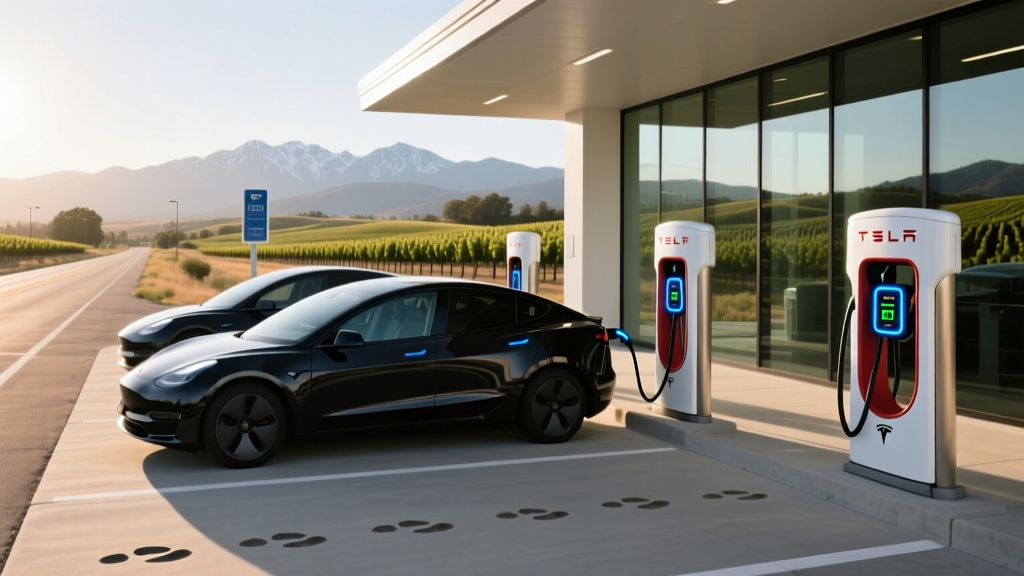
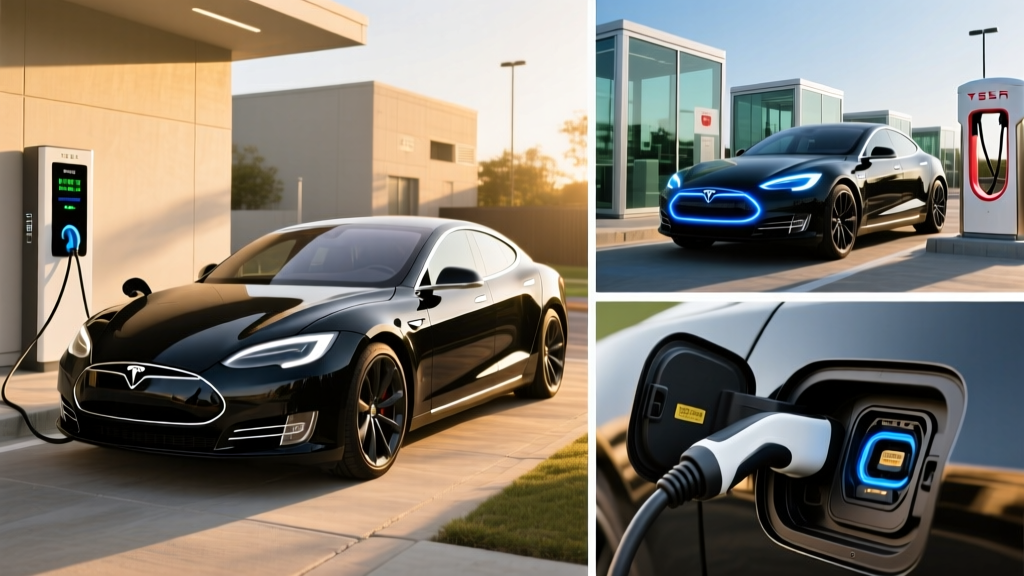
| DC Fast Charging (Tesla Supercharger V3/V4) | Up to 250 kW peak | Up to ~200 mi in 15 min | ~25–30 minutes (10–80%) |
The charge-curve reality: On a V3 Supercharger, the Model S peaks near 250 kW only when the battery is between roughly 10–30% SoC and properly preconditioned. As the battery passes 50%, the rate tapers to ~100–120 kW, and above 80% it drops further to ~40–50 kW. This is why the industry standard metric is 10–80% time, not 0–100%. Charging from 80–100% on DC fast charging can take nearly as long as the 10–80% session — so plan your stops accordingly and only charge to what you need.
Home Charging Setup for the Model S: Electrical Requirements and Install Costs
The Tesla Model S supports AC charging at up to 11.5 kW (48 amps) using its onboard charger. To take full advantage, you need a 240-volt circuit rated for at least 60 amps (EV chargers are considered continuous loads under the National Electrical Code, so the circuit must be rated at 125% of the charger's max draw — 48A × 1.25 = 60A).
Most homes built after 2000 have a 200-amp electrical panel that can accommodate a dedicated 60A circuit without an upgrade. Older homes with 100-amp or 150-amp service may need a panel upgrade, which is one of the most commonly underestimated costs in home EV charging.
What Your Installation Actually Involves
- Dedicated circuit: Your charger must have its own breaker — no sharing with dryers, ovens, or HVAC.
- GFCI protection: NEC 2020 and later require GFCI breakers for EV charging outlets (or the charger itself must provide GFCI protection, which hardwired units like the Tesla Wall Connector do).
- Outdoor rating: If your charger is mounted outside, the unit and any outlet must carry a NEMA 4 or NEMA 4X weather-resistance rating.
- Permit: Nearly all jurisdictions require an electrical permit for new 240V circuits. Your electrician typically pulls this, and an inspector will verify the work.
| Cost Component | Typical Range | Notes |
|---|---|---|
| Level 2 charger equipment | $400–$700 | Tesla Wall Connector ~$475; third-party smart chargers $450–$700 |
| Electrician labor (standard install) | $500–$1,500 | Depends on run length from panel to garage; longer runs = higher cost |
| Electrical permit | $50–$250 | Varies by municipality |
| Panel upgrade (if needed) | $1,500–$4,000+ | Required if existing panel lacks capacity; 100A→200A upgrade |
| Total (no panel upgrade) | $950–$2,450 | Most common scenario for newer homes |
| Total (with panel upgrade) | $2,500–$6,500 | Older homes or high-load households |
Pro tip: Even if your current EV only needs a 48A charger, consider installing a 60A circuit and running wire rated for it. Future EVs may support higher AC charge rates, and upgrading wire later is far more expensive than doing it right the first time.
Connector Compatibility: NACS, CCS1, and Adapters
The 2025–2026 Tesla Model S uses the NACS (North American Charging Standard) connector natively — this is the same connector used across the entire Tesla Supercharger network. As of 2025, virtually all major automakers (Ford, GM, Rivian, Hyundai, Volvo, and others) have adopted NACS for their North American vehicles, and the Supercharger network has opened to non-Tesla EVs at select locations.
| Connector | Model S Compatible? | Adapter Needed? | Where You'll Find It |
|---|---|---|---|
| NACS (Tesla) | ✅ Native | None | Superchargers, Tesla Destination, newer public stations |
| CCS1 | ✅ With adapter | Tesla CCS Adapter (~$250) | Electrify America, EVgo, ChargePoint DC stations |
| CHAdeMO | ❌ No | N/A (no viable adapter) | Legacy Nissan Leaf stations — being phased out |
| J1772 (Level 2) | ✅ With adapter | Included with vehicle | Public Level 2 stations, non-Tesla home chargers |
Tesla includes a J1772 adapter with every new Model S, so you can use any public Level 2 charger. For DC fast charging on non-Tesla networks like Electrify America, the CCS adapter is worth the investment — it opens up thousands of additional fast-charging stalls, particularly useful on cross-country routes where Supercharger coverage may have gaps.
Cost to Charge a Tesla Model S: Home vs. Public vs. Gas Comparison
The economics of EV ownership depend heavily on where you charge. Home charging on a Level 2 circuit during off-peak hours is dramatically cheaper than public DC fast charging — and both are cheaper than gasoline in most U.S. markets.
| Charging Scenario | Avg. $/kWh | Cost for 95 kWh (10–100%) | Cost Per Mile (402 mi EPA) |
|---|---|---|---|
| Home (off-peak utility rate) | $0.08–$0.14 | $7.60–$13.30 | $0.019–$0.033 |
| Home (standard residential rate) | $0.13–$0.18 | $12.35–$17.10 | $0.031–$0.043 |
| Public Level 2 (ChargePoint, etc.) | $0.20–$0.35 | $19.00–$33.25 | $0.047–$0.083 |
| Tesla Supercharger (V3/V4) | $0.25–$0.40 | $23.75–$38.00 | $0.059–$0.095 |
| Third-party DC Fast (Electrify America) | $0.35–$0.55 | $33.25–$52.25 | $0.083–$0.130 |
| Gasoline comparison (25 MPG combined, $3.40/gal) | — | $54.40 (for 402 mi equiv.) | $0.136 |
The Model S achieves approximately 120 MPGe combined (EPA), translating to roughly 28 kWh per 100 miles. At the national average residential electricity rate of about $0.16/kWh, home charging costs roughly $0.045 per mile — about one-third the cost of fueling a comparable gasoline sedan at $3.40/gallon and 25 MPG combined.
Even at the highest public DC fast-charging rates, the Model S is generally cheaper per mile than gasoline. But the savings are maximized when you charge at home overnight on a time-of-use (TOU) utility plan.
Recommended Home Chargers for the Tesla Model S
Below are chargers well-suited to the Model S, based on power output, connector type, reliability, and smart features. All support NACS natively or via the included J1772 adapter.
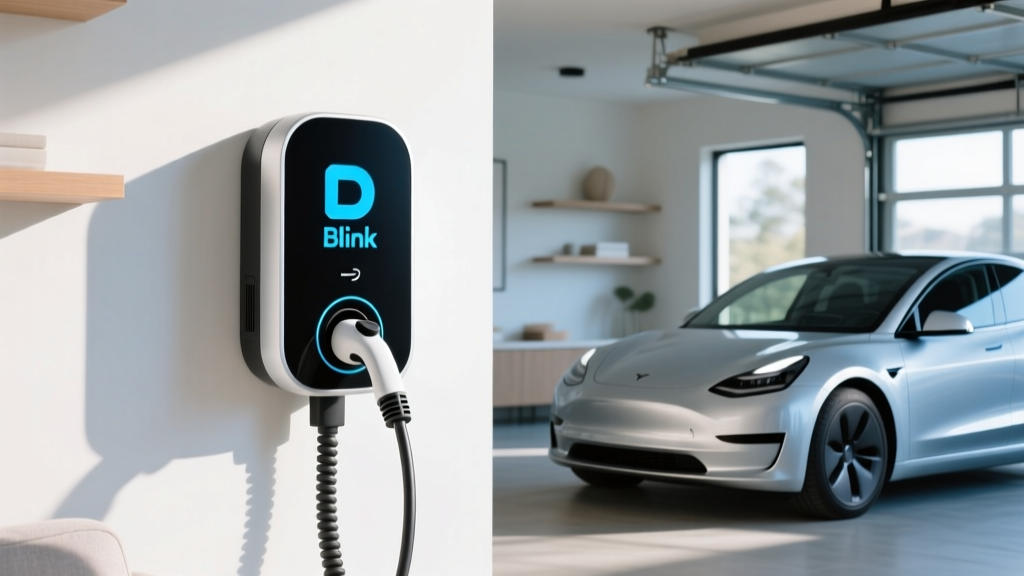
Tesla Wall Connector (Gen 3)
- Power output: Up to 11.5 kW (48A)
- Connector: NACS native
- Cable length: 24 ft
- Smart features: Wi-Fi updates, load sharing with multiple units, power-sharing across two Wall Connectors on one circuit
- Price: ~$475
- Verdict: Best default choice for Tesla owners. Seamless integration, fast AC charging, clean installation.
ChargePoint Home Flex
- Power output: Up to 12 kW (50A) — configurable down to 16A
- Connector: J1772 (use Tesla's included adapter) or NACS pigtail version
- Cable length: 23 ft
- Smart features: App scheduling, Alexa integration, energy tracking, flexible amperage for older panels
- Price: ~$550–$650
- Verdict: Best if you own multiple EV brands or want adjustable amperage to avoid a panel upgrade.
Emporia Vue Level 2 Charger
- Power output: Up to 11.5 kW (48A)
- Connector: J1772 (use Tesla adapter) or NACS version available
- Cable length: 24 ft
- Smart features: Integrated energy monitoring, solar-aware charging, scheduling, very competitive price
- Price: ~$400–$450
- Verdict: Best value pick, especially for solar-equipped homes that want to charge on excess production.
Safety, Electrical Code, and Common Installation Mistakes
EV charging is a high-draw, continuous electrical load — it runs for hours at maximum amperage. This is fundamentally different from a dryer or oven that cycles on and off. Here are the code requirements and practical safety points your installer must follow:
- NEC Article 625: Governs EV charging equipment installation. Requires the circuit to be rated at 125% of the charger's continuous draw.
- GFCI protection: Required for receptacle-based (plug-in) installations per NEC 2020+. Hardwired chargers with built-in GFCI (like the Tesla Wall Connector) satisfy this requirement without a GFCI breaker, which can be expensive for 60A circuits.
- Wire gauge: A 60A circuit requires 6 AWG copper wire (THHN in conduit) or 4 AWG for NM-B (Romex) cable. Your electrician will determine the correct gauge based on run length and installation method.
- NEMA 14-50 outlet vs. hardwired: A NEMA 14-50 outlet gives you portability (take the charger when you move), but hardwired installations are often cleaner, avoid GFCI breaker requirements, and support the full 48A continuous draw without outlet overheating concerns.
- Outdoor installations: Must use a weather-rated enclosure and NEMA 4/4X rated connector or outlet. The Tesla Wall Connector is rated for outdoor use.
Model S Charging Specs at a Glance
| Specification | 2025 Tesla Model S Long Range | 2025 Tesla Model S Plaid |
|---|---|---|
| Battery capacity (usable) | ~95 kWh | ~95 kWh |
| Battery chemistry | NMC (Nickel Manganese Cobalt) | NMC |
| EPA range | 402 miles | 396 miles |
| Max AC charge rate (Level 2) | 11.5 kW (48A) | 11.5 kW (48A) |
| Max DC fast charge rate | 250 kW peak | 250 kW peak |
| 10–80% DC fast charge time | ~25–30 minutes | ~25–30 minutes |
| 0–60 mph | 3.1 seconds | 1.99 seconds |
| Horsepower | 670 hp | 1,020 hp |
| Base MSRP | $79,990 | $94,990 |
| Federal §30D tax credit | Eligible (up to $7,500) — subject to income, sourcing, and MSRP caps | Eligible (up to $7,500) — subject to income, sourcing, and MSRP caps |
| Battery/powertrain warranty | 8 years / 150,000 miles (min. 70% retention) | 8 years / 150,000 miles (min. 70% retention) |
Tax credit note: Under IRS §30D, the new EV tax credit of up to $7,500 is subject to buyer income caps ($150K single / $300K joint), vehicle MSRP caps ($55,000 for sedans — the Model S currently exceeds this cap for the sedan classification, so verify current IRS classification at irs.gov), and critical mineral/battery component sourcing requirements. Rules change frequently — consult a tax professional before purchasing.
Frequently Asked Questions
How much does it cost to install a home EV charger for the Tesla Model S?
For most homes with a 200-amp panel and a garage close to the electrical panel, expect $950–$2,450 total (charger + electrician + permit). If your home needs a panel upgrade from 100A to 200A, total costs rise to $2,500–$6,500. Always get 2–3 quotes from licensed electricians, and confirm they have EV charger installation experience.
How fast will each charging level add range to my Model S?
Level 1 (120V standard outlet) adds roughly 3–5 miles per hour — only practical for emergency top-ups or very low daily mileage. Level 2 (240V, 48A) adds approximately 35–44 miles per hour, easily replenishing a full day of driving overnight. DC fast charging at a V3 Supercharger can add up to 200 miles in about 15 minutes under optimal conditions (low SoC, preconditioned battery).
Which connector and charger is compatible with my Tesla Model S?
The Model S uses NACS natively, which connects directly to all Tesla Superchargers and the Tesla Wall Connector. For non-Tesla public Level 2 chargers (J1772), use the adapter included with the vehicle. For non-Tesla DC fast chargers (CCS1), you'll need Tesla's CCS adapter (~$250). CHAdeMO is not compatible and is being phased out across the U.S.
How much does charging cost per mile compared to gas?
Charging at home on a standard residential rate (~$0.16/kWh), the Model S costs approximately $0.04–$0.05 per mile. A comparable gasoline luxury sedan at 25 MPG combined and $3.40/gallon costs about $0.14 per mile. Home charging saves roughly $0.09–$0.10 per mile, or about $1,200–$1,500 per year at 15,000 miles driven annually.
What electrical upgrades might I need for a home charger?
The most common upgrade is a panel capacity increase. If your home has a 100-amp service panel and you already run electric HVAC, a dryer, and an electric range, you may not have room for a 60A EV circuit. Upgrading to a 200A panel costs $1,500–$4,000. Alternatively, you can install a lower-amperage charger (e.g., 32A / 7.7 kW) on a 40A circuit, which still provides ~25 miles of range per hour — sufficient for most daily driving. Smart chargers like the ChargePoint Home Flex allow adjustable amperage to match your panel's available capacity. A licensed electrician should perform a load calculation before you commit to a charger amperage.
Should I precondition my Model S before Supercharging?
Yes. When you navigate to a Supercharger in the Tesla navigation system, the car automatically begins preconditioning the battery — warming it to the optimal temperature for fast charging. This can reduce your 10–80% charge time by 5–10 minutes, especially in cold weather. If you drive to a Supercharger without using the built-in navigation (e.g., using a phone app), preconditioning won't activate and your initial charge rate will be slower.
Does frequent Supercharging degrade the Model S battery?
Tesla's battery management system is sophisticated, and real-world data from high-mileage Model S vehicles shows modest degradation — typically 8–12% capacity loss over 150,000 miles. Exclusive DC fast charging does accelerate degradation slightly compared to Level 2 home charging, but the effect is manageable. Best practice: use home Level 2 charging for daily use, set the charge limit to 80–90% for daily driving (NMC batteries prefer not to sit at 100%), and reserve Supercharging for road trips.