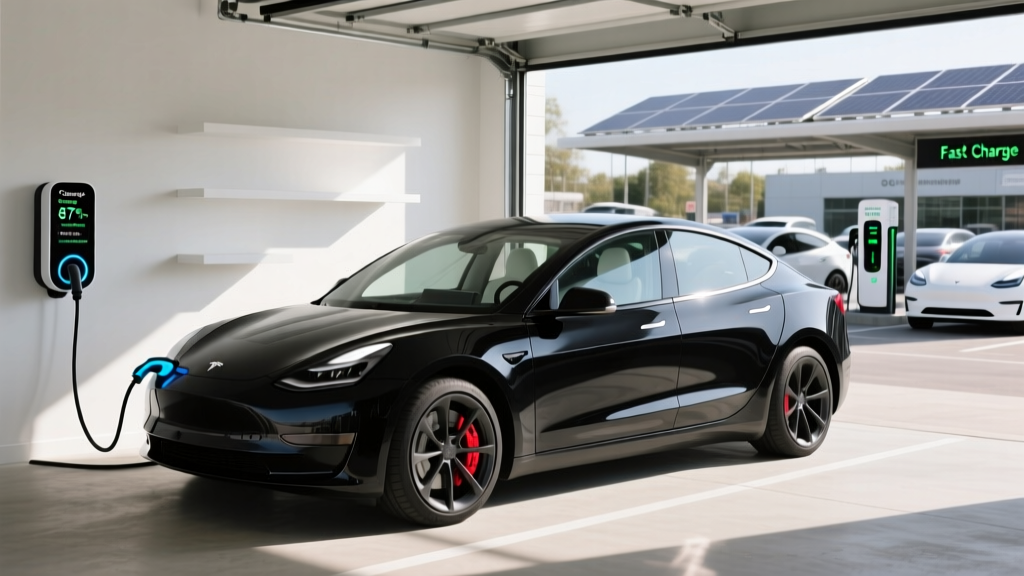
If you own or are considering a used 2013 Tesla Model S, understanding its real-world range and charging options in 2026 is critical. The original 60 kWh and 85 kWh battery packs have aged, and the EV charging landscape has shifted dramatically since this car debuted. This guide covers what to expect from a 2013 Model S today — from degraded range to modern charging compatibility — and provides a comprehensive home and public charging blueprint that applies to any EV owner.
2013 Tesla Model S Range: EPA vs. Real-World in 2026
The 2013 Tesla Model S was sold in three battery configurations. Here's what the EPA originally rated and what you can realistically expect today after more than a decade of battery cycling and calendar aging.
| Trim | Original EPA Range | Battery (Usable) | Estimated 2026 Range (10-15% Degradation) | Real-World Highway/Cold |
|---|---|---|---|---|
| Model S 60 | 208 mi | ~60 kWh (NMC) | ~177–187 mi | ~145–160 mi (winter/highway) |
| Model S 85 | 265 mi | ~81 kWh (NMC) | ~225–239 mi | ~185–205 mi (winter/highway) |
| Model S P85 | 265 mi | ~81 kWh (NMC) | ~225–239 mi | ~185–205 mi (winter/highway) |
Note: Battery degradation varies by charging habits, climate exposure, and mileage. Vehicles that were frequently DC fast-charged or stored at 100% SoC in hot climates may see 18-22% degradation. Always request a battery health report (available via third-party tools like TeslaFi or Recurrent) before purchasing a used 2013 Model S.
The 2013 Model S uses an NMC (nickel manganese cobalt) lithium-ion battery. NMC chemistry offers high energy density but is more susceptible to calendar degradation than the LFP (lithium iron phosphate) batteries used in newer Tesla Standard Range models. Expect roughly 1-2% capacity loss per year under normal use, compounding over time.
For efficiency context, the 2013 Model S 85 achieves approximately 95 MPGe combined (35 kWh/100mi) per fueleconomy.gov. That translates to roughly 3 miles per kWh under mixed driving — a useful figure for calculating charging costs and times below.
Charging Levels Explained: Speeds, Power, and Range Added
Before we get into equipment and costs, let's clarify the three charging levels. The critical distinction: kW (kilowatts) measures power — how fast energy flows into the battery. kWh (kilowatt-hours) measures energy — the total capacity of the battery. Think of kW as the flow rate of a hose and kWh as the size of the bucket.
| Level | Voltage / Amps | Power (kW) | Miles of Range Added Per Hour | Best For |
|---|---|---|---|---|
| Level 1 (120V) | 120V / 12A | ~1.4 kW | ~3–5 mi/hr | Emergency/overnight trickle |
| Level 2 (240V) | 240V / 32–48A | 7.7–11.5 kW | ~25–44 mi/hr | Daily home charging |
| DC Fast Charging | 400V+ DC | 50–250 kW | ~150–900 mi/hr (peak) | Road trips, quick top-ups |
Miles-per-hour figures are approximate and vary by vehicle efficiency. The 2013 Model S averages ~3 mi/kWh.
For a 2013 Model S 85 with ~70 kWh of usable capacity remaining:
- Level 1 (1.4 kW): A full 10–80% charge takes approximately 35+ hours. Only practical as a last resort.
- Level 2 (11.5 kW / 48A): A 10–80% charge takes roughly 4.5–5 hours. This is the sweet spot for overnight home charging.
- DC Fast Charging (up to 120 kW on Supercharger V2): The 2013 Model S can accept up to ~120 kW at peak on a V2 Supercharger, though sustained rates taper significantly above 60% SoC. Expect 10–80% in approximately 45–55 minutes. Note: the 2013 Model S cannot charge at the 250 kW rates of newer V3/V4 Superchargers due to its older battery management system and charge architecture.
Connector Compatibility: NACS, CCS, and the 2013 Model S
The 2013 Tesla Model S uses Tesla's proprietary connector — which in 2022 was renamed the North American Charging Standard (NACS). This is the same physical connector now adopted by Ford, GM, Rivian, Volvo, and most major automakers for 2025+ models. However, there's an important nuance for 2013-era Teslas.
| Connector Type | Compatible with 2013 Model S? | Notes |
|---|---|---|
| NACS (Tesla proprietary) | Yes — native | Built-in. Works at all Tesla Superchargers and Destination Chargers. |
| CCS1 | No — adapter required | Tesla sells a CCS adapter (~$250). Required for Electrify America, EVgo, and other non-Tesla DC networks. The 2013 Model S may need a firmware update to recognize CCS adapters — confirm with Tesla service. |
| CHAdeMO | No — adapter required | Tesla previously sold a CHAdeMO adapter (discontinued). Third-party options exist but are rare and expensive. CHAdeMO infrastructure is declining in the US. |
| J1772 (Level 2 public) | Yes — adapter included | The 2013 Model S shipped with a J1772-to-Tesla adapter. Use it at any public Level 2 station (ChargePoint, Blink, etc.). |
Practical advice: If you're buying a used 2013 Model S, confirm that the J1772 adapter is included (often lost by previous owners). If you plan to use non-Tesla DC fast chargers, budget for the CCS adapter and verify firmware compatibility with Tesla service before purchasing the adapter.
Home Charger Installation: Electrical Requirements and Costs
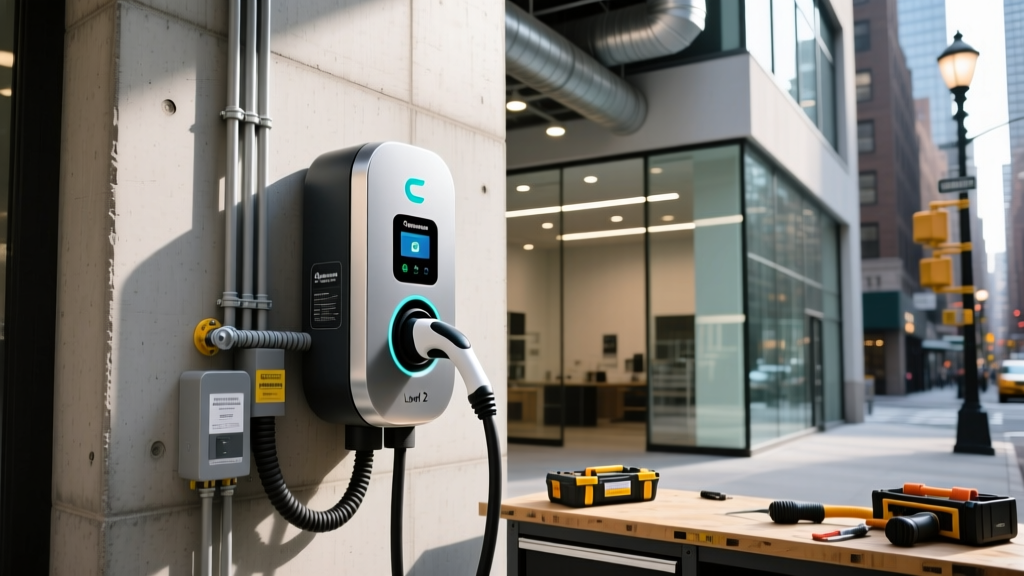
Installing a Level 2 home charger is the single most impactful upgrade for EV ownership. Here's what's involved electrically and financially.
Electrical Requirements
A Level 2 charger requires a dedicated 240V circuit, similar to what powers an electric dryer or oven. The amperage depends on your charger:
- 32A charger (7.7 kW): Requires a 40A breaker (NEC code requires circuits rated at 125% of continuous load).
- 40A charger (9.6 kW): Requires a 50A breaker.
- 48A charger (11.5 kW): Requires a 60A breaker.
The 2013 Model S has an onboard charger rated for up to 40A (single charger) or 80A (twin charger option). If your Model S has the twin charger option, you can accept up to 19.2 kW on Level 2 — but very few home installations support this. A 48A/11.5 kW home charger is the practical maximum for most homes and will still charge a 2013 Model S efficiently overnight.
Panel Upgrade Considerations
Many older homes (especially those built before 2000) have 100A or 150A electrical panels. Adding a 50-60A dedicated EV circuit may push the panel close to its capacity, particularly if you also run electric heat, an electric oven, and a dryer simultaneously.
An electrician will perform a load calculation per NEC Article 220 to determine if your panel can support the new circuit. If not, a panel upgrade to 200A typically costs $1,500–$3,000 — a significant but sometimes unavoidable expense. Homes with 200A panels generally have sufficient headroom.
Installation Cost Breakdown
| Component | Cost Range | Notes |
|---|---|---|
| Level 2 Charger (Equipment) | $350–$750 | Varies by brand, power output, smart features |
| Electrical Permit | $50–$250 | Required in most jurisdictions; varies by locality |
| Electrician Labor (Standard Install) | $500–$1,500 | Assumes panel is nearby, conduit run under 30 ft |
| Electrician Labor (Complex Install) | $1,500–$3,500 | Long conduit runs, trenching, sub-panel addition |
| Panel Upgrade (if needed) | $1,500–$3,000 | 100A → 200A upgrade; not always required |
| Total (Standard Install) | $900–$2,500 | Most common scenario for homes with adequate panel capacity |
| Total (With Panel Upgrade) | $2,400–$6,500 | Older homes needing service upgrade |
Always hire a licensed electrician. Per the National Electrical Code, EV charger circuits require a dedicated breaker, proper wire gauge (typically 6 AWG for 50A circuits), and GFCI protection for outdoor installations. Permits are required in most jurisdictions and ensure your installation passes inspection — critical for home insurance and resale.
Safety and Code Considerations
- Dedicated circuit: Your EV charger must be on its own breaker — never shared with other appliances.
- GFCI protection: Required for outdoor receptacles per NEC 2023/2026 updates. Many hardwired chargers have built-in GFCI; plug-in units via NEMA 14-50 outlets need a GFCI breaker.
- Outdoor rating: If mounting outdoors, ensure the charger carries a NEMA 4 or IP55+ rating for weather resistance.
- NEMA 14-50 vs. hardwired: A NEMA 14-50 outlet offers portability (take the charger when you move) but requires a GFCI breaker (~$80–$150 extra). Hardwired installations are slightly cheaper and avoid the GFCI breaker requirement since many chargers include internal ground-fault protection.
Charging Cost: Per Mile vs. Gasoline
One of the strongest arguments for EV ownership is fuel cost savings. Here's how charging a 2013 Model S compares to fueling a comparable gasoline sedan.
| Scenario | Rate | Cost to Add 200 Miles | Cost Per Mile |
|---|---|---|---|
| Home Charging (Off-Peak / Time-of-Use) | $0.08–$0.12/kWh | $4.70–$7.00 | $0.024–$0.035 |
| Home Charging (Standard Rate) | $0.14–$0.18/kWh | $8.20–$10.50 | $0.041–$0.053 |
| Public Level 2 (ChargePoint, etc.) | $0.20–$0.35/kWh | $11.70–$20.50 | $0.059–$0.103 |
| DC Fast Charging (Tesla Supercharger) | $0.25–$0.40/kWh | $14.60–$23.40 | $0.073–$0.117 |
| DC Fast Charging (Electrify America / EVgo) | $0.35–$0.55/kWh | $20.50–$32.20 | $0.103–$0.161 |
| Gasoline (30 MPG sedan, $3.50/gal) | $3.50/gal | $23.30 | $0.117 |
Calculations based on 2013 Model S efficiency of ~3 mi/kWh (35 kWh/100mi). Gasoline comparison assumes a mid-size sedan at 30 MPG combined.
Home charging on an off-peak rate plan delivers the most dramatic savings — roughly 70-80% less per mile than gasoline. Even DC fast charging on Tesla's Supercharger network is competitive with or cheaper than gas. However, frequent reliance on third-party DC networks (Electrify America, EVgo) can push charging costs close to gasoline parity, particularly in high-cost electricity states like California and Massachusetts.
Pro tip: If your utility offers a time-of-use (TOU) rate plan, schedule charging for off-peak hours (typically 10 PM – 6 AM). The Tesla app and most smart chargers allow scheduled charging to automate this.
Recommended Home Chargers for the 2013 Model S
Since the 2013 Model S uses the NACS connector natively, you have two paths: buy a charger with a native NACS cable, or buy a J1772 charger and use the included Tesla adapter. Native NACS chargers eliminate the adapter hassle and are increasingly available in 2026.
Tesla Wall Connector (Gen 3) — Best Overall for Tesla Owners
- Power Output: Up to 48A / 11.5 kW (on a 60A circuit)
- Connector: Native NACS — no adapter needed
- Cable Length: 24 ft
- Smart Features: Wi-Fi connected, OTA firmware updates, power sharing (link two units on one circuit), load management, access control via app
- Price: ~$475
- Why it works: Purpose-built for Teslas. The 11.5 kW output adds ~34 miles of range per hour on a 2013 Model S — enough to fully replenish overnight. Wi-Fi connectivity enables scheduling and energy tracking.
ChargePoint Home Flex — Best Universal Option
- Power Output: Up to 50A / 12 kW (on a 60A circuit); configurable down to 16A for lower-capacity panels
- Connector: J1772 (use Tesla's included adapter) or available with NACS pigtail (2025+ models)
- Cable Length: 23 ft
- Smart Features: Wi-Fi, app scheduling, energy reports, Alexa integration, flexible amperage settings
- Price: ~$550–$650
- Why it works: The adjustable amperage is a standout — if your panel is tight, you can set it to 32A or 40A without swapping hardware. Works with any EV using the appropriate adapter.
Emporia Vue Level 2 Charger — Best Budget Pick
- Power Output: Up to 48A / 11.5 kW (on a 60A circuit)
- Connector: J1772 (use Tesla adapter) or NACS (2025+ version)
- Cable Length: 24 ft
- Smart Features: Wi-Fi, app control, scheduling, integrates with Emporia Vue energy monitor for whole-home load tracking
- Price: ~$350–$400
- Why it works: Delivers 48A performance at a budget price. The energy-monitoring integration is valuable for homes with tight electrical capacity — you can see real-time panel load before your charger trips a breaker.
Public Charging with a 2013 Model S: What to Expect
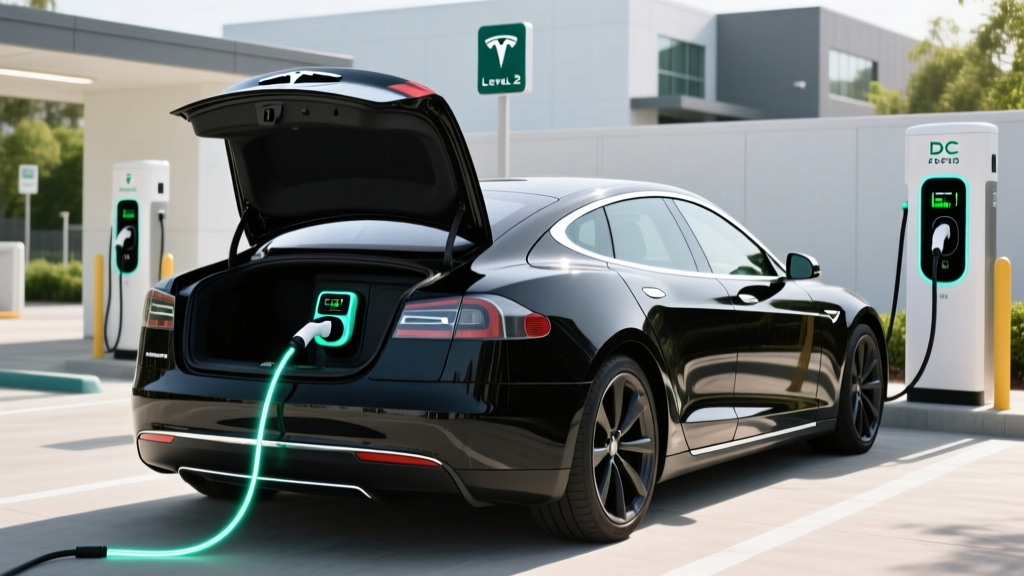
The 2013 Model S benefits from full access to the Tesla Supercharger network, which in 2026 includes over 6,000 stations and 60,000+ stalls across North America. However, there are limitations to understand:
- Supercharger V2 (150 kW stalls): The 2013 Model S will peak around 100–120 kW at these stations, tapering to ~60 kW above 50% SoC and ~30 kW above 80%. A 10–80% charge takes approximately 45–55 minutes.
- Supercharger V3/V4 (250–350 kW stalls): The 2013 Model S cannot take advantage of higher power. It will still charge at its maximum acceptance rate (~120 kW), so you won't see faster speeds at newer stalls.
- Non-Tesla DC networks (Electrify America, EVgo): Requires the CCS adapter (and firmware confirmation). Peak speeds will be similar to Supercharger V2 — around 100–120 kW depending on station output and battery temperature.
- Preconditioning: The 2013 Model S does not support automatic battery preconditioning for charging (a feature added in later hardware). In cold weather, expect significantly slower DC charging speeds until the battery warms through use. Plan for 60–75 minute 10–80% sessions in freezing conditions.
For daily driving, the 2013 Model S's range (177–239 miles depending on battery and degradation) is adequate for most commutes when paired with overnight Level 2 home charging. Road trips require more planning than with newer 350+ mile EVs, but the Supercharger network makes them entirely practical with 45-minute stops every ~180 miles.
Frequently Asked Questions
How much does it cost to install a home EV charger?
A standard Level 2 home charger installation costs between $900 and $2,500 when your electrical panel has sufficient capacity. This includes the charger unit ($350–$750), permit ($50–$250), and electrician labor ($500–$1,500). If your home needs a panel upgrade from 100A to 200A, total costs can reach $2,400–$6,500. Always get a load calculation from a licensed electrician before committing to a charger amperage.
How fast will each charging level add range?
For a 2013 Model S averaging ~3 miles per kWh: Level 1 (120V) adds about 3–5 miles per hour. Level 2 (240V, 48A) adds about 34 miles per hour. DC fast charging at peak (~120 kW) can add up to 360 miles per hour, but sustained rates taper as the battery fills — expect a 10–80% session in 45–55 minutes.
Which connector and charger is compatible with my 2013 Model S?
The 2013 Model S uses the native NACS (Tesla) connector. It works directly with Tesla Superchargers, Tesla Destination Chargers, and any Level 2 charger using the included J1772-to-Tesla adapter. For non-Tesla DC fast chargers (CCS1 stations), you need Tesla's CCS adapter (~$250) and a firmware verification from Tesla service. CHAdeMO adapters are discontinued and difficult to source.
How much does charging cost per mile vs gas?
Home charging on off-peak rates costs roughly $0.024–$0.035 per mile for a 2013 Model S — about 70–80% less than a 30 MPG gasoline sedan at $3.50/gallon ($0.117/mile). Public DC fast charging ranges from $0.073–$0.161 per mile depending on the network, which is competitive with or slightly higher than gasoline. Home charging delivers the strongest economic advantage.
What electrical upgrades might I need for a home charger?
The most common upgrade is a panel capacity increase from 100A or 150A to 200A, needed in older homes where the existing panel can't support a new 50–60A dedicated circuit alongside existing loads. Other potential upgrades include: adding a sub-panel if the main panel is full, upgrading service entrance wiring, or installing a new conduit run if the charger location is far from the panel. A licensed electrician's load calculation per NEC Article 220 will determine exactly what's needed. Per the National Electrical Code, all EV circuits must be dedicated, properly grounded, and permitted.
Can I get a tax credit for installing a home EV charger?
The federal Alternative Fuel Vehicle Refueling Property Credit (IRS Form 8911) covers 30% of home charger equipment and installation costs, up to $1,000. However, eligibility depends on your census tract meeting certain low-income or non-urban criteria. Consult a tax professional to confirm eligibility — rules are specific and subject to change.
How long will a 2013 Model S battery last?
Tesla's original battery warranty for the 2013 Model S was 8 years / unlimited miles (85 kWh) or 8 years / 125,000 miles (60 kWh). Most 2013 models are now outside warranty coverage. Real-world data from owner communities and fleet analyses (such as those by Recurrent Auto) show that Tesla NMC batteries typically retain 80–88% capacity after 10–12 years under normal use. If your battery has degraded below 70%, a replacement from Tesla or a third-party rebuilder typically costs $12,000–$20,000 depending on the pack size and source.