Understanding Tesla Model Charge Time Across Every Charging Level
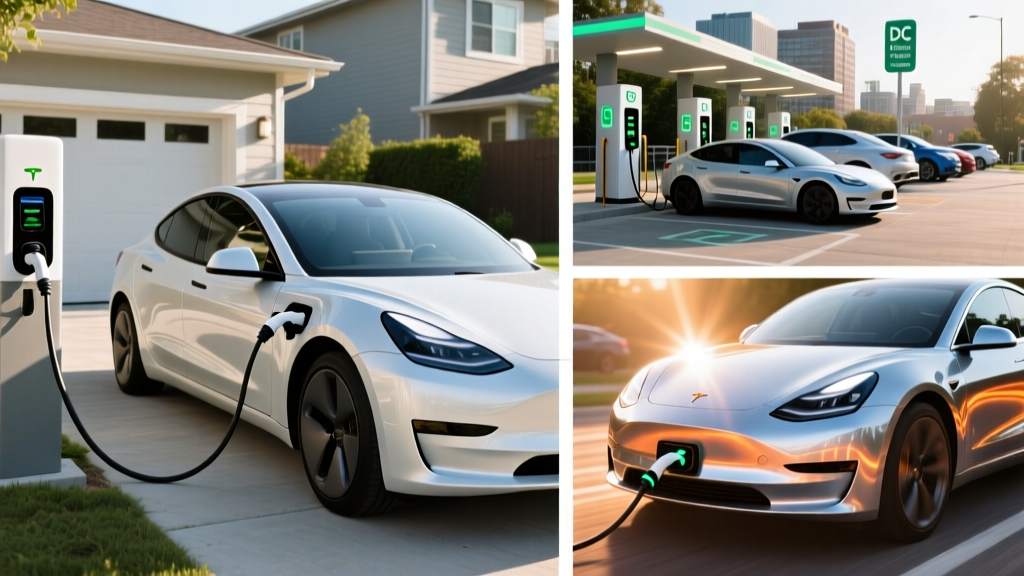
If you own a Tesla or are about to buy one, the single most practical question is how long it actually takes to charge. Marketing materials quote peak charge rates, but real-world Tesla model charge time depends on the charging level you use, your battery's state of charge, ambient temperature, and whether you've preconditioned the pack. This guide breaks down exact charge times for every current Tesla model across Level 1, Level 2, and DC fast charging, plus what you'll spend to set up charging at home.
Before we get into the numbers, one critical distinction: kW (kilowatts) measures power — the rate at which energy flows into your car. kWh (kilowatt-hours) measures energy — the total capacity of your battery. A 75 kWh battery charged at 7.5 kW takes roughly 10 hours from empty. Think of kW as the flow rate of a hose and kWh as the size of the bucket.
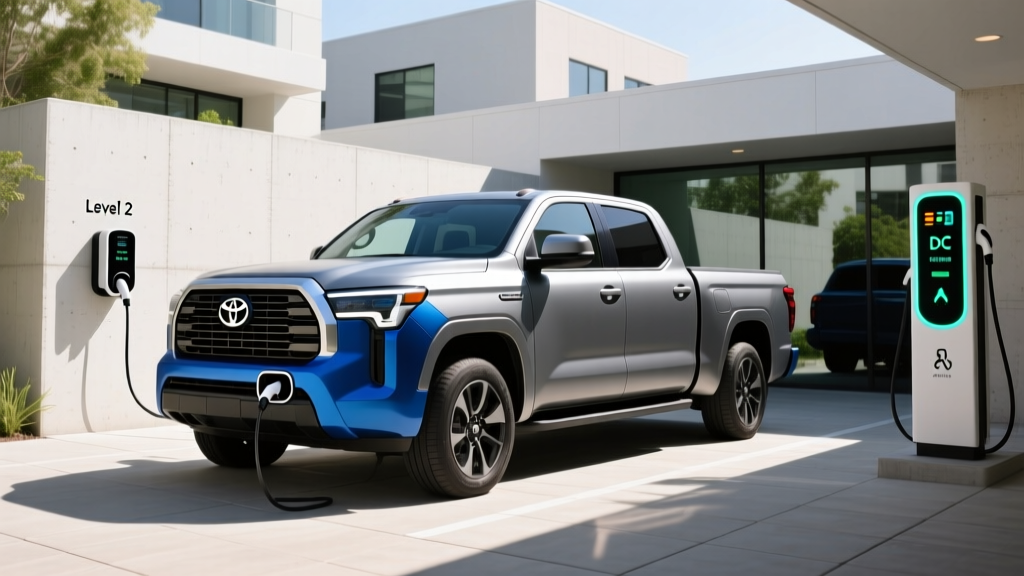
| Level | Voltage / Amperage | Max Power (kW) | Miles of Range Per Hour | Best For |
|---|---|---|---|---|
| Level 1 (120V) | 120V / 12A | ~1.4 kW | 3–5 mi/hr | Overnight trickle, emergencies |
| Level 2 (240V) | 240V / 48A | 11.5 kW | 30–44 mi/hr | Daily home charging |
| DC Fast (Supercharger V3) | DC / up to 250 kW | 250 kW (peak) | ~1,000 mi/hr (peak) | Road trips, rapid top-ups |
| DC Fast (Supercharger V4) | DC / up to 350 kW | 350 kW (peak) | ~1,200 mi/hr (peak) | Newest stations, Cybertruck |
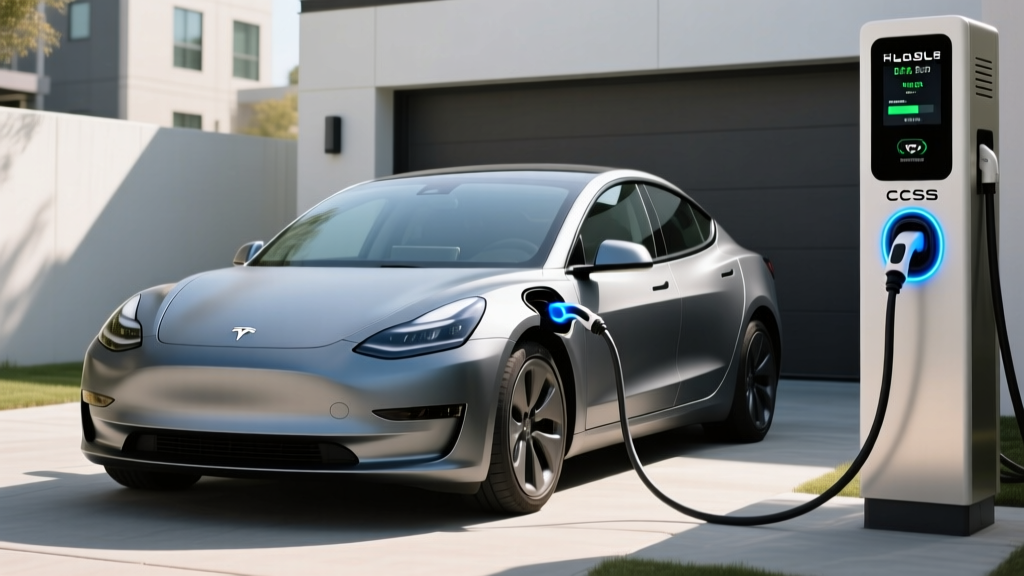
Tesla's onboard charger limits Level 2 AC charging to 11.5 kW (48A) across the Model 3, Model Y, Model S, and Model X as of the 2025–2026 model years. The Cybertruck supports up to 16.5 kW on Level 2 thanks to its larger onboard charger. This means even if you install a 60A or 80A wall connector, a Model 3 or Model Y will still max out at 11.5 kW — the extra circuit capacity simply provides headroom and future-proofing.
Exact Tesla Model Charge Time: 10–80% at Every Level
The most useful benchmark for EV charging is the 10–80% time. Charging above 80% slows dramatically as the battery management system tapers current to protect cell longevity. Most Tesla owners rarely charge past 80% on DC fast chargers during road trips because the time cost per added mile becomes inefficient.
| Model | Battery (kWh usable) | Level 1 (~1.4 kW) | Level 2 (11.5 kW) | DC Fast V3 (250 kW peak) | DC Fast V4 (350 kW peak) |
|---|---|---|---|---|---|
| Model 3 RWD | ~57.5 (LFP) | ~29 hrs | ~3.5 hrs | ~25 min | N/A (CCS/NACS limit) |
| Model 3 Long Range | ~75 (NMC) | ~38 hrs | ~4.6 hrs | ~27 min | ~22 min |
| Model Y Long Range | ~75 (NMC) | ~38 hrs | ~4.6 hrs | ~28 min | ~23 min |
| Model S Plaid | ~95 (NMC) | ~48 hrs | ~5.8 hrs | ~32 min | ~25 min |
| Model X Long Range | ~95 (NMC) | ~48 hrs | ~5.8 hrs | ~34 min | ~27 min |
| Cybertruck AWD | ~123 (NMC) | ~62 hrs | ~7.5 hrs | ~40 min | ~30 min |
Real-world caveat: These DC fast times assume a preconditioned battery at optimal temperature (roughly 70–95°F pack temp). In cold weather (below 32°F), expect 10–80% times to increase by 15–30% unless you've navigated to a Supercharger in the Tesla app, which triggers automatic battery preconditioning. The LFP battery in the Model 3 RWD can accept higher states of charge regularly — Tesla recommends charging to 100% weekly for LFP packs to maintain accurate state-of-charge calibration.
Real-World Range vs. EPA Sticker
The EPA rates the 2026 Model Y Long Range at 320 miles. In mixed real-world driving at 70 mph on the highway, expect roughly 270–290 miles. In cold weather (below 30°F) with cabin heat, that can drop to 230–250 miles. The Model 3 Long Range AWD's 341-mile EPA estimate typically delivers 290–310 miles on the highway in moderate temperatures. Always plan road-trip charging stops using the car's navigation, which factors in elevation, temperature, and driving speed.
Home Charger Installation: Electrical Requirements and Costs
Installing a Level 2 home charger is the single best upgrade a Tesla owner can make. It transforms charging from a chore into something that happens invisibly overnight. But the total cost goes well beyond the wall connector itself.
Electrical Requirements
A Tesla Wall Connector or equivalent Level 2 charger requires a 240V dedicated circuit. For a 48A continuous charge rate (which is what Teslas can accept), the National Electrical Code (NEC) requires the circuit breaker to be rated at 125% of the continuous load — meaning a 60A breaker. If your charger is hardwired (recommended for 48A+), you need 6 AWG copper wire for runs up to about 50 feet, or 4 AWG for longer runs to minimize voltage drop.
Your main electrical panel must have enough spare capacity. A typical home has a 100A or 200A main panel. A licensed electrician will perform a load calculation (NEC Article 220) to determine if your panel can handle an additional 60A circuit. Homes with 200A service and moderate existing loads (no electric furnace or tankless water heater) usually have room. Older homes with 100A service, electric heat, or significant existing loads may need a panel upgrade to 200A, which is the most expensive variable in the entire installation.
| Component | Low End | High End | Notes |
|---|---|---|---|
| Tesla Wall Connector (hardware) | $420 | $475 | Gen 3, 24ft cable, Wi-Fi enabled |
| Third-party Level 2 charger | $350 | $700 | ChargePoint, Emporia, Enel X |
| Electrician labor (standard install) | $400 | $1,200 | Short run, accessible panel, no conduit challenges |
| Electrician labor (complex install) | $1,200 | $3,000+ | Long wire run, conduit, trenching, attic/crawlspace |
| Electrical permit | $50 | $250 | Varies by municipality |
| Panel upgrade (if needed) | $1,500 | $4,000 | 100A → 200A; not always required |
| Total (no panel upgrade) | $870 | $2,200 | Typical for most modern homes |
| Total (with panel upgrade) | $2,370 | $6,200 | Older homes with 100A service |
Safety and Code Considerations
- Dedicated circuit: The NEC requires a dedicated circuit for EV charging — you cannot share it with other outlets or appliances.
- GFCI protection: NEC 2020 and later require GFCI protection for all EV charging outlets. Hardwired installations may exempt you from this requirement depending on your local jurisdiction, and hardwired avoids nuisance GFCI trips that some owners report with NEMA 14-50 receptacles.
- Outdoor rating: If installing outside, ensure the charger is NEMA 4 rated (the Tesla Wall Connector is). The electrical junction box and conduit must also be rated for wet locations.
- Wi-Fi connectivity: The Tesla Wall Connector uses Wi-Fi for firmware updates and energy monitoring. Place it within range of your home network, or consider a Wi-Fi extender for garage installations far from your router.
Connector Compatibility: NACS, CCS, and Adapter Requirements
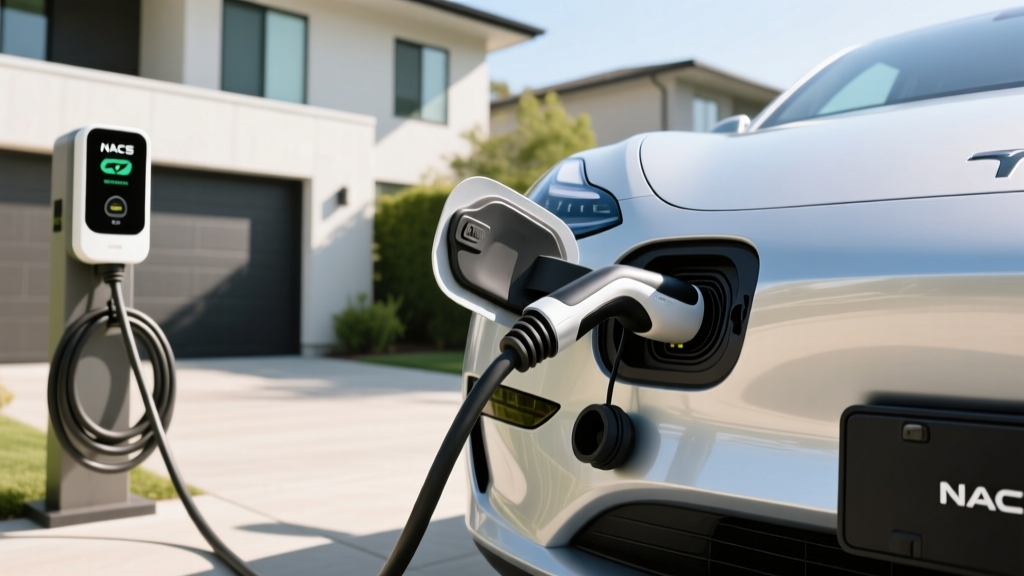
Tesla's North American Charging Standard (NACS) has become the dominant connector in the US market. As of 2025–2026, all Tesla vehicles ship with a NACS charge port, and nearly every major automaker — Ford, GM, Rivian, Hyundai, BMW, and others — has adopted NACS for their new vehicles. This means Tesla owners have the simplest connector situation of any EV buyer: native access to the Supercharger network and, with a CCS adapter, access to legacy CCS stations.
| Connector | Native on Tesla? | Adapter Needed? | Network Access |
|---|---|---|---|
| NACS (Tesla) | Yes — all models | No | Tesla Superchargers, Destination Chargers |
| CCS1 | No | Tesla CCS Adapter (~$175) | Electrify America, EVgo, ChargePoint DC |
| CHAdeMO | No | Third-party adapter (rare, ~$400+) | Limited legacy stations; not recommended |
| J1772 (Level 2 AC) | No | Tesla J1772 Adapter (included) | Public Level 2, workplace chargers |
Tesla includes a J1772-to-NACS adapter in the glovebox of every new vehicle. The CCS adapter is sold separately through the Tesla shop and is worth carrying on road trips that may route through non-Supercharger DC fast stations. CHAdeMO is effectively obsolete in the US market, with Electrify America and other networks having fully transitioned to CCS and NACS.
How Much Does Charging Cost Per Mile vs. Gas?
The economics of charging a Tesla depend heavily on where and when you charge. Home charging during off-peak hours is dramatically cheaper than gasoline, while frequent DC fast charging at public stations narrows the gap considerably.
| Scenario | Rate | Cost per Mile (Model Y LR, ~3.5 mi/kWh) | Equivalent Gas Car (28 MPG, $3.40/gal) |
|---|---|---|---|
| Home off-peak (utility rate) | $0.09/kWh | $0.026 | $0.121 |
| Home average (blended rate) | $0.16/kWh | $0.046 | $0.121 |
| Public Level 2 (ChargePoint, etc.) | $0.25/kWh | $0.071 | $0.121 |
| Tesla Supercharger V3 (avg) | $0.32/kWh | $0.091 | $0.121 |
| Electrify America DC (avg) | $0.43/kWh | $0.123 | $0.121 |
At home with off-peak utility rates, a Tesla Model Y costs roughly 4–5× less per mile than a comparable gas SUV. Even at Supercharger rates, you're saving 20–25% per mile vs. gasoline at $3.40/gallon. The economics flip only if you rely exclusively on premium-priced public DC fast chargers like Electrify America at $0.43+/kWh — at that point, a fuel-efficient hybrid like the Toyota RAV4 Hybrid (39 MPG combined per fueleconomy.gov) becomes competitive on fuel cost alone.
Many utilities now offer time-of-use (TOU) plans that make overnight charging even cheaper. Check with your local utility about EV-specific rate plans — some offer rates as low as $0.05–0.07/kWh between midnight and 6 AM.
Recommended Home Charging Equipment for Tesla Owners
While the Tesla Wall Connector is the default choice, several third-party chargers now work seamlessly with Tesla's NACS port (either natively or with the included J1772 adapter). Here's how the top options compare in 2026.
Tesla Wall Connector (Gen 3)
- Power output: Up to 11.5 kW (48A) — matches Tesla's onboard charger limit
- Connector: NACS (native Tesla)
- Cable length: 24 feet
- Smart features: Wi-Fi firmware updates, energy monitoring via Tesla app, power sharing between two units on one circuit, access control
- Price: ~$420–$475
- Verdict: Best choice for Tesla-only households. Seamless integration, cleanest aesthetic, no adapter needed.
ChargePoint Home Flex (NACS version)
- Power output: Up to 12 kW (50A) — adjustable down to match circuit
- Connector: NACS (2025+ version) or J1772 with adapter
- Cable length: 23 feet
- Smart features: Wi-Fi, ChargePoint app with scheduling, energy tracking, Alexa integration, amperage dial for flexible circuit sizing
- Price: ~$550–$650
- Verdict: Best for mixed-EV households. Amperage dial lets you install on a 40A circuit (32A charge) or 60A circuit (48A charge) without buying different hardware.
Emporia Vue Level 2 Charger
- Power output: Up to 11.5 kW (48A)
- Connector: J1772 (use Tesla's included adapter) or NACS (newer SKU)
- Cable length: 24 feet
- Smart features: Wi-Fi, Emporia app, integration with Emporia Vue home energy monitor for whole-home load tracking, solar-aware scheduling
- Price: ~$350–$400
- Verdict: Best budget smart charger. Ideal if you have or plan to get the Emporia Vue energy monitor for whole-home solar and load management.
Grizzl-E Smart (NACS)
- Power output: Up to 10 kW (40A)
- Connector: NACS or J1772
- Cable length: 24 feet
- Smart features: Wi-Fi, app scheduling, OCPP-compatible for utility demand-response programs
- Price: ~$400–$500
- Verdict: Built in Canada with extreme cold-weather durability. Slightly lower amperage (40A vs 48A) means about 30 mi/hr instead of 44 mi/hr, still sufficient for overnight charging.
For most Tesla owners, the Tesla Wall Connector is the obvious pick — it's the cheapest option with native NACS, and the power-sharing feature lets you install two units on a single 60A circuit if you add a second EV. If your household includes a non-Tesla EV with a CCS port, the ChargePoint Home Flex gives you flexibility without adapters.
Frequently Asked Questions About Tesla Charging
How much does it cost to install a home EV charger for my Tesla?
Expect $870–$2,200 for a standard installation (Tesla Wall Connector + electrician + permit) if your electrical panel has sufficient capacity. If you need a panel upgrade from 100A to 200A, total costs range from $2,370 to $6,200. Get quotes from at least two licensed electricians and confirm they include permit costs in their estimate. Some utilities offer rebates of $200–$500 for Level 2 charger installation — check the AFDC incentive database for your state.
How fast will each charging level add range to my Tesla?
Level 1 (120V standard outlet) adds roughly 3–5 miles per hour — enough for plug-in hybrids but impractical for a full-size EV battery. Level 2 (240V home charger) adds 30–44 miles per hour, fully replenishing a Model Y Long Range overnight in about 5 hours. DC fast charging at a V3 Supercharger peaks at roughly 1,000 miles per hour of range added, though the actual charge curve tapers significantly above 50% state of charge.
Which connector and charger is compatible with my Tesla?
All 2025–2026 Tesla vehicles use the NACS connector natively. This works directly with Tesla Superchargers, Tesla Wall Connectors, and Tesla Destination Chargers. For non-Tesla public Level 2 stations with J1772 connectors, use the J1772-to-NACS adapter included with your vehicle. For non-Tesla DC fast stations with CCS1 connectors, purchase Tesla's CCS adapter (~$175) from the Tesla shop.
How much does charging a Tesla cost per mile vs. gas?
Home charging at average residential rates ($0.16/kWh) costs about $0.046 per mile in a Model Y Long Range — roughly 2.5× cheaper than a 28 MPG gas SUV at $3.40/gallon ($0.121/mile). Off-peak home rates ($0.09/kWh) drop this to $0.026/mile, nearly 5× cheaper. Supercharger rates ($0.32/kWh average) still save about 25% vs. gas. See the cost-per-mile table above for a full breakdown.
What electrical upgrades might I need before installing a Level 2 charger?
The most common upgrade is a panel capacity increase. If your home has a 100A main panel with existing heavy loads (electric range, dryer, HVAC), a load calculation may show insufficient spare capacity for a 60A EV circuit. Upgrading to a 200A panel costs $1,500–$4,000 depending on your utility's requirements and local labor rates. An alternative is a smart panel or circuit-sharing device like the Sense energy monitor paired with a load-management charger, which can throttle EV charging when other appliances are drawing heavily — potentially avoiding a panel upgrade altogether. Always have a licensed electrician perform the load calculation and pull the required permits.
Should I charge my Tesla to 100% every night?
It depends on your battery chemistry. The Model 3 RWD uses an LFP (lithium iron phosphate) battery, and Tesla recommends charging to 100% at least once per week for accurate state-of-charge readings. Models with NMC batteries (Model 3 Long Range, Model Y Long Range, Model S, Model X, Cybertruck) should be set to 80% for daily use and charged to 100% only before long trips. This preserves long-term battery health. The Tesla battery care guide provides model-specific recommendations.