The Reality of Tesla Model 3 Wireless Charging in 2026
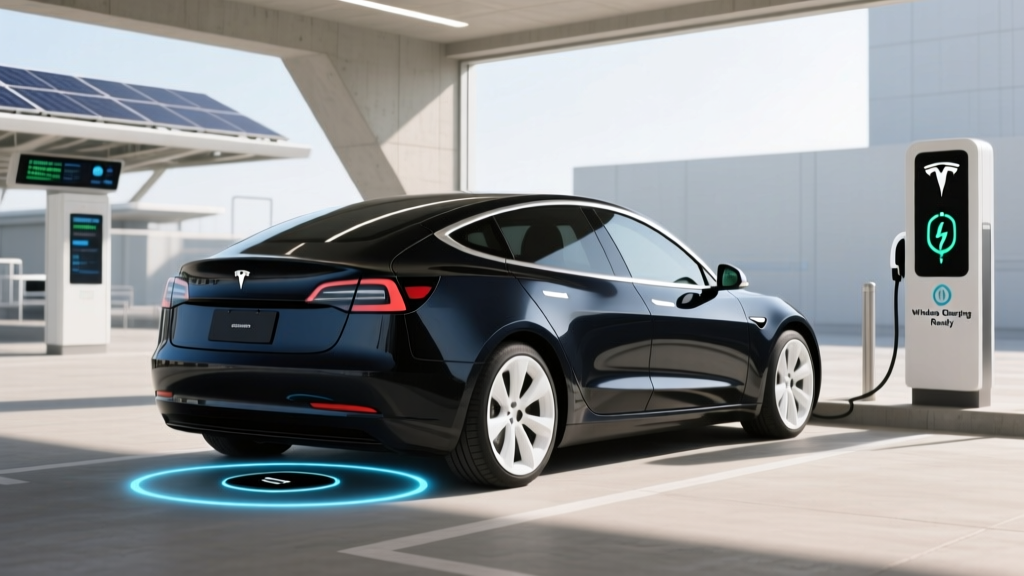
Search for "Tesla Model 3 wireless charging" and you'll find concept videos and aftermarket pads promising cable-free convenience. Here's the truth: as of the 2026 model year, Tesla does not offer factory wireless charging for the Model 3's high-voltage traction battery. The Tesla Model 3 charges exclusively via its NACS (North American Charging Standard) port, and no OEM wireless EV charging system is currently sold for passenger cars in the U.S. market.
Wireless power transfer for EVs exists in pilot programs—companies like WiTricity and Plugless Power have demonstrated 6–11 kW inductive pads—but none are commercially available for the Model 3. If you're shopping for a charging solution today, your best options remain wired Level 2 at home and NACS DC fast charging on the road. This guide walks through exactly what that means for cost, speed, and installation.
Charging Levels Explained: kW, Miles Per Hour, and 10–80% Times
Before picking equipment, understand the three charging tiers. Power is measured in kilowatts (kW)—the rate of energy flow—while battery capacity is measured in kilowatt-hours (kWh), the total energy stored. A 60 kWh battery charged at 10 kW takes roughly 6 hours from empty; at 250 kW, it takes minutes to 80%.
| Level | Power (kW) | Miles of Range Added Per Hour | 10–80% Time | Typical Use |
|---|---|---|---|---|
| Level 1 (120V) | 1.3–1.9 kW | 3–5 mi/hr | ~45+ hours | Emergency / overnight trickle |
| Level 2 (240V) | 7.2–11.5 kW | 25–44 mi/hr | 7–10 hours | Home daily charging |
| DC Fast (NACS) | Up to 250 kW peak | ~200 mi in 15 min (peak) | ~25–30 min | Road trips, Superchargers |
The 2026 Model 3 Long Range accepts up to 11.5 kW on Level 2 AC (48A onboard charger) and peaks at 250 kW on a V3/V4 Supercharger. Real-world DC charging tapers above 50% state of charge; expect the 10–80% session to average around 100–130 kW sustained, not the full 250 kW peak.
Home Level 2 Installation: Electrical Requirements and True Costs
Most Model 3 owners install a 240V Level 2 wall connector. Here's what that involves electrically and financially.
Electrical Requirements
- Circuit: Dedicated 60A breaker (for a 48A continuous charger) or 50A breaker (for 40A continuous).
- Wire: 6 AWG copper (THHN in conduit) for 60A; 8 AWG for 50A.
- Panel capacity: Your main service panel must have spare amperage. A 200A panel with existing loads near 160A may require a panel upgrade to 400A or a smart load-management device.
- Permit: Most jurisdictions require an electrical permit ($50–$250) and a post-install inspection.
- GFCI: NEC 2023/2026 requires GFCI protection for EV receptacles; hardwired units may be exempt in some areas—your electrician will confirm local code.
Installation Cost Breakdown
| Item | Low-End | High-End | Notes |
|---|---|---|---|
| Level 2 charger hardware | $400 | $750 | Tesla Wall Connector, ChargePoint, Emporia |
| Electrician labor (standard run) | $600 | $1,500 | 20–40 ft from panel, drywall, no trenching |
| Permit & inspection | $50 | $250 | Varies by municipality |
| Panel upgrade (if needed) | $1,500 | $4,500 | 200A → 400A service upgrade |
| Total (no panel upgrade) | $1,050 | $2,500 | Most homes with 200A service |
| Total (with panel upgrade) | $2,550 | $7,000 | Older homes or high-load panels |
The IRS §30C credit covers up to 30% of home charging equipment and installation costs (capped at $1,000), subject to income and census-tract eligibility. Confirm with a tax professional before claiming.
Connector Compatibility: NACS, CCS, and Adapters
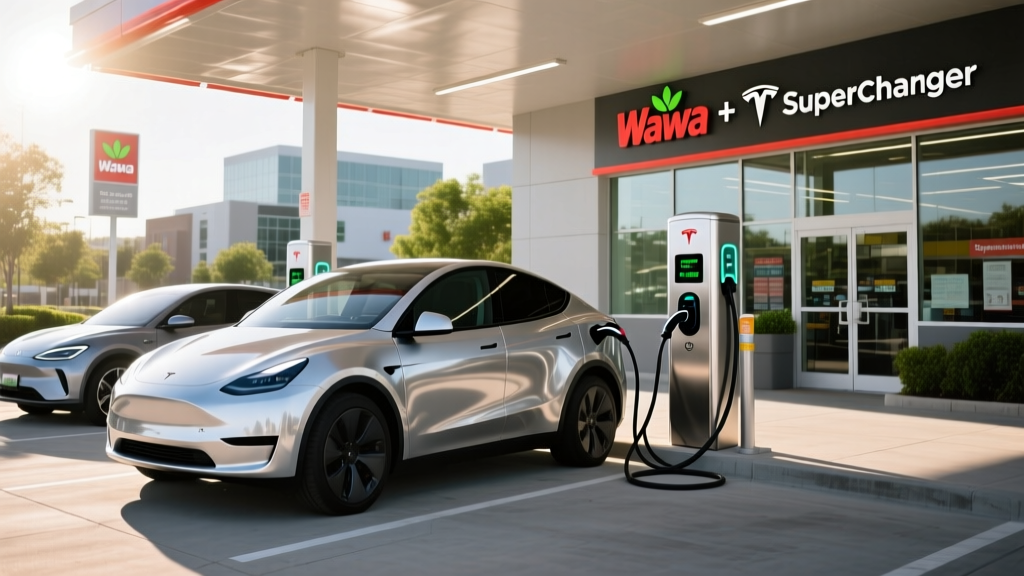
The 2026 Tesla Model 3 uses the NACS connector natively—no adapter needed at Tesla Superchargers or any third-party station that has deployed NACS cables (increasingly common as Electrify America, EVgo, and others add NACS stalls through 2025–2026).
| Connector | Standard On | Tesla Model 3 Compatibility |
|---|---|---|
| NACS (J3400) | Tesla, Ford, GM, Rivian, Hyundai (2025+) | Native — no adapter |
| CCS1 | Legacy VW, BMW, some 2024 models | Adapter needed (Tesla sells CCS adapter, ~$175) |
| CHAdeMO | Nissan Leaf (discontinued) | No practical adapter; network shrinking |
If you own a non-Tesla EV with CCS and want to use Superchargers, Tesla's Magic Dock adapter (built into select V4 stalls) enables access, or you can use a third-party NACS-to-CCS adapter rated for DC fast charging.
Cost to Charge: Home vs. Public vs. Gas
Charging economics depend heavily on your electricity rate and whether you can charge at home overnight.
| Scenario | Rate ($/kWh) | Cost for 10–80% (~57 kWh) | Cost Per Mile |
|---|---|---|---|
| Home off-peak (utility TOU) | $0.09 | $5.13 | $0.022 |
| Home standard rate | $0.16 | $9.12 | $0.039 |
| Public Level 2 (ChargePoint, etc.) | $0.30 | $17.10 | $0.073 |
| Tesla Supercharger (avg) | $0.35 | $19.95 | $0.085 |
| Gas equivalent (28 MPG, $3.40/gal) | — | — | $0.121 |
At home off-peak rates, a Model 3 costs roughly $0.02–$0.04 per mile—about one-quarter the fuel cost of a 28 MPG gas sedan. Public DC fast charging narrows the gap to $0.08–$0.09/mi, still cheaper than gas but not dramatically so. The real savings come from consistent home charging.
Recommended Home Chargers for the Model 3
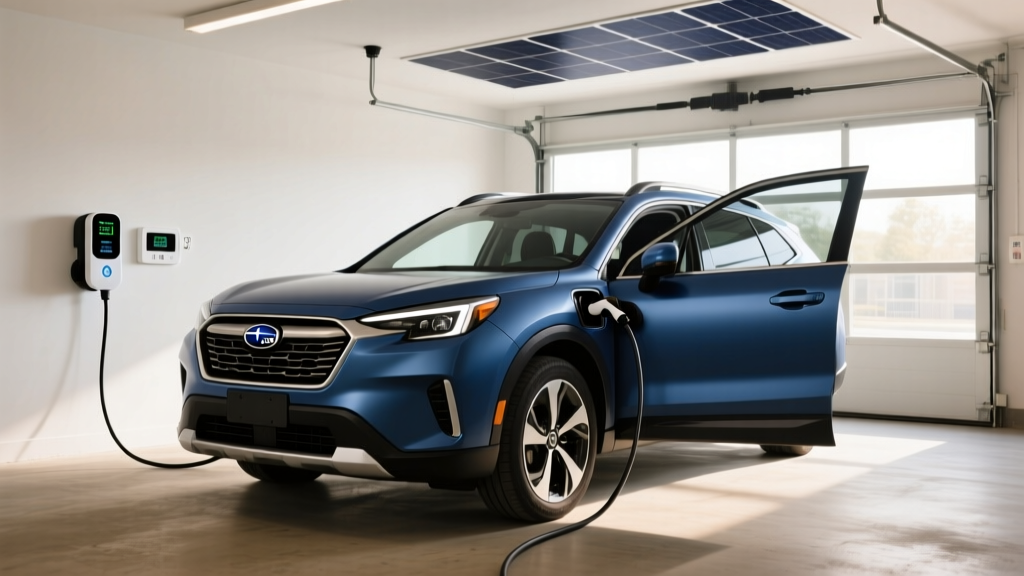
Since wireless charging isn't an option, here are three proven Level 2 units that pair well with the Model 3's 11.5 kW onboard charger.
Tesla Wall Connector (Gen 3)
- Power output: Up to 11.5 kW (48A) on a 60A circuit
- Connector: NACS native
- Cable length: 24 ft
- Smart features: Wi-Fi OTA updates, power-sharing with second unit, access control
- Price: ~$475
- Best for: Tesla-only households wanting seamless integration
Emporia Vue Level 2 Charger
- Power output: Up to 11.5 kW (48A)
- Connector: J1772 (NACS adapter included) or NACS version available
- Cable length: 24 ft
- Smart features: Energy monitoring, solar integration, scheduling via app
- Price: ~$399
- Best for: Budget-conscious buyers with solar panels or multi-EV homes
ChargePoint Home Flex
- Power output: Up to 12 kW (50A, configurable down to 16A)
- Connector: J1772 (NACS adapter sold separately) or NACS pigtail
- Cable length: 23 ft
- Smart features: Alexa integration, detailed energy reports, flexible amperage
- Price: ~$699
- Best for: Multi-brand EV households needing adjustable circuit draw
Safety, Code, and Outdoor Considerations
Level 2 chargers draw continuous high current for hours—proper installation is non-negotiable.
- Dedicated circuit: Never share the charger circuit with other appliances. A 60A breaker serving only the EVSE prevents overheating and nuisance trips.
- Hardwired vs. plug: Hardwired units avoid the NEC GFCI requirement for receptacles and allow higher amperage. A NEMA 14-50 receptacle is limited to 50A (40A continuous) and may require GFCI breakers ($100–$150 extra).
- Outdoor rating: All three chargers above carry NEMA 4 (weatherproof) ratings for outdoor mounting. Ensure your electrician uses weatherproof conduit fittings and a drip loop on the cable.
- Load management: If your panel is near capacity, devices like the Emporia Smart Load Manager or Tesla's built-in power-sharing can throttle the charger dynamically to avoid tripping the main breaker—cheaper than a full panel upgrade.
Wireless Charging's Future: What to Watch
Inductive EV charging is technically viable. WiTricity has demonstrated 11 kW pads with 90–93% efficiency (close to wired Level 2), and the SAE J2954 standard defines alignment and power protocols. However, barriers remain:
- No OEM integration: Tesla, GM, Hyundai, and others have not equipped any 2026 production vehicle with a wireless receiver coil in the underbody.
- Cost: Aftermarket pads, when available, are expected to cost $3,000–$5,000 installed—far above a $500 wired wall connector.
- Efficiency penalty: Even at 92%, wireless loses ~7% as heat vs. <2% for wired Level 2. Over a year of daily charging, that's roughly 200 wasted kWh.
- Ground clearance: Inductive coupling requires 4–7 inches of gap. Lowered vehicles or those with aerodynamic underbody panels may face alignment challenges.
For now, "Tesla Model 3 wireless charging" remains a concept, not a product. Wired Level 2 at home delivers faster, cheaper, and more reliable charging with mature equipment.
Frequently Asked Questions
How much does it cost to install a home EV charger?
A standard Level 2 installation (60A circuit, 20–40 ft wire run, no panel upgrade) costs $1,050–$2,500 including hardware, electrician labor, and permit. If your home needs a panel upgrade from 200A to 400A, add $1,500–$4,500. The federal §30C credit may offset up to $1,000 of this cost.
How fast will each charging level add range?
Level 1 (120V) adds 3–5 miles per hour—barely enough for daily driving. Level 2 (240V, 48A) adds 35–44 miles per hour, fully replenishing a Model 3 overnight. DC fast charging at a V3 Supercharger adds up to 200 miles in 15 minutes at peak rate, tapering above 50% SoC.
Which connector is compatible with my Tesla Model 3?
The 2026 Model 3 uses NACS natively. You can charge at any Tesla Supercharger or third-party station with a NACS cable. For legacy CCS stations, Tesla sells a CCS-to-NACS adapter (~$175). CHAdeMO is not practical for Tesla vehicles.
How much does charging cost per mile vs. gas?
Home off-peak charging costs roughly $0.02–$0.04 per mile. Public DC fast charging runs $0.08–$0.09 per mile. A comparable 28 MPG gas car at $3.40/gallon costs about $0.12 per mile. Home charging saves $800–$1,200 annually for a 12,000-mile driver.
What electrical upgrades might I need?
If your service panel is 100A or fully loaded at 200A, you may need a panel upgrade to 400A ($1,500–$4,500). Alternatively, a smart load-management device can dynamically share capacity between the EV charger and other circuits, avoiding a full upgrade. A licensed electrician can perform a load calculation to determine your exact needs.
Is wireless EV charging available for any car in 2026?
No production passenger vehicle sold in the U.S. in 2026 offers factory wireless charging. Pilot programs exist (WiTricity with select fleet vehicles, Plugless Power demos), but no consumer product is commercially available. Wired Level 2 remains the standard for home charging.