Charging the Tesla Model 3 Standard Range Rear Wheel Drive: What You Need to Know
The Tesla Model 3 Standard Range Rear Wheel Drive remains one of the most accessible electric vehicles on the market, with a starting MSRP around $38,990 for the 2025 model year and an EPA-estimated range of 272 miles. But owning an EV is only as convenient as your charging setup. Whether you're plugging into a standard 120V outlet, installing a Level 2 home charger, or relying on Tesla's Supercharger network, understanding the exact speeds, costs, and electrical requirements will determine whether your Model 3 experience is seamless or frustrating.
This guide breaks down every charging scenario for the Model 3 Standard Range RWD — from the 57.5 kWh (usable) LFP battery pack to the peak 170 kW DC fast-charge capability — with real numbers and real-world expectations.
Charging Levels Explained: Speeds in kW and Miles Per Hour
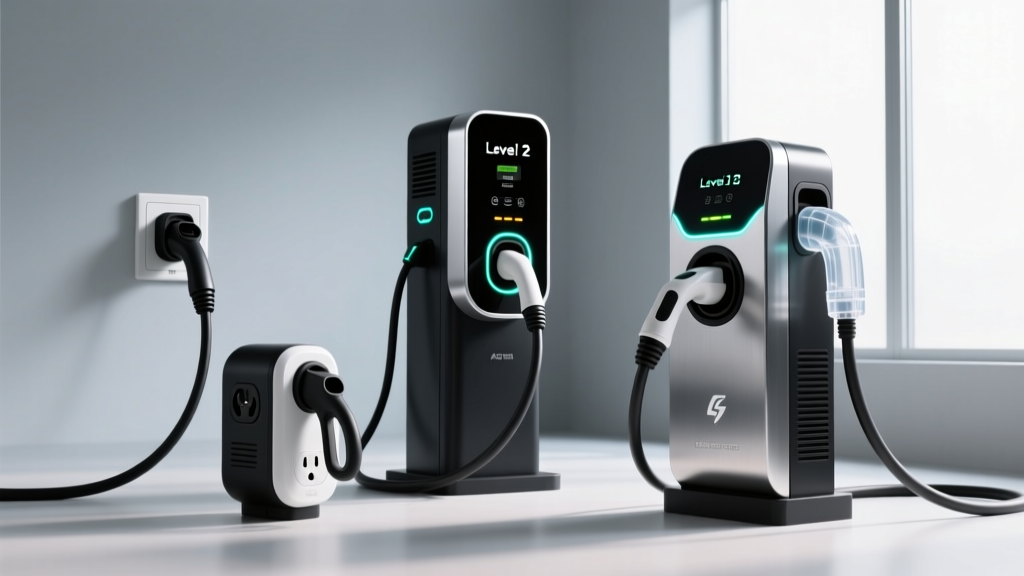
Before choosing equipment, you need to understand the three charging tiers. Power is measured in kilowatts (kW) — the rate of energy flow — while battery capacity is measured in kilowatt-hours (kWh), the total energy stored. Think of kW as the width of a hose and kWh as the size of the bucket.
| Level | Voltage / Amperage | Power (kW) | Miles of Range Per Hour | 0–100% Time (57.5 kWh) |
|---|---|---|---|---|
| Level 1 (120V) | 120V / 12A | ~1.4 kW | 3–5 mi/hr | ~40+ hours |
| Level 2 (240V) | 240V / 32–48A | 7.7–11.5 kW | 25–44 mi/hr | 5–8 hours |
| DC Fast Charging | 400V+ / variable | Peak 170 kW | Up to ~650 mi/hr (peak) | 10–80% in ~25 min |
Key takeaway for Model 3 Standard Range RWD owners: The onboard charger accepts up to 11.5 kW on Level 2 (48A). For DC fast charging, Tesla rates this trim at a peak of 170 kW — though that peak is only sustained briefly between roughly 10–30% State of Charge. Above 50%, the charge curve tapers significantly, dropping below 80 kW by 70% SoC and below 40 kW past 85%. This is normal for LFP chemistry and protects the battery.
Home Charger Installation: Electrical Requirements and Costs
Installing a Level 2 home charger is the single most impactful upgrade for EV ownership. For the Model 3 Standard Range RWD, a 48-amp charger on a 60-amp dedicated circuit will deliver the full 11.5 kW the car can accept, adding roughly 44 miles of range per hour of charging.
Electrical Requirements
- Circuit: 60-amp dedicated breaker (for a 48A continuous-load charger, NEC requires 125% overhead)
- Voltage: 240V split-phase (standard US residential)
- Wire gauge: 6 AWG copper (THHN in conduit) or 4 AWG aluminum for runs over 50 feet
- Outlet option: NEMA 14-50 receptacle (allows charger portability) or hardwired connection (required for some 48A+ units and often preferred by inspectors)
- Panel capacity: Your main panel must have physical space for a double-pole 60A breaker AND sufficient amperage headroom. A 200A panel is generally adequate; a 100A panel may require a upgrade or a load-management device.
Installation Cost Breakdown
Home charger installation costs vary dramatically based on your panel location relative to the charging spot, panel age, and local permitting fees. Here's a realistic breakdown based on national averages and typical 2025–2026 electrician rates:
| Component | Simple Install (panel near garage) | Complex Install (long run or panel upgrade) |
|---|---|---|
| Level 2 Charger (equipment) | $400–$700 | $400–$700 |
| Electrician labor (2–4 hrs simple / 6–12 hrs complex) | $300–$600 | $900–$2,000 |
| Materials (conduit, wire, breaker, outlet) | $100–$250 | $300–$800 |
| Permit & inspection | $50–$150 | $50–$200 |
| Panel upgrade (100A → 200A, if needed) | N/A | $1,500–$3,500 |
| TOTAL | $850–$1,700 | $3,150–$7,200 |
Connector Compatibility: NACS, CCS, and the Adapter Question
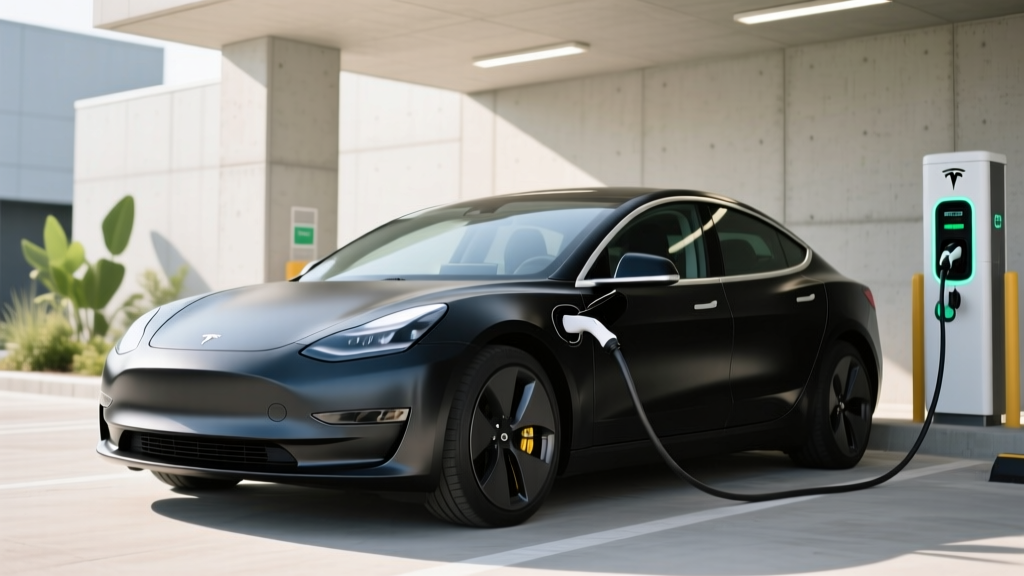
The Tesla Model 3 Standard Range RWD comes equipped with a native NACS (North American Charging Standard) port — Tesla's proprietary connector, now standardized as SAE J3400. This means you can plug directly into any Tesla Supercharger or Destination Charger without an adapter.
However, the broader public charging landscape in 2025–2026 still includes CCS1 and CHAdeMO connectors at many non-Tesla stations. Here's what you need:
| Connector Type | Native on Model 3? | Adapter Needed? | Where You'll Find It |
|---|---|---|---|
| NACS (Tesla) | Yes — native port | None | Tesla Superchargers, Destination Chargers, growing number of Electrify America & EVgo stations |
| CCS1 | No | Tesla CCS Adapter (~$250, sold by Tesla) | Electrify America, EVgo, ChargePoint, most non-Tesla DC stations |
| CHAdeMO | No | Third-party adapter ($300–$450) | Legacy stations, increasingly rare — being phased out |
| J1772 (Level 2) | No | Tesla J1772 Adapter (included with vehicle) | Public Level 2 stations, workplaces, hotels |
Practical recommendation: The Tesla CCS adapter is worth purchasing if you frequently travel outside Supercharger coverage or live in an area where CCS stations outnumber NACS-equipped ones. By late 2026, most major networks will have added NACS cables, but the transition is still incomplete in rural areas.
Cost to Charge: Home vs. Public vs. Gas Comparison
One of the strongest arguments for the Model 3 Standard Range RWD is the per-mile fuel cost. Here's how charging costs break down across scenarios, compared against a gas-powered equivalent (we'll use the Toyota Camry at 32 MPG combined as a baseline, with gas at $3.40/gallon national average):
| Scenario | Rate ($/kWh) | Cost for Full 57.5 kWh Charge | Cost Per Mile (272 mi) |
|---|---|---|---|
| Home Off-Peak (time-of-use rate) | $0.08–$0.12 | $4.60–$6.90 | $0.017–$0.025 |
| Home Standard Rate | $0.14–$0.18 | $8.05–$10.35 | $0.030–$0.038 |
| Tesla Supercharger (national avg) | $0.28–$0.36 | $16.10–$20.70 | $0.059–$0.076 |
| Non-Tesla DC Fast (EA, EVgo) | $0.35–$0.55 | $20.13–$31.63 | $0.074–$0.116 |
| Gas Equivalent (Camry 32 MPG, $3.40/gal) | — | ~$29.75 (8.5 gal) | $0.106 |
The bottom line: Charging at home on off-peak rates costs roughly one-quarter to one-fifth of what gasoline costs per mile. Even at Tesla Supercharger rates, you're saving 25–40% versus gas. The Model 3 Standard Range RWD achieves an EPA-rated 132 MPGe combined (source: fueleconomy.gov), translating to roughly 25 kWh per 100 miles — one of the most efficient EVs in its class.
DC Fast Charging in Practice: Real Charge Times
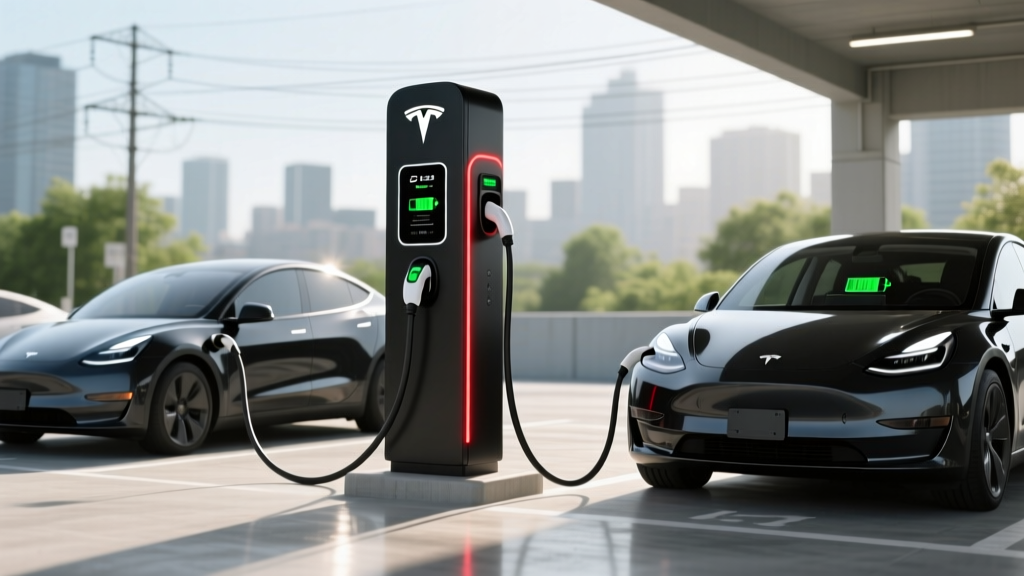
Tesla rates the Model 3 Standard Range RWD at a peak 170 kW on DC fast charging. But peak rate is not sustained rate. Here's what a typical Supercharger session looks like based on real-world charge-curve data:
- 10–30% SoC: Sustains near 170 kW — adds roughly 120 miles in 8 minutes
- 30–50% SoC: Tapers to ~130–140 kW — adds roughly 90 miles in 8 minutes
- 50–70% SoC: Drops to ~80–100 kW — adds roughly 70 miles in 10 minutes
- 70–80% SoC: Falls to ~50–65 kW — adds roughly 35 miles in 8 minutes
- 80–100% SoC: Below 30 kW, tapering further — ~40+ minutes (avoid unless necessary)
Total 10–80% charge time: approximately 25–28 minutes at a V3 or V4 Supercharger (250 kW+ capable stations). At older V2 Superchargers limited to 150 kW, expect 30–35 minutes.
Recommended Home Charging Equipment
Here are three proven Level 2 chargers well-suited to the Model 3 Standard Range RWD, each offering different trade-offs in price, features, and power output:
Tesla Wall Connector (Gen 4)
- Power output: Up to 11.5 kW (48A) — matches Model 3's onboard charger maximum
- Connector: Native NACS — no adapter needed
- Cable length: 24 feet
- Smart features: Wi-Fi enabled, OTA updates, power sharing between two units on one circuit, load management
- Price: ~$475
- Best for: Tesla-only households wanting the cleanest integration
ChargePoint Home Flex
- Power output: Up to 12 kW (50A), configurable down to 16A for smaller circuits
- Connector: NACS (2025+ models) or J1772 (use Tesla adapter)
- Cable length: 23 feet
- Smart features: App scheduling, energy tracking, Alexa integration, flexible amperage settings
- Price: ~$599
- Best for: Multi-EV households or renters who may move (configurable amperage adapts to different panels)
Grizzl-E Smart
- Power output: Up to 10 kW (40A) — slightly below Model 3's max, but works on a 50A circuit (cheaper install)
- Connector: J1772 (use included Tesla adapter) or NACS version available
- Cable length: 24 feet
- Smart features: OCPP-compatible, works with multiple apps, adjustable amperage (16/24/32/40A)
- Price: ~$449
- Best for: Budget-conscious installs on 50A circuits; durable outdoor-rated enclosure
Safety, Code, and Installation Best Practices
EV charging involves sustained high-current draw — more like running a welder than plugging in a lamp. Here are the critical safety and code requirements:
- Dedicated circuit: Your EV charger must be on its own dedicated breaker — no sharing with other appliances. NEC 2023 Article 625 requires this for all EVSE installations.
- GFCI protection: NEC 2020 and later requires GFCI protection for all receptacles used for EV charging (including NEMA 14-50). Hardwired chargers are exempt from this requirement in most jurisdictions, which is one reason many electricians prefer hardwiring.
- Outdoor rating: If installing outdoors, ensure the charger carries a NEMA 4 or NEMA 4X rating (weatherproof). All three chargers recommended above meet this standard.
- Permitting: Most municipalities require an electrical permit for EV charger installations. The permit fee typically runs $50–$150, and an inspector will verify the work meets code. Skipping the permit risks insurance claim denial if an electrical fire occurs.
- Load management: If your panel is near capacity but you don't want to pay for an upgrade, consider an EVSE with built-in load management (like the Tesla Wall Connector). These devices monitor total household draw and reduce charging amperage when other large loads activate.
Frequently Asked Questions
How much does it cost to install a home EV charger for the Tesla Model 3 Standard Range RWD?
For a straightforward installation with a 200A panel near the garage, expect $850–$1,700 including the charger, electrician labor, materials, and permit. If your panel needs upgrading from 100A to 200A, or the wire run exceeds 50 feet through finished walls, total costs can reach $3,150–$7,200. Always get at least two quotes from licensed electricians.
How fast will each charging level add range to my Model 3?
Level 1 (120V) adds roughly 3–5 miles per hour — fine for overnight top-ups if your daily drive is under 40 miles. Level 2 (240V, 48A) adds approximately 44 miles per hour, fully recharging the 57.5 kWh battery in 5–6 hours. DC fast charging at a Supercharger adds up to 170 miles in 15 minutes at peak rate, though a realistic 10–80% session takes 25–28 minutes.
Which connector does the Tesla Model 3 Standard Range RWD use?
The Model 3 uses a native NACS (Tesla) connector for both Level 2 and DC fast charging. A J1772 adapter is included with the car for use at non-Tesla Level 2 public stations. For non-Tesla DC fast chargers still using CCS1 connectors, you'll need Tesla's CCS adapter, sold separately for approximately $250.
How much does charging cost per mile compared to gas?
Charging at home on off-peak rates ($0.08–$0.12/kWh), the Model 3 Standard Range RWD costs roughly $0.02–$0.03 per mile. A comparable gas car at 32 MPG with $3.40/gallon fuel costs about $0.11 per mile. Even at Tesla Supercharger rates ($0.28–$0.36/kWh), you're paying $0.06–$0.08 per mile — still 25–45% less than gasoline.
What electrical upgrades might my home need for a Level 2 charger?
The most common upgrade is a panel replacement from 100A to 200A service, required when your existing panel lacks the amperage headroom for a 60A dedicated EV circuit. Older homes may also need new grounding, a meter socket upgrade, or utility service line replacement. A licensed electrician will perform a NEC Article 220 load calculation to determine exactly what's needed. Budget $1,500–$3,500 for a panel upgrade if required.
Can I charge the Model 3 Standard Range RWD to 100% every day?
Yes. This trim uses an LFP (lithium iron phosphate) battery, which Tesla recommends charging to 100% at least once per week for accurate state-of-charge calibration. Unlike NMC batteries, LFP chemistry does not suffer accelerated degradation from regular full charges. Set your daily charge limit to 100% without concern — this is a genuine advantage of the Standard Range model over Long Range trims.
Does the Model 3 Standard Range RWD qualify for the federal EV tax credit?
As of the 2025 tax year, the Model 3 Standard Range RWD assembled in Fremont, California may qualify for up to $7,500 under IRS §30D Clean Vehicle Credit, subject to buyer income limits ($150K single / $300K joint AGI), MSRP caps ($55,000 for sedans), and battery critical-mineral and component sourcing requirements that change annually. The credit can now be transferred to the dealer at point of sale, reducing your purchase price directly. Verify current-year eligibility on irs.gov or with a tax professional before relying on the credit in your budget.
Sources: EPA fuel economy data from fueleconomy.gov, IRS §30D credit rules from irs.gov, Tesla specifications from Tesla.com. All pricing and rates reflect 2025–2026 estimates and are subject to change. Consult a licensed electrician for installation specifics and a tax professional for credit eligibility.