Quick Verdict: Charging the Tesla Model 3 Standard Range Plus
The Tesla Model 3 Standard Range Plus (rebadged as the Model 3 RWD in recent model years) remains one of the most efficient electric vehicles on the road, with EPA-rated range around 272 miles and a usable battery capacity of approximately 57.5 kWh (LFP chemistry in 2022+ models). Its NACS connector gives it native access to Tesla's Supercharger network — still the most reliable DC fast-charging ecosystem in North America — while a simple adapter opens up CCS1 public chargers. At home on a 240V Level 2 circuit, you can replenish the battery from 10% to 80% in roughly 5-6 hours, easily covering daily driving needs overnight.
This guide walks through every charging scenario you'll encounter as a Model 3 Standard Range Plus owner, from the electrical panel in your garage to a 250 kW Supercharger on a road trip, with exact numbers for speeds, costs, and equipment.
Understanding Charging Levels: How Fast Does Each Add Range?
Before plugging in, it helps to distinguish between kW (kilowatts), which measures power — the rate of energy delivery — and kWh (kilowatt-hours), which measures energy — the total capacity of your battery. Think of kW as the flow rate of a hose and kWh as the size of the bucket. The Model 3 Standard Range Plus has a ~57.5 kWh bucket; how fast you fill it depends on the kW flow rate.
| Level | Voltage / Phase | Max Power (kW) | Miles of Range Added Per Hour | Typical Use Case |
|---|---|---|---|---|
| Level 1 | 120V AC / Single | 1.0–1.4 kW | 3–5 mi/hr | Emergency top-up, overnight trickle |
| Level 2 | 240V AC / Single | 7.2–11.5 kW | 25–44 mi/hr | Home daily charging, workplace |
| DC Fast (Supercharger V3) | 400V+ DC | Peak ~170 kW | ~170 mi in 15 min (peak) | Road trips, rapid top-up |
| DC Fast (Supercharger V4) | 400V+ DC | Peak ~250 kW | ~200 mi in 15 min (peak) | Newer Supercharger stations |
Real-world caveat: Peak DC fast-charging rates only hold between roughly 10-40% State of Charge (SoC). Above 60%, the charge curve tapers significantly — from 170 kW down to under 40 kW past 80%. Tesla's battery management system enforces this taper to protect the LFP cells. Plan road-trip stops to charge from 10-80% rather than waiting for a full 100%.
Home Charger Installation: Electrical Requirements and Real Costs
Installing a Level 2 home charger is the single most impactful upgrade for EV ownership. For the Model 3 Standard Range Plus, the onboard charger accepts up to 11.5 kW (48A on a 60A circuit) on newer models, or 7.7 kW (32A on a 40A circuit) on older Standard Range Plus variants. Here's what the installation actually requires.
Electrical Panel and Circuit Requirements
- Dedicated 240V circuit: A NEMA 14-50 outlet (50A breaker) or hardwired connection on a 60A breaker for full 48A charging.
- Panel capacity: Most modern 200A panels can accommodate a 50-60A EV circuit. Older homes with 100A service may need a panel upgrade ($1,500–$3,500) or a smart load-management device like the Emporia VUE to avoid overloading.
- Wire gauge: 6 AWG copper for a 50A circuit; 4 AWG for a 60A circuit. Longer runs (over 50 feet from panel to garage) may require thicker wire to prevent voltage drop.
- Permit: Most jurisdictions require an electrical permit ($50–$200) and a post-installation inspection. Skip this and you risk voiding homeowner's insurance coverage for electrical fires.
Installation Cost Breakdown
| Item | Low End | High End | Notes |
|---|---|---|---|
| Level 2 Charger (Equipment) | $250 | $650 | Wall Connector, ChargePoint, Emporia |
| Electrician Labor | $400 | $1,500 | Depends on run length, wall type, conduit |
| Electrical Permit | $50 | $200 | Varies by municipality |
| Panel Upgrade (if needed) | $1,500 | $3,500 | 100A → 200A service upgrade |
| Total (no panel upgrade) | $700 | $2,350 | Most homes with 200A panels |
| Total (with panel upgrade) | $2,200 | $5,850 | Older homes with 100A service |
Pro tip: The federal §30C Alternative Fuel Vehicle Refueling Property Credit covers up to 30% of home charger equipment and installation costs (max $1,000), but only if you live in an eligible census tract. Check the IRS guidance for your ZIP code before filing.
Connector Compatibility: NACS, CCS1, and Adapter Needs
The Tesla Model 3 Standard Range Plus ships with a NACS (North American Charging Standard) port — Tesla's proprietary connector that is now being adopted industry-wide. This means native plug-and-charge access to all Tesla Superchargers and Destination Chargers without any adapter.
| Connector | Native or Adapter? | Where You'll Find It | Notes |
|---|---|---|---|
| NACS (Tesla) | Native | Tesla Superchargers, Destination Chargers, growing third-party networks | Default connector on all Model 3 vehicles |
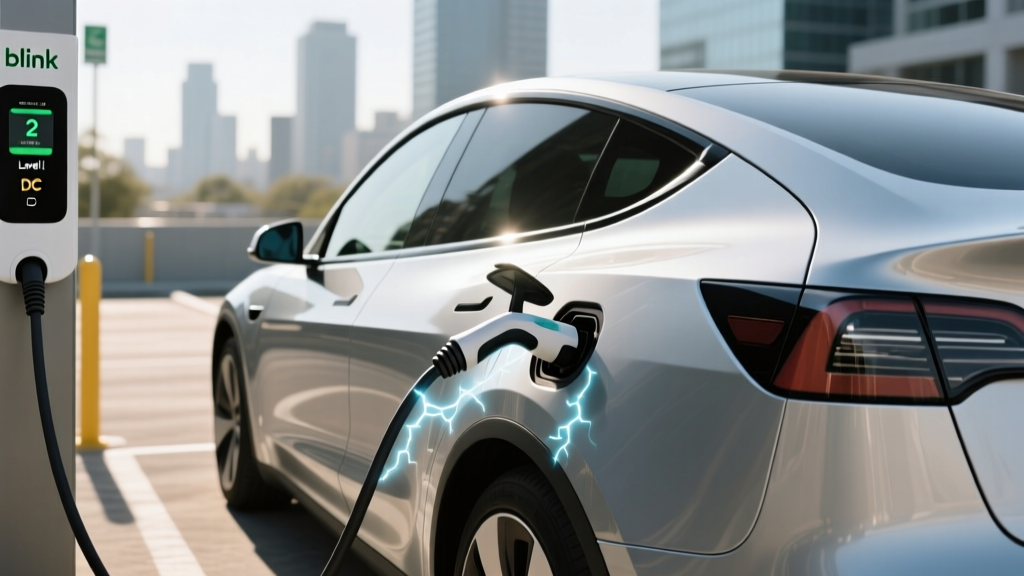
| CCS1 | Tesla CCS Adapter ($175–$250) | Electrify America, EVgo, ChargePoint DC stations | Required for non-Tesla DC fast chargers |
| CHAdeMO | Not supported | Older Nissan Leaf stations | Legacy standard; no adapter available for Tesla |
| J1772 (Level 2) | Tesla J1772 Adapter (included) | Public Level 2 stations, workplaces, hotels | Comes in the glovebox with every Tesla |
Buy the Tesla CCS1 adapter from Tesla's online store before any road trip that might take you off the Supercharger network. Third-party adapters exist but are not recommended due to firmware handshake issues at some Electrify America stations.
Cost to Charge: Home vs. Public vs. Gas Comparison
Electricity pricing varies enormously by location, time of day, and charging method. Here's what Model 3 Standard Range Plus owners actually pay per mile in common scenarios, benchmarked against a comparable 30 MPG gas sedan at $3.50/gallon.
| Charging Scenario | Cost per kWh | Cost to Fill 57.5 kWh (10-100%) | Cost Per Mile (272 mi range) |
|---|---|---|---|
| Home Off-Peak (national avg) | $0.13 | $7.48 | $0.027 |
| Home Peak / Standard Rate | $0.22 | $12.65 | $0.047 |
| Tesla Supercharger (avg) | $0.32 | $18.40 | $0.068 |
| Electrify America / EVgo | $0.43 | $24.73 | $0.091 |
| Gas Sedan (30 MPG @ $3.50/gal) | — | $31.73 (equiv.) | $0.117 |
Even at peak Supercharger pricing, the Model 3 Standard Range Plus costs roughly 40-60% less per mile than a comparable gas sedan. At home off-peak rates, the savings are dramatic — under 3 cents per mile, or roughly $7.50 for a full charge. According to fueleconomy.gov, the Model 3 RWD achieves 132 MPGe combined, translating to roughly 25 kWh per 100 miles of driving.
Charging Time Examples: What to Expect at Each Level
With a ~57.5 kWh usable battery, here's how long common charging sessions take for the Model 3 Standard Range Plus:
- Level 1 (120V, 1.4 kW): 0-100% in approximately 41 hours. Useful only for overnight trickle if you drive under 30 miles/day.
- Level 2 (240V, 11.5 kW / 48A): 10-80% in roughly 3.5 hours; 0-100% in about 5 hours. Ideal for overnight home charging.
- Level 2 (240V, 7.7 kW / 32A): 10-80% in roughly 5.2 hours; 0-100% in about 7.5 hours. Sufficient for most daily needs.
- DC Fast Charge (Supercharger V3, 170 kW peak): 10-80% in approximately 25-30 minutes. Expect the first 20-40% to charge very quickly, then a progressive taper.
- DC Fast Charge (150 kW CCS station with adapter): 10-80% in approximately 30-35 minutes, depending on station output and battery temperature.
Preconditioning matters: Navigate to a Supercharger using the Tesla's built-in navigation, and the car will automatically precondition the battery — warming it to optimal temperature for faster DC charging. Skipping preconditioning in cold weather can add 10-15 minutes to your charge session.
Recommended Home Chargers for the Model 3 Standard Range Plus
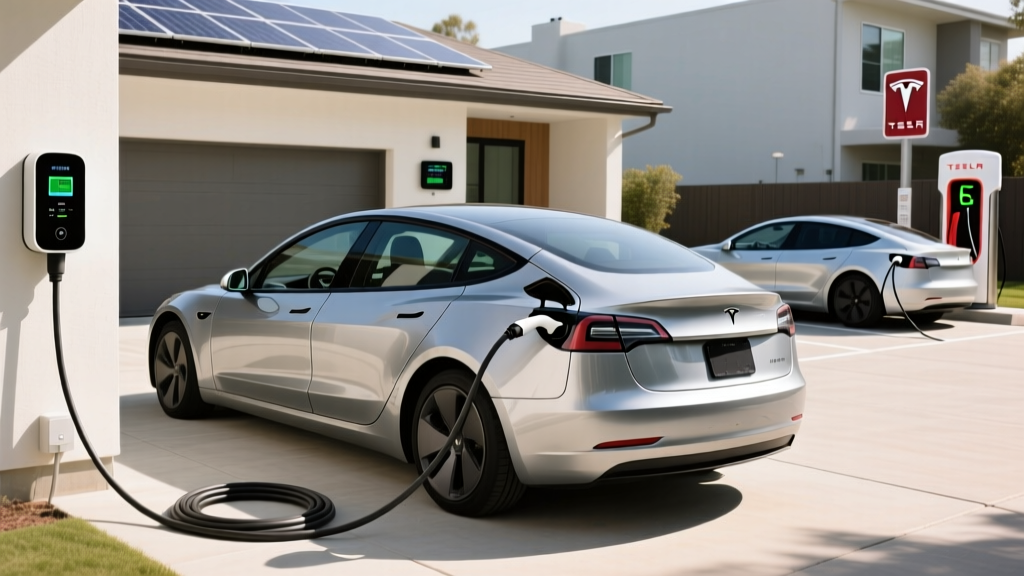
Tesla Wall Connector (Gen 3)
Power Output: Up to 11.5 kW (48A) on a 60A circuit
Connector: NACS (native Tesla)
Cable Length: 24 feet
Smart Features: Wi-Fi updates, power sharing between two units, load management
Price: ~$475
Best for: Tesla-only households wanting maximum charge speed and seamless integration with the Tesla app. No adapter needed — just plug in.
ChargePoint Home Flex
Power Output: Up to 12 kW (50A) on a 60A circuit; configurable down to 16A
Connector: J1772 (use included Tesla adapter) or NACS version available
Cable Length: 23 feet
Smart Features: App scheduling, utility demand-response programs, Alexa integration, amperage adjustment via app
Price: ~$550–$700
Best for: Multi-EV households (Tesla + non-Tesla) or owners who want utility-rebate eligibility and flexible amperage settings for older panels.
Emporia Vue Home EV Charger
Power Output: Up to 11.5 kW (48A) on a 60A circuit
Connector: J1772 (use Tesla adapter) or NACS version
Cable Length: 24 feet
Smart Features: Real-time energy monitoring, solar integration, load management with Emporia VUE panel monitor
Price: ~$400–$500
Best for: Homes with solar panels or tight electrical panels that need intelligent load balancing to avoid a costly panel upgrade.
Safety and Code Considerations
Level 2 EV charging draws sustained high current for hours — more like an electric furnace than a typical appliance. Cutting corners here creates fire risk and insurance liability.
- Dedicated circuit required: The NEC (National Electrical Code) requires EV chargers to be on a dedicated breaker — not shared with other outlets or appliances.
- GFCI protection: NEC 2020 and later requires GFCI (Ground Fault Circuit Interrupter) protection for outdoor EV outlets. Hardwired indoor installations may not require GFCI, but your local inspector has final say.
- Outdoor rating: If your charger is mounted outside or in an unsealed garage, ensure it carries a NEMA 4 or IP65 weather rating. The Tesla Wall Connector and ChargePoint Home Flex both meet this standard.
- Continuous load rule: EV charging is classified as a continuous load under NEC Article 625. This means the circuit must be rated at 125% of the charger's maximum draw — a 48A charger requires a 60A breaker, and a 32A charger requires a 40A breaker. Never undersize the breaker.
- Use a licensed electrician: While the equipment is straightforward, the wiring, grounding, and permit process require a licensed professional. DIY electrical work on 240V circuits can be lethal and will void most homeowner insurance policies if unpermitted.
Frequently Asked Questions
How much does it cost to install a home EV charger for my Tesla Model 3 Standard Range Plus?
Expect $700–$2,350 for a straightforward installation on an existing 200A panel, including equipment, electrician labor, and permit. If your home has older 100A service and needs a panel upgrade, total costs can reach $2,200–$5,850. Get at least two quotes from licensed electricians — prices vary significantly based on wire run distance and local labor rates.
How fast will each charging level add range to the Model 3 Standard Range Plus?
Level 1 (120V) adds about 3-5 miles per hour — barely enough for low-mileage commuters. Level 2 (240V at 48A) adds roughly 44 miles per hour, fully replenishing the battery overnight. DC fast charging at a Supercharger V3 can add up to 170 miles in 15 minutes at peak rate, but expect tapering above 60% SoC.
Which connector and charger is compatible with my Tesla Model 3 Standard Range Plus?
Your Model 3 has a native NACS port. This works directly with all Tesla Superchargers and the Tesla Wall Connector at home. For non-Tesla DC fast chargers (Electrify America, EVgo), you'll need the Tesla CCS1 adapter ($175–$250). For public Level 2 stations with J1772 connectors, use the J1772 adapter that came with your vehicle. CHAdeMO is not supported.
How much does charging the Model 3 cost per mile compared to gas?
At home off-peak rates ($0.13/kWh), charging costs about 2.7 cents per mile — roughly 77% cheaper than a 30 MPG gas car at $3.50/gallon (11.7 cents/mile). Even at Supercharger rates ($0.32/kWh), you're paying about 6.8 cents per mile, still a significant savings. According to the IRS, you may also qualify for the §30C home charger credit to reduce installation costs.
What electrical upgrades might I need before installing a Level 2 charger?
If your home has a 200A electrical panel with available breaker slots, you likely need nothing beyond the dedicated 50-60A circuit. If you have a 100A panel — common in homes built before 1990 — you may need a panel upgrade to 200A ($1,500–$3,500) or a smart load-management system that throttles charger draw when other appliances are running. An electrician can perform a load calculation to determine your exact requirements.