The Tesla Model 3 Standard Range (officially the Rear-Wheel Drive trim) remains one of the most popular entry points into electric vehicle ownership. With an EPA-estimated 272 miles of range and a usable battery capacity of approximately 57.5 kWh (LFP chemistry), it strikes a balance between affordability and daily usability. But owning an EV means understanding charging — the levels, the costs, the equipment, and the electrical work your home might need.
This guide walks through every charging scenario a Model 3 Standard Range owner will encounter, from a standard 120V outlet to Tesla Superchargers, with exact numbers for speeds, costs, and installation requirements.
Charging Levels Explained: How Fast Will Each Add Range?
Every Model 3 Standard Range owner uses three charging tiers depending on the situation. Here's how they break down in real-world terms:
| Level | Voltage / Amperage | Power (kW) | Miles of Range Per Hour | 0–100% Time (approx.) | Best For |
|---|---|---|---|---|---|
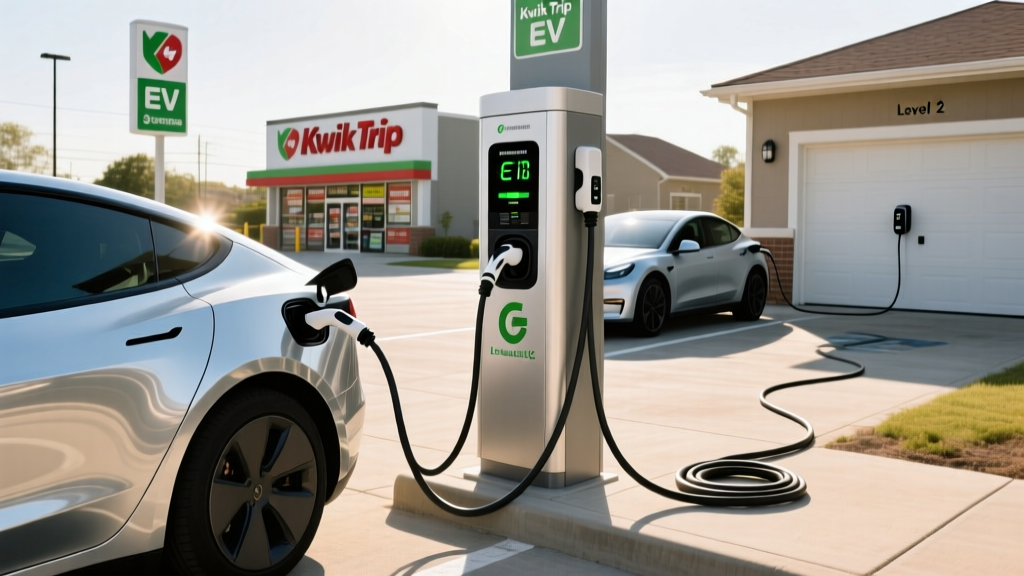
| Level 1 (120V) | 120V / 12A | ~1.4 kW | 3–5 mi/hr | ~40+ hours | Emergency / trickle top-up |
| Level 2 (240V) | 240V / 32–48A | 7.7–11.5 kW | 22–44 mi/hr | 5.5–8 hours | Daily home charging |
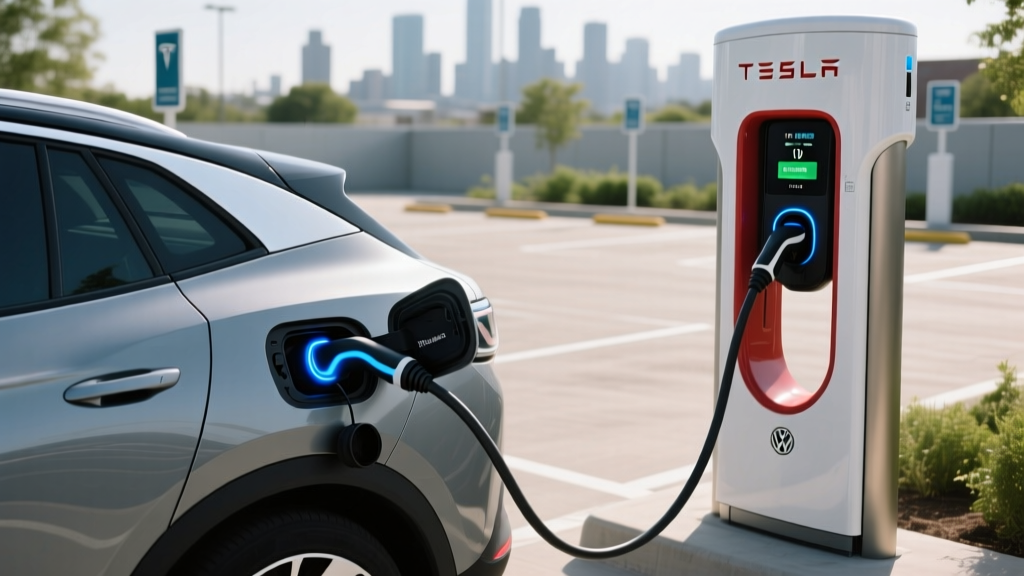
| DC Fast (Supercharger) | 400V architecture | Peak ~170 kW | ~175 mi in 15 min | 10–80% in ~25 min | Road trips / rapid top-up |
The Model 3 Standard Range uses an LFP (lithium iron phosphate) battery. Unlike NMC chemistry, Tesla recommends charging LFP batteries to 100% regularly — at least once per week — to maintain accurate state-of-charge calibration. This is an advantage for daily drivers who want the full 272 EPA miles available every morning.
Real-world charging curve note: The peak 170 kW DC fast-charge rate only holds between roughly 10–45% state of charge. Above 60%, the rate tapers significantly. A 10–80% session takes approximately 25 minutes, but pushing from 80–100% at a DC fast charger can add another 20+ minutes. For road trips, plan to hop between chargers at 80% rather than waiting for a full charge.
Home Charger Installation: Electrical Requirements and Costs
The single most impactful upgrade a Model 3 owner can make is installing a 240V Level 2 home charger. Here's what that actually involves.
Electrical Requirements
The Model 3's onboard charger accepts up to 11.5 kW (48 amps) on Level 2. To deliver that, you need a 240V circuit rated for 60 amps (the National Electrical Code requires circuits be rated 125% above the continuous load — 48A × 1.25 = 60A breaker).
If your electrical panel is already near capacity — common in homes built before 2000 with 100A or 150A service — you may need a panel upgrade to 200A. This is one of the most overlooked costs in EV ownership planning.
Installation Cost Breakdown
| Component | Low End | High End | Notes |
|---|---|---|---|
| Level 2 EVSE (charger hardware) | $350 | $750 | Tesla Wall Connector, ChargePoint, Emporia |
| Electrician labor (standard install) | $500 | $1,500 | Depends on run length from panel to garage |
| Permit and inspection | $50 | $250 | Varies by municipality |
| Panel upgrade (if needed) | $1,500 | $3,500 | 100A→200A service upgrade |
| Total (without panel upgrade) | $900 | $2,500 | |
| Total (with panel upgrade) | $2,400 | $6,000 |
Federal incentive: The IRS §30C Alternative Fuel Vehicle Refueling Property Credit can cover up to 30% of home charger equipment and installation costs, capped at $1,000. Eligibility depends on census tract requirements. Check the IRS §30C page and consult a tax professional to confirm your eligibility.
Connector Compatibility: NACS, CCS, and Adapters
The 2026 Tesla Model 3 comes equipped with the NACS (North American Charging Standard) connector natively. This is the same connector used across the Tesla Supercharger network, which now numbers over 30,000 stalls in North America.
| Connector Type | Native Support? | Adapter Needed? | Network Examples |
|---|---|---|---|
| NACS (Tesla) | Yes — built in | No | Tesla Supercharger, Tesla Destination |
| CCS1 | No | Yes — NACS-to-CCS adapter (~$200–$250) | Electrify America, EVgo, ChargePoint DC |
| CHAdeMO | No | Not available (legacy standard) | Declining network — avoid reliance |
| J1772 (Level 2 public) | No | Yes — J1772-to-NACS adapter (included with car) | Public Level 2 stations, workplace chargers |
Tesla includes a J1772 adapter with the Model 3. For CCS1 DC fast charging on non-Tesla networks, you'll need to purchase a NACS-to-CCS adapter. Tesla sells one directly, and third-party options from brands like Lectron and A2Z are available. As of 2026, many Electrify America and EVgo stations are adding NACS cables, reducing the need for adapters over time.
Cost to Charge: Home vs. Public vs. Gas Comparison
Charging economics depend heavily on where and when you plug in. Here's how the Model 3 Standard Range stacks up against a comparable gas sedan.
| Scenario | Rate | Cost per kWh | Cost per Mile |
|---|---|---|---|
| Home (off-peak utility rate) | Time-of-use plan | $0.08–$0.12/kWh | $0.02–$0.03 |
| Home (standard rate) | Flat rate | $0.14–$0.18/kWh | $0.04–$0.05 |
| Tesla Supercharger (V3/V4) | Per-kWh pricing | $0.28–$0.36/kWh | $0.08–$0.10 |
| Public DC fast (non-Tesla) | Per-kWh pricing | $0.35–$0.55/kWh | $0.10–$0.15 |
| Gas sedan (30 MPG, $3.50/gal) | — | — | $0.12/mile |
The Model 3 Standard Range achieves approximately 26 kWh/100mi (or about 3.85 miles per kWh) according to EPA data on fueleconomy.gov. At home off-peak rates, you're paying roughly a quarter of what a 30-MPG gas car costs per mile. Even at Supercharger prices, the Model 3 is competitive with or cheaper than gasoline.
The takeaway: Home charging is where the economics win decisively. If you can install a Level 2 charger and charge overnight on a time-of-use plan, annual fuel savings over a gas car typically run $1,000–$1,800 depending on mileage and local electricity rates.
Recommended Home Charging Equipment
For the Model 3 Standard Range, you want a Level 2 charger that can deliver close to the car's 11.5 kW maximum. Here are three strong options at different price points:
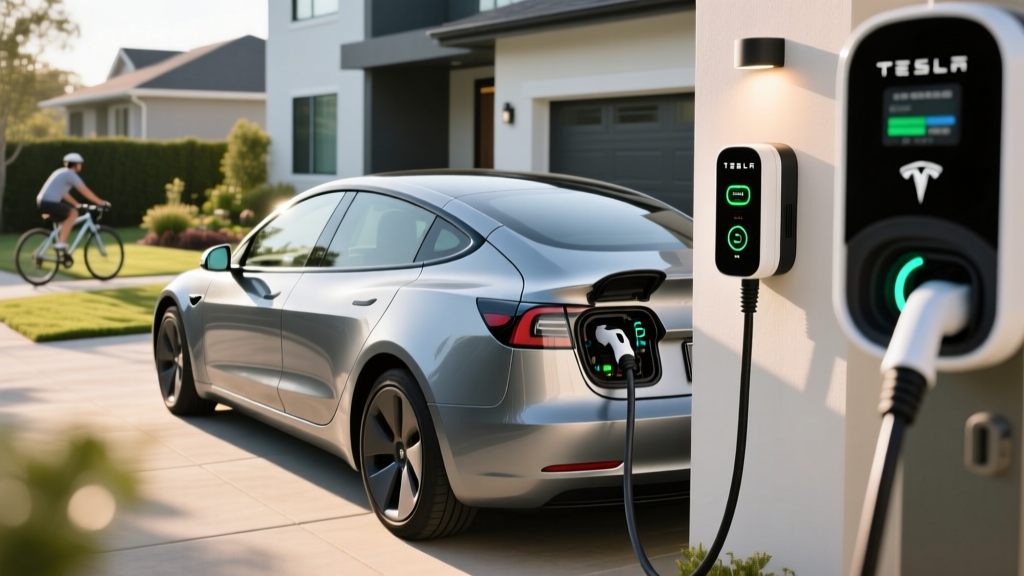
Tesla Wall Connector
Power: Up to 11.5 kW (48A)
Connector: NACS native
Cable length: 24 ft
Smart features: Wi-Fi updates, power sharing between units, load management
Price: ~$475
Best for: Tesla-only households. Seamless integration, cleanest install.
Emporia Level 2 EV Charger
Power: Up to 11.5 kW (48A)
Connector: J1772 (use included adapter for NACS)
Cable length: 24 ft
Smart features: Energy monitoring, scheduling, solar integration
Price: ~$399
Best for: Multi-EV households or solar-panel owners wanting energy visibility.
ChargePoint Home Flex
Power: Up to 12 kW (50A, adjustable)
Connector: J1772 (use adapter for NACS)
Cable length: 23 ft
Smart features: App scheduling, Alexa integration, flexible amperage settings
Price: ~$699
Best for: Households wanting adjustable amperage to match existing panel capacity.
All three support NEMA 14-50 plug-in installation or hardwired connection. Hardwired is preferred for 48A+ circuits and is required by code in many jurisdictions for circuits above 40A.
Safety, Code, and Installation Considerations
EV charging is a high-draw, continuous electrical load — it runs at maximum draw for hours at a time. This makes proper installation non-negotiable.
- Dedicated circuit: Your Level 2 charger must be on its own dedicated breaker. No sharing with other appliances.
- GFCI protection: The 2023 NEC (adopted by most states by 2026) requires GFCI protection for EVSE circuits in garages. Some chargers have built-in GFCI; your electrician will determine if a GFCI breaker is needed at the panel.
- Outdoor rating: If installing outside, the EVSE must carry a NEMA 4 or NEMA 4X rating for weather resistance. The Tesla Wall Connector and ChargePoint Home Flex are both outdoor-rated.
- Wire gauge: A 60A circuit typically requires 6 AWG copper wire for runs under 50 feet. Longer runs may require 4 AWG to minimize voltage drop. Your licensed electrician will size this correctly.
- Permit: Most jurisdictions require an electrical permit and inspection for new 240V circuits. Skipping this risks insurance denial in the event of a fire.
Public Charging on the Road: Supercharger and Beyond
The Model 3 Standard Range peaks at approximately 170 kW on DC fast charging. On a V3 Tesla Supercharger (250 kW capable), you'll see the car pull its maximum rate in the low state-of-charge window, then taper.
Realistic road-trip charging session: Arriving at 10% SoC, you'll reach 80% in roughly 25 minutes. That adds about 218 miles of range — enough for the next 3+ hours of highway driving. Plan your stops around this rhythm.
With Tesla's expanding Supercharger network and the increasing adoption of NACS by other networks (Electrify America adding NACS cables, EVgo expanding NACS stalls), the Model 3's charging access in 2026 is the strongest of any EV on the market. You'll rarely need an adapter for DC fast charging on major corridors.
For destination charging — hotels, restaurants, shopping centers — Tesla's Destination Charging network provides Level 2 NACS connectors, and the included J1772 adapter opens up thousands of additional public Level 2 stations.
Frequently Asked Questions
How much does it cost to install a home EV charger for the Model 3?
A typical Level 2 home installation runs $900–$2,500 including equipment, electrician labor, and permits — assuming your electrical panel has sufficient capacity. If a panel upgrade from 100A to 200A is needed, total costs can reach $2,400–$6,000. The federal §30C credit may offset up to $1,000 of this cost depending on your census tract.
How fast will each charging level add range to my Model 3 Standard Range?
Level 1 (120V) adds 3–5 miles per hour — only practical for overnight trickle charging. Level 2 (240V) adds 22–44 miles per hour depending on amperage, fully recharging overnight. DC fast charging at a Supercharger adds up to 175 miles in 15 minutes, with a 10–80% session taking approximately 25 minutes.
Which connector and charger is compatible with my Tesla Model 3?
The 2026 Model 3 uses NACS natively. This works directly with Tesla Superchargers, Tesla Wall Connectors, and Tesla Destination chargers. For J1772 Level 2 public stations, use the included J1772-to-NACS adapter. For CCS1 DC fast stations, purchase a NACS-to-CCS adapter (~$200–$250). CHAdeMO is not supported.
How much does charging cost per mile compared to gas?
Charging at home on off-peak rates costs approximately $0.02–$0.03 per mile. Even at Supercharger rates, you'll pay $0.08–$0.10 per mile. A comparable 30-MPG gas sedan at $3.50/gallon costs about $0.12 per mile. Home charging delivers 75–85% fuel cost savings.
What electrical upgrades might I need for a home charger?
You'll need a dedicated 240V circuit — typically 60A for maximum Level 2 speed. If your home's electrical panel is already near capacity (common in pre-2000 homes with 100A or 150A service), a panel upgrade to 200A may be required. A licensed electrician will perform a NEC Article 220 load calculation to determine this. Always hire a licensed professional and pull the required permits.