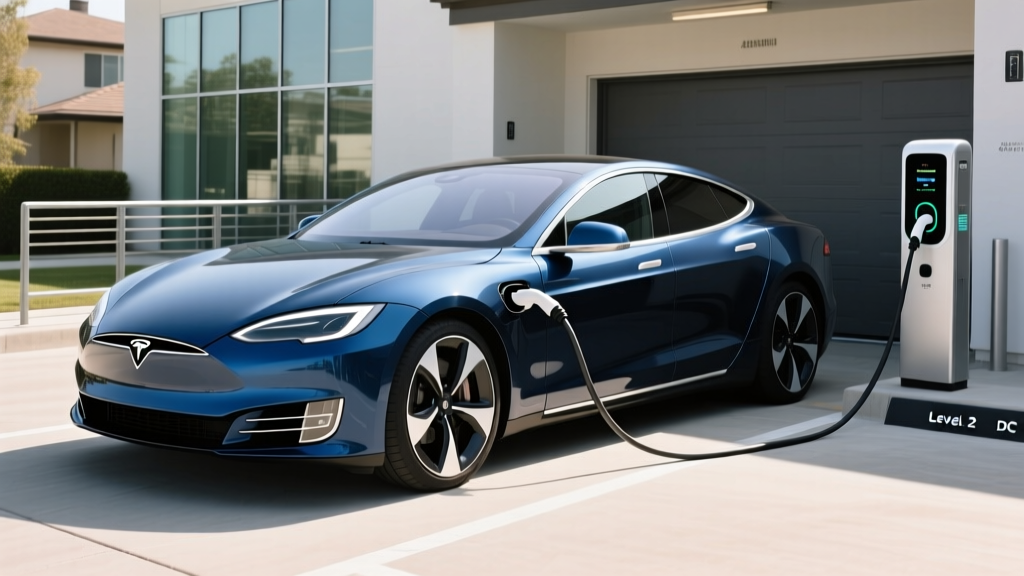
Owners searching for a Tesla Model 3 range increase often focus on software updates or battery conditioning, but the most impactful range gains come from optimizing how and where you charge. A proper home Level 2 setup doesn't literally add EPA-rated miles to your battery, but it ensures you consistently start every day at 100% State of Charge (SoC) with minimal degradation — effectively maximizing your usable range. This guide breaks down exactly how to set up charging for a 2025/2026 Tesla Model 3 (Rear-Wheel Drive, Long Range, and Performance trims), what it costs, and how to minimize your cost per mile.
Tesla Model 3 Battery and Range: What You're Working With
Before selecting a charger, understand the energy capacity you need to replenish. The current-generation Tesla Model 3 lineup uses different battery chemistries and capacities depending on trim:
| Trim | Battery (Usable kWh) | Chemistry | EPA Range | Real-World Range* | Peak DC Charge Rate |
|---|---|---|---|---|---|
| Rear-Wheel Drive | ~57 kWh | LFP | 272 mi | 230–250 mi | 170 kW |
| Long Range RWD | ~75 kWh | NMC | 363 mi | 300–330 mi | 250 kW |
| Long Range AWD | ~75 kWh | NMC | 346 mi | 290–315 mi | 250 kW |
| Performance | ~75 kWh | NMC | 315 mi | 265–290 mi | 250 kW |
*Real-world range accounts for highway driving at 70+ mph, moderate climate use, and typical 85–90% SoC daily limits on NMC trims. Cold weather (below 32°F) can reduce range 15–30%. LFP trims are recommended to charge to 100% regularly, which helps with range calibration.
The critical distinction: kW (kilowatts) measures charging power — the rate at which energy flows. kWh (kilowatt-hours) measures battery energy capacity — how much total energy the pack holds. A 75 kWh battery charged at 11.5 kW (Level 2) takes roughly 6.5 hours from empty; at 170 kW (DC fast), the same energy arrives in under 30 minutes (though the charge curve tapers above 80% SoC).
Charging Levels Explained: Speeds and Range Added Per Hour
EV charging falls into three tiers. Here's how each applies to the Tesla Model 3:
| Level | Voltage / Amps | Power (kW) | Miles Added/Hour | Best Use Case |
|---|---|---|---|---|
| Level 1 | 120V / 12A | ~1.4 kW | 3–5 mi/hr | Overnight top-off, emergencies |
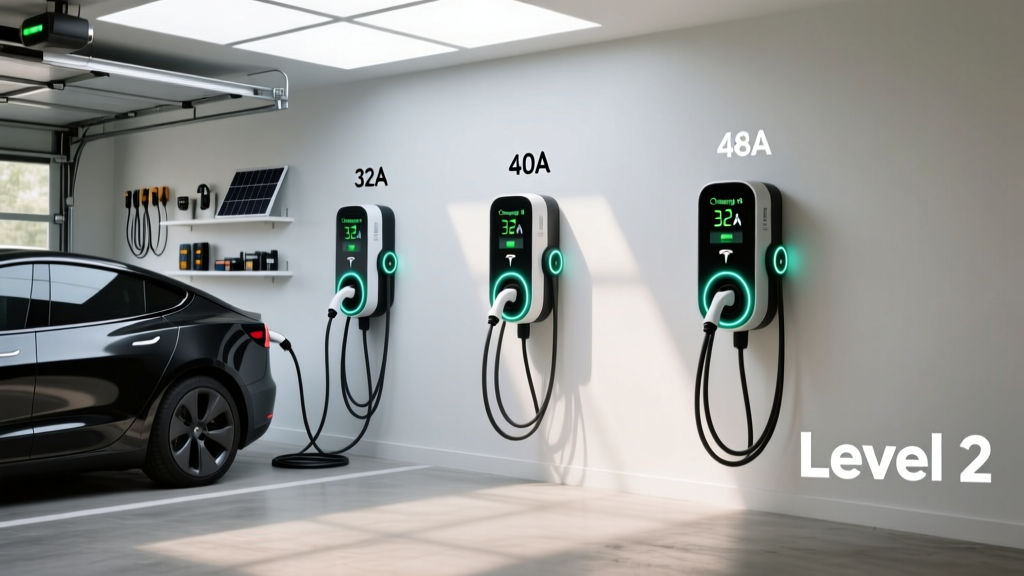
| Level 2 (Home) | 240V / 32–48A | 7.7–11.5 kW | 25–44 mi/hr | Daily home charging |
| DC Fast | 400V+ / variable | 50–250 kW | 150–500+ mi/hr | Road trips, quick top-ups |
Real-world charging time examples (10–80% SoC):
- Model 3 RWD (57 kWh LFP) on a 48A Level 2 (11.5 kW): ~5.5 hours for a full 10–100% charge. Tesla recommends LFP owners charge to 100% at least weekly for accurate SoC estimation.
- Model 3 Long Range (75 kWh NMC) on a 48A Level 2: ~6.5 hours for 0–100%. Daily limit of 80% SoC takes about 5 hours from near-empty.
- Model 3 Long Range at a 250 kW Supercharger V4: 10–80% in approximately 25–30 minutes. Peak rate of 250 kW is sustained only up to ~40% SoC, then tapers — expect ~100 kW average across the full session.
Home Charger Installation: Electrical Requirements and Costs
A Level 2 home charger is the single best investment for maximizing your Tesla Model 3's daily usable range. Here's what the installation involves.
Electrical Requirements
For a 48-amp Level 2 charger (the most common high-power home setup), you need:
- Circuit: Dedicated 60-amp breaker (NEC requires circuits rated at 125% of continuous load, so 48A × 1.25 = 60A breaker)
- Voltage: 240V split-phase (standard US residential)
- Wire: 6 AWG copper (THHN in conduit or NM-B/Romex depending on local code)
- Connector: NACS (Tesla's native plug) — no adapter needed for Model 3
- Panel capacity: Minimum 200-amp main service panel recommended; older homes with 100A panels will likely need an upgrade
Panel Upgrade Considerations
If your home has a 100-amp electrical panel (common in homes built before 2000), adding a 60A EV circuit may exceed your panel's safe capacity, especially if you also run electric HVAC, a dryer, and an oven. An electrician will perform a load calculation per NEC Article 220 to determine if your panel can handle the additional draw.
- 200A panel upgrade: $1,500–$3,500 (including new panel, labor, and utility coordination)
- Smart panel / load management: Some chargers (like the Emporia Vue-integrated systems or Tesla Wall Connector with load-sharing) can dynamically reduce charge rate when household demand spikes, potentially avoiding a panel upgrade. Cost: $200–$500 additional hardware.
Installation Cost Breakdown
| Component | Cost Range | Notes |
|---|---|---|
| Level 2 Charger (hardware) | $250–$600 | Varies by brand and features |
| Electrician labor | $400–$1,500 | Depends on run length, wall type, conduit |
| Electrical permit | $50–$200 | Required in most jurisdictions |
| Panel upgrade (if needed) | $1,500–$3,500 | Only for 100A panels or maxed-out 200A |
| Total (no panel upgrade) | $700–$2,300 | Typical for homes with 200A service |
| Total (with panel upgrade) | $2,200–$5,800 | Older homes or high-load households |
The IRS §30C tax credit covers 30% of home EV charger equipment and installation costs, up to $1,000, for eligible taxpayers in qualifying census tracts. Check your eligibility on the IRS website — this credit is separate from the §30D vehicle purchase credit.
Connector Compatibility: NACS, CCS, and the Tesla Advantage
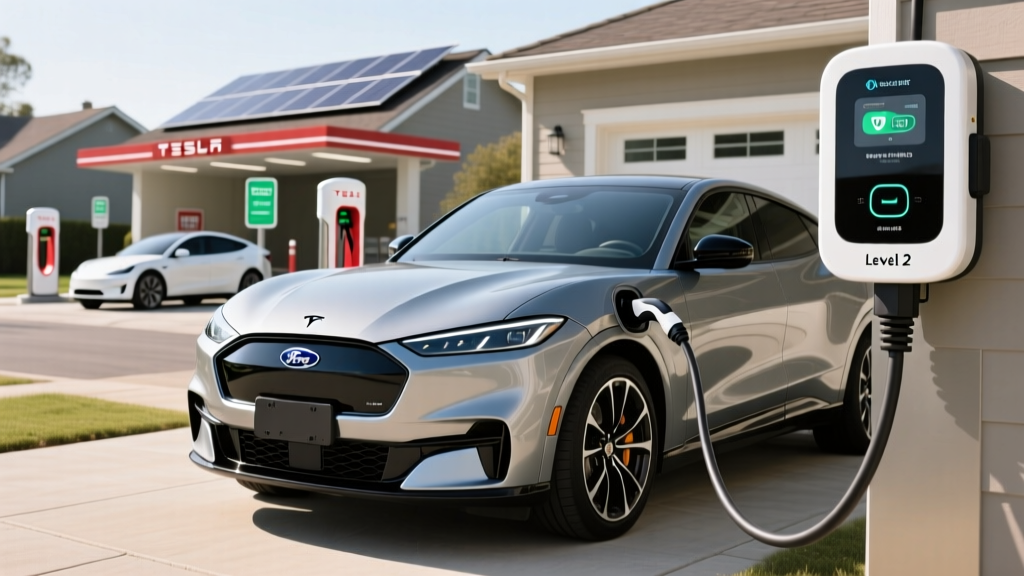
The Tesla Model 3 uses the North American Charging Standard (NACS) connector natively — both for AC Level 2 and DC fast charging. Since 2024, Ford, GM, Rivian, Volvo, and most major automakers have adopted NACS, and Tesla Superchargers now welcome non-Tesla EVs at many locations.
| Connector | Used By | Tesla Model 3 Compatibility |
|---|---|---|
| NACS (Tesla) | Tesla, Ford, GM, Rivian, Volvo, others (2025+) | Native — no adapter needed |
| CCS1 | Hyundai, Kia, VW, BMW, most legacy EVs | Not needed; Tesla no longer includes CCS adapter |
| CHAdeMO | Nissan Leaf (legacy) | Incompatible, no adapter available |
| J1772 (AC) | All non-Tesla EVs for Level 1/2 | Tesla Mobile Connector includes J1772 adapter; use for public Level 2 non-Tesla stations |
Adapter tip: If you use public Level 2 chargers with J1772 connectors (common at hotels, workplaces, and older ChargePoint stations), the Tesla Mobile Connector's J1772 adapter handles this seamlessly. For CCS-equipped public DC fast chargers (like Electrify America), Tesla sells an optional CCS adapter (~$250), but with the Supercharger network now exceeding 6,000 US stations and over 30,000 V3/V4 stalls, most Model 3 owners rarely need it.
Recommended Home Chargers for Tesla Model 3
Here are the top Level 2 chargers that pair well with the Model 3, evaluated on power output, cable length, smart features, and value:
Tesla Wall Connector
- Power: Up to 48A (11.5 kW on 240V/60A circuit)
- Connector: NACS native — 24-foot cable
- Smart features: Wi-Fi, OTA updates, load sharing between multiple units, access control
- Price: ~$450
- Verdict: Best for Tesla-only households. Cleanest integration, fastest home charge for Model 3.
ChargePoint Home Flex
- Power: Configurable 16–50A (up to 12 kW with 50A/60A circuit)
- Connector: NACS or J1772 (select at purchase); 24-foot cable
- Smart features: App scheduling, Alexa/Google integration, detailed energy tracking
- Price: ~$550–$650
- Verdict: Best for mixed-fleet garages (Tesla + non-Tesla). Flexible amperage lets you match your circuit.
Emporia Level 2 Charger
- Power: Up to 48A (11.5 kW)
- Connector: NACS or J1772; 24-foot cable
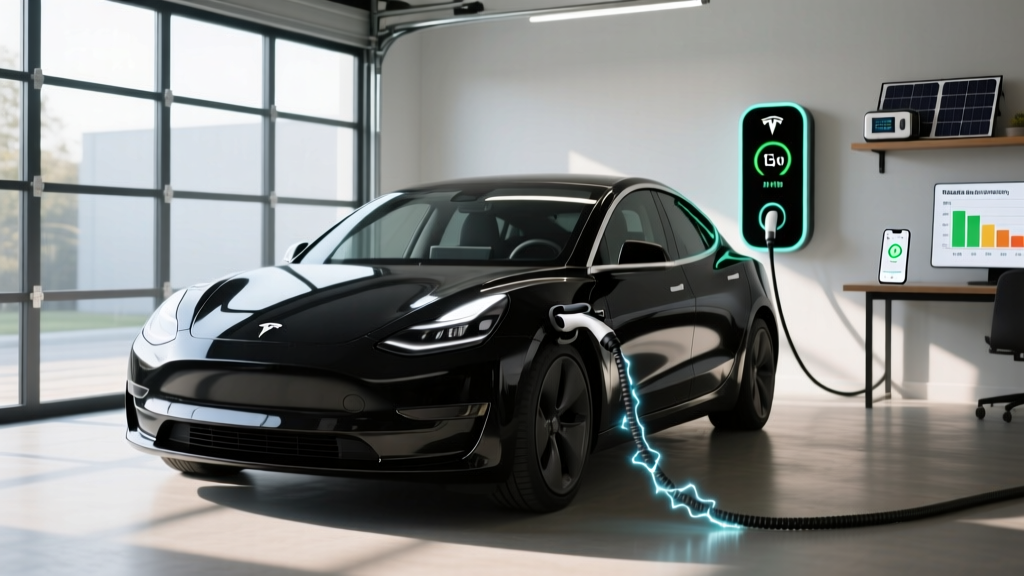
- Smart features: Integrates with Emporia Vue energy monitor for solar-aware and load-managed charging
- Price: ~$350–$400
- Verdict: Best budget smart charger. Ideal if you have solar panels or want to avoid panel upgrades via load management.
Charging Cost Per Mile: Home vs. Public vs. Gas
One of the most compelling reasons to optimize your home charging setup is cost. Here's how electricity compares to gasoline on a per-mile basis for the Model 3:
| Charging Scenario | Avg Cost/kWh | Model 3 LR Efficiency | Cost Per Mile |
|---|---|---|---|
| Home (off-peak utility rate) | $0.08–$0.14 | 25 kWh/100mi | $0.02–$0.035 |
| Home (standard rate, no TOU) | $0.14–$0.20 | 25 kWh/100mi | $0.035–$0.05 |
| Home (solar, net-metered) | $0.03–$0.07 | 25 kWh/100mi | $0.008–$0.018 |
| Public Level 2 (ChargePoint, EVgo) | $0.25–$0.45 | 25 kWh/100mi | $0.063–$0.113 |
| DC Fast (Supercharger V4 avg) | $0.28–$0.40 | 25 kWh/100mi | $0.07–$0.10 |
| Gas car (30 MPG, $3.40/gal) | — | — | $0.113 |
Annual savings estimate: Driving 12,000 miles/year and charging primarily at home on off-peak rates ($0.12/kWh), a Model 3 Long Range costs roughly $360/year in electricity. A comparable gas sedan at 30 MPG costs $1,360/year in fuel — a savings of ~$1,000 annually. Even on public DC fast charging exclusively ($0.34/kWh average), the Model 3 costs about $1,020/year — still below gasoline.
Source: EPA efficiency data from fueleconomy.gov for the 2025 Tesla Model 3 Long Range.
Safety, Code, and Best Practices
EV charging involves sustained high-current draw — treating it like a dryer outlet is a mistake. Follow these safety and code guidelines:
- Dedicated circuit: Your Level 2 charger must be on its own dedicated breaker — never share a circuit with other appliances.
- GFCI protection: NEC 2020+ requires GFCI protection for all 120V and 240V receptacles in garages. Hardwired chargers (like the Tesla Wall Connector) bypass this requirement and are generally preferred for reliability — no plug to loosen over time.
- Outdoor rating: If installing outside, ensure the charger is NEMA 4 rated (weatherproof). The Tesla Wall Connector and ChargePoint Home Flex are both outdoor-rated.
- Cable management: Use a wall-mounted holster to keep the cable off the ground and prevent tripping hazards or cable damage.
- Permit and inspection: Always pull an electrical permit. The inspection ensures your installation meets NEC and local code — critical for insurance coverage in the event of an electrical fire.
Tesla Model 3 Range Increase FAQ
Can a home charger actually increase my Tesla Model 3's EPA range?
No. Your Model 3's EPA-rated range (272–363 miles depending on trim) is fixed by battery capacity and vehicle efficiency. However, a Level 2 home charger ensures you start every day at your target SoC (100% for LFP, 80% for NMC daily), effectively giving you maximum available range every morning. Public-charger-dependent owners often start trips at 60–70% SoC, leaving 30% of range on the table.
How much does it cost to install a home EV charger for my Model 3?
For a typical 48A Tesla Wall Connector on a 60A/240V circuit: $700–$2,300 all-in (hardware, electrician, permit) if your panel has capacity. If you need a 200A panel upgrade, add $1,500–$3,500. The IRS §30C credit may cover 30% of costs up to $1,000.
How fast will each charging level add range to my Model 3?
Level 1 (120V): 3–5 miles per hour. Level 2 (240V/48A): 30–44 miles per hour — enough to fully replenish a day's driving in 1–2 hours. DC Fast (Supercharger V4): 10–80% in ~25–30 minutes for Long Range trims.
Do I need an adapter to charge my Model 3 at non-Tesla stations?
For Level 2 stations with J1772 connectors: yes, use the J1772 adapter included with the Tesla Mobile Connector. For CCS DC fast chargers: Tesla sells an optional CCS adapter (~$250), but the Tesla Supercharger network covers most US travel corridors, making it unnecessary for most owners.
Is it better to hardwire or use a plug for my Level 2 charger?
Hardwiring (recommended for the Tesla Wall Connector) eliminates the plug connection point, reduces failure risk, avoids GFCI nuisance tripping on 240V receptacles, and is often required by local code for circuits above 40A. A NEMA 14-50 plug offers portability if you plan to move, but requires a GFCI breaker under NEC 2020+, adding $50–$100 to the breaker cost.
What electrical upgrades might I need for a home charger?
The most common upgrade is a panel capacity increase from 100A to 200A ($1,500–$3,500) if your existing panel can't handle a new 60A circuit alongside your other loads. In some cases, a smart load-management device ($200–$500) can avoid the panel upgrade by dynamically throttling charger power when household demand is high. Your electrician's load calculation will determine which path is required.