Why the Tesla Model 3 Range Update Europe Matters for Charging Choices
If you've been following the Tesla Model 3 range update Europe headlines, you've seen the refreshed Highland and newer Juniper iterations push the Long Range AWD variant past the 430-mile WLTP mark. But headline range figures only tell part of the ownership story. The real question for buyers — whether you're in Europe tracking WLTP numbers or in the U.S. cross-referencing EPA estimates — is how quickly and cheaply you can replenish that battery at home and on the road.
This guide breaks down the charging infrastructure reality behind the Tesla Model 3's updated range, covering home installation costs, connector compatibility, real-world charging speeds, and the per-mile economics versus gasoline. We'll use the 2026 Model 3 Long Range AWD (79 kWh usable battery, NMC chemistry) as our reference vehicle.
Charging Levels Explained: Speeds, Power, and Range Added Per Hour
Before selecting equipment, you need to understand the three charging tiers. Power is measured in kW (kilowatts) — the rate of energy delivery. Energy is measured in kWh (kilowatt-hours) — the total capacity stored in the battery. A 79 kWh battery charged at 11.5 kW takes roughly 7 hours from empty; that same battery on a 250 kW DC fast charger can recover 10–80% in about 25 minutes. Never confuse kW with kWh.
| Level | Voltage / Amperage | Power (kW) | Miles of Range Per Hour | Best Use Case |
|---|---|---|---|---|
| Level 1 (120V) | 120V / 12A | ~1.4 kW | 3–5 mi/hr | Overnight trickle, PHEVs, emergencies |
| Level 2 (240V) | 240V / 32–48A | 7.7–11.5 kW | 25–44 mi/hr | Daily home charging, workplace |
| DC Fast Charging | 400–800V DC | 50–250+ kW | 150–1,000+ mi/hr (peak) | Road trips, rapid top-ups |
For the Model 3 Long Range's 79 kWh battery, a full Level 2 charge at 11.5 kW (48A) takes approximately 7 hours from 0–100%. Most owners charge from 20–80% daily, which takes about 4 hours on Level 2 — easily accomplished overnight.
Home EV Charger Installation: Requirements, Costs, and Panel Upgrades
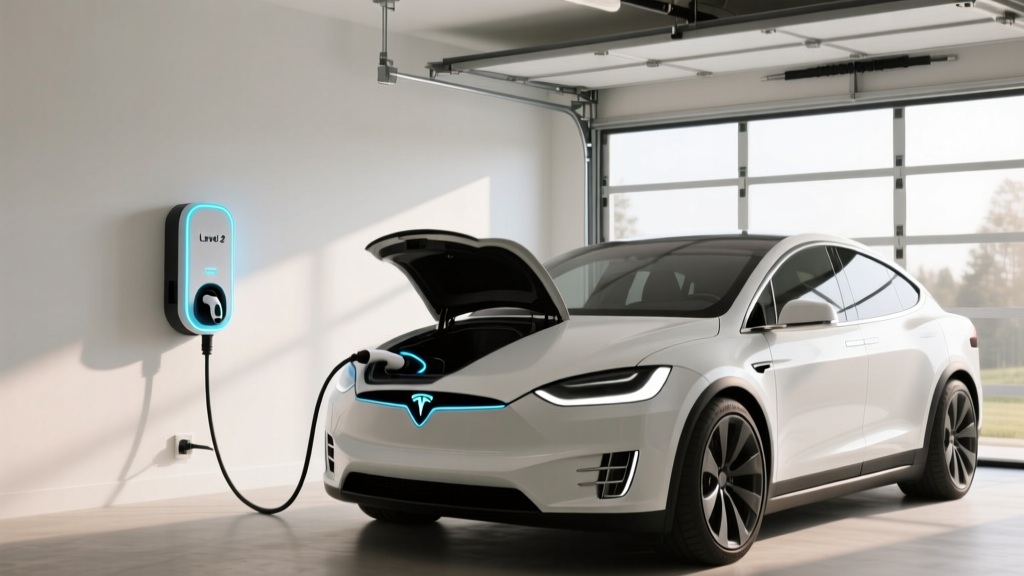
Installing a dedicated Level 2 home charger is the single most impactful upgrade for EV ownership. Here's what's involved for a typical 240V / 48A circuit capable of delivering 11.5 kW to your Model 3.
Electrical Requirements
The Tesla Model 3's onboard charger accepts up to 11.5 kW (48A) on Level 2. To deliver this, you need a 240V circuit rated for 60A (the National Electrical Code requires circuits to be rated at 125% of the continuous load, so a 48A charger requires a 60A breaker). If your home's electrical panel is older or already near capacity, a panel upgrade from 100A to 200A service may be necessary — this is one of the most commonly underestimated costs.
Installation Cost Breakdown
| Component | Typical Range | Notes |
|---|---|---|
| Level 2 Charger (hardware) | $400–$750 | Tesla Wall Connector, ChargePoint, Emporia |
| Electrician labor (standard install) | $600–$1,500 | Varies by run length, conduit, wall material |
| Permit & inspection | $100–$300 | Required in most jurisdictions |
| Panel upgrade (if needed) | $1,500–$3,500 | 100A → 200A service; older homes |
| Total (no panel upgrade) | $1,100–$2,550 | Most common scenario |
| Total (with panel upgrade) | $2,600–$6,050 | Homes built before ~2000 |
The IRS §30C Alternative Fuel Vehicle Refueling Property Credit covers up to 30% of home charging equipment and installation costs (capped at $1,000), though eligibility depends on census-tract requirements. Consult a tax professional for your specific situation.
Safety and Code Considerations
- Dedicated circuit: Your Level 2 charger must be on its own dedicated breaker — never share the circuit with other appliances.
- GFCI protection: NEC 2020+ requires GFCI breakers for EV receptacles in garages; hardwired units may be exempt depending on local code.
- Outdoor rating: If mounting outside, ensure the charger carries a NEMA 4 or IP65 rating. The Tesla Wall Connector and Emporia Vue are both rated for outdoor use.
- Wire gauge: A 60A circuit requires 6 AWG copper wire for runs under 50 feet; longer runs may need 4 AWG to minimize voltage drop. Your licensed electrician will specify this.
Connector Compatibility: NACS, CCS, and CHAdeMO for the Model 3
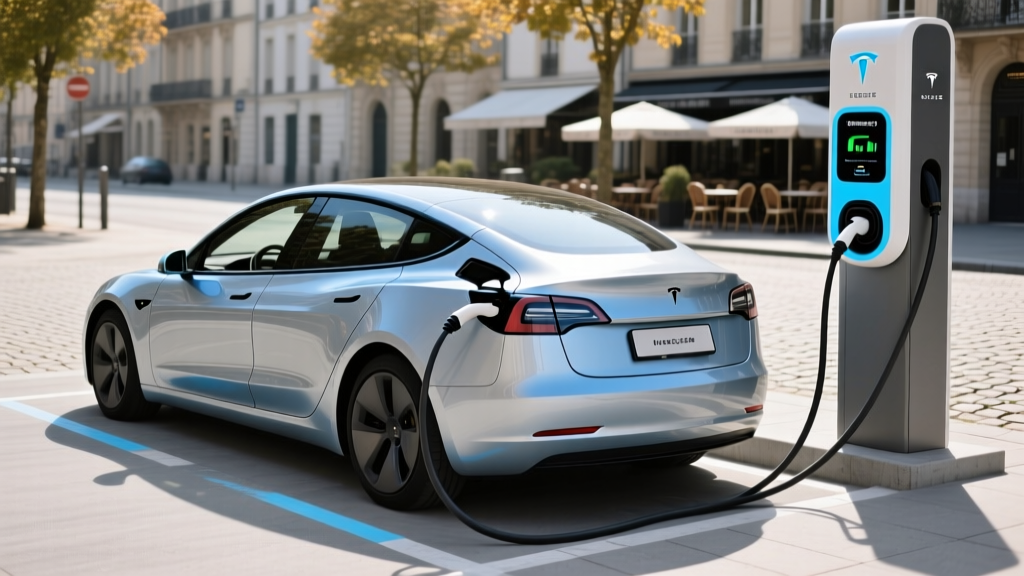
The Tesla Model 3 sold in North America uses the NACS (North American Charging Standard) connector natively. In Europe, the Model 3 ships with a CCS2 port — a key difference for anyone cross-referencing the Tesla Model 3 range update Europe specifications.
| Connector | Region | Compatible Vehicles | Adapter Needed for Model 3? |
|---|---|---|---|
| NACS (Tesla) | North America | Tesla (native); Ford, GM, Rivian, Hyundai, others (2025+) | No — native on NA Model 3 |
| CCS1 | North America | Legacy non-Tesla EVs (pre-NACS transition) | Yes — CCS-to-NACS adapter (~$200) for Tesla Superchargers |
| CCS2 | Europe | European Model 3/Y, VW ID.4, BMW iX, most EU EVs | No — native on EU Model 3 |
| CHAdeMO | Global (declining) | Nissan Leaf, Mitsubishi Outlander PHEV | No adapter available; network phase-out ongoing |
For North American Model 3 owners, the NACS connector grants native access to Tesla's Supercharger network — over 6,000 stations and 30,000+ stalls in the U.S. as of early 2026, per Tesla's Supercharger map. Non-Tesla EVs with NACS ports or CCS-to-NACS adapters now also access select Supercharger stalls.
Charging Times: Model 3 Long Range 10–80% at Each Level
The 2026 Model 3 Long Range AWD's 79 kWh usable battery and peak DC fast-charge rate of approximately 250 kW make it one of the faster-charging vehicles in its class. However, peak rate is not sustained rate — the charging curve tapers significantly above 50% State of Charge (SoC), and drops sharply past 80% to protect battery health.
| Charging Method | Power | 10–80% Time | Notes |
|---|---|---|---|
| Level 1 (120V outlet) | 1.4 kW | ~55+ hours | Impractical for full recharge |
| Level 2 (240V, 48A) | 11.5 kW | ~4.5 hours | Ideal overnight charge |
| Tesla Supercharger V3 | Peak 250 kW | ~25 minutes | Precondition battery via nav |
| Tesla Supercharger V4 | Peak 250–350 kW | ~20–22 minutes | Rolling deployment 2025–2026 |
| Electrify America / 350 kW CCS | Peak ~200 kW* | ~30 minutes | *With NACS adapter; lower peak |
Preconditioning matters. When you navigate to a Supercharger using the car's built-in navigation, the Model 3 automatically warms the battery to optimal temperature for fast charging. Without preconditioning — especially in cold weather — your peak charge rate may be limited to 100–150 kW for the first several minutes, adding 5–10 minutes to your stop.
Cost to Charge: Per-Mile Economics vs. Gasoline
The economic advantage of EV charging depends heavily on where and when you charge. The Model 3 Long Range AWD achieves approximately 25 kWh/100 mi (EPA combined), or roughly 4 miles per kWh.
| Charging Scenario | Cost per kWh | Cost per Mile | Annual Cost (12,000 mi) |
|---|---|---|---|
| Home (off-peak utility rate) | $0.12/kWh | $0.030/mi | $360 |
| Home (average U.S. rate) | $0.17/kWh | $0.043/mi | $510 |
| Tesla Supercharger (avg) | $0.35/kWh | $0.088/mi | $1,050 |
| Electrify America (peak) | $0.48/kWh | $0.120/mi | $1,440 |
| Gas car (28 MPG, $3.40/gal) | — | $0.121/mi | $1,457 |
Home charging at off-peak rates delivers fuel costs at roughly one-quarter the price of gasoline. Even exclusive Supercharger use undercuts the per-mile cost of a 28 MPG gas sedan. The lesson: if you can charge at home, the Model 3's operating cost advantage is massive. If you rely entirely on public DC fast charging, the savings narrow considerably but still hold.
Recommended Level 2 Home Chargers for the Tesla Model 3
Below are three proven Level 2 units compatible with the North American Model 3 (NACS connector), each offering distinct advantages.
Tesla Wall Connector
- Power: 11.5 kW (48A, hardwired)
- Connector: NACS native
- Cable length: 24 ft
- Smart features: Wi-Fi updates, load sharing, Powerwall integration
- Outdoor rated: Yes (NEMA 4)
- Price: ~$475
Best for Tesla-only households; seamless integration.
Emporia Level 2 EV Charger
- Power: 11.5 kW (48A, hardwired) or 9.6 kW (40A, NEMA 14-50)
- Connector: J1772 (NACS adapter included)
- Cable length: 24 ft
- Smart features: Energy monitoring, solar integration, scheduling
- Outdoor rated: Yes (NEMA 4)
- Price: ~$400
Best value; great for solar homeowners.
ChargePoint Home Flex
- Power: Up to 12 kW (50A, hardwired) or 9.6 kW (40A, NEMA 14-50)
- Connector: J1772 (NACS adapter sold separately) or NACS (2025+ models)
- Cable length: 23 ft
- Smart features: App scheduling, Alexa, flexible amperage
- Outdoor rated: Yes (NEMA 4)
- Price: ~$650
Best for multi-EV households with mixed connectors.
Frequently Asked Questions
How much does it cost to install a home EV charger?
A standard Level 2 home charger installation (240V/48A) typically costs $1,100–$2,550 including hardware, electrician labor, and permits. If your home requires an electrical panel upgrade from 100A to 200A service, expect to add $1,500–$3,500. The IRS §30C credit may offset up to $1,000 (30% of costs) depending on your census tract eligibility.
How fast will each charging level add range to my Model 3?
Level 1 (120V) adds 3–5 miles per hour — adequate only for PHEVs or overnight trickle. Level 2 (240V, 48A) adds 35–44 miles per hour, fully replenishing a Model 3 Long Range overnight. DC fast charging at a Tesla Supercharger V3 (250 kW peak) can add approximately 175 miles in 15 minutes under optimal conditions with battery preconditioning.
Which connector and charger is compatible with my EV?
In North America, the 2026 Tesla Model 3 uses NACS natively — no adapter needed for Superchargers or NACS-equipped public stations. For CCS1 stations, you'll need a CCS-to-NACS adapter (~$200). In Europe, the Model 3 uses CCS2 natively. CHAdeMO is effectively incompatible and being phased out across most networks.
How much does charging cost per mile versus gas?
Home charging at the U.S. average rate of $0.17/kWh costs approximately $0.043 per mile in the Model 3 Long Range (25 kWh/100 mi). A comparable 28 MPG gas car at $3.40/gallon costs $0.121 per mile — nearly 3× more. Even exclusive Supercharger use ($0.35/kWh average) costs $0.088/mi, still 27% less than gasoline.
What electrical upgrades might I need for a Level 2 charger?
You'll need a dedicated 60A breaker on a 240V circuit with 6 AWG copper wire. Homes built before 2000 often have 100A electrical service, which may not have sufficient spare capacity — a panel upgrade to 200A ($1,500–$3,500) may be required. Your licensed electrician will perform a load calculation to determine if an upgrade is necessary. Never skip the permit and inspection — it protects your home insurance coverage.
Does the Tesla Model 3 range update in Europe affect U.S. charging specs?
The European-spec Model 3 Long Range's WLTP range increase (to ~436 mi) reflects the same underlying battery and efficiency improvements found in the U.S. model, but European cars use CCS2 connectors and Type 2 AC inlets. U.S. models retain NACS and achieve an EPA-estimated 363 miles. Charging speeds and hardware remain functionally identical; only the connector standard and test-cycle ratings differ.
For official range and efficiency data, refer to fueleconomy.gov. For tax credit and refueling property credit eligibility, consult IRS.gov §30C and speak with a qualified tax professional.