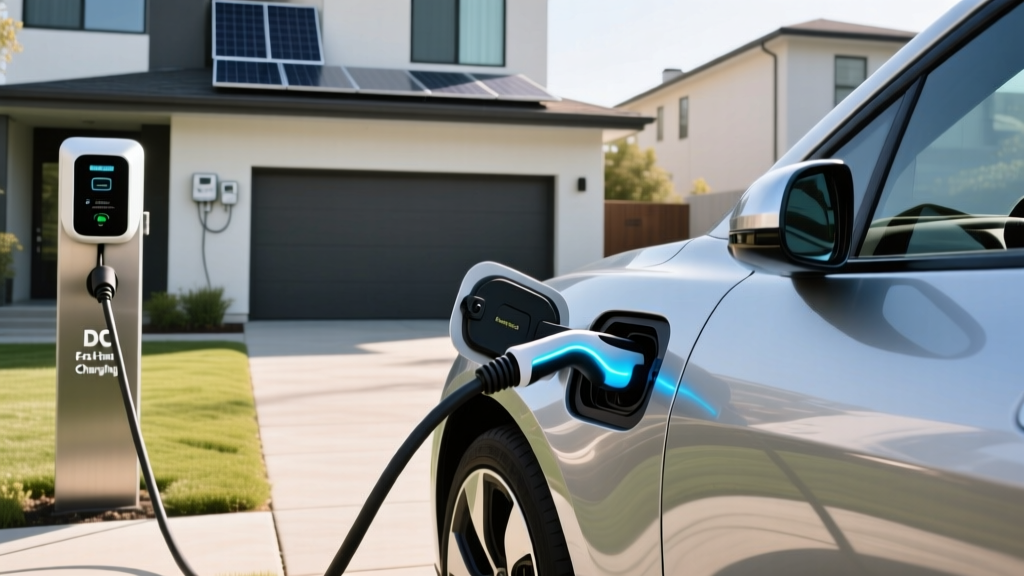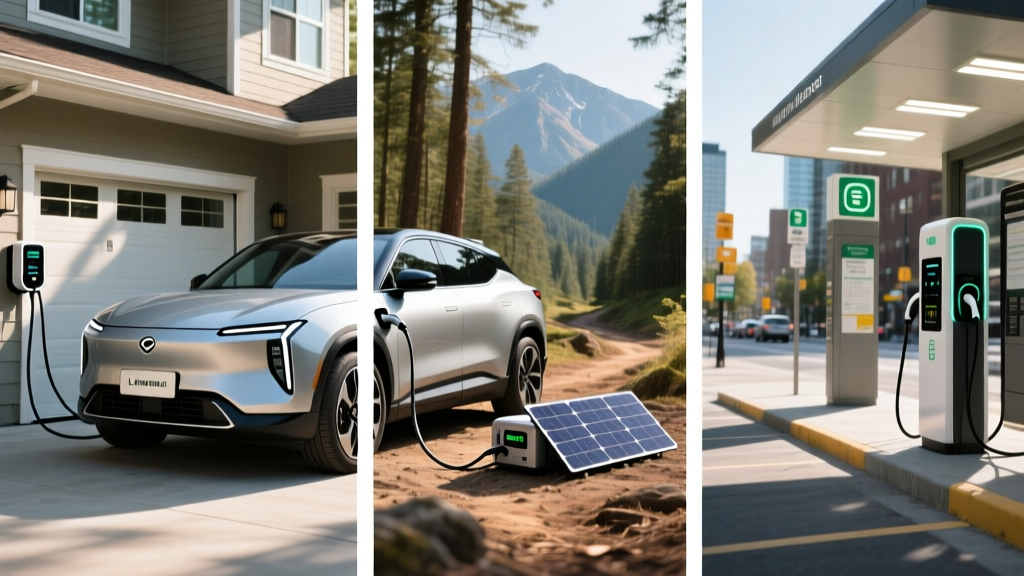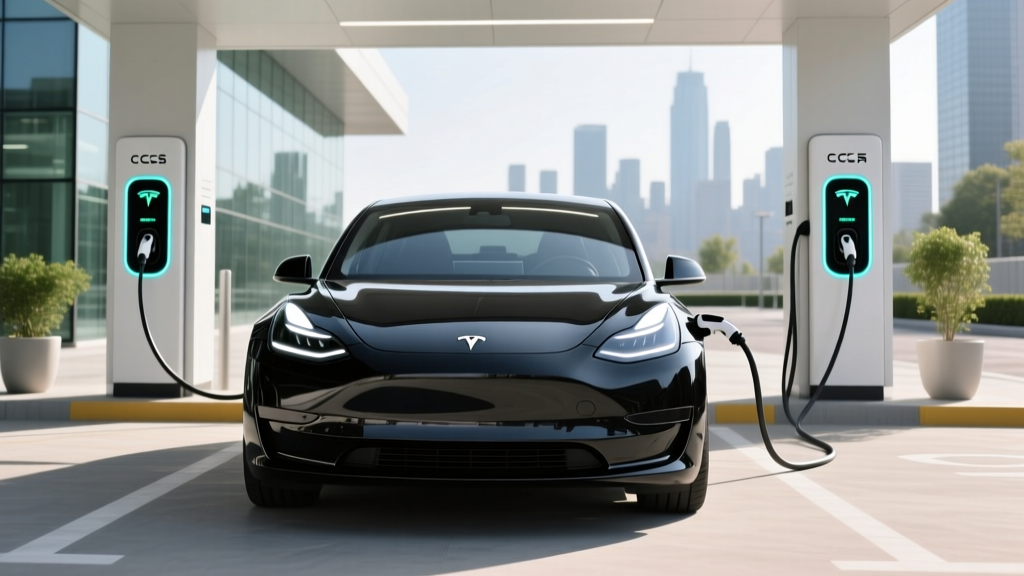
The 2026 Tesla Model 3 Performance pairs a dual-motor all-wheel-drive powertrain with an EPA-estimated 315 miles of range and a 0-60 mph time of 2.9 seconds. But extracting every one of those miles—and replenishing the 79 kWh (usable) NMC lithium-ion battery quickly—depends entirely on how you charge. This guide maps the exact charging speeds, home installation requirements, connector realities, and per-mile costs you need to plan a charging setup that matches the car's capability.
Tesla Model 3 Performance: Range and Battery Specs at a Glance
| Spec | Value |
|---|---|
| EPA Range | 315 miles |
| Battery (Usable) | ~79 kWh, NMC chemistry |
| Max DC Fast Charge Rate | 250 kW peak |
| 10–80% DC Fast Charge | ~25 minutes (V3 Supercharger) |
| Level 2 AC Charge Rate | 11.5 kW (48A onboard) |
| Connector | NACS (native Tesla) |
| 0–60 mph | 2.9 seconds |
| Horsepower | 510 hp |
| EPA Efficiency | 118 MPGe combined |
| Base MSRP | ~$54,990 (excludes destination) |
| Battery & Drive Unit Warranty | 8 years / 120,000 miles (≥70% retention) |
Charging Levels Explained: kW Speeds and Miles Per Hour
A critical EV literacy point: kW (kilowatts) measures charging power—the rate electricity flows into the battery. kWh (kilowatt-hours) measures energy capacity—how much the battery holds. The Model 3 Performance has a ~79 kWh battery; charging it depends on how many kW your equipment can deliver.
| Level | Voltage / Amperage | Max Power (kW) | Miles of Range / Hour | Typical Use Case |
|---|---|---|---|---|
| Level 1 | 120V / 12A | ~1.4 kW | ~3–5 mi/hr | Emergency / overnight trickle |
| Level 2 | 240V / 48A | 11.5 kW | ~35–40 mi/hr | Home daily charging, workplace |
| DC Fast (V3 Supercharger) | 400V architecture | 250 kW peak | ~175 mi in 15 min | Road trips, rapid top-ups |
Level 1 charging from a standard household outlet is painfully slow for a 79 kWh battery—a full charge would take over 55 hours. Level 2 is the practical home standard: a 48A, 240V circuit delivers roughly 11.5 kW, enough to replenish the Model 3 Performance from 20% to 80% overnight in about 4–5 hours. DC fast charging at a V3 Supercharger peaks at 250 kW but tapers significantly above 60% state of charge (SoC); the 10–80% time of approximately 25 minutes reflects that charge-curve reality.
Home Charger Installation: Electrical Requirements and Costs
Installing a Level 2 home charger for the Model 3 Performance requires a dedicated 240V circuit, typically rated at 60 amps to support a continuous 48A draw (the National Electrical Code requires circuits to be rated at 125% of the continuous load). Here is what the project entails:
- Panel capacity: Your main electrical panel must have spare capacity—usually 200A service is sufficient. Older homes with 100A panels may need a panel upgrade ($1,500–$3,500) before adding a 60A EV circuit.
- Dedicated circuit: A 60A double-pole breaker with appropriately gauged wire (typically 6 AWG copper for runs under 50 feet).
- GFCI protection: NEC 2020 and later require GFCI protection for EV outlets; hardwired chargers may bypass this requirement depending on local code interpretation.
- Permit: Most jurisdictions require an electrical permit ($50–$200) and a post-installation inspection.
- Outdoor rating: If your charger mounts outside, it must carry a NEMA 4 or IP55+ weather rating.
| Item | Cost Range |
|---|---|
| Level 2 Charger Equipment | $400 – $750 |
| Electrician Labor (standard install) | $500 – $1,500 |
| Electrical Permit | $50 – $200 |
| Panel Upgrade (if needed, 100A→200A) | $1,500 – $3,500 |
| Conduit / Wire (long runs >50 ft) | $200 – $600 |
| Total (no panel upgrade) | $950 – $2,450 |
| Total (with panel upgrade) | $2,450 – $5,950 |
Always hire a licensed electrician and pull the required permits. Unpermitted EV charger installations can void home insurance coverage and create fire-safety risks. The National Electrical Contractors Association maintains a directory of qualified installers.
Connector Compatibility: NACS, CCS, and Adapters
The 2026 Tesla Model 3 Performance uses the NACS (North American Charging Standard) connector natively—both for AC Level 2 and DC fast charging. As of 2025–2026, Ford, GM, Rivian, Volvo, and most major automakers have adopted NACS on new vehicles, making it the dominant North American standard.
| Connector | Used By | Adapter Needed for Model 3? |
|---|---|---|
| NACS (Tesla) | Tesla, Ford, GM, Rivian, Volvo, Hyundai (2026+) | None — native |
| CCS1 | Legacy VW ID.4, BMW iX, older non-Tesla EVs | CCS-to-NACS adapter (~$200) for non-Tesla DC chargers |
| CHAdeMO | Nissan Leaf (discontinued), Mitsubishi | CHAdeMO-to-NACS adapter (rare, ~$300+) |
| J1772 (AC Level 2) | All non-Tesla EVs for AC charging | J1772-to-NACS adapter (included with Tesla) |
For the Model 3 Performance, the Tesla Supercharger network provides seamless plug-and-charge DC fast charging with no adapter. If you need to use Electrify America or other CCS-equipped networks, Tesla sells a CCS-to-NACS adapter, and the car's navigation will route you accordingly. Tesla also includes a J1772-to-NACS adapter in the glovebox for use with non-Tesla Level 2 public chargers.
Cost to Charge: Home vs. Public vs. Gas Comparison
Electricity prices vary widely by region and time of day. Here is a realistic cost breakdown for the Model 3 Performance's ~79 kWh battery and 315-mile range, assuming an efficiency of roughly 250 Wh/mile (real-world highway driving):
| Scenario | Rate | Cost for Full Charge (79 kWh) | Cost Per Mile |
|---|---|---|---|
| Home Off-Peak (utility TOU rate) | $0.12/kWh | $9.48 | $0.030 |
| Home Standard Rate | $0.18/kWh | $14.22 | $0.045 |
| Public Level 2 (ChargePoint, etc.) | $0.30/kWh | $23.70 | $0.075 |
| Tesla Supercharger (avg 2026) | $0.35/kWh | $27.65 | $0.088 |
| Gas Sedan (28 MPG avg, $3.50/gal) | $3.50/gallon | — | $0.125 |
At home off-peak rates, the Model 3 Performance costs roughly 3 cents per mile—less than a quarter of what a comparable gas sport sedan spends on fuel. Even at Supercharger rates, the per-mile cost undercuts gasoline. According to fueleconomy.gov, the Model 3 Performance's 118 MPGe combined translates to significant annual fuel savings for most drivers covering 12,000–15,000 miles per year.
Equipment Recommendations: Home Level 2 Chargers for the Model 3
The Model 3 Performance's 11.5 kW onboard charger accepts up to 48 amps on Level 2. You need a charger that can deliver that full rate to minimize overnight charge times. Here are three proven options:
Tesla Wall Connector (Gen 3)
- Power Output: Up to 11.5 kW (48A) at 240V
- Connector: Native NACS — no adapter required
- Cable Length: 24 feet
- Smart Features: Wi-Fi connectivity, OTA updates, load sharing with a second Wall Connector, Tesla app integration
- Price: ~$475
- Verdict: Best overall for Tesla owners. Seamless integration, clean install, and full 48A output.
ChargePoint Home Flex (NACS version)
- Power Output: Up to 12 kW (50A adjustable) at 240V
- Connector: NACS (2025+ models) or J1772 with adapter
- Cable Length: 23 feet
- Smart Features: Wi-Fi, Alexa integration, scheduling, detailed energy tracking via ChargePoint app
- Price: ~$650
- Verdict: Excellent for multi-EV households or users wanting granular energy data and smart-home integration.
Emporia Level 2 EV Charger
- Power Output: Up to 11.5 kW (48A) at 240V
- Connector: J1772 (use included Tesla adapter) or NACS version
- Cable Length: 24 feet
- Smart Features: Wi-Fi, real-time energy monitoring, integrates with Emporia home energy monitor for solar-aware charging
- Price: ~$400
- Verdict: Budget-friendly smart charger with strong energy-monitoring features—ideal for solar-equipped homes.
For the Model 3 Performance, the Tesla Wall Connector is the default recommendation: native NACS plug, full 48A output, and no adapter friction at 11 PM when you just want to plug in and walk away.
DC Fast Charging: Supercharger Network and Charge-Curve Reality
Tesla's V3 Superchargers deliver up to 250 kW to the Model 3 Performance. However, peak rate is not sustained rate. The charge curve looks roughly like this:
- 10–30% SoC: Near peak 250 kW (fastest segment)
- 30–55% SoC: Tapers to ~180–200 kW
- 55–80% SoC: Further taper to ~100–130 kW
- 80–100% SoC: Drops below 50 kW (avoid charging above 80% on road trips unless necessary)
This is why Tesla quotes a 10–80% time of ~25 minutes rather than a theoretical "full charge in X minutes." The 0–80% charge adds roughly 250 miles of range in that window. For road-trip efficiency, plan stops around 15–20 minutes and keep charging within the 10–80% sweet spot.
Preconditioning matters enormously. When you navigate to a Supercharger using the car's built-in routing, the Model 3 Performance automatically warms the battery to optimal temperature before arrival. Without preconditioning—say, if you drive to a charger using a third-party app—your initial charge rate could be 30–50% slower in cold weather.
Safety, Electrical Code, and Best Practices
Beyond the hard requirements (dedicated circuit, correct wire gauge, permit), follow these best practices for a safe, code-compliant installation:
- Hardwire vs. plug: Hardwired chargers eliminate the NEMA 14-50 receptacle as a failure point and may not require GFCI breakers (which can nuisance-trip on some EV chargers). Discuss with your electrician.
- Cable management: Use a wall-mounted holster to keep the cable off the ground, especially in garages with limited floor space.
- Load management: If your panel is near capacity, consider a smart charger with load-sensing capability (e.g., Tesla Wall Connector with Power Sharing or Emporia with an energy monitor) that dynamically adjusts charge rate to avoid tripping the main breaker.
- Utility incentives: Many utilities offer rebates of $250–$500 for installing a smart Level 2 charger, and some offer time-of-use (TOU) rates that make overnight charging significantly cheaper. Check your local utility's EV programs.
For detailed code requirements, the National Fire Protection Association's NEC resource page provides access to the latest National Electrical Code standards governing EV charging installations.
Frequently Asked Questions
How much does it cost to install a home EV charger for the Tesla Model 3 Performance?
A standard installation with a 60A dedicated circuit, Tesla Wall Connector, and permit typically runs $950–$2,450. If your home needs a panel upgrade from 100A to 200A service, add $1,500–$3,500. Total cost with a panel upgrade: $2,450–$5,950.
How fast will each charging level add range to the Model 3 Performance?
Level 1 (120V) adds roughly 3–5 miles per hour. Level 2 (240V, 48A) adds about 35–40 miles per hour. DC fast charging at a V3 Supercharger can add approximately 175 miles in 15 minutes, though the rate tapers above 60% SoC.
Which connector and charger are compatible with my Tesla Model 3 Performance?
The 2026 Model 3 Performance uses the NACS connector natively. The Tesla Wall Connector is the most seamless home option. For non-Tesla public Level 2 chargers (J1772), Tesla includes a J1772-to-NACS adapter. A CCS-to-NACS adapter enables access to Electrify America and other CCS networks.
How much does charging cost per mile compared to gas?
At home off-peak rates ($0.12/kWh), the Model 3 Performance costs about $0.03 per mile. Even at Supercharger rates (~$0.35/kWh), it's roughly $0.088/mile. A comparable gas sport sedan at 28 MPG and $3.50/gallon costs $0.125/mile. Home charging saves 75% or more per mile.
What electrical upgrades might I need before installing a Level 2 charger?
If your home has a 100A main panel, you will likely need a panel upgrade to 200A service to accommodate a 60A dedicated EV circuit alongside your existing loads. Homes with 200A panels usually have sufficient capacity. Long wire runs (over 50 feet from panel to charger) may require thicker gauge wire and add to material costs. Always have a licensed electrician evaluate your panel before purchasing equipment.
Does the §30D federal tax credit apply to the Model 3 Performance?
The Tesla Model 3 Performance's MSRP falls under the $55,000 sedan cap for the IRS §30D credit. However, eligibility depends on your modified adjusted gross income (≤$150,000 single / ≤$300,000 joint), battery critical-mineral and component sourcing requirements, and point-of-sale transfer rules. Check the latest requirements at IRS.gov and consult a tax professional for your specific situation.