Understanding Tesla Model 3 Miles Per kWh in 2026
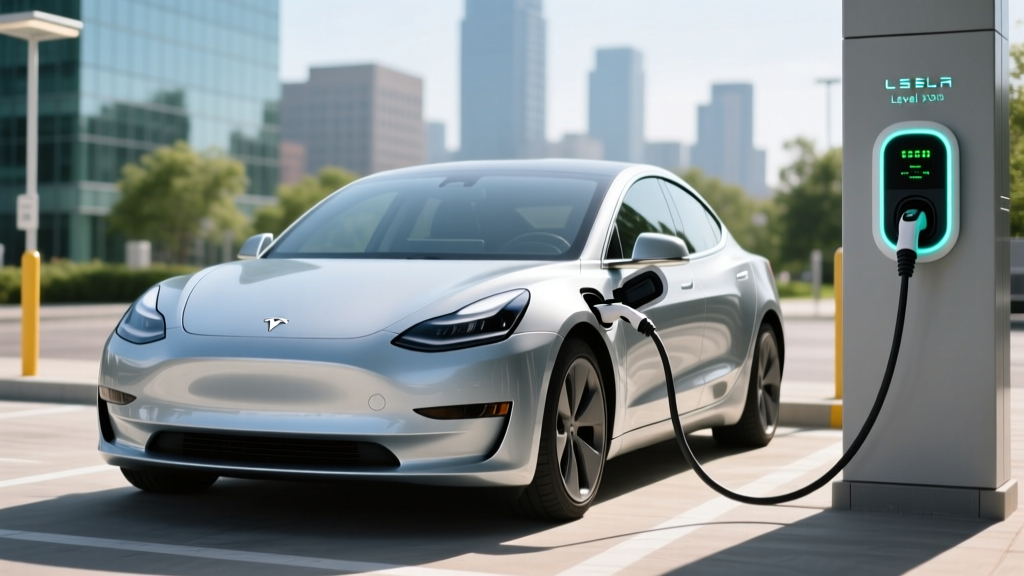
Efficiency is the metric that separates a good EV ownership experience from a frustrating one. For the 2026 Tesla Model 3, miles per kWh (mi/kWh) is the single number that dictates your real-world range, your monthly electricity bill, and how often you'll need to stop on road trips. Unlike gas cars measured in miles per gallon, EVs are measured by how far they travel on one kilowatt-hour of battery energy — and the Model 3 remains one of the most efficient sedans on the market.
The 2026 Tesla Model 3 Long Range AWD carries a usable battery capacity of approximately 75 kWh (LFP chemistry on the RWD variant at ~57.5 kWh) and earns an EPA combined efficiency rating of 4.08 mi/kWh (131 MPGe combined, per fueleconomy.gov). The RWD variant achieves slightly higher efficiency at roughly 4.25 mi/kWh due to its lighter single-motor drivetrain.
But EPA stickers assume a mix of city and highway driving at moderate temperatures. In real-world highway cruising at 75 mph, expect closer to 3.4–3.7 mi/kWh. In cold weather (below 32°F), that can drop to 2.8–3.2 mi/kWh due to cabin heating demands and increased battery resistance. These numbers directly determine how much range you actually get from each charging session.
EPA-rated range for the 2026 Model 3 Long Range: 341 miles. Real-world highway expectation: 260–290 miles in mild weather, 210–245 miles in freezing conditions. The RWD model rates at 272 miles EPA, with real-world highway figures of 220–245 miles.
Charging Levels Explained: kW Speeds and Miles Per Hour
Before we calculate costs, you need to understand the three charging tiers available to Model 3 owners. A critical distinction: kW (kilowatts) measures power — the rate at which energy flows into your battery. kWh (kilowatt-hours) measures energy — the total capacity stored. Think of kW as the width of a hose and kWh as the size of the bucket.
Here's how each level translates to actual range added for a Tesla Model 3, using the Long Range's 4.08 mi/kWh efficiency factor:
| Level | Voltage / Amperage | Power (kW) | Miles of Range Per Hour | Best For |
|---|---|---|---|---|
| Level 1 | 120V / 12A | 1.4 kW | 3–5 mi/hr | Overnight trickle, emergencies |
| Level 2 | 240V / 32–48A | 7.7–11.5 kW | 30–44 mi/hr | Daily home charging |
| DC Fast (Supercharger V3/V4) | 400V+ DC | Up to 250 kW (peak) | Up to 170 mi in 15 min | Road trips, rapid top-ups |
The Model 3 Long Range's onboard charger accepts up to 11.5 kW on Level 2 (48A at 240V), meaning a full 10–80% charge at home takes approximately 5.5 to 6 hours. On a V3 Supercharger, the Model 3 peaks at 250 kW but sustains that rate only between roughly 10–30% State of Charge (SoC). The charging curve tapers significantly above 50% SoC, and the 10–80% session takes about 25–30 minutes in optimal thermal conditions. Always precondition your battery via the Tesla app or navigation routing to a Supercharger — cold batteries charge dramatically slower.
Home Charger Installation: Electrical Requirements and Costs
Installing a Level 2 home charger is the single highest-impact upgrade for EV ownership. For a Tesla Model 3, you'll want a 240V circuit capable of delivering at least 40A (yielding ~9.6 kW) or ideally 48A (yielding 11.5 kW) to match the car's maximum onboard charger acceptance rate.
Electrical Requirements
The Tesla Wall Connector requires a dedicated circuit — meaning no other appliances share that breaker. For a 48A continuous charge rate, the National Electrical Code (NEC) requires a 60A breaker (circuits must be rated at 125% of continuous load). For a 40A charge rate, you need a 50A breaker. Your electrical panel must have sufficient spare capacity — typically at least 200A total service for modern homes adding an EV charger.
What About Panel Upgrades?
If your home has a 100A or 150A main panel — common in homes built before 2000 — adding a 60A EV circuit may exceed your panel's capacity. A panel upgrade to 200A service typically costs $1,500–$3,500 depending on your utility and local code requirements. In some cases, a smart panel-level load management device (like the Span drive or a CT-clamp-based controller) can avoid a full upgrade by throttling charger amperage when household demand is high.
| Component | Typical Cost Range | Notes |
|---|---|---|
| Level 2 Charger Equipment | $400–$700 | Tesla Wall Connector ~$475; third-party smart chargers $500–$700 |
| Electrician Labor (standard install) | $500–$1,500 | Depends on run length from panel to garage/carport |
| Permit Fees | $50–$250 | Varies by municipality; some jurisdictions waive for EV |
| Conduit, Wiring, Breaker | $150–$400 | 6 AWG copper for 48A; longer runs cost more |
| Panel Upgrade (if needed) | $1,500–$3,500 | 100A→200A service; not required for all homes |
| Total (no panel upgrade) | $1,100–$2,850 | Most homes with 200A service fall in $1,200–$2,000 |
| Total (with panel upgrade) | $2,600–$6,350 | Older homes; get 2–3 electrician quotes |
The federal Alternative Fuel Vehicle Refueling Property Credit (IRC §30C) may cover up to 30% of home charger equipment and installation costs (capped at $1,000), subject to census-tract eligibility. Consult a tax professional for your specific situation.
Connector Compatibility: NACS, CCS, and Adapters
The 2026 Tesla Model 3 uses the North American Charging Standard (NACS) connector natively — the same connector Tesla has used since its founding, now adopted as an industry standard by Ford, GM, Rivian, Hyundai, and most other major automakers. This means Model 3 owners have native access to the Tesla Supercharger network (over 25,000 stalls in North America) without any adapter.
| Connector Type | Model 3 Compatibility | Network Access | Adapter Needed? |
|---|---|---|---|
| NACS (Tesla) | Native | Tesla Superchargers, many new third-party DC stations | No |
| CCS1 | Via adapter | Electrify America, EVgo, ChargePoint DC stations | Yes — Tesla CCS Adapter (~$175) |
| CHAdeMO | Not practical | Legacy Nissan/Mitsubishi stations (declining) | No reliable adapter available |
| J1772 (Level 2 AC) | Via adapter | Public Level 2 stations, non-Tesla destination chargers | Yes — J1772-to-NACS (included with car) |
For home charging, the Tesla Wall Connector uses a hardwired NACS plug directly. If you opt for a third-party Level 2 charger (like ChargePoint or Emporia), you'll either select a NACS-terminated version or use the J1772 adapter that ships with the car.
Charging Cost Per Mile: Model 3 vs Gas Equivalent
This is where the Tesla Model 3's strong mi/kWh figure translates directly into savings. Let's build a concrete cost comparison using the Model 3 Long Range's real-world efficiency of 3.6 mi/kWh (highway-adjusted) against a comparable gas sedan achieving 30 MPG combined.
| Scenario | Cost Per Unit | Model 3 Cost/Mile | Gas Sedan Cost/Mile (30 MPG) |
|---|---|---|---|
| Home (off-peak utility rate) | $0.12/kWh | $0.033 | $0.117 (at $3.50/gal) |
| Home (average US rate) | $0.17/kWh | $0.047 | $0.117 |
| Public Level 2 | $0.25–$0.35/kWh | $0.076–$0.097 | $0.117 |
| Tesla Supercharger V3 | $0.28–$0.40/kWh | $0.078–$0.111 | $0.117 |
| Third-party DC fast | $0.35–$0.55/kWh | $0.097–$0.153 | $0.117 |
The takeaway is clear: home charging is dramatically cheaper than gas, saving $700–$1,000+ annually for a driver covering 12,000 miles. However, exclusive reliance on third-party DC fast charging in high-cost markets (California, Northeast) can actually approach or exceed gas costs. This is why a home Level 2 setup is not optional for cost-conscious ownership — it's the financial foundation.
Recommended Level 2 Chargers for the Model 3
Not all Level 2 chargers are equal. Here are our top picks for Tesla Model 3 owners, evaluated on power output, cable management, smart features, build quality, and price.
Tesla Wall Connector (Best for Tesla-Only Households)
- Power Output: Up to 11.5 kW (48A at 240V)
- Connector: NACS native — no adapter needed
- Cable Length: 24 feet
- Smart Features: Wi-Fi for OTA updates, Power Sharing (link up to 6 units on one circuit), access control
- Price: ~$475
- Verdict: The default choice for Model 3 owners. Cleanest integration, fastest home charging, and the lowest cost among premium chargers. No app scheduling — set charge limits in the Tesla app instead.
ChargePoint Home Flex (Best for Multi-EV Households)
- Power Output: Up to 12 kW (50A at 240V) — configurable via DIP switch
- Connector: J1772 (NACS adapter required for Tesla) or NACS version now available
- Cable Length: 23 feet
- Smart Features: ChargePoint app with scheduling, energy tracking, Alexa integration
- Price: ~$599–$699
- Verdict: Excellent if you have a non-Tesla EV alongside your Model 3. The app-based scheduling and detailed energy reports are superior to Tesla's Wall Connector management.
Emporia Vue Level 2 Charger (Best Budget Smart Charger)
- Power Output: Up to 11.5 kW (48A at 240V)
- Connector: J1772 (use Tesla adapter) — NACS version available
- Cable Length: 24 feet
- Smart Features: Full energy monitoring via Emporia app, integrates with Emporia Vue home energy panel, solar-aware scheduling
- Price: ~$399
- Verdict: Outstanding value. If you have solar panels or want granular energy monitoring, this is the best charger under $500. Build quality slightly below Tesla/ChargePoint but fully adequate.
Safety, Code Compliance, and Installation Best Practices
A Level 2 charger draws continuous high current for hours — this is not a DIY-friendly electrical project. Here's what your installation must include to meet the National Electrical Code (NEC) and ensure safe operation:
- Dedicated circuit: Your EV charger must have its own breaker with no shared loads. A 60A breaker for 48A charging or 50A breaker for 40A charging.
- GFCI protection: NEC 2020 and later requires GFCI protection for outdoor receptacles. Hardwired chargers (recommended) typically bypass this requirement, which also eliminates nuisance tripping.
- Hardwired vs plug: Hardwired installations are strongly preferred. They avoid the NEMA 14-50 receptacle failure mode (loose connections causing overheating) and allow full 48A operation. A NEMA 14-50 plug is limited to 40A continuous.
- Outdoor rating: If installing outside, ensure the charger carries a NEMA 4 or NEMA 4X rating. The Tesla Wall Connector and ChargePoint Home Flex are both rated for outdoor use.
- Wire gauge: 6 AWG copper THHN for 48A circuits; 8 AWG for 40A circuits. Longer runs (>50 feet from panel) may require 4 AWG to prevent voltage drop.
- Permit and inspection: Most jurisdictions require an electrical permit and post-installation inspection. Skipping this can void homeowner's insurance coverage for electrical fires.
Frequently Asked Questions
How much does it cost to install a home EV charger for a Tesla Model 3?
Most homeowners with a 200A electrical panel spend between $1,200 and $2,000 for a complete Level 2 installation (charger + electrician + permit + wiring). Homes needing a panel upgrade to 200A service should budget $2,600–$6,350 total. Always get at least three licensed electrician quotes, as labor costs vary significantly by market and installation complexity.
How fast will each charging level add range to my Model 3?
Level 1 (120V) adds roughly 3–5 miles per hour — adequate only for overnight top-ups if you drive less than 30 miles daily. Level 2 (240V, 48A) adds 30–44 miles per hour, fully replenishing a depleted Model 3 Long Range overnight in about 7–8 hours. DC fast charging at a Supercharger V3 can add up to 170 miles in 15 minutes, but sustained rates depend on battery temperature and State of Charge.
Which connector and charger is compatible with my Tesla Model 3?
The 2026 Model 3 uses the NACS connector natively. The Tesla Wall Connector is the simplest home solution (NACS plug, no adapter). For public DC charging, you have native Supercharger access and can use a Tesla CCS adapter (~$175) for Electrify America and other CCS networks. The J1772-to-NACS adapter included with the car works for public Level 2 stations.
How much does charging a Model 3 cost per mile vs a gas car?
At the US average residential electricity rate of ~$0.17/kWh and the Model 3's real-world efficiency of 3.6 mi/kWh, home charging costs about $0.047 per mile. A comparable 30 MPG gas sedan at $3.50/gallon costs $0.117 per mile. Over 12,000 annual miles, that's roughly $564 vs $1,404 — a savings of $840 per year with home charging. Supercharger costs vary by location but typically run $0.07–$0.11 per mile.
What electrical upgrades might I need before installing a charger?
The most common upgrade is a panel capacity increase from 100A or 150A to 200A service, needed in older homes that lack spare breaker capacity. Some homes may also need a new conduit run from the panel to the garage or carport, particularly if the panel is on the opposite side of the house. In rare cases, the utility may need to upgrade the service drop to your home. A licensed electrician can assess your panel's available capacity during a site visit — most offer free or low-cost estimates.