Tesla Model 3 Mid Range Charging Essentials at a Glance
The Tesla Model 3 Mid Range (sometimes called Standard Range in prior model years) pairs a ~60 kWh usable LFP (lithium iron phosphate) battery with EPA efficiency around 26 kWh/100 mi. That translates to roughly 272 miles of EPA range in recent trims, though real-world highway driving at 70+ mph typically yields 230–250 miles, and cold weather can shave another 15–25% off that figure. The car's NACS (North American Charging Standard) connector and 170 kW peak DC fast-charge capability shape everything about how you'll fuel it.
| Spec | Value |
|---|---|
| Usable Battery | ~60 kWh (LFP chemistry) |
| EPA Range | 272 mi (expect 230–250 mi real-world highway) |
| EPA Efficiency | ~132 MPGe / 26 kWh/100 mi |
| Peak DC Fast Charge | 170 kW (NACS) |
| 10–80% DCFC Time | ~25 minutes (preconditioned) |
| Level 2 Onboard Charger | 11.5 kW (48A) |
| Connector | NACS (native Tesla) |
Understanding the difference between kW and kWh is non-negotiable here: kW (kilowatts) measures the rate of power delivery — how fast electrons flow into the car. kWh (kilowatt-hours) measures stored energy — how much the battery holds. A 60 kWh battery charged at 11.5 kW takes roughly 5.2 hours from empty to full (minus taper losses). Think of kW as the hose diameter and kWh as the bucket size.
Charging Levels Explained: Level 1, Level 2, and DC Fast
Every Tesla Model 3 Mid Range owner will use some combination of three charging tiers. Here's what each actually delivers in miles-per-hour of charging, not just marketing claims.
| Level | Voltage / Amps | Power (kW) | Miles of Range Added per Hour | Typical Use Case |
|---|---|---|---|---|
| Level 1 | 120V / 12A | ~1.4 kW | ~3–4 mi/hr | Emergency / occasional top-off |
| Level 2 (Home) | 240V / 48A | 11.5 kW | ~35–40 mi/hr | Daily primary charging |
| Level 2 (Public) | 240V / 32–40A | 7.7–9.6 kW | ~22–30 mi/hr | Workplace, shopping, hotels |
| DC Fast (Supercharger V3) | 400V+ DC | Up to 170 kW peak | ~150–175 mi in 15 min | Road trips |
Level 1 charging via a standard 120V household outlet is included with the car (Tesla's Mobile Connector), but at ~3–4 miles of range per hour, a full charge of the 60 kWh pack takes over 40 hours. It's fine for PHEVs or low-mileage commuters but impractical as a primary strategy for a BEV.
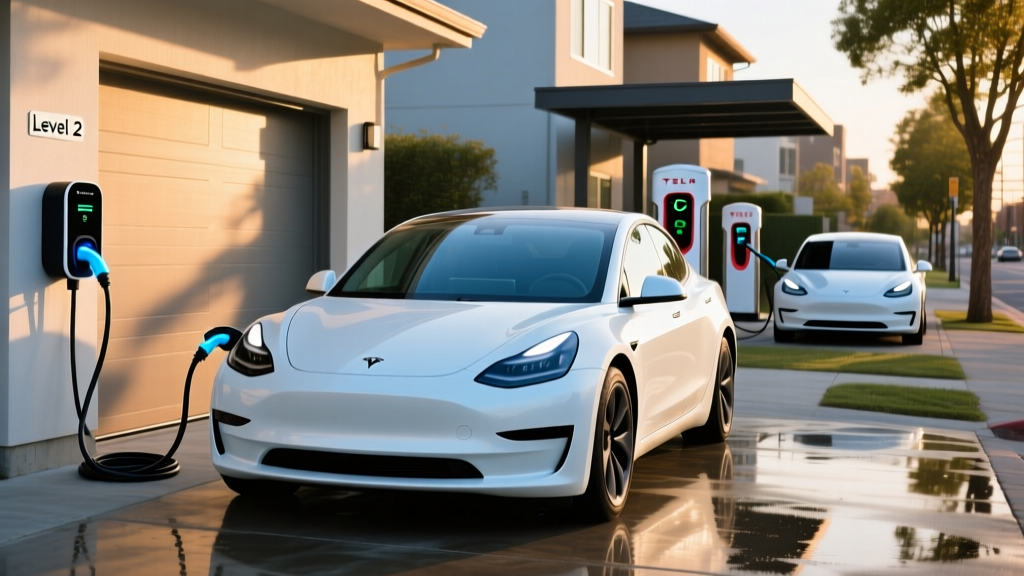
Level 2 at 240V is the workhorse. With the Model 3's 11.5 kW onboard charger, you'll recover roughly 35–40 miles of range per hour — enough to refill the entire battery overnight in about 6 hours. This is the setup 90%+ of Tesla owners rely on daily.
DC fast charging bypasses the onboard charger entirely, feeding DC current straight to the battery. On a Tesla Supercharger V3 (250 kW stall), the Model 3 Mid Range peaks around 170 kW but doesn't sustain it. The charge curve tapers significantly above 60% State of Charge (SoC), which is why manufacturers quote 10–80% times rather than 0–100%. Expect roughly 25 minutes from 10% to 80% when the battery is preconditioned — meaning the car has warmed the pack via navigation to a Supercharger.
Home Charger Installation: Electrical Requirements, Costs, and Gotchas
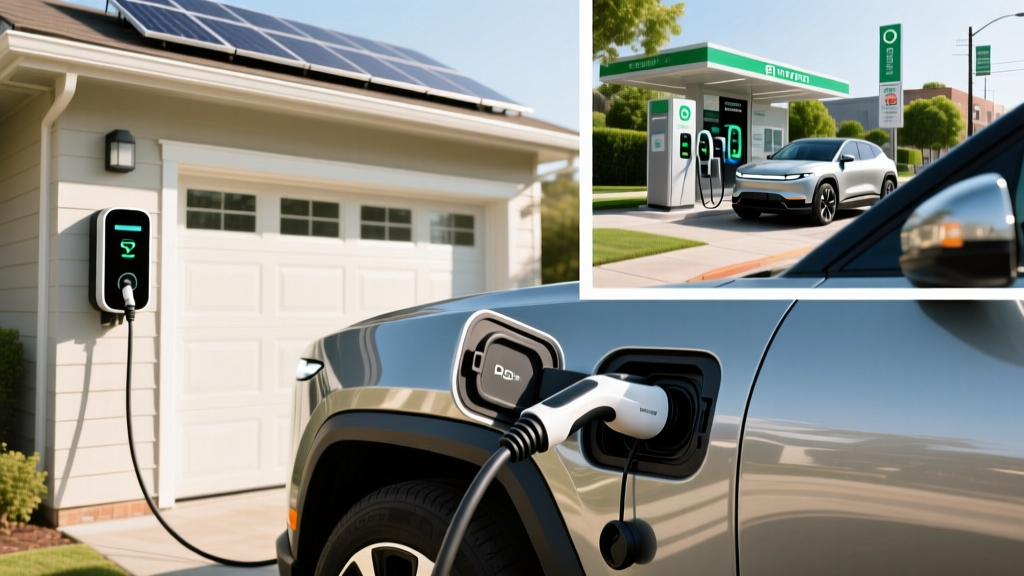
Installing a Level 2 home charger for the Model 3 Mid Range is the single highest-impact ownership decision you'll make. Here's what the electrical reality looks like.
Electrical Requirements
To deliver the Model 3's full 11.5 kW (48A), you need a dedicated 240V circuit rated at 60 amps. The National Electrical Code (NEC) requires continuous loads to use only 80% of a circuit's capacity, so a 48A charger demands a 60A breaker. If your charger is hardwired, this is straightforward; if you're using a NEMA 14-50 outlet, the circuit should still be 60A, though some electricians install 50A circuits for 40A chargers (yielding ~9.6 kW — still very usable).
Panel Upgrade Reality
Homes built before 2000 often have 100A or 150A main service panels. Adding a 60A EV circuit to an already-loaded panel may require upgrading to a 200A panel — a $1,500–$3,500 job on its own. Signs you might need an upgrade: your panel is near capacity (few open breaker slots), you have existing high-draw appliances (electric range, dryer, HVAC, hot tub), or your utility service is only 100A.
Permit and Inspection
Most jurisdictions require an electrical permit for EV charger installation ($50–$200 depending on locality) and a post-install inspection. Skipping the permit risks insurance claim denials if an electrical fire occurs and may violate local code.
| Cost Component | Typical Range | Notes |
|---|---|---|
| Level 2 Charger (Equipment) | $300–$700 | Wall Connector, ChargePoint, Emporia, etc. |
| Electrician Labor (standard install) | $500–$1,500 | Assumes panel is close to garage, short conduit run |
| Electrical Permit | $50–$200 | Varies by municipality |
| Panel Upgrade (if needed) | $1,500–$3,500 | 200A service upgrade for older homes |
| Conduit / Wiring (long runs) | $200–$800 | Detached garages, long distances from panel |
| Total (no panel upgrade) | $850–$2,400 | Most common scenario for modern homes |
| Total (with panel upgrade) | $2,350–$5,900 | Older homes with 100A service |
Always hire a licensed electrician and request a load calculation per NEC Article 220 before committing to a circuit size. The National Fire Protection Association publishes the NEC standards that govern EV charger circuits.
Connector Compatibility: NACS, CCS, and Adapter Needs
The Tesla Model 3 Mid Range ships with a native NACS (North American Charging Standard) charge port — the same connector Tesla has used since 2012. This is a significant advantage in 2026 because the Tesla Supercharger network remains the most reliable and expansive DC fast-charging infrastructure in North America, with over 25,000 stalls.
| Connector | Native to Model 3? | Where You'll Find It | Adapter Needed? |
|---|---|---|---|
| NACS (Tesla) | Yes — native | Tesla Superchargers, Destination Chargers, growing number of third-party stations (Electrify America, EVgo adding NACS) | None |
| CCS1 | No | Electrify America, EVgo, ChargePoint (legacy stalls) | Tesla CCS Adapter (~$175–$250) |
| CHAdeMO | No | Largely legacy / discontinued networks | Not available for Tesla; avoid |
| J1772 (Level 2) | No | Public Level 2 stations, non-Tesla home chargers | Tesla J1772 Adapter (included with car) |
The Tesla CCS Adapter is worth purchasing if you frequently travel in areas where CCS-only DC fast chargers outnumber Superchargers — particularly rural corridors or older Electrify America plazas. For daily Level 2 home charging, any NACS-equipped wall connector works natively, and the included J1772 adapter handles public Level 2 stations.
Cost to Charge: Home vs. Public vs. Gas Comparison
The economics of charging a Tesla Model 3 Mid Range depend heavily on where and when you plug in. Let's run real numbers using the car's ~26 kWh/100 mi efficiency.
| Charging Scenario | Rate ($/kWh) | Cost per 100 Miles | Cost per Mile |
|---|---|---|---|
| Home Off-Peak (utility TOU plan) | $0.08–$0.12 | $2.08–$3.12 | $0.02–$0.03 |
| Home Standard Rate | $0.14–$0.18 | $3.64–$4.68 | $0.04–$0.05 |
| Tesla Supercharger (average 2026) | $0.28–$0.38 | $7.28–$9.88 | $0.07–$0.10 |
| Third-Party DCFC (EA, EVgo) | $0.35–$0.55 | $9.10–$14.30 | $0.09–$0.14 |
| Gasoline Car (30 MPG, $3.40/gal) | — | $11.33 | $0.11 |
Home charging on an off-peak time-of-use plan is roughly 4–5× cheaper per mile than gasoline. Even at public DC fast chargers, the Model 3 Mid Range typically beats a 30 MPG gas car on a per-mile basis — though the margin narrows. If you rely exclusively on premium-priced third-party DCFC without a home charger, your fuel cost advantage nearly disappears.
Charging time examples for the 60 kWh pack:
- 10–80% at home Level 2 (11.5 kW): ~4.5 hours (adding ~42 kWh)
- 10–80% at Supercharger V3 (170 kW peak): ~25 minutes
- 10–80% at 50 kW CCS stall (with adapter): ~55 minutes
The charge curve matters: the Model 3 Mid Range will pull close to 170 kW from roughly 10–35% SoC, then taper to ~100 kW through 60%, and drop further to ~40–50 kW above 80%. This is why charging to 100% at a DC fast charger is wasteful — the last 20% can take as long as the first 60%.
Best Home Chargers for the Tesla Model 3 Mid Range (2026 Picks)
Not all Level 2 chargers are created equal. Here are three proven units matched to the Model 3's 11.5 kW onboard charger capability.
Tesla Wall Connector (Gen 3)
- Power Output: Up to 11.5 kW (48A)
- Connector: NACS (native)
- Cable Length: 24 ft
- Smart Features: Wi-Fi, OTA updates, power sharing (pair two units on one circuit), access control
- Price: ~$475
- Verdict: The default choice for Tesla owners. Maximizes the Model 3's onboard charger. Clean integration with the Tesla app.
Emporia Vue / Emporia Level 2 Charger
- Power Output: Up to 11.5 kW (48A)
- Connector: NACS (2025+ models) or J1772
- Cable Length: 24 ft
- Smart Features: Energy monitoring, solar integration, scheduled charging, load management
- Price: ~$399
- Verdict: Best value pick with robust energy tracking. Ideal if you have solar panels or want granular kWh usage data.
ChargePoint Home Flex
- Power Output: Up to 12 kW (50A, configurable down to 16A)
- Connector: J1772 (use Tesla's included adapter) or NACS (newer SKUs)
- Cable Length: 23 ft
- Smart Features: Alexa integration, scheduling, ChargePoint network account, flexible amperage dip switches
- Price: ~$599
- Verdict: Best for multi-EV households or renters who may move. The adjustable amperage means it works on 20A–60A circuits without replacement.
Safety, Code, and Installation Best Practices
EV chargers draw sustained high current for hours — more like an electric furnace than a phone charger. Safety isn't optional.
- Dedicated circuit: Your Level 2 charger must have its own dedicated breaker — never share a circuit with other appliances.
- GFCI protection: NEC 2020 and later require GFCI protection for outdoor receptacles used for EV charging. Hardwired installations may have different requirements depending on jurisdiction.
- Outdoor rating: If your charger is mounted outside or in an unenclosed carport, ensure it carries a NEMA 4 (weatherproof) rating. All three chargers recommended above are rated for outdoor use.
- Cable management: Use a holster or cable reel to keep the cord off the ground, preventing tripping hazards and insulation damage.
- Utility rebates: Many utilities offer $200–$500 rebates for smart Level 2 charger installations, especially on time-of-use plans. Check with your local utility before purchasing.
The U.S. Department of Energy's EV charging guide provides state-specific incentive information and utility program links.
Frequently Asked Questions
How much does it cost to install a home EV charger for the Tesla Model 3 Mid Range?
Most homeowners spend $850–$2,400 for a standard Level 2 installation (equipment + electrician + permit) when the electrical panel has sufficient capacity. Older homes requiring a 200A panel upgrade should budget $2,350–$5,900 total. Always get a load calculation from a licensed electrician first.
How fast will each charging level add range to the Model 3 Mid Range?
Level 1 (120V): ~3–4 miles per hour. Level 2 (240V, 48A): ~35–40 miles per hour. DC fast charging at a Supercharger: up to ~175 miles in 15 minutes when preconditioned, though the charge curve tapers significantly above 60% SoC.
Which connector and charger is compatible with my Tesla Model 3 Mid Range?
The Model 3 uses a native NACS connector. For home Level 2, the Tesla Wall Connector (NACS) is the simplest option. For public DCFC, Tesla Superchargers work natively; CCS stations require the Tesla CCS Adapter (~$175–$250). J1772 Level 2 stations work with the adapter included in the car.
How much does charging cost per mile compared to gas?
Home charging on off-peak rates costs ~$0.02–$0.03 per mile (4–5× cheaper than a 30 MPG gas car at $3.40/gallon). Public Supercharging averages $0.07–$0.10/mile. Exclusive reliance on premium third-party DCFC ($0.09–$0.14/mile) nearly eliminates the cost advantage over gasoline.
What electrical upgrades might I need for a home charger?
The most common upgrade is a panel capacity increase from 100A to 200A service ($1,500–$3,500) for older homes. You may also need new conduit runs for detached garages, a sub-panel installation, or a smart load-management device if your utility requires demand-response capability. A licensed electrician's load calculation per NEC Article 220 will determine your specific requirements.
Should I charge the LFP battery to 100% daily?
Yes — unlike NMC batteries, Tesla recommends charging LFP packs to 100% at least once per week for accurate battery management system (BMS) calibration. Set your daily charge limit to 100% and plug in whenever convenient. LFP chemistry also tolerates higher states of charge with less degradation, making it ideal for daily home charging routines.