For Tesla Model 3 Long Range owners, the EPA-estimated 363 miles of range is just a starting point. Real-world efficiency depends heavily on how and where you charge. Whether you're optimizing for battery longevity or planning cross-country road trips, understanding the relationship between charging infrastructure and your Model 3's usable range is critical. This guide breaks down exactly how each charging level affects your Tesla Model 3 Long Range miles, what home installation really costs, and how to minimize your cost per mile.
Understanding Your Model 3 Long Range Battery and Range
The 2026 Tesla Model 3 Long Range AWD carries an estimated 79 kWh usable battery capacity (NMC chemistry) and achieves an EPA-estimated 363 miles of range, translating to roughly 4.0 miles per kWh or 132 MPGe combined, according to fueleconomy.gov. However, real-world range varies significantly based on driving conditions:
• EPA Sticker: 363 miles
• Highway (70 mph, 75°F): ~320-340 miles
• Cold Weather (30°F, highway): ~260-290 miles (20-30% reduction)
• City Driving with Regen: ~350-370 miles
The Model 3 Long Range's battery management system includes a thermal preconditioning feature that warms or cools the battery before fast charging, which is essential for achieving peak charge rates. Without preconditioning, DC fast charging speeds can drop by 30-50%.
Charging Levels: Speed, Range Added, and Real-World Times
Each charging level delivers power at different rates, measured in kilowatts (kW). Power (kW) determines charging speed, while energy (kWh) is what your battery stores. Here's how each level translates to Tesla Model 3 Long Range miles:
| Level | Voltage/Amps | Max Power (kW) | Miles Added/Hour | 10-80% Time |
|---|---|---|---|---|
| Level 1 (120V) | 120V / 12A | 1.4 kW | 4-5 miles | ~60+ hours |
| Level 2 (240V) | 240V / 48A | 11.5 kW | 35-44 miles | ~6-7 hours |
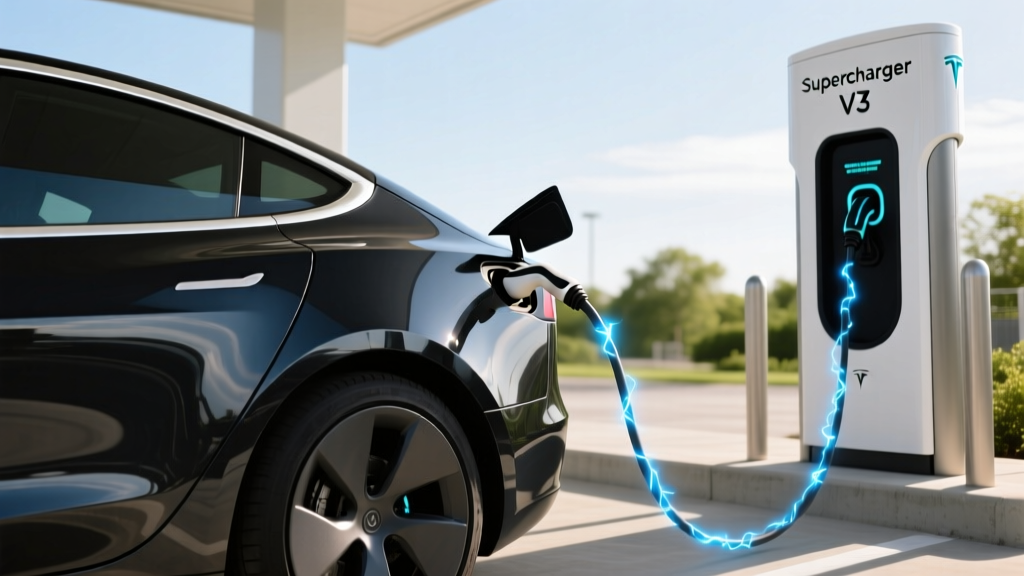
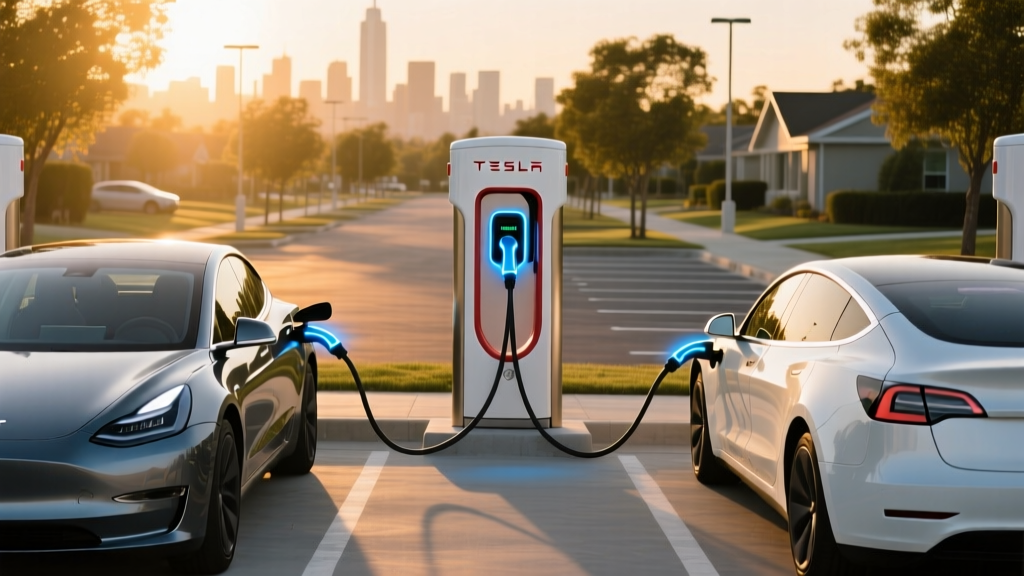
| DC Fast (Supercharger) | 400V+ / 250kW peak | 250 kW | ~175 miles in 15 min | ~25-30 minutes |
Critical note on DC fast charging curves: The Model 3 Long Range can accept up to 250 kW at a V3 Supercharger, but only between 10-30% state of charge (SoC). Above 50% SoC, the charge rate tapers to ~100 kW, and above 80% it drops to ~40 kW. This is why manufacturers quote 10-80% times rather than 0-100%.
Home Charger Installation: Electrical Requirements and True Costs
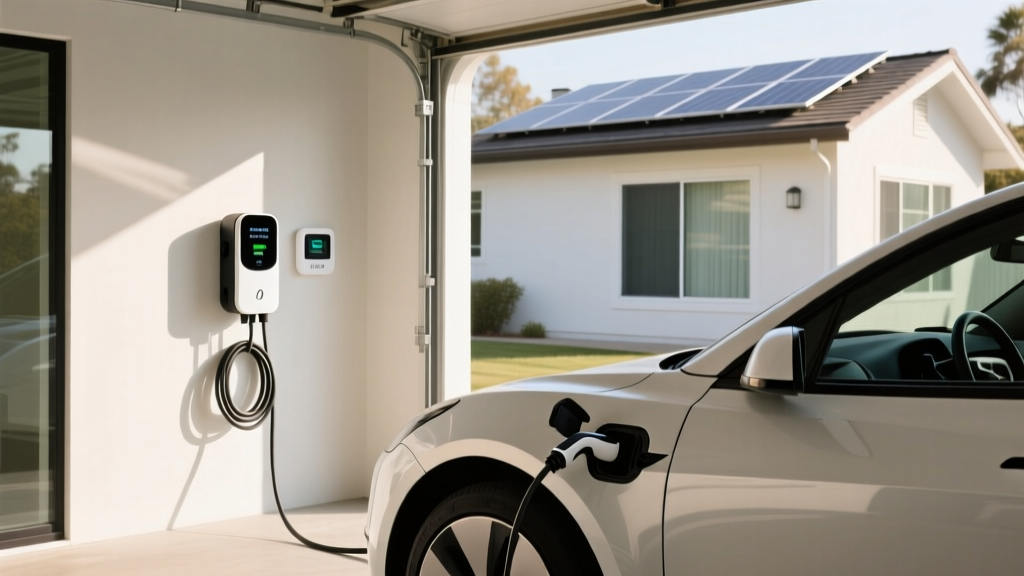
Installing a Level 2 home charger is the most cost-effective way to maintain your Model 3's range. Here's what's required:
Electrical Requirements:
- Circuit: Dedicated 60-amp breaker (for 48A continuous charging)
- Wire: 6 AWG copper (or 4 AWG aluminum) for runs up to 50 feet
- Outlet: NEMA 14-50 (240V/50A) or hardwired connection
- Panel capacity: Minimum 100A service, though 200A is recommended
Installation Cost Breakdown:
| Component | Cost Range | Notes |
|---|---|---|
| Level 2 Charger (Equipment) | $400 - $750 | Tesla Wall Connector, ChargePoint Home Flex |
| Electrician Labor | $500 - $1,500 | Varies by region, run length, complexity |
| Permit & Inspection | $50 - $250 | Required in most jurisdictions |
| Panel Upgrade (if needed) | $1,500 - $3,500 | Older homes with 100A service |
| Total (no panel upgrade) | $950 - $2,500 | Average: ~$1,500 |
| Total (with panel upgrade) | $2,450 - $6,000 | Significant cost for older homes |
Panel Upgrade Reality Check: Homes built before 1990 often have 100A or 150A panels that may not support a 60A EV circuit alongside existing loads (HVAC, electric range, dryer). A load calculation by a licensed electrician determines if an upgrade is necessary. Some utilities offer rebates of $500-$1,000 for panel upgrades paired with EV charger installation.
Connector Compatibility: NACS, CCS, and Adapter Requirements
The 2026 Tesla Model 3 Long Range uses the North American Charging Standard (NACS) connector natively. However, with Tesla opening its Supercharger network to non-Tesla EVs and other manufacturers adopting NACS, understanding the connector landscape is essential:
| Connector Type | Tesla Model 3 Compatibility | Use Case |
|---|---|---|
| NACS (Tesla) | Native (no adapter) | Tesla Superchargers, Tesla Wall Connector, newer public stations |
| CCS1 | Requires CCS adapter ($175-$250) | Electrify America, EVgo, non-Tesla DC fast chargers |
| CHAdeMO | Not compatible (no adapter available) | Legacy Nissan Leaf stations (phasing out) |
| J1772 | Includes adapter with vehicle | Public Level 2 stations, non-Tesla home chargers |
Adapter Strategy: Tesla includes a J1772-to-NACS adapter with the Model 3, allowing you to use public Level 2 chargers. For DC fast charging on non-Tesla networks (Electrify America, EVgo), Tesla sells a CCS1-to-NACS adapter for $175. However, Tesla's Supercharger network remains the most reliable and widespread DC fast-charging option, with over 6,000 V3 (250 kW) stalls in the U.S. as of 2026.
Cost Per Mile: Home Charging vs. Public vs. Gas
One of the strongest arguments for the Model 3 Long Range is its low operating cost. Here's how charging costs compare to gasoline:
| Charging Scenario | Rate ($/kWh) | Cost for 363 miles (full charge) | Cost Per Mile |
|---|---|---|---|
| Home (off-peak utility rate) | $0.12 | $9.48 | $0.026 |
| Home (average U.S. rate) | $0.16 | $12.64 | $0.035 |
| Public Level 2 (ChargePoint, EVgo) | $0.25 - $0.39 | $19.75 - $30.81 | $0.054 - $0.085 |
| Tesla Supercharger (V3) | $0.28 - $0.36 | $22.12 - $28.44 | $0.061 - $0.078 |
| Gas Car Comparison (30 MPG, $3.50/gal) | — | $42.35 | $0.117 |
Annual Savings Calculation: Driving 12,000 miles per year and charging primarily at home ($0.16/kWh), a Model 3 Long Range owner spends ~$420 on electricity. A comparable gas car (30 MPG, $3.50/gallon) costs ~$1,400 in fuel. That's a $980 annual savings, or $4,900 over five years—before factoring in reduced maintenance (no oil changes, fewer brake replacements due to regenerative braking).
Recommended Home Charging Equipment
For Tesla Model 3 Long Range owners, these Level 2 chargers offer the best balance of speed, reliability, and value:
Tesla Wall Connector (Gen 3)
- Power Output: 11.5 kW (48A) max
- Connector: NACS (native)
- Cable Length: 24 feet
- Smart Features: Wi-Fi, over-the-air updates, power sharing (multiple units), load management
- Price: $475
- Best For: Tesla-only households, fastest Model 3 charging
ChargePoint Home Flex
- Power Output: 12 kW (50A) max, adjustable down to 16A
- Connector: J1772 (use included Tesla adapter) or NACS version available
- Cable Length: 23 feet
- Smart Features: Wi-Fi, Alexa integration, scheduling, energy tracking, flexible amperage
- Price: $699
- Best For: Multi-EV households, renters who may move
Grizzl-E Smart
- Power Output: 10 kW (40A) max
- Connector: J1772 (use Tesla adapter) or NACS
- Cable Length: 24 feet
- Smart Features: Wi-Fi, OCPP compatibility, extreme cold rating (-40°F)
- Price: $549
- Best For: Cold climates, budget-conscious buyers
Pro Tip: If your electrical panel has limited capacity, the ChargePoint Home Flex allows you to dial down the amperage (e.g., to 32A or 24A) to match your available circuit, avoiding a panel upgrade while still gaining 25-35 miles of range per hour.
Safety, Code Compliance, and Installation Best Practices
EV charger installation must comply with the National Electrical Code (NEC) Article 625 and local building codes. Key requirements include:
- Dedicated Circuit: EV chargers require their own breaker—no sharing with other appliances
- GFCI Protection: Required for outdoor installations and some indoor locations (check local code)
- Outdoor Rating: If installing outside, use a NEMA 4-rated enclosure or a charger rated for outdoor use (Tesla Wall Connector and ChargePoint Home Flex are both outdoor-rated)
- Wire Sizing: Oversizing wire (e.g., 4 AWG instead of 6 AWG) reduces voltage drop on long runs and allows future upgrades
- Permit & Inspection: Most jurisdictions require a permit ($50-$250) and final inspection. Skipping this can void home insurance coverage
Load Management Solutions: If your panel is near capacity, consider a smart load management system like the Sense Energy Monitor or Span Smart Panel, which dynamically reduces charger power when other high-load appliances (HVAC, dryer) are running. This can avoid a $2,000-$3,500 panel upgrade.
Frequently Asked Questions
How much does it cost to install a home EV charger for my Tesla Model 3?
A typical Level 2 installation costs $950-$2,500, including the charger ($400-$750), electrician labor ($500-$1,500), and permit ($50-$250). If your home needs a panel upgrade (common in pre-1990 homes with 100A service), add $1,500-$3,500. Get quotes from 2-3 licensed electricians and ask about utility rebates, which can offset $300-$1,000 of the cost.
How fast will each charging level add range to my Model 3 Long Range?
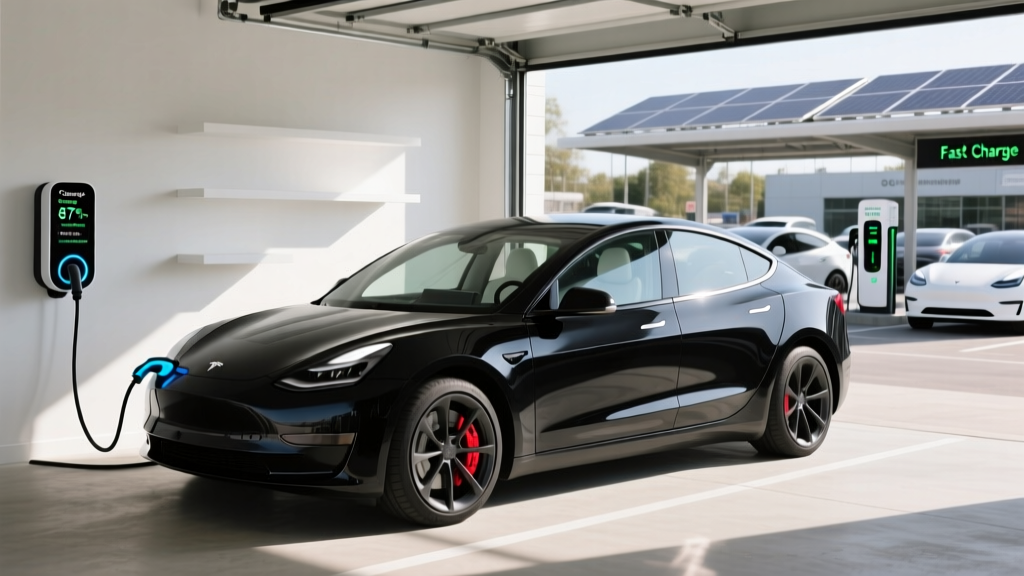
Level 1 (120V) adds 4-5 miles per hour—too slow for daily use. Level 2 (240V/48A) adds 35-44 miles per hour, fully replenishing a day's driving in 1-2 hours. DC fast charging (Tesla Supercharger V3) adds up to 175 miles in 15 minutes, but only at low state of charge (10-30% SoC). For daily charging, Level 2 at home is the sweet spot.
Which connector and charger are compatible with my Tesla Model 3?
The Model 3 uses the NACS connector natively, compatible with Tesla Superchargers and the Tesla Wall Connector. For non-Tesla public Level 2 chargers (J1772), use the included adapter. For non-Tesla DC fast chargers (CCS1), purchase Tesla's CCS adapter ($175). CHAdeMO chargers are not compatible.
How much does charging cost per mile compared to gas?
Charging at home at the U.S. average rate ($0.16/kWh) costs $0.035 per mile—about 70% less than a 30 MPG gas car at $3.50/gallon ($0.117/mile). Even at Tesla Supercharger rates ($0.28-$0.36/kWh), you're paying $0.061-$0.078 per mile, still 33-48% cheaper than gas. Over 12,000 miles annually, home charging saves ~$980 vs. gas.
What electrical upgrades might I need for a home charger?
If your home has a 200A electrical panel with available capacity, you likely need only a dedicated 60A circuit. However, homes with 100A or 150A panels—especially those with electric HVAC, range, and dryer—may require a panel upgrade to 200A or 400A. A licensed electrician will perform a load calculation to determine your panel's capacity. Alternatives include installing a lower-amperage charger (32A instead of 48A) or using a smart load management system.
Should I charge to 100% or 80% daily?
Tesla recommends setting daily charge limits to 80-90% for NMC batteries to maximize longevity. Reserve 100% charges for road trips. The Model 3's battery management system includes a buffer (hidden capacity below 0% and above 100% displayed), so even at 100% displayed, you're not at true cell maximum. However, consistently charging to 100% and letting the car sit accelerates degradation—expect 10-15% range loss over 150,000 miles with proper care vs. 15-20% with frequent 100% charges.
Optimizing your Tesla Model 3 Long Range miles starts with smart charging habits: install a Level 2 home charger for daily use, leverage Superchargers for road trips, and maintain an 80% daily charge limit. With home charging costs at $0.035 per mile and annual savings of ~$980 vs. gas, the Model 3 Long Range remains one of the most economical vehicles on the road—provided you invest in the right charging infrastructure upfront.