If you own or are shopping for a Tesla Model 3 Long Range, you already know the headline specs: an EPA-estimated 363 miles of range, dual-motor all-wheel drive, and a combined output of roughly 346 horsepower (hp). But understanding how to actually keep that 75 kWh (usable) LFP or NMC battery charged efficiently — at home, on road trips, and at what cost — is where real EV ownership begins.
This guide walks through every charging scenario for the 2025/2026 Model 3 Long Range, from a standard 120V wall outlet to a 250 kW Supercharger. We will cover exact speeds in kW (power) and miles added per hour, home electrical requirements, installation costs, connector compatibility, and what you will actually pay per mile compared to a gas sedan.
Charging Levels Explained: kW Speeds and Miles Per Hour
The single most important distinction in EV charging is between kW (kilowatts — the rate of power delivery) and kWh (kilowatt-hours — the total energy stored in your battery). Think of kW as how fast water flows from a hose, and kWh as the size of the bucket. The Model 3 Long Range has roughly 75 kWh of usable battery capacity. How fast you fill that bucket depends on the charging level.
| Level | Voltage | Max Power (kW) | Miles of Range Added Per Hour | Typical Use Case |
|---|---|---|---|---|
| Level 1 (120V) | 120V / 12A | ~1.4 kW | ~3–5 mi/hr | Overnight trickle, emergencies |
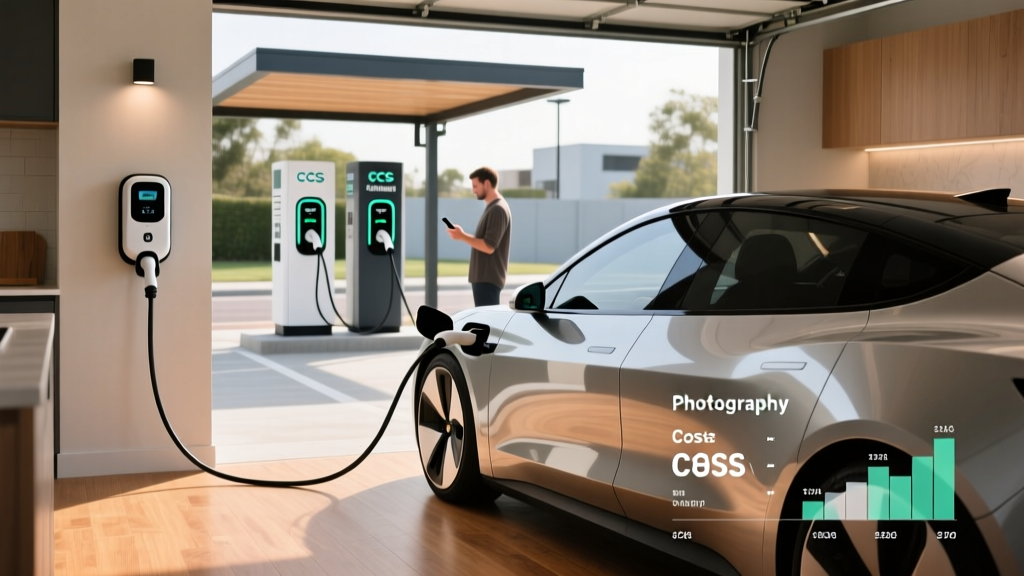
| Level 2 (240V) | 240V / 32–48A | 7.7–11.5 kW | ~25–44 mi/hr | Home daily charging, workplaces |
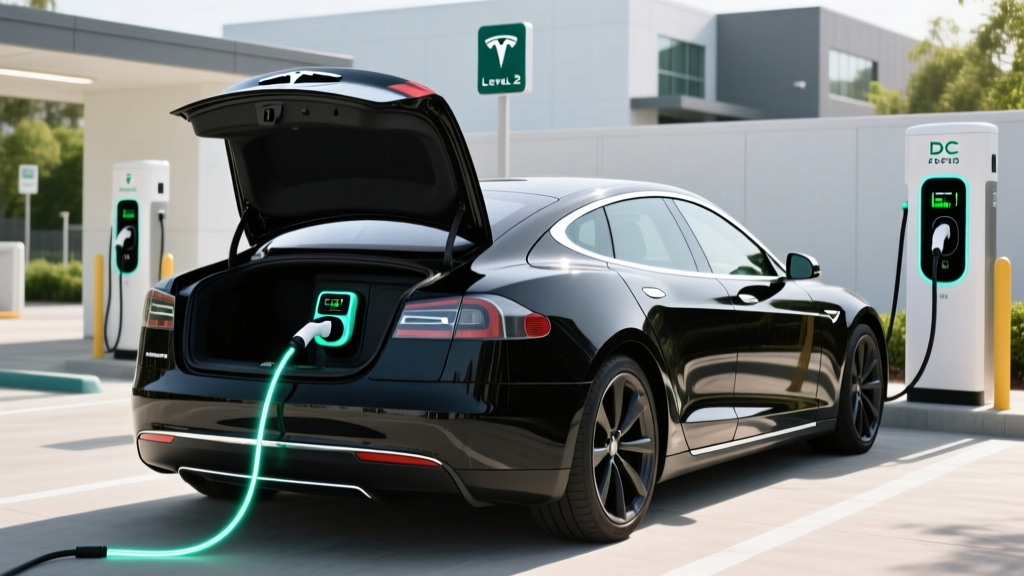
| DC Fast (Supercharger) | 400V+ DC | Up to 250 kW peak | ~175 mi in 15 min | Road trips, highway corridors |
At Level 1, a full charge from 10% to 100% would take over 50 hours — impractical for daily use. Level 2 is the home-charging sweet spot: a 10–80% charge completes in roughly 5–7 hours depending on amperage. On a V3 Tesla Supercharger (250 kW peak), the Model 3 Long Range can add approximately 175 miles in 15 minutes, though peak rate is sustained only between roughly 10–30% State of Charge (SoC) before the charge curve tapers. Expect a 10–80% DC fast charge in about 25–30 minutes.
Home Charger Installation: Electrical Requirements and Costs
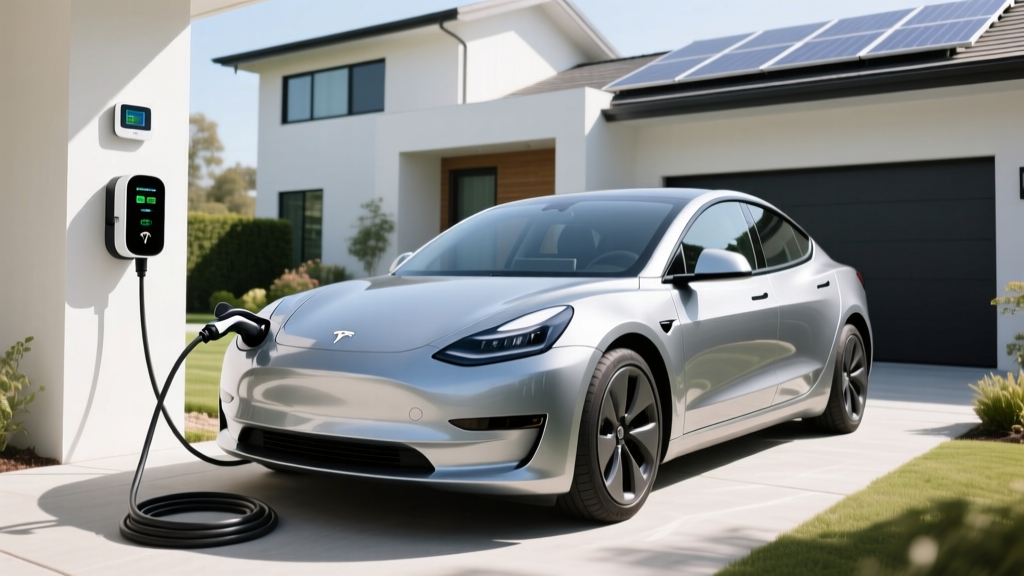
Installing a Level 2 home charger is the single highest-impact upgrade for EV ownership. For the Model 3 Long Range, Tesla recommends a NEMA 14-50 outlet or a hardwired Wall Connector on a dedicated 240V circuit. Here is what that involves electrically:
- Voltage/Amperage: 240V on a dedicated 50A or 60A circuit (breaker rated at 125% of continuous load, so a 48A charger requires a 60A breaker)
- Wire gauge: Typically 6 AWG copper for 50A, or 4 AWG for 60A runs, depending on distance from panel
- Panel capacity: Your electrical panel must have enough spare capacity — typically 200A service is recommended for homes with EV charging plus electric appliances
- Permit: Most jurisdictions require an electrical permit and inspection for new 240V circuits
What Electrical Upgrades Might I Need?
If your home has a 100A panel (common in pre-1990 construction), adding a 50–60A EV circuit may exceed safe panel loading, especially if you already run electric range, dryer, and HVAC. A panel upgrade to 200A typically costs $1,500–$3,500 before charger installation. Homes with modern 200A panels usually have sufficient headroom, but a licensed electrician should perform a load calculation per NEC Article 220.
| Cost Component | Low Estimate | High Estimate | Notes |
|---|---|---|---|
| Level 2 Charger Equipment | $350 | $650 | Tesla Wall Connector, ChargePoint, Emporia |
| Electrician Labor (standard install) | $500 | $1,500 | Depends on run length, wall type, conduit |
| Electrical Permit | $50 | $200 | Varies by municipality |
| Panel Upgrade (if needed) | $1,500 | $3,500 | 100A to 200A service upgrade |
| Total (no panel upgrade) | $900 | $2,350 | Typical suburban home |
| Total (with panel upgrade) | $2,400 | $5,850 | Older homes with 100A service |
The federal Residential Clean Energy Credit (IRC §25C, extended through 2032) covers 30% of charger equipment and installation costs up to $1,000 — potentially saving $300–$700 on a standard install. Confirm eligibility with a tax professional, as income and sourcing rules apply.
Connector Compatibility: NACS, CCS, and Adapters
The 2025/2026 Tesla Model 3 Long Range uses the North American Charging Standard (NACS) connector natively — both for AC Level 2 and DC fast charging. This is the same connector Tesla has used since its inception, now adopted industry-wide as SAE J3400.
| Connector | Used By | Tesla Model 3 Compatible? | Adapter Needed? |
|---|---|---|---|
| NACS (Tesla) | Tesla, Ford, GM, Rivian, others (2025+) | Yes — native | None |
| CCS1 | Most non-Tesla EVs (2014–2024) | With adapter | Tesla CCS Adapter (~$175) |
| CHAdeMO | Nissan Leaf, older Japanese EVs | Not practical | No official Tesla adapter available |
| J1772 (AC Level 2) | Non-Tesla public Level 2 stations | Yes — included | Tesla J1772 adapter (included with car) |
For Model 3 owners, the charging ecosystem is straightforward: Tesla Superchargers and Destination Chargers work natively. Non-Tesla Level 2 stations (ChargePoint, Blink) work with the included J1772 adapter. As Electrify America and other networks add NACS cables in 2025–2026, CCS adapter dependency will decrease. Still, carrying the Tesla CCS adapter is wise for road trips through areas where CCS-only chargers remain.
Cost to Charge: Per-Mile Economics vs. Gas
Charging cost depends heavily on where and when you plug in. Below are realistic $/kWh scenarios and the resulting cost-per-mile for the Model 3 Long Range, which achieves approximately 25 kWh/100 miles (or roughly 4 miles per kWh) in mixed driving per fueleconomy.gov.
| Charging Scenario | $/kWh | Cost Per Mile | Equivalent Gas MPG at $3.50/gal |
|---|---|---|---|
| Home (off-peak utility rate) | $0.08–$0.12 | $0.02–$0.03 | 117–175 MPG |
| Home (standard residential avg) | $0.14–$0.18 | $0.035–$0.045 | 78–100 MPG |
| Public Level 2 (ChargePoint, etc.) | $0.20–$0.35 | $0.05–$0.0875 | 40–70 MPG |
| Tesla Supercharger (avg 2026) | $0.28–$0.36 | $0.07–$0.09 | 39–50 MPG |
| Non-Tesla DC Fast (EA, EVgo) | $0.35–$0.55 | $0.0875–$0.1375 | 25–40 MPG |
For comparison, a 30 MPG gas sedan at $3.50/gallon costs roughly $0.117 per mile. The Model 3 Long Range charged at home off-peak costs approximately 75–80% less per mile. Even at Supercharger rates, the Tesla undercuts most gas vehicles. The takeaway: home charging is where the economics shine most dramatically. Relying exclusively on public DC fast charging narrows the cost advantage significantly.
Recommended Level 2 Home Chargers for the Model 3 Long Range
Not all Level 2 chargers are equal. The Model 3 Long Range can accept up to 11.5 kW (48A) on Level 2 AC, so pairing it with a capable charger maximizes overnight speed. Here are three proven options:
Tesla Wall Connector (Gen 3)
- Power Output: Up to 11.5 kW (48A at 240V)
- Connector: NACS native — no adapter needed
- Cable Length: 24 feet
- Smart Features: Wi-Fi updates, Power Sharing (load-balance multiple units), access control
- Price: ~$475
- Best For: Tesla-only households seeking maximum charge speed and cleanest integration
Emporia Vue Level 2 Charger
- Power Output: Up to 11.5 kW (48A at 240V)
- Connector: J1772 (use Tesla's included adapter) or NACS version (2025+)
- Cable Length: 24 feet
- Smart Features: Energy monitoring, solar integration, time-of-use scheduling, app control
- Price: ~$399
- Best For: Budget-conscious buyers with solar panels or utility time-of-use plans
ChargePoint Home Flex
- Power Output: Up to 12 kW (50A at 240V) — configurable from 16A–50A
- Connector: J1772 (use Tesla adapter) or NACS pigtail option
- Cable Length: 23 feet
- Smart Features: Alexa/Google integration, scheduling, flex amperage to match circuit
- Price: ~$599
- Best For: Multi-EV households (Tesla + non-Tesla) needing flexible amperage
For the Model 3 Long Range specifically, the Tesla Wall Connector is the most seamless choice: native NACS means no adapter fumbling, and 48A fills roughly 44 miles of range per hour — enough to replenish a full day of driving in under 4 hours of overnight charging.
Safety, Code, and Installation Best Practices
EV charging is a high-draw, continuous electrical load — the NEC classifies it as a continuous load requiring circuits rated at 125% of the charger's maximum draw. Key safety requirements include:
- Dedicated circuit: Your Level 2 charger must be on its own dedicated breaker — never shared with other appliances
- GFCI protection: NEC 2020 and later require GFCI protection for outdoor receptacles; hardwired installations may bypass this depending on local code
- Outdoor rating: If mounting outdoors, ensure the charger carries a NEMA 4 (watertight) rating — the Tesla Wall Connector and ChargePoint Home Flex both qualify
- Cable management: Avoid running cables across walkways or driveways where trip hazards or vehicle damage can occur
- Professional installation: Always use a licensed electrician — DIY 240V work carries serious fire and shock risk and will fail inspection if unpermitted
One frequently overlooked consideration: if your garage is attached, some jurisdictions require a smoke/CO detector within 10 feet of the charger location. Check with your local building department before finalizing placement.
Charging Time Examples: 10–80% for Common Scenarios
How long does it actually take to charge the Model 3 Long Range's ~75 kWh battery from 10% to 80% (the practical daily range)? Here are real-world estimates accounting for charge-curve taper on DC fast charging:
| Charging Method | Power (kW) | 10–80% Time | Notes |
|---|---|---|---|
| 120V Level 1 (Mobile Connector) | 1.4 kW | ~37+ hours | Emergency/trickle only |
| 240V / 32A (NEMA 14-50) | 7.7 kW | ~6.75 hours | Common home setup |
| 240V / 48A (Wall Connector) | 11.5 kW | ~4.5 hours | Optimal home charging |
| Tesla V3 Supercharger | 250 kW peak | ~25–30 minutes | Peak rate 10–30% SoC, then tapers |
| Tesla V4 Supercharger | Up to 350 kW | ~20–25 minutes | Availability limited as of early 2026 |
The charge-curve taper is the detail most new EV owners miss: a 250 kW peak does not mean sustained 250 kW delivery. The Model 3 Long Range typically pulls peak power only between roughly 10–30% SoC, then steps down progressively — often to 100 kW by 50% and below 50 kW past 80%. This is normal battery-management behavior to protect cell longevity. For road trips, plan stops around 10–80% rather than attempting full charges, which add significant time for the last 20%.
Frequently Asked Questions
How much does it cost to install a home EV charger for a Tesla Model 3?
Expect $900–$2,350 for a standard installation (equipment, electrician labor, and permit) in a home with adequate 200A panel capacity. If a panel upgrade from 100A to 200A is needed, total costs range from $2,400–$5,850. The federal §25C credit may offset 30% of costs up to $1,000.
How fast will each charging level add range to my Model 3 Long Range?
Level 1 (120V) adds roughly 3–5 miles per hour. Level 2 at 32A adds ~25 miles per hour; at 48A, ~44 miles per hour. A V3 Supercharger can add ~175 miles in 15 minutes during peak charge-curve delivery.
Which connector and charger is compatible with my Tesla Model 3?
The Model 3 Long Range uses NACS natively for all charging. Tesla Superchargers and Destination Chargers connect directly. Non-Tesla J1772 Level 2 stations work with the included adapter. For non-Tesla DC fast chargers with CCS1 cables, the optional Tesla CCS adapter (~$175) is required.
How much does charging cost per mile vs. gasoline?
Charging at home on off-peak rates costs approximately $0.02–$0.03 per mile — roughly 75–80% cheaper than a 30 MPG gas car at $3.50/gallon ($0.117/mile). Even Supercharging at $0.32/kWh costs ~$0.08 per mile, still below most gas vehicles.
What electrical upgrades might my home need for a Level 2 charger?
Homes with 100A electrical panels (common in pre-1990 builds) may require a panel upgrade to 200A, costing $1,500–$3,500. Homes with modern 200A panels typically have sufficient capacity. A licensed electrician must perform a NEC Article 220 load calculation to confirm.
Does the Tesla Model 3 Long Range have a heat pump for cold-weather efficiency?
Yes. The current-generation Model 3 Long Range includes Tesla's octovalve heat-pump system, which significantly reduces cabin-heating energy draw in cold weather compared to resistive heaters. Expect 15–25% range loss in sub-freezing conditions rather than the 30–40% seen in older EVs without heat pumps.
For the latest EPA range and efficiency data, always cross-reference fueleconomy.gov. For federal tax credit and charger incentive rules, consult IRS.gov and confirm with a qualified tax professional before filing.