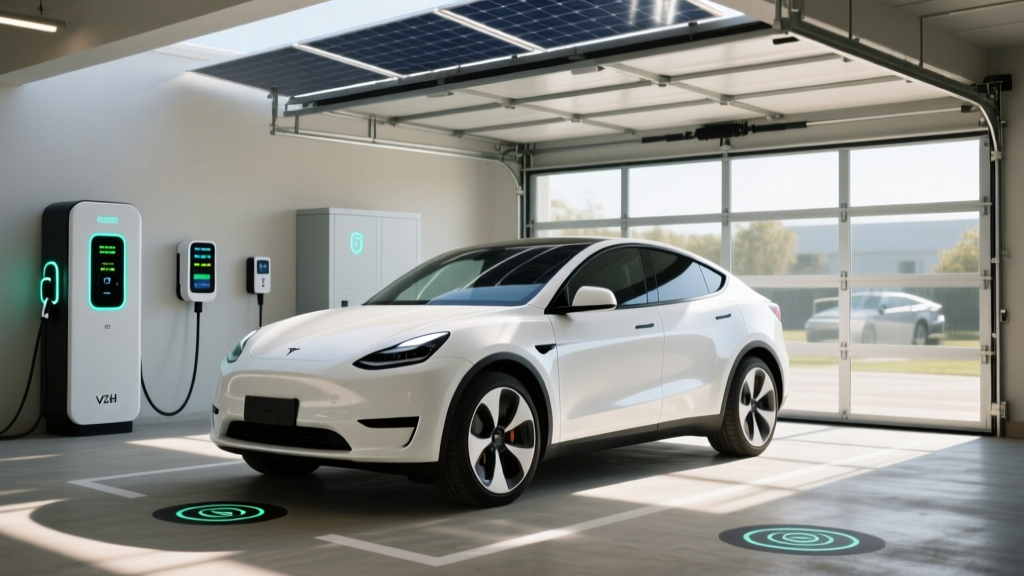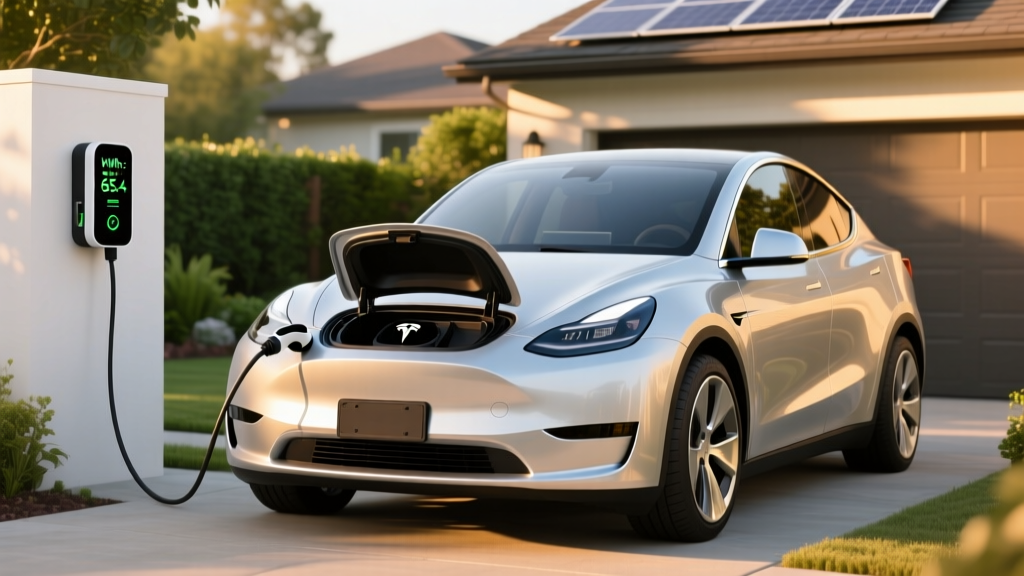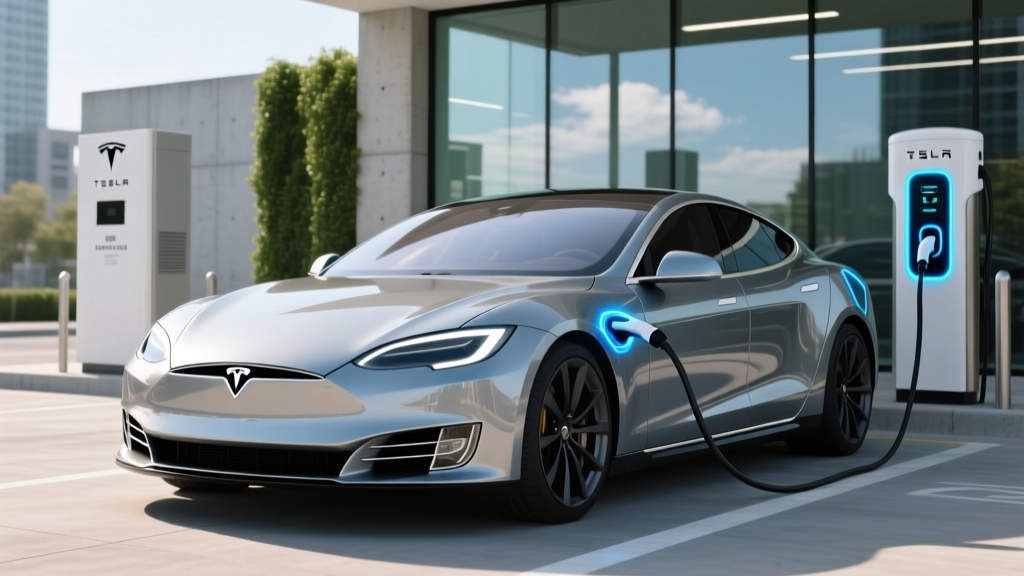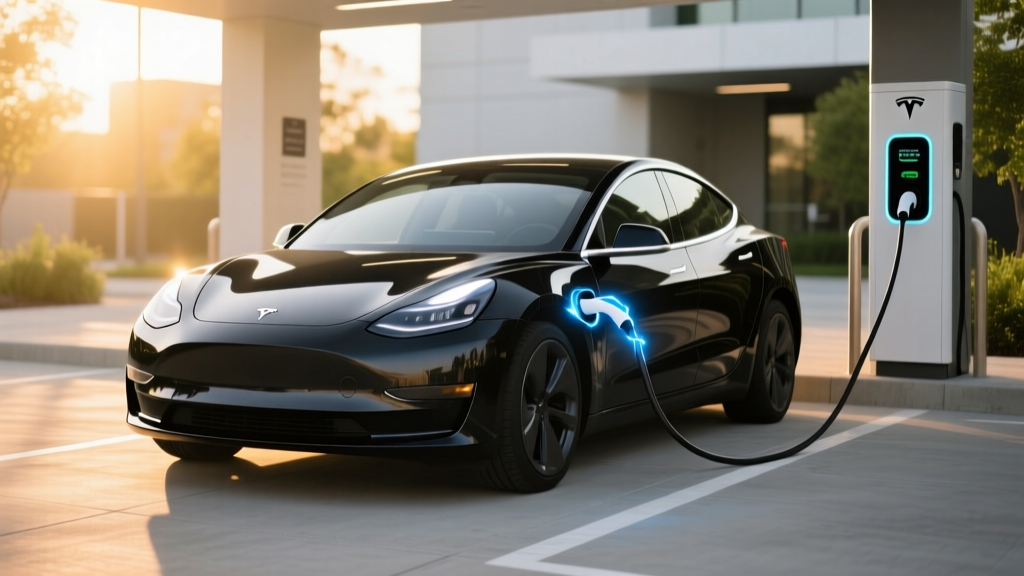
If you own or are shopping for a Tesla Model 3 Long Range, the EPA-estimated 341 miles of range (for the 2025/2026 refresh) is a headline number — but the real question is how many of those miles you can actually use day-to-day, and how quickly you can replenish them. Whether you're topping off in your garage overnight or pulling into a Supercharger on a road trip, understanding the relationship between your battery's 79 kWh (usable) pack, charging power measured in kilowatts (kW), and energy stored in kilowatt-hours (kWh) is the single most important thing you can learn as an EV owner.
This guide breaks down exactly how fast each charging level adds Model 3 Long Range miles, what a home Level 2 installation actually costs in 2026, which connectors you'll encounter, and how charging expenses compare to filling a gas tank. We'll use real numbers — no marketing fluff.
Real-World Model 3 Long Range Miles vs. the EPA Sticker
EPA estimate: 341 miles (2025/2026 model year)
Real-world highway (70-75 mph, moderate temps): ~290–310 miles
Cold weather (below 30°F, highway): ~240–270 miles
City/mixed driving with regen: ~320–340 miles
Source: fueleconomy.gov
The EPA test cycle includes low-speed city driving and moderate highway segments that favor regenerative braking. On a sustained 75 mph interstate run in 40°F weather with the cabin heater running, expect to use roughly 280–300 Wh/mile, which pulls your effective range down to around 260–280 miles from a full charge. That's still excellent — it just means your charging plan for a 500-mile road trip should assume ~250 usable miles between stops, not 341.
The Model 3 Long Range uses an NMC (nickel manganese cobalt) lithium-ion battery pack. Tesla recommends daily charging to 80% for NMC chemistry to preserve long-term battery health, reserving 100% charges for road trips. That 80% daily ceiling gives you roughly 273 EPA miles or about 230–250 real-world miles for your daily driving envelope — more than enough for nearly all commutes.
Charging Levels Explained: kW, Speed, and Miles Per Hour
The most common confusion in EV ownership is the difference between kW (kilowatts), which measures the rate of power delivery — think of it as how wide the hose is — and kWh (kilowatt-hours), which measures total energy stored in your battery, like the size of the tank. Your Model 3 Long Range has roughly 79 kWh of usable battery capacity. A charger delivering 11.5 kW will add 11.5 kWh of energy per hour.
| Level | Voltage / Amps | Power (kW) | Miles Added/Hour | Best Use Case |
|---|---|---|---|---|
| Level 1 | 120V / 12A | ~1.4 kW | ~4–5 mi/hr | Emergency / trickle top-off |
| Level 2 (Home) | 240V / 48A | ~11.5 kW | ~38–44 mi/hr | Daily home charging |
| Level 2 (Public) | 208–240V / 30–40A | 6.6–9.6 kW | ~22–35 mi/hr | Workplace, shopping, hotels |
| DC Fast (V3 Supercharger) | 400V+ DC | Up to 250 kW peak | ~1,000+ mi/hr (peak) | Road trips, rapid replenishment |
| DC Fast (V4 Supercharger) | 800V+ DC | Up to 350 kW (vehicle-limited) | ~1,200+ mi/hr (peak) | Newer Tesla corridors |
A critical nuance: the Model 3 Long Range's onboard charger maxes out at 11.5 kW on Level 2 AC. Even if you plug into a 19.2 kW public Level 2 station, your car will only accept 11.5 kW. That's still fast enough to fully recharge overnight in about 7–8 hours from near-empty.
DC Fast Charging: The Charge Curve Reality
Tesla's V3 Superchargers can deliver up to 250 kW to the Model 3 Long Range, but that peak rate only holds between roughly 10–30% state of charge (SoC). Above 50%, the rate tapers significantly to protect battery health. Here's what a typical Supercharger session looks like:
- 10–80% charge: ~25–30 minutes at a V3 Supercharger
- 10–50%: ~12–15 minutes (sustained 200+ kW)
- 80–100%: ~20+ additional minutes (tapers below 50 kW)
This is why road-trip strategy focuses on charging to 80% and moving on — the last 20% takes nearly as long as the first 70%. Always enable battery preconditioning by setting the Supercharger as your navigation destination; this warms the pack for faster charge acceptance, especially in cold weather.
Home Level 2 Installation: Electrical Requirements, Costs, and Gotchas
Installing a Level 2 charger at home is where most Model 3 owners will do 85–95% of their charging. The Tesla Wall Connector is the obvious first choice, but the electrical work behind the wall is where costs and complexity live.
Electrical Requirements
The Tesla Wall Connector (Gen 3) can deliver up to 11.5 kW on a 60-amp dedicated circuit (48 amps continuous, per NEC 80% rule). Here's what your electrician will assess:
- Circuit: 60A dedicated breaker for full 48A/11.5 kW output; a 50A circuit yields 40A/9.6 kW — still excellent for overnight charging
- Wire gauge: 6 AWG copper for 60A; 8 AWG for 50A
- Voltage: 240V single-phase (standard residential split-phase)
- Panel capacity: Your main service panel must have enough spare amperage to support the new circuit
Installation Cost Breakdown
| Component | Simple Install (panel nearby) | Complex Install (long run / panel upgrade) |
|---|---|---|
| Tesla Wall Connector (hardware) | $475 | $475 |
| Electrician labor (2–4 hrs simple / 6–12 hrs complex) | $300–$700 | $1,200–$3,000 |
| Materials (wire, conduit, breaker) | $100–$250 | $400–$1,000 |
| Permit & inspection | $50–$150 | $100–$300 |
| Panel upgrade (if needed: 100A → 200A) | N/A | $1,500–$4,000 |
| TOTAL | $925–$1,575 | $3,675–$8,775 |
The panel upgrade gotcha: Homes built before the 1990s often have 100-amp service panels that are already near capacity. Adding a 60A EV circuit may require upgrading to a 200A panel — a $1,500–$4,000 job that's the single biggest surprise cost for new EV owners. Always get a licensed electrician to do a load calculation before committing to equipment.
Federal tax credit note: The IRS §30D alternative fuel vehicle refueling property credit can cover up to 30% of home charger equipment and installation costs (capped at $1,000), but eligibility depends on census tract requirements and income limits. Check current-year rules at irs.gov and consult a tax professional.
Connector Compatibility: NACS, CCS, and Adapters
The Tesla Model 3 uses the North American Charging Standard (NACS) connector natively — it's the slim, lightweight plug you see at every Supercharger. As of 2025–2026, the industry has broadly shifted toward NACS, with Ford, GM, Rivian, Hyundai, and others adopting it. But you'll still encounter CCS1 connectors at many Electrify America, EVgo, and third-party DC fast stations.
| Connector | Native? | Where You'll Find It | Adapter Needed? |
|---|---|---|---|
| NACS (Tesla) | Yes — native port | Tesla Superchargers, Destination Chargers, newer third-party stations | None |
| CCS1 | No | Electrify America, EVgo, many non-Tesla DCFC stations | Tesla CCS Adapter (~$250, sold by Tesla) |
| CHAdeMO | No | Legacy stations (declining) | Setec CHAdeMO adapter (~$400) |
| J1772 (Level 2 AC) | No | Public Level 2 stations, hotels, workplaces | Tesla J1772 adapter (included with vehicle) |
Practical advice: Buy the Tesla CCS adapter and keep it in your frunk or trunk. It unlocks thousands of additional DC fast chargers on road trips, and at ~$250 it's cheap insurance against sparse Supercharger coverage in rural corridors. The J1772 adapter ships with the car — use it at any public Level 2 station.
Charging Cost Per Mile: Model 3 Long Range vs. Gas
One of the strongest ownership arguments for the Model 3 Long Range is the per-mile fuel cost. The car averages roughly 26 kWh/100 miles (or about 3.85 miles per kWh) in mixed driving, per EPA data. Let's translate that into dollars.
| Charging Scenario | Rate | Cost / 100 Miles | Cost Per Mile |
|---|---|---|---|
| Home (national avg electricity, ~$0.16/kWh) | $0.16/kWh | $4.16 | $0.042 |
| Home (off-peak TOU rate, ~$0.09/kWh) | $0.09/kWh | $2.34 | $0.023 |
| Tesla Supercharger (avg ~$0.35/kWh) | $0.35/kWh | $9.10 | $0.091 |
| Third-party DCFC (avg ~$0.48/kWh) | $0.48/kWh | $12.48 | $0.125 |
| Gas sedan (30 MPG, $3.50/gal) | $3.50/gal | $11.67 | $0.117 |
At home on off-peak rates, the Model 3 Long Range costs roughly $0.023 per mile — about one-fifth the cost of a 30 MPG gas car at $3.50/gallon. Even at Supercharger rates, you're paying less per mile than gasoline. The savings compound: at 12,000 miles per year, home charging saves roughly $900–$1,100 annually versus gas, which goes a long way toward offsetting the car's premium price.
Maximize savings by enrolling in your utility's time-of-use (TOU) plan and scheduling charging for off-peak hours (typically 10 PM – 6 AM). The Tesla app makes this trivial to set up.
Recommended Home Charging Equipment for the Model 3 Long Range
Since the Model 3's onboard charger caps at 11.5 kW (48A), you want a Level 2 unit that can deliver at least that. Here are three proven options:
Tesla Wall Connector (Gen 3)
- Power output: Up to 11.5 kW (48A on 60A circuit)
- Connector: NACS (native Tesla)
- Cable length: 24 feet
- Smart features: Wi-Fi updates, Tesla app integration, power sharing with second unit, load management
- Price: ~$475
- Verdict: Best-in-class for Tesla owners — seamless integration, cleanest install, fastest Model 3 charging
ChargePoint Home Flex
- Power output: Up to 12 kW (50A on 60A circuit); adjustable down to match circuit
- Connector: NACS or J1772 (NACS version available 2025+)
- Cable length: 23 feet
- Smart features: Wi-Fi, ChargePoint app scheduling, Alexa integration, energy tracking
- Price: ~$599–$699
- Verdict: Great if you also own a non-Tesla EV; flexible amperage settings for older panels
Emporia Level 2 EV Charger
- Power output: Up to 11.5 kW (48A)
- Connector: J1772 (use Tesla's included adapter) or NACS (newer version)
- Cable length: 24 feet
- Smart features: Wi-Fi, Emporia energy monitoring integration, scheduling, solar-aware charging
- Price: ~$399
- Verdict: Budget pick with excellent energy monitoring — pairs well if you have Emporia Vue home energy monitor
All three units are hardwired or NEMA 14-50 plug compatible. Hardwired installations are preferred for 48A+ circuits because NEMA 14-50 receptacles are rated for 50A and some jurisdictions restrict continuous 48A draw through a plug. Your electrician will advise on local code.
Safety, Electrical Code, and Best Practices
EV charging draws significant current for hours at a time — this is not the same as plugging in a dryer for 45 minutes. Safety and code compliance matter.
- Dedicated circuit: Your Level 2 charger must be on its own dedicated breaker — never shared with other appliances
- GFCI protection: NEC 2020 and later require GFCI protection for EV receptacles (not required for hardwired units in most jurisdictions)
- Outdoor rating: If mounting outside, ensure the charger carries a NEMA 4 or IP65 rating. The Tesla Wall Connector is rated for indoor and outdoor use
- Cable management: Use a wall-mounted holster or cable organizer to prevent trip hazards and cord damage
- Permit and inspection: Most jurisdictions require an electrical permit for a new 240V circuit. Skipping this can void home insurance coverage in the event of a fire
- Load calculation: A licensed electrician must perform a NEC Article 220 load calculation to confirm your panel can handle the added draw. Do not skip this step.
Frequently Asked Questions
How much does it cost to install a home EV charger for a Model 3?
For a straightforward install where your electrical panel is near the garage and has sufficient capacity, expect $925–$1,575 all-in (Tesla Wall Connector + electrician + materials + permit). If you need a panel upgrade from 100A to 200A service, total costs can reach $3,675–$8,775. Always get at least two quotes from licensed electricians.
How fast will each charging level add range to my Model 3 Long Range?
Level 1 (120V standard outlet) adds about 4–5 miles per hour — useful only for overnight trickle charging. Level 2 (240V home station at 48A) adds roughly 38–44 miles per hour, fully recharging the 79 kWh battery in about 7–8 hours. DC fast charging at a V3 Supercharger can add up to 175 miles in 15 minutes, but real-world 10–80% sessions take 25–30 minutes due to charge-curve tapering above 50%.
Which connector is compatible with my Tesla Model 3?
Your Model 3 has a native NACS port. It works directly with all Tesla Superchargers, Destination Chargers, and the growing number of NACS-equipped third-party stations. For CCS1 stations (Electrify America, EVgo), you'll need Tesla's CCS adapter (~$250). A J1772 adapter is included with the car for public Level 2 AC stations.
How much does charging cost per mile vs. gas?
At home on average electricity rates ($0.16/kWh), the Model 3 Long Range costs about $0.04 per mile — roughly one-third the cost of a 30 MPG gas car at $3.50/gallon ($0.12/mile). On off-peak TOU rates ($0.09/kWh), it drops to $0.023/mile. Even at Supercharger rates ($0.35/kWh), you're paying about $0.09/mile — still less than gas. Annual savings for a 12,000-mile driver: $700–$1,100.
What electrical upgrades might I need for a home charger?
The most common upgrade is a panel replacement: homes with 100A service often need an upgrade to 200A to safely support a 60A EV circuit alongside existing loads ($1,500–$4,000). You may also need a new breaker slot, heavier-gauge wiring for long conduit runs (50+ feet from panel to garage), or a sub-panel if your main panel is on the opposite side of the house. A licensed electrician's load calculation will identify exactly what's needed.
Should I charge my Model 3 Long Range to 100% every day?
No. Tesla recommends setting the daily charge limit to 80% for NMC battery chemistry to minimize long-term degradation. Reserve 100% charges for road trips where you need maximum range. At 80%, you'll have roughly 273 EPA miles available — more than sufficient for daily driving. The Tesla app makes it easy to set and adjust charge limits.