The Tesla Model 3 Long Range AWD pairs sports-sedan acceleration with one of the most efficient charging architectures on the road. But knowing that the 2026 Model 3 Long Range hits 0-60 mph in 4.2 seconds tells you only half the ownership story. The other half—how fast you can actually recharge that ~75 kWh (usable) LFP/NMC battery, what it costs to wire your garage for Level 2, and how per-mile fuel costs compare to gas—determines whether this car fits your daily life.
This guide uses the Model 3 Long Range as our reference vehicle to walk through every charging level, home-installation cost, connector compatibility, and real-world per-mile economics. Whether you're about to take delivery or you're cross-shopping the Model 3 against a Hyundai Ioniq 6 or BMW i4, these numbers apply broadly across the 2026 EV market.
Tesla Model 3 Long Range: The Core Specs That Shape Charging
Before plugging in, here's the spec sheet that defines what charging hardware you actually need.
| Spec | Value |
|---|---|
| EPA Range | 341 miles |
| Battery (usable) | ~75 kWh (NMC chemistry) |
| Peak DC Fast Charge | 250 kW |
| 10–80% DC Fast Charge | ~25 minutes |
| Max AC Level 2 Rate | 11.5 kW (48A) |
| 0–60 mph | 4.2 seconds |
| Horsepower | ~346 hp (dual motor) |
| EPA Efficiency | 131 MPGe / 25 kWh/100mi |
| Connector | NACS (native Tesla) |
| Base MSRP | ~$47,740 (before incentives) |
| Battery Warranty | 8 years / 120,000 miles (≥70% retention) |
Charging Levels Explained: kW, Miles per Hour, and What Each Means
A critical distinction every EV owner must internalize: kW (kilowatts) is power—the rate at which energy flows. kWh (kilowatt-hours) is energy—the total amount stored in the battery, analogous to gallons in a gas tank. A 75 kWh battery charged at 7.5 kW takes 10 hours; charged at 75 kW, it takes roughly one hour (before taper).
| Level | Voltage / Power | Miles of Range per Hour | Typical Use | Model 3 LR 10–80% Time |
|---|---|---|---|---|
| Level 1 (120V) | 120V / 1.4–1.9 kW | 3–5 mi/hr | Overnight trickle; emergency top-up | ~45+ hours (impractical) |
| Level 2 (240V) | 240V / 7.7–19.2 kW | 25–65 mi/hr | Home daily charging; workplace | ~5.5–8 hours (at 11.5 kW onboard max) |
| DC Fast Charge | 400–800V / 50–350 kW | 150–1,000+ mi/hr (peak) | Road trips; highway corridors | ~25 minutes (at 250 kW peak) |
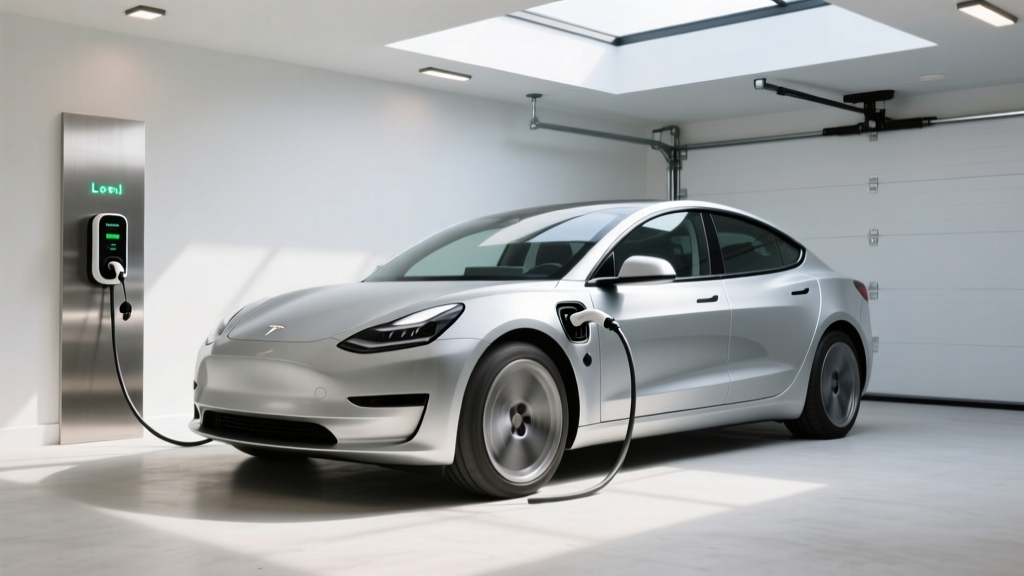
The Model 3 Long Range's onboard charger maxes at 11.5 kW on AC. Installing a 19.2 kW (80A) home charger won't speed up this car—though it future-proofs for higher-capability EVs. A 48A circuit delivering 11.5 kW is the sweet spot, adding roughly 44 miles of range per hour of charging.
Home Charger Installation: Electrical Requirements and Total Cost
This is where most new EV buyers encounter sticker shock—or pleasant surprises. The total cost to install a home Level 2 charger depends on your electrical panel's capacity, the distance from panel to charger location, and local permit fees.
Electrical Requirements for the Model 3 Long Range
To feed the car's 11.5 kW maximum AC charge rate, you need a 240V / 60A dedicated circuit (which delivers 48A continuous, per NEC 80% rule). The charger must be hardwired or use a NEMA 14-50 outlet on its own breaker.
- Panel capacity: Most modern 200A panels can accommodate a 60A EV circuit. Older 100A or 150A panels may require an upgrade ($1,500–$3,500) or a smart load-management device like the Emporia V2H or Span panel.
- Wire gauge: 6 AWG copper for runs up to ~50 feet; 4 AWG for longer runs to minimize voltage drop.
- GFCI: NEC 2020+ requires GFCI protection for outdoor receptacles; hardwired indoor chargers may not require it, but local inspectors vary.
- Permit: Nearly all jurisdictions require an electrical permit ($50–$250) and a final inspection.
How Much Does It Cost to Install a Home EV Charger?
| Component | Low End | High End | Notes |
|---|---|---|---|
| Level 2 Charger (hardware) | $350 | $750 | Wall Connector, ChargePoint, Emporia |
| Electrician labor (standard install) | $500 | $1,500 | Short run, panel has capacity |
| Electrical permit | $50 | $250 | Varies by municipality |
| Panel upgrade (if needed) | $1,500 | $3,500 | 100A→200A service upgrade |
| Conduit/wire (long runs, 50+ ft) | $200 | $800 | Detached garage, underground runs |
| Total (no panel upgrade) | $900 | $2,500 | Most homes with 200A panels |
| Total (with panel upgrade) | $2,400 | $6,050 | Older homes needing service upgrade |
The IRS §30C alternative fuel vehicle refueling property credit covers up to 30% of home charger hardware and installation costs, capped at $1,000, for eligible census tracts. Check your eligibility with a tax professional—this credit has geographic and income-related nuances.
Connector Compatibility: NACS, CCS, and Adapters
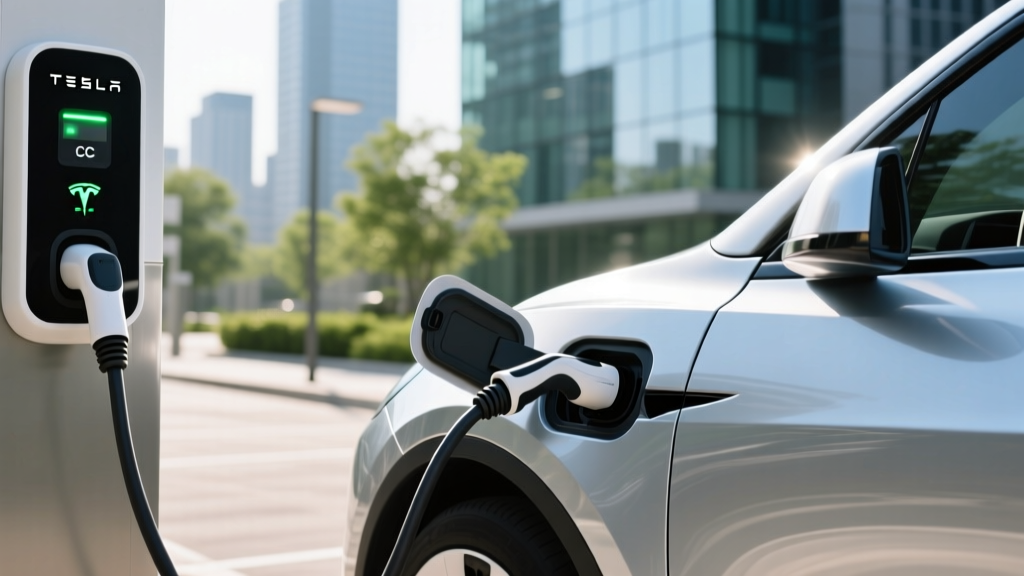
The Model 3 Long Range uses the NACS (North American Charging Standard) connector natively—Tesla's proprietary plug, now adopted by Ford, GM, Rivian, Hyundai, and most major automakers as of 2025–2026. This means:
- Tesla Superchargers: plug-and-play, no adapter needed.
- Non-Tesla DC fast chargers (Electrify America, EVgo, Ionity): most have added NACS cables by 2026, but CCS1 stations may require a CCS-to-NACS adapter (~$150–$250).
- Level 2 public chargers (ChargePoint, Blink): typically use J1772 connectors; Tesla includes a J1772-to-NACS adapter in the glovebox.
| Connector | Where You'll Find It | Adapter Needed? |
|---|---|---|
| NACS (native) | Tesla Superchargers, newer EA/EVgo/ChargePoint stalls | No |
| CCS1 | Legacy Electrify America, some EVgo, older public DCFC | Yes — CCS-to-NACS adapter |
| CHAdeMO | Nissan Leaf-era stations; increasingly rare | Not available for Tesla |
| J1772 (Level 2 AC) | Public Level 2, workplaces, hotels | Yes — included J1772 adapter |
Cost to Charge: Per-Mile Economics vs. Gasoline
The Model 3 Long Range consumes roughly 25 kWh per 100 miles (EPA combined). Your per-mile cost depends entirely on where and when you charge.
| Scenario | $/kWh | Cost per 100 mi | Cost per Mile | |
|---|---|---|---|---|
| Home, off-peak utility rate | $0.09–$0.13 | $2.25–$3.25 | $0.023–$0.033 | |
| Home, standard rate (no TOU) | $0.15–$0.20 | $3.75–$5.00 | $0.038–$0.050 | |
| Public Level 2 (ChargePoint, etc.) | $0.25–$0.49 | $6.25–$12.25 | $0.063–$0.123 | |
| DC Fast Charge (Tesla Supercharger) | $0.28–$0.40 | $7.00–$10.00 | $0.070–$0.100 | |
| DC Fast Charge (EA / EVgo peak) | $0.40–$0.60 | $10.00–$15.00 | $0.100–$0.150 | |
| Gas comparison: 30 MPG sedan at $3.40/gal | $0.113/mile | |||
The takeaway: Home-charged Model 3 owners pay $0.03–$0.05 per mile—roughly one-third to one-quarter the cost of a 30-MPG gas car. Exclusive reliance on DC fast charging narrows the gap to near parity, which is why home Level 2 access is the single biggest economic factor in EV ownership.
According to fueleconomy.gov, the Model 3 Long Range's 131 MPGe rating translates to an annual fuel cost of approximately $550 (based on 15,000 miles/year and $0.15/kWh), compared to ~$1,700 for a comparable 30-MPG gas sedan.
Recommended Home Chargers for the Tesla Model 3 Long Range
These Level 2 chargers match the Model 3's 11.5 kW AC ceiling and offer proven reliability.
Tesla Wall Connector (Gen 3)
Power: 11.5 kW (48A) | Connector: NACS native
Cable: 24 ft | Price: ~$475
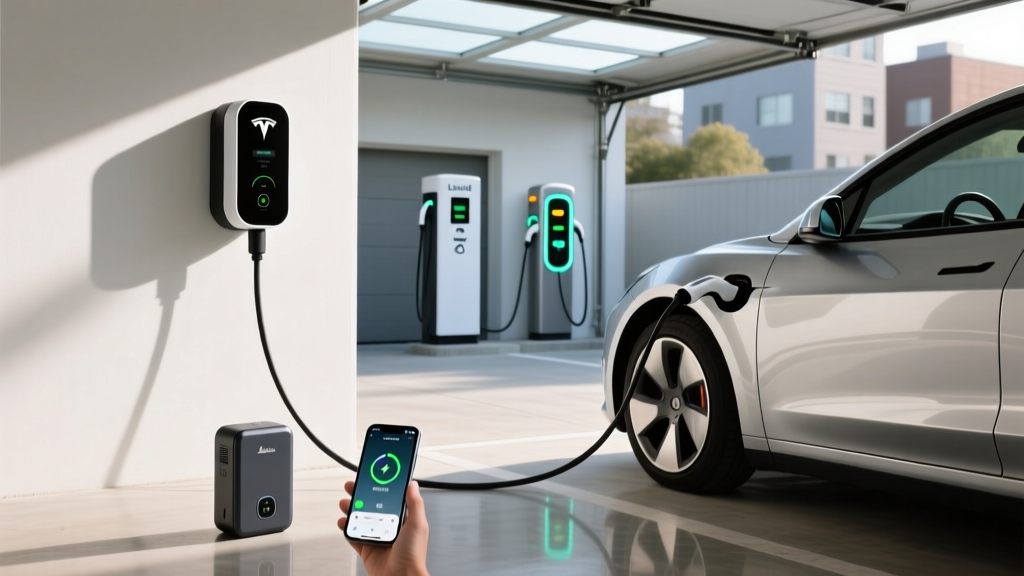
Smart features: Wi-Fi updates, load sharing between two units, access control, integrates with Tesla app. No energy metering for utility rebates in some regions.
Best for: Tesla-only households. Seamless integration, cleanest install.
ChargePoint Home Flex
Power: Up to 12 kW (50A, adjustable) | Connector: J1772 (use Tesla adapter) or NACS
Cable: 23 ft | Price: ~$549–$699
Smart features: Alexa, scheduling, energy tracking, utility demand-response compatible. NACS version available as of late 2025.
Best for: Multi-EV households or renters who may switch vehicles.
Emporia Level 2 EV Charger
Power: Up to 11.5 kW (48A) | Connector: J1772 or NACS
Cable: 24 ft | Price: ~$399
Smart features: Integrated energy monitoring, solar-aware charging, pairs with Emporia Vue home energy monitor, time-of-use scheduling.
Best for: Solar-panel owners and budget-conscious buyers who want detailed energy data.
All three units are NEMA 4 (outdoor-rated) and UL-listed. Hardwired installation is recommended over plug-in for continuous 48A operation—NEMA 14-50 receptacles are rated for 50A but sustained 48A draws can overheat lower-quality outlets.
Safety, Code, and Practical Installation Considerations
EV charging is a high-draw, continuous-load appliance—similar to an electric oven running for 8 hours. Corner-cutting here creates fire risk.
- Dedicated circuit: The charger must be on its own breaker—never shared with other appliances. A 60A breaker for 48A continuous operation (NEC 125% rule).
- Outdoor rating: If installed outside or in an unsealed garage, the unit must be NEMA 4 rated. All three recommendations above meet this standard.
- GFCI protection: Required by NEC 2020 for outdoor receptacles. Hardwired units bypass this requirement in many jurisdictions, but check with your local inspector.
- Cable management: A 24-foot cable drags on garage floors and collects dirt. Wall-mounted cable organizers ($20–$40) protect the connector and keep things tidy.
- Load management: If your panel is near capacity, devices like the Emporia Smart Panel or Tesla's built-in load-sharing (between two Wall Connectors) dynamically reduce charge rate when other circuits draw power, avoiding a costly panel upgrade.
Always hire a licensed electrician familiar with NEC Article 625 (EV charging). Per NHTSA and UL guidance, never use extension cords, adapter splitters, or undersized wiring for EV charging circuits.
Frequently Asked Questions
How fast will each charging level add range to the Model 3 Long Range?
Level 1 (120V): 3–5 miles per hour. Level 2 (240V at 48A/11.5 kW): ~44 miles per hour. DC Fast Charge (250 kW peak): up to 175 miles in 15 minutes, tapering significantly above 80% SoC. For daily driving, Level 2 at home is the practical standard—most owners plug in overnight and wake up with a full battery.
How much does it cost to install a home EV charger for the Model 3?
Between $900 and $2,500 for a straightforward install on a modern 200A panel. If your home needs a panel upgrade from 100A to 200A, expect $2,400–$6,050 total. The IRS §30C credit can offset up to $1,000 (30% of costs) for eligible installations in qualifying census tracts.
Which connector and charger is compatible with the Tesla Model 3?
The 2026 Model 3 uses NACS natively. Tesla Superchargers require no adapter. For CCS1 stations, you'll need a CCS-to-NACS adapter. For Level 2 public stations with J1772 connectors, Tesla includes a J1772-to-NACS adapter. At home, the Tesla Wall Connector (NACS native) is the simplest choice.
How much does charging the Model 3 cost per mile vs. a gas car?
Home charging at off-peak rates costs $0.023–$0.033 per mile. A comparable 30-MPG gas sedan at $3.40/gallon costs ~$0.113 per mile. Even DC fast charging at $0.35/kWh comes to ~$0.088/mile—still below gasoline. The savings widen further if you have rooftop solar or time-of-use utility plans.
What electrical upgrades might I need for a home charger?
If your home has a 200A electrical panel with spare breaker slots, you likely need only a new 60A breaker and wiring run. Homes with 100A or 150A panels, full breaker boxes, or panels with known safety issues (Federal Pacific, Zinsco) will need a service upgrade ($1,500–$3,500). A load-management device can sometimes avoid a panel upgrade by dynamically sharing capacity.
Does the Tesla Model 3 Long Range's 0-60 time change with battery state of charge?
Yes. The 4.2-second 0-60 mph time requires a high State of Charge (above ~80%) and warm battery conditions. Below 50% SoC or in cold weather, expect 4.8–5.5 seconds. The car's pre-conditioning feature (activated when you navigate to a Supercharger or enable "Ludicrous" prep) warms the battery for optimal power delivery.