Tesla Model 3 Long Range: Performance Meets Charging Practicality
The 2026 Tesla Model 3 Long Range AWD remains one of the most compelling electric sedans on the market, balancing blistering acceleration with class-leading efficiency. But owning an EV is only half the equation — how you charge it at home and on the road determines your daily experience. This guide covers the Model 3 Long Range's performance specs alongside a comprehensive charging setup breakdown, from electrical requirements to equipment picks and real-world cost comparisons.
EPA Range: 341 miles | Battery: 79 kWh (usable), NMC chemistry
0-60 mph: 4.2 seconds | Horsepower: 384 hp (dual motor)
Peak DC Fast Charge: 250 kW | 10-80% in ~25 minutes
Base MSRP: $47,740 (before incentives)
Understanding EV Charging Levels: kW vs kWh Explained
Before selecting equipment, clarify the single most confused concept in EV ownership: kW (kilowatts) measures power — how fast energy flows into your battery. kWh (kilowatt-hours) measures energy capacity — how much the battery holds. Think of kW as the width of a pipe and kWh as the size of the tank. A wider pipe (higher kW) fills the tank faster.
The Tesla Model 3 Long Range carries approximately 79 kWh of usable battery capacity. How quickly you replenish that depends entirely on the charging level you use.
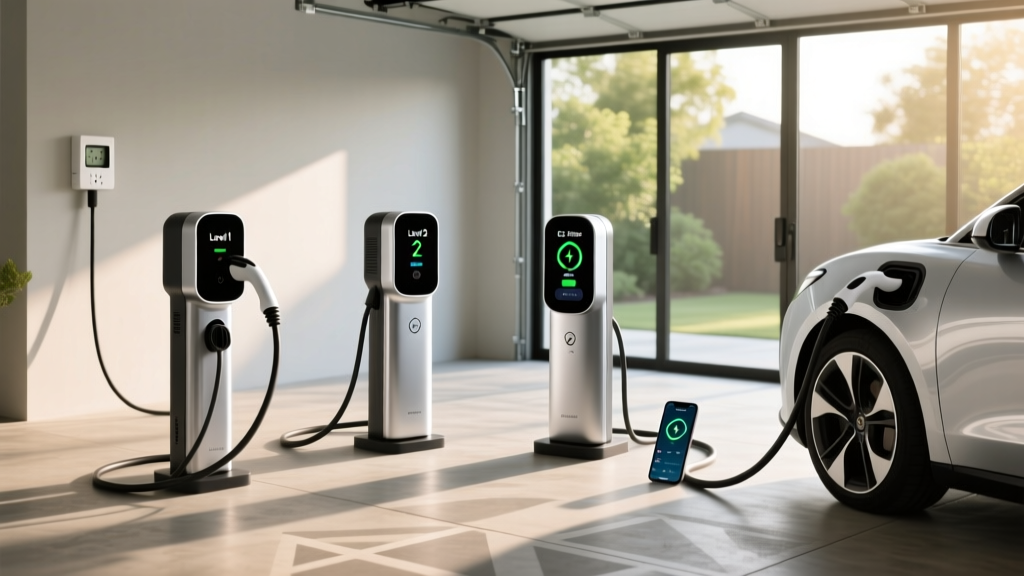
| Level | Power (kW) | Miles of Range Added per Hour | Best Use Case |
|---|---|---|---|
| Level 1 (120V household outlet) | 1.0–1.4 kW | 3–5 miles/hour | Overnight trickle, emergencies |
| Level 2 (240V home/public) | 7.2–19.2 kW | 25–65 miles/hour | Daily home charging, workplace |
| DC Fast Charging | 50–250+ kW | 150–1,000+ miles/hour (peak) | Road trips, rapid top-ups |
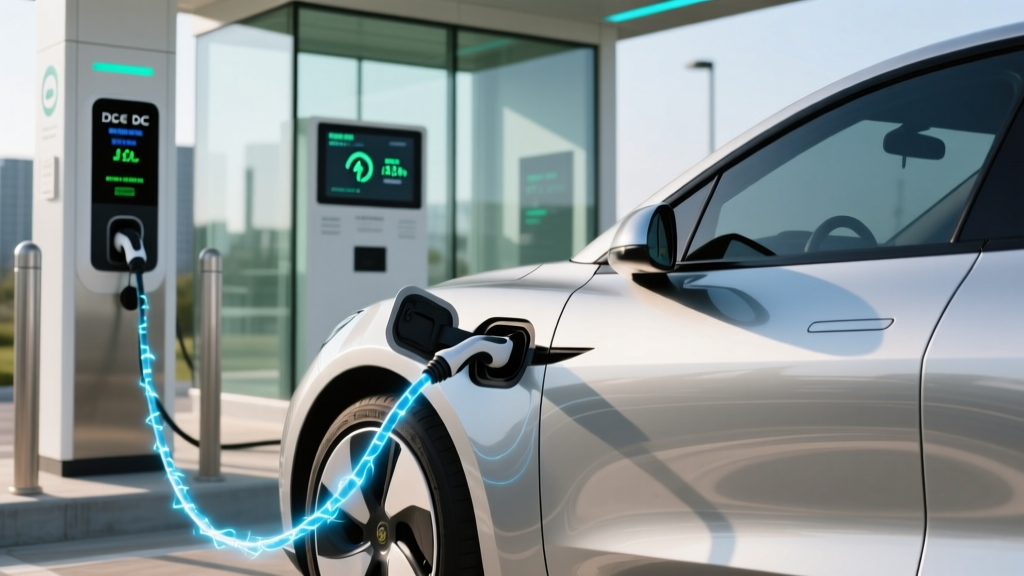
For the Model 3 Long Range, Level 2 home charging at 11.5 kW (48A) adds roughly 44 miles of range per hour — enough to fully replenish overnight. On Tesla Superchargers (V3 at 250 kW peak), you'll recover 10-80% in approximately 25 minutes, though the charge curve tapers significantly above 80% to protect battery health.
Home Charger Installation: Electrical Requirements & Costs
Installing a Level 2 home charger for your Tesla Model 3 Long Range requires a dedicated 240V circuit, typically 60A to support 48A continuous charging (EVSE must be rated at 125% of continuous load per NEC code). Here's what to expect:
Homes built before 2000 often have 100A or 150A electrical panels. Adding a 60A EV circuit may require upgrading to a 200A panel — a $1,500–$3,500 expense that dramatically increases total installation cost. Have a licensed electrician perform a load calculation before committing to equipment.
| Component | Cost Range | Notes |
|---|---|---|
| Level 2 EVSE equipment (40A–48A) | $400–$750 | Tesla Wall Connector, ChargePoint, Emporia |
| Electrician labor (basic install) | $500–$1,200 | Short run from panel, no upgrades |
| Permit & inspection | $50–$200 | Varies by municipality |
| Panel upgrade (if needed) | $1,500–$3,500 | 100A/150A → 200A service |
| Total (no panel upgrade) | $950–$2,150 | Most newer homes |
| Total (with panel upgrade) | $2,450–$5,650 | Older homes with limited capacity |
Connector Compatibility: NACS, CCS, and Adapter Needs
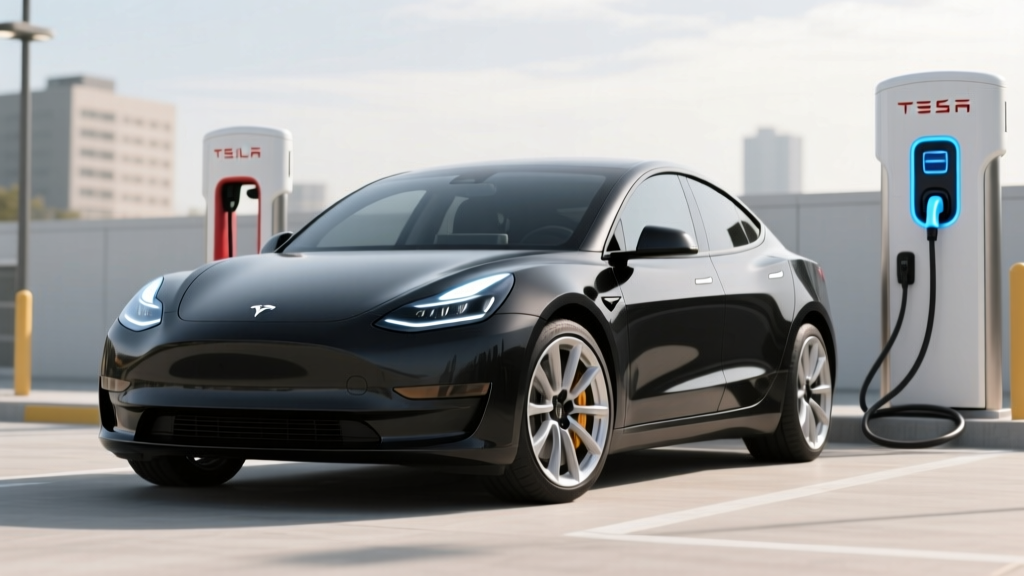
The 2026 Tesla Model 3 Long Range uses the North American Charging Standard (NACS) connector natively — Tesla's proprietary design now adopted industry-wide. This means seamless access to Tesla Superchargers without adapters. However, understanding the broader charging ecosystem matters for public charging flexibility.
| Connector Type | Native Vehicles | Tesla Model 3 Compatibility |
|---|---|---|
| NACS (Tesla) | Tesla, Ford (2025+), GM (2025+), Rivian, others | Native — no adapter needed |
| CCS1 | Hyundai, Kia, VW, BMW, most legacy EVs | Requires NACS-to-CCS adapter (~$200) |
| CHAdeMO | Nissan Leaf (legacy) | Not supported; network declining |
Tesla sells a CCS adapter for $199 that unlocks Electrify America, EVgo, and other CCS networks — valuable for road trips through areas with limited Supercharger coverage. The Model 3's onboard charger accepts up to 11.5 kW on Level 2 (48A at 240V), so ensure your home EVSE matches or exceeds this to maximize charging speed.
Recommended Home Chargers for Tesla Model 3 Long Range
Not all Level 2 chargers are equal. Here are three proven options that pair well with the Model 3 Long Range's 11.5 kW onboard charging capability:
Tesla Wall Connector
Power: Up to 11.5 kW (48A)
Cable Length: 24 ft
Smart Features: Wi-Fi, OTA updates, load sharing, integrated NACS plug
Price: $475
Best For: Tesla-only households; seamless integration
Emporia Vue Level 2 Charger
Power: Up to 11.5 kW (48A)
Cable Length: 24 ft
Smart Features: Energy monitoring, solar integration, NACS/CCS configurable, load management
Price: $399
Best For: Solar-equipped homes, budget-conscious buyers
ChargePoint Home Flex
Power: Up to 12 kW (50A, configurable)
Cable Length: 23 ft
Smart Features: App scheduling, Alexa integration, NACS/CCS adapter included
Price: $699
Best For: Multi-EV households, future-proofing
Charging Cost Per Mile: EV vs Gas Comparison
The Tesla Model 3 Long Range achieves an EPA-rated 132 MPGe combined (source: fueleconomy.gov), translating to roughly 25 kWh per 100 miles driven. Let's compare real-world charging costs against a gas-powered equivalent like the Toyota Camry (32 MPG combined).
| Charging/Fuel Scenario | Cost per kWh/Gallon | Model 3 LR Cost/Mile | Camry Cost/Mile |
|---|---|---|---|
| Home off-peak (utility rate) | $0.13/kWh | $0.033 | $0.109 (at $3.50/gal) |
| Home peak (utility rate) | $0.28/kWh | $0.070 | $0.109 |
| Public Level 2 (ChargePoint, EVgo) | $0.35/kWh | $0.088 | $0.109 |
| DC Fast Charging (Tesla Supercharger) | $0.32/kWh | $0.080 | $0.109 |
Even at peak public charging rates, the Model 3 Long Range costs less per mile than a fuel-efficient gas sedan. Home charging during off-peak hours delivers the best economics — roughly $0.03 per mile, or one-third the cost of gasoline. Over 15,000 annual miles, that's a savings of $1,140+ per year.
Tesla Model 3 Long Range 0-60 Performance & Real-World Range
The 2026 Model 3 Long Range AWD delivers a 4.2-second 0-60 mph time — quick enough to merge confidently and overtake without drama. The dual-motor setup produces 384 horsepower and 346 lb-ft of torque, with all-wheel traction ensuring consistent launches in wet or dry conditions.
EPA-rated: 341 miles
Highway driving (70-80 mph): ~280-300 miles
Cold weather (below 32°F): ~240-270 miles
Mixed city/highway (moderate temps): ~310-330 miles
Range varies with speed, temperature, terrain, and HVAC use. Preconditioning the battery while plugged in (via the Tesla app) minimizes cold-weather losses and optimizes DC fast charging speeds.
On DC fast chargers, the Model 3 Long Range peaks at 250 kW but sustains that rate only between 10-30% state of charge. Expect the curve to taper to ~100 kW by 60% and ~50 kW above 80%. This is normal battery management — charging to 100% on DC fast chargers wastes time and accelerates degradation.
Safety, Code Compliance & Installation Best Practices
EV charger installation isn't a DIY project. The National Electrical Code (NEC) requires:
- Dedicated circuit: Your EVSE must have its own breaker — no sharing with other appliances
- GFCI protection: Required for all outdoor installations and some indoor locations (check local code)
- Proper wire gauge: 6 AWG copper for 60A circuits; undersized wire creates fire risk
- Outdoor rating: If installing outside, use NEMA 4-rated equipment and weatherproof conduit
- Permit & inspection: Most jurisdictions require electrical permits for EVSE installation — skipping this voids insurance coverage in case of fire
Hire a licensed electrician experienced with EV installations. Ask for a load calculation to confirm your panel can handle the additional 60A draw, especially if you run electric HVAC, water heating, or cooking appliances.
Frequently Asked Questions
How much does it cost to install a home EV charger for my Tesla Model 3?
Expect $950–$2,150 for a basic installation (equipment + electrician + permit) if your electrical panel has sufficient capacity. Older homes requiring a panel upgrade may pay $2,450–$5,650 total. Get quotes from 2-3 licensed electricians before committing.
How fast will Level 2 charging add range to my Model 3 Long Range?
At 11.5 kW (48A), you'll add approximately 44 miles of range per hour. A full charge from 10% to 100% takes about 7-8 hours — perfect for overnight replenishment.
Do I need an adapter to charge my Tesla at non-Tesla public chargers?
Yes, for CCS-equipped stations (Electrify America, EVgo), you'll need Tesla's CCS adapter ($199). The Model 3 natively supports NACS/Tesla Superchargers without adapters.
Is home charging really cheaper than gas?
Yes. At the national average electricity rate ($0.16/kWh), the Model 3 Long Range costs ~$0.04 per mile to charge at home — roughly 60% less than a 32 MPG gas car at $3.50/gallon.
What if my home's electrical panel can't handle a 60A circuit?
You have options: install a lower-amperage charger (32A/40A) that still adds 25-35 miles per hour, upgrade your panel to 200A service ($1,500–$3,500), or explore smart chargers with load-sharing features that dynamically adjust draw based on household usage.