2022 Tesla Model 3 Long Range AWD at a Glance
The 2022 Tesla Model 3 Long Range AWD remains one of the most efficient electric sedans on the road, even as newer competitors have entered the market. With an EPA-estimated 358 miles of range, a 75 kWh (usable) battery pack, and peak DC fast charging at 250 kW, it rewards owners who understand how to charge it properly — and punishes those who don't.
This guide walks through every charging scenario for the 2022 Model 3 Long Range AWD: what each charging level delivers in real-world miles per hour, what a home Level 2 installation actually costs (including the panel upgrade many older homes need), which connectors and adapters you'll encounter on public networks, and how the cost per mile stacks up against a comparable gas sedan in 2026.
| Spec | Value |
|---|---|
| EPA Range | 358 miles |
| Real-World Highway Range | ~290–310 mi (75 mph); ~250–270 mi in cold weather |
| Battery Capacity (Usable) | ~75 kWh (NMC chemistry) |
| Peak DC Fast Charge Rate | 250 kW (V3 Supercharger) |
| 10–80% DC Fast Charge Time | ~27 minutes |
| Level 2 Max Acceptance | 11.5 kW (48A onboard charger) |
| Connector | NACS (Tesla proprietary) |
| EPA Efficiency | 132 MPGe combined (25 kWh/100 mi) |
Charging Levels Explained: How Fast Does Each Add Range?
Before plugging in anywhere, it's critical to understand the difference between kW (kilowatts — the rate of power delivery, like water pressure) and kWh (kilowatt-hours — the total energy stored, like the size of the tank). Your charger's kW rating determines how quickly it fills the battery's kWh capacity.
The 2022 Model 3 Long Range AWD can accept up to 11.5 kW on Level 2 and 250 kW on DC fast charging. Here's what each level delivers in practical terms:
| Level | Power Source | Max kW | Miles of Range Added Per Hour | Best For |
|---|---|---|---|---|
| Level 1 | 120V household outlet | ~1.4 kW | ~4–5 mi/hr | Emergency trickle; overnight top-off |
| Level 2 (Home/Public) | 240V, 40–60A circuit | Up to 11.5 kW (car-limited) | ~35–44 mi/hr | Daily home charging; destination charging |
| DC Fast Charging | 480V+ commercial station | Up to 250 kW (V3 Supercharger) | ~1,000+ mi/hr (at peak) | Road trips; rapid top-ups |
A few real-world notes: Level 1 charging on a standard 120V outlet is painfully slow for a 75 kWh battery — a full 10–80% charge would take roughly 40+ hours. It's viable only if you drive under 30 miles daily and can leave the car plugged in for 12+ hours. Level 2 is the practical baseline for daily ownership. DC fast charging at a Tesla V3 Supercharger (250 kW) will add roughly 175 miles in 15 minutes under ideal conditions, but the charge curve tapers significantly above 60% State of Charge (SoC), which is why 10–80% takes ~27 minutes rather than a linear projection.
Home Level 2 Installation: Electrical Requirements, Costs & Gotchas
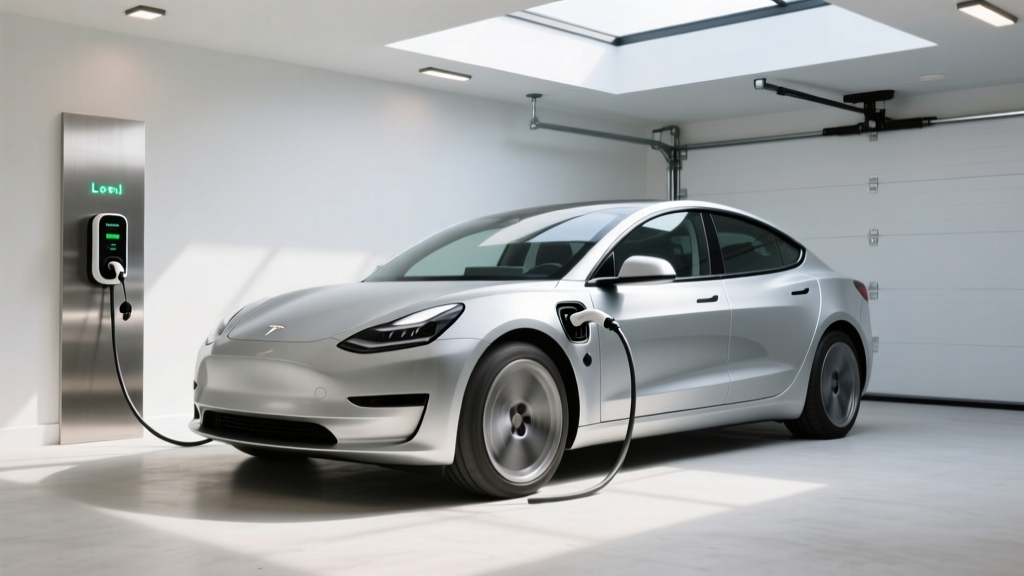
Installing a Level 2 home charger is the single biggest ownership decision for any EV buyer. For the 2022 Model 3 Long Range AWD, a properly installed 240V / 60A circuit feeding a Tesla Wall Connector at 48A will fully replenish the battery overnight and add ~44 miles of range per hour — enough to recover a full day's driving in about 7–8 hours.
Electrical Requirements
The Tesla Wall Connector (Gen 3) can deliver up to 11.5 kW when connected to a 60-amp dedicated circuit (the charger draws a continuous 48A, and electrical code requires circuits to be rated at 125% of continuous load). Key requirements:
- Circuit: Dedicated 60A, 240V breaker
- Wire: 6 AWG copper (or 4 AWG aluminum) THHN in conduit, or 6/2 NM-B for short indoor runs
- Connector: NACS (native Tesla) — no adapter needed for the Model 3
- GFCI: Not required for hardwired installations per NEC 2020/2023; required if using a plug-in receptacle (e.g., NEMA 14-50)
- Outdoor rating: The Wall Connector is NEMA 4 rated for outdoor use
Panel Upgrade: The Cost Many Buyers Overlook
If your home has a 100A main electrical panel — common in homes built before 2000 — adding a 60A EV circuit may exceed your panel's capacity, especially if you already have electric appliances (dryer, oven, HVAC). A licensed electrician will perform a load calculation per NEC Article 220 to determine if your panel can handle the additional draw. If not, a panel upgrade to 200A typically costs $1,500–$3,500 before the charger installation even begins.
| Component | Low Estimate | High Estimate |
|---|---|---|
| Tesla Wall Connector (Gen 3, 24ft cable) | $475 | $475 |
| Electrician labor (60A circuit, hardwired) | $600 | $2,000 |
| Permit & inspection | $50 | $300 |
| Wire, conduit, breaker, misc. materials | $100 | $500 |
| Electrical panel upgrade (if needed) | $1,500 | $3,500 |
| Total (no panel upgrade) | $1,225 | $3,275 |
| Total (with panel upgrade) | $2,725 | $6,775 |
Costs vary dramatically based on the distance from your panel to the charger location, whether walls need to be opened, and local labor rates. A simple garage install with the panel on the same wall can be as low as $1,200. A detached-garage run with trenching and a panel upgrade can exceed $6,000. Always get 2–3 quotes from licensed electricians and confirm they pull a permit — unpermitted work can void home insurance and complicate resale.
Connector Compatibility & the Expanding Supercharger Network
The 2022 Model 3 Long Range AWD uses the NACS (North American Charging Standard) connector — Tesla's proprietary plug, which was opened to other automakers starting in 2024. As of 2026, the NACS connector has effectively become the dominant standard in North America, adopted by Ford, GM, Rivian, Hyundai, and most major brands.
For the Model 3 owner, this means:
- Tesla Superchargers: Native compatibility — plug in and charge. The network exceeds 30,000 stalls globally, with V3 (250 kW) and V4 stalls now widespread.
- Non-Tesla DC fast chargers (CCS1): Electrify America, EVgo, and ChargePoint stations use the CCS1 connector. You'll need a Tesla CCS Adapter (~$175–$250) to use these stations. The Model 3's software supports CCS charging with the adapter.
- CHAdeMO: Largely obsolete in North America. Skip it.
| Connector | Compatibility | Adapter Needed? |
|---|---|---|
| NACS (Tesla) | Native | No |
| CCS1 | Yes, with adapter | Tesla CCS Adapter ($175–$250) |
| CHAdeMO | Not supported | N/A |
| J1772 (Level 2 public) | Yes, with adapter | Tesla J1772 Adapter (included with car) |
Pro tip: The Tesla J1772 adapter ships with the car and works at any public Level 2 station with a J1772 connector — including hotels, workplaces, and shopping centers. Keep it in the glovebox at all times.
Charging Cost Per Mile: Model 3 Long Range vs. Gas Sedan
The 2022 Model 3 Long Range AWD consumes approximately 25 kWh per 100 miles (EPA combined). At an average U.S. residential electricity rate of $0.17/kWh in 2026 (source: EIA), home charging costs roughly $0.0425 per mile. Compare this to a gas sedan achieving 30 MPG at $3.40/gallon — $0.113 per mile.
| Scenario | Cost/kWh or Gallon | Cost Per Mile (Model 3) | Cost Per Mile (Gas, 30 MPG) |
|---|---|---|---|
| Home charging (off-peak/utility rate) | $0.12/kWh | $0.030 | $0.113 |
| Home charging (avg. residential) | $0.17/kWh | $0.043 | $0.113 |
| Public Level 2 (ChargePoint, etc.) | $0.30/kWh | $0.075 | $0.113 |
| Tesla Supercharger (avg. V3) | $0.35/kWh | $0.088 | $0.113 |
| Non-Tesla DC Fast (EA, EVgo) | $0.45/kWh | $0.113 | $0.113 |
The takeaway: Home charging is where the economics overwhelmingly favor the EV. At off-peak utility rates, the Model 3 costs less than one-third per mile compared to gas. Even at Supercharger rates, you're still saving 20–25% per mile. However, frequent reliance on non-Tesla DC fast chargers at $0.45+/kWh erases the cost advantage entirely — a strong argument for prioritizing home charging access.
For a driver covering 12,000 miles annually, home charging at $0.17/kWh costs roughly $510/year in electricity, versus $1,360/year in gasoline for the comparable sedan — a savings of ~$850 per year, or $4,250 over five years.
Recommended Home Chargers for the Model 3 Long Range
While any J1772 Level 2 charger will work with the included Tesla adapter, a native NACS charger eliminates the adapter step and often provides better integration with the Tesla app. Here are the top options as of 2026:
Tesla Wall Connector (Gen 3)
- Power Output: Up to 11.5 kW (48A)
- Cable Length: 24 feet
- Connector: NACS (native Tesla)
- Smart Features: Wi-Fi updates, load sharing (pair two units on one circuit), Tesla app integration, access control
- Price: $475
- Verdict: Best overall for Tesla owners. Seamless integration, fast charging, and clean installation. Hardwired only — no plug option.
ChargePoint Home Flex
- Power Output: Up to 12 kW (50A), adjustable down to 16A
- Cable Length: 23 feet
- Connector: J1772 (use Tesla adapter) or NACS (2025+ models)
- Smart Features: Wi-Fi, Alexa integration, ChargePoint app scheduling, flexible amperage for panel-constrained homes
- Price: $549–$599
- Verdict: Best for households with mixed EV brands. The adjustable amperage (down to 16A on a 20A circuit) is ideal for older panels that can't support 60A.
Emporia Level 2 EV Charger
- Power Output: Up to 11.5 kW (48A)
- Cable Length: 24 feet
- Connector: J1772 or NACS (select at purchase)
- Smart Features: Wi-Fi, Emporia energy monitoring integration, scheduled charging, solar-aware charging
- Price: $399
- Verdict: Best value pick. Ideal if you already use Emporia's home energy monitor to track solar production and optimize charging during excess generation.
For the 2022 Model 3 Long Range AWD specifically, the Tesla Wall Connector is the default recommendation — native NACS, full 48A draw, and no adapter fumbling in the rain. Choose the ChargePoint Home Flex only if you have a second non-Tesla EV or a panel that limits you to a 30A or 40A circuit.
Safety, Electrical Code & Installation Best Practices
EV charging places a sustained, high-amperage load on your home's electrical system — far more demanding than intermittent appliances like a dryer. Corners cut during installation create fire risk. Follow these non-negotiable guidelines:
- Dedicated circuit: Your Level 2 charger must be on its own dedicated breaker. Never share a circuit with other appliances.
- Hardwired vs. plug-in: Hardwired installations (no receptacle) avoid GFCI nuisance tripping and are generally more reliable. If you prefer plug-in flexibility (e.g., to take the charger when you move), use a NEMA 14-50 receptacle installed by a licensed electrician with a GFCI breaker per NEC 2023 requirements.
- Permit and inspection: Every jurisdiction requires a permit for new 240V circuits. The inspection ensures proper wire gauge, breaker sizing, grounding, and torque specs. Skip the permit and you risk insurance denial in the event of an electrical fire.
- Outdoor rating: If your charger is mounted outside, confirm it carries a NEMA 4 (weather-resistant) rating. The Tesla Wall Connector and ChargePoint Home Flex both qualify.
- Wire gauge: Verify your electrician uses 6 AWG copper for a 60A circuit. Undersized wire on a long run creates voltage drop and heat buildup.
Per the National Electrical Code (NEC), all EV charging installations must comply with Article 625. Many utilities also offer rebates of $250–$500 for Level 2 installations — check with your local provider before scheduling work.
Charging Time Examples: 10–80% at Each Level
The 2022 Model 3 Long Range AWD's ~75 kWh usable battery means a 10–80% charge requires approximately 52.5 kWh of energy delivered. Here's how long that takes at each charging level, accounting for real-world charge curve taper:
| Charging Method | Delivered Power | Estimated 10–80% Time |
|---|---|---|
| Level 1 (120V, 12A) | ~1.4 kW | ~38 hours |
| Level 2 (240V, 32A / NEMA 14-50) | ~7.7 kW | ~7 hours |
| Level 2 (240V, 48A / Wall Connector) | ~11.5 kW | ~4.5 hours |
| DC Fast (Tesla V2 Supercharger, 150 kW) | Peak 150 kW, tapered | ~35 minutes |
| DC Fast (Tesla V3 Supercharger, 250 kW) | Peak 250 kW, tapered | ~27 minutes |
| DC Fast (CCS via adapter, 150 kW station) | Peak ~150 kW | ~35–40 minutes |
Important context on DC fast charging: The 250 kW peak rate applies only between roughly 10–30% SoC. Above 50%, the rate drops to ~100 kW. Above 80%, it slows to ~40 kW or less to protect the battery. This is why manufacturers quote 10–80% times rather than 0–100% — charging the final 20% can take as long as the first 70%. For road trips, plan to charge from 10–80% and skip the slow top-off unless you're stopping for an extended break.
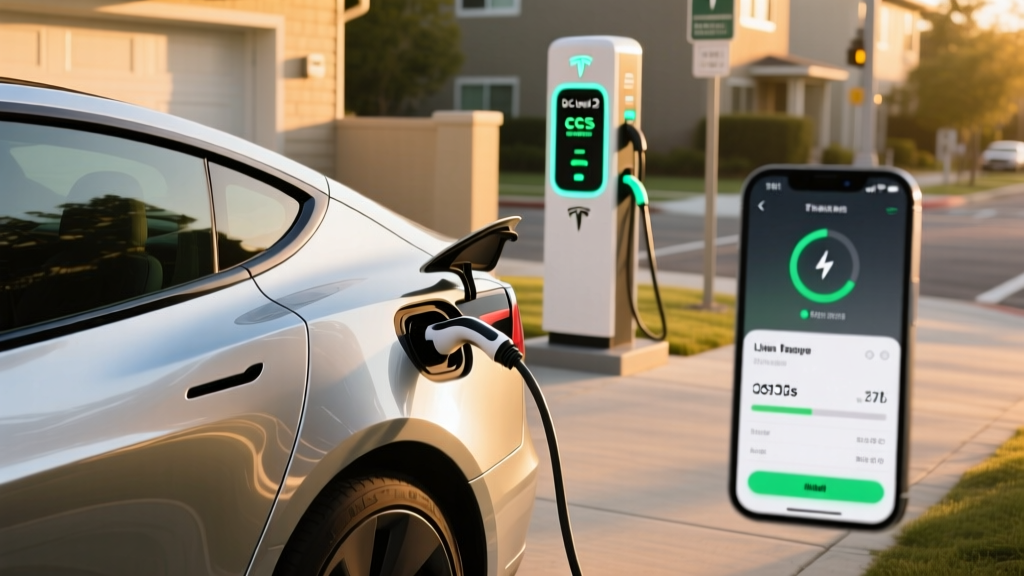
Preconditioning tip: Navigate to a Supercharger using the car's built-in navigation, and the Model 3 will automatically precondition (warm) the battery to optimize charge acceptance. Arriving at a Supercharger with a cold battery can double your charging time in winter. Always use the nav-based preconditioning feature.
Frequently Asked Questions
How much does it cost to install a home EV charger for the 2022 Model 3 Long Range?
A typical installation with a Tesla Wall Connector on a 60A circuit costs $1,225–$3,275 if your electrical panel has sufficient capacity. If a panel upgrade from 100A to 200A is needed, add $1,500–$3,500, bringing the total to $2,725–$6,775. Always get a load calculation from a licensed electrician first.
How fast will each charging level add range to my Model 3?
Level 1 (120V) adds ~4–5 miles per hour. Level 2 (240V, 48A) adds ~44 miles per hour. DC fast charging at a V3 Supercharger (250 kW) can add ~175 miles in 15 minutes at peak rates, though the charge curve tapers as the battery fills.
Which connector does the 2022 Tesla Model 3 Long Range AWD use?
The 2022 Model 3 uses the NACS (Tesla) connector natively. It works directly with all Tesla Superchargers and Destination Chargers. For CCS1 public DC fast chargers (Electrify America, EVgo), you'll need the Tesla CCS Adapter ($175–$250). The included J1772 adapter works for public Level 2 stations.
How much does charging cost per mile compared to gas?
At the U.S. average residential rate of $0.17/kWh, the Model 3 Long Range costs about $0.043 per mile. A 30 MPG gas sedan at $3.40/gallon costs $0.113 per mile. Home charging saves roughly $0.07 per mile, or ~$840 per year at 12,000 miles. Public DC fast charging at $0.35–$0.45/kWh narrows or eliminates the gap.
What electrical upgrades might my home need for a Level 2 charger?
Homes with a 100A main panel may need an upgrade to 200A to support a 60A EV circuit, especially if you have other electric appliances. The average cost for a panel upgrade is $1,500–$3,500. Homes with a 200A panel and capacity headroom typically need no upgrade — just a new 60A breaker and dedicated circuit. A licensed electrician will perform a load calculation to determine your specific needs per NEC Article 220.
Should I charge to 100% daily?
No. The 2022 Model 3 Long Range uses NMC battery chemistry, which degrades faster when held at 100% SoC for extended periods. Tesla recommends setting the daily charge limit to 80% and only charging to 100% before long road trips. This practice significantly extends long-term battery health. (Note: Tesla's LFP-equipped Standard Range models can and should be charged to 100% regularly, but the Long Range AWD uses NMC.)
Does the 2022 Model 3 Long Range qualify for any tax credits in 2026?
The 2022 Model 3 Long Range AWD was eligible for the federal §30D credit when purchased new, subject to MSRP caps ($55,000 for sedans), buyer income limits, and battery sourcing requirements. For used purchases in 2026, the Used Clean Vehicle Credit (§25E) may apply — up to $4,000 or 30% of the sale price (whichever is lower) on vehicles priced under $25,000. Consult IRS guidelines and a tax professional for eligibility specific to your situation.