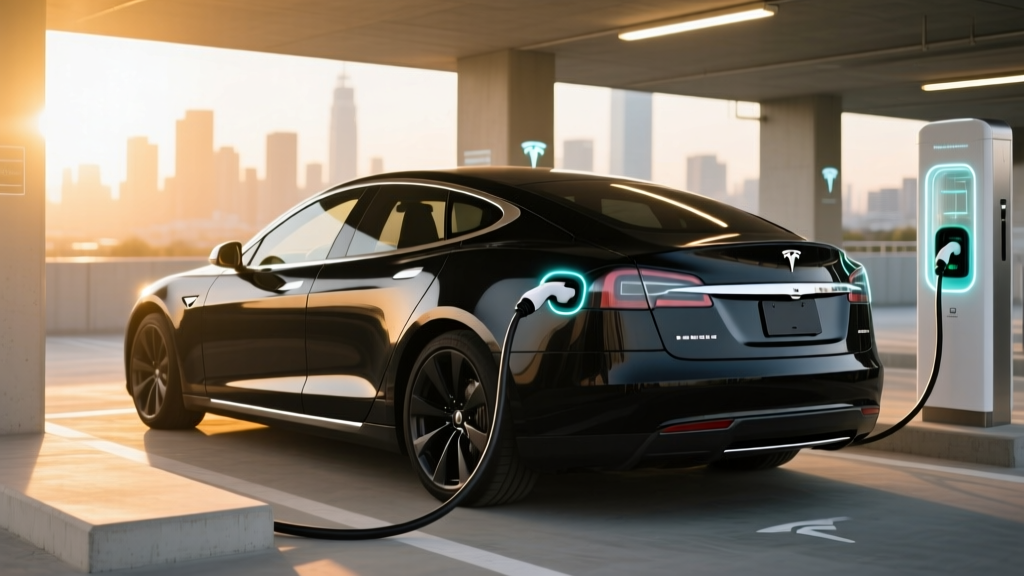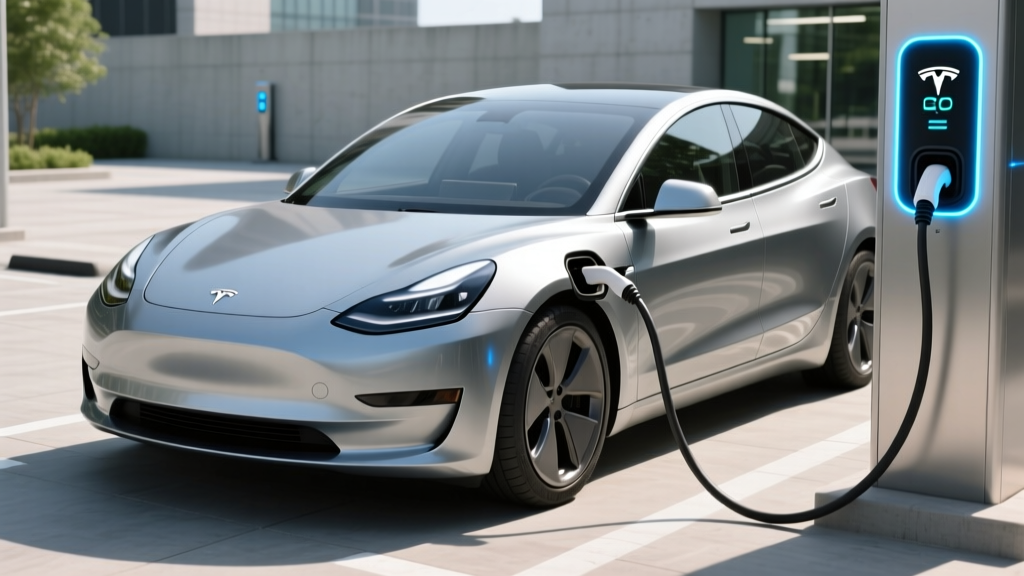
If you're asking how many kWh to charge a Tesla Model 3, the short answer depends on your battery size and how depleted it is. A 2026 Tesla Model 3 Long Range has roughly 75 kWh of usable battery capacity, meaning a full 0–100% charge requires about 75 kWh of energy delivered to the car. The Standard Range (Rear-Wheel Drive) model uses an LFP battery with approximately 57 kWh usable. But because you rarely charge from zero, and because charging isn't 100% efficient (expect 5–10% energy loss as heat), the real-world electricity consumption for a typical 20–80% top-up is closer to 48 kWh for the Long Range and 36 kWh for the RWD.
This guide breaks down exactly what that means for your electric bill, how fast each charging level replenishes those kWh, what a home charger installation actually costs, and which equipment to buy. Every number here is grounded in real-world EV ownership — not marketing copy.
Understanding kWh vs. kW: The EV Charging Basics
Before we calculate costs, let's nail the terminology that trips up most new EV buyers:
- kWh (kilowatt-hour) is a unit of energy — think of it as the "gallons" in your battery tank. The Model 3 Long Range holds about 75 kWh.
- kW (kilowatt) is a unit of power — think of it as the flow rate of the hose filling that tank. A 48-amp Level 2 charger delivers up to 11.5 kW, meaning it adds roughly 11.5 kWh of energy per hour.
Confusing these two is the most common EV mistake on the internet. When someone says their charger is "75 kWh," they're wrong — they mean the battery is 75 kWh. The charger is rated in kW. Keep this straight and every other charging concept becomes simple.
Charging Levels Explained: Speeds in kW and Miles Per Hour
Every Tesla Model 3 supports three charging tiers. Here's what each delivers in practical terms:
| Charging Level | Voltage | Max Power (kW) | Miles of Range Per Hour | Typical Use Case |
|---|---|---|---|---|
| Level 1 (Standard 120V Outlet) | 120V / 12A | ~1.4 kW | 3–5 mi/hr | Overnight trickle, emergencies |
| Level 2 (240V Home/Public) | 240V / 48A | ~11.5 kW | 30–44 mi/hr | Daily home charging, workplace |
| DC Fast Charging (Supercharger) | 400V+ DC | Up to 250 kW (V3) / 350 kW (V4) | Up to ~170 mi in 15 min | Road trips, rapid top-ups |
Real-World Charging Time Examples
Here's how long common charging sessions take on a 2026 Model 3 Long Range (75 kWh usable):
- Level 1 (1.4 kW): 10–80% (~52.5 kWh) takes roughly 37–40 hours. Practical only if you drive under 30 miles daily and can leave it plugged in for days.
- Level 2 at 11.5 kW (48A): 10–80% takes approximately 5–5.5 hours. Ideal overnight charge — plug in at 10 PM, wake up full.
- Level 2 at 7.7 kW (32A): 10–80% takes about 7–8 hours. Still viable overnight for most drivers.
- Tesla V3 Supercharger (250 kW peak): 10–80% in roughly 25–28 minutes. Peak rate only sustains up to ~50% SoC, then tapers — this is the charge curve reality that marketing materials hide.
- Tesla V4 Supercharger: Newer V4 cabinets can deliver higher sustained rates; expect 10–80% in ~20–25 minutes on compatible vehicles.
The charge curve matters: a "250 kW" charger doesn't deliver 250 kW for the entire session. Above 80% SoC, speeds drop dramatically to protect battery health. This is why you'll see EV drivers say "10–80% time" rather than "0–100% time" — the last 20% can take as long as the first 60%.
How Much Does Charging a Tesla Model 3 Actually Cost?
The cost to charge depends entirely on your electricity rate, measured in dollars per kWh. Here's what that looks like across common scenarios, based on the Model 3 Long Range consuming approximately 25 kWh per 100 miles (per EPA data on fueleconomy.gov):
| Charging Scenario | Avg. Cost ($/kWh) | Cost for 60 kWh (10–80%) | Cost Per Mile |
|---|---|---|---|
| Home off-peak (utility time-of-use rate) | $0.08–$0.12 | $4.80–$7.20 | $0.02–$0.03 |
| Home standard rate (national avg.) | $0.16–$0.17 | $9.60–$10.20 | $0.04 |
| Public Level 2 (ChargePoint, EVgo, etc.) | $0.25–$0.49 | $15.00–$29.40 | $0.06–$0.12 |
| Tesla Supercharger (varies by location/time) | $0.28–$0.48 | $16.80–$28.80 | $0.07–$0.12 |
| Gas equivalent (25 MPG at $3.50/gal) | — | $33.60 (equiv.) | $0.14 |
The takeaway: Home charging on an off-peak rate is roughly one-quarter to one-third the per-mile cost of gasoline. Even at standard residential rates, the Model 3 costs about $0.04/mile to "fuel" versus $0.14/mile for a 25 MPG gas car. Public DC fast charging narrows the gap but still undercuts gas in most markets.
For a full 0–100% charge of the 75 kWh Long Range battery at the national average residential rate of ~$0.17/kWh (accounting for ~8% charging loss, so ~81 kWh drawn from the grid), you're looking at roughly $13.77. For the RWD's 57 kWh battery, about $10.45.
Home Charger Installation: Costs, Electrical Requirements & Upgrades
This is where most new EV owners get sticker shock — or a pleasant surprise. The total cost depends heavily on your home's existing electrical infrastructure.
Electrical Requirements for a Level 2 Home Charger
A typical Level 2 home charger for a Tesla Model 3 requires:
- Voltage: 240V (same as your dryer or oven circuit)
- Amperage: 40A to 60A dedicated circuit (for 32A to 48A continuous charging — electrical code requires circuits rated at 125% of continuous load)
- Breaker: 50A or 60A double-pole breaker in your main panel
- Wire gauge: 6 AWG copper for 48A circuits; 4 AWG for 60A
Installation Cost Breakdown
| Cost Component | Simple Install (panel nearby) | Complex Install (panel far or upgrade needed) |
|---|---|---|
| Level 2 Charger Equipment | $400–$700 | $400–$700 |
| Electrician Labor (2–4 hrs typical) | $300–$800 | $800–$2,000 |
| Electrical Permit | $50–$200 | $50–$300 |
| Conduit, Wire, Materials | $100–$300 | $300–$1,000 |
| Panel Upgrade (100A → 200A, if needed) | $0 (not needed) | $1,500–$4,000 |
| Total Estimated Cost | $850–$2,000 | $3,050–$8,000 |
Panel upgrade reality check: If your home has a 100-amp service panel (common in homes built before the 1990s), adding a 50A or 60A EV circuit may max out your panel's capacity. An electrician will perform a load calculation to determine this. If an upgrade to 200A service is required, budget an additional $1,500–$4,000. Some utilities offer rebates for panel upgrades — check with your provider before proceeding.
Always hire a licensed electrician and pull a permit. Unpermitted EV charger installations can void home insurance claims and create fire hazards. The National Electrical Code (NEC Article 625) governs EV charging equipment specifically.
Federal Tax Credit for Home Charging Equipment
Under IRS §30C (Alternative Fuel Vehicle Refueling Property Credit), you may claim 30% of the cost of home EV charger equipment and installation, up to $1,000. This credit has income eligibility requirements and must be installed at your primary residence. Check current-year eligibility on irs.gov, as rules and caps are subject to legislative updates.
Connector Compatibility: NACS, CCS, and Adapters
The 2026 Tesla Model 3 comes equipped with the NACS (North American Charging Standard) connector — Tesla's proprietary plug that has been adopted as the industry standard by Ford, GM, Rivian, Hyundai, BMW, and nearly every major automaker.
| Connector Type | Tesla Model 3 (2026) | Notes |
|---|---|---|
| NACS (Tesla native) | ✅ Native — no adapter needed | Works at all Tesla Superchargers and Destination Chargers; growing third-party NACS network |
| CCS1 (Combo) | ✅ With Tesla CCS Adapter (~$175–$250) | Required for Electrify America, non-Tesla DC fast chargers with CCS cables |
| CHAdeMO | ❌ Not supported | Legacy standard (Nissan Leaf); no Tesla adapter available; network shrinking |
| J1772 (Level 2 public) | ✅ With included J1772 adapter | Tesla ships a J1772-to-NACS adapter with every Model 3 |
Practical advice: For daily charging, NACS is all you need — at home with a Tesla Wall Connector or NACS-equipped third-party charger, and on the road at Superchargers. Buy the Tesla CCS adapter if you frequently travel routes where Electrify America or other CCS-only networks are the best option. The CHAdeMO standard is effectively dead for new vehicles.
Best Home Chargers for the Tesla Model 3 (2026 Picks)
Here are proven Level 2 chargers that pair well with the Model 3, based on power output, reliability, and real-world features:
Tesla Wall Connector (Gen 4)
- Power Output: Up to 11.5 kW (48A) on a 60A circuit
- Connector: NACS native — no adapter needed
- Cable Length: 24 feet
- Smart Features: Wi-Fi for OTA updates, load sharing (pair two units on one circuit), integrated Tesla app control, Power Share with Tesla Powerwall
- Price: ~$475
- Best For: Tesla-only households; seamless ecosystem integration
ChargePoint Home Flex (NACS version)
- Power Output: Up to 12 kW (50A) on a 60A circuit; adjustable down to 16A
- Connector: Available in NACS (2025+ models) or J1772 with adapter
- Cable Length: 23 feet
- Smart Features: App-based scheduling, Alexa/Google integration, detailed energy reports, flexible amperage settings for older panels
- Price: ~$599–$699
- Best For: Multi-EV households (mix of Tesla and non-Tesla); panel-constrained homes that need adjustable amperage
Emporia Vue Level 2 Smart Charger
- Power Output: Up to 11.5 kW (48A) on a 60A circuit
- Connector: J1772 (use Tesla's included adapter) or NACS version
- Cable Length: 24 feet
- Smart Features: Deep energy monitoring via Emporia Vue home energy panel, solar-aware scheduling, utility demand-response integration
- Price: ~$399–$499
- Best For: Solar-equipped homes; budget-conscious buyers who want detailed energy tracking
Every charger above is hardwired (not plug-in) for maximum reliability and code compliance at 48A+. If your panel is constrained, the ChargePoint Home Flex's adjustable amperage (down to 16A/3.8 kW) lets you install on a smaller 20A circuit and still add ~14 miles of range per hour — adequate for most daily driving.
Safety, Electrical Code & Outdoor Installation Considerations
EV charging draws sustained high current for hours — this is fundamentally different from a dryer that cycles on and off. Proper installation protects your home and your car:
- Dedicated circuit: Your EV charger must have its own dedicated breaker — never share a circuit with other appliances.
- GFCI protection: NEC 2023+ requires GFCI (Ground Fault Circuit Interrupter) protection for outdoor EV receptacles. Hardwired chargers with integrated ground-fault protection satisfy this requirement in most jurisdictions.
- Outdoor rating: If mounting outdoors, ensure the charger carries a NEMA 4 (weather-resistant) rating. The Tesla Wall Connector and ChargePoint Home Flex are both rated for outdoor use.
- Cable management: A 24-foot cable is heavy when wet or frozen. Install a cable holster or retractable reel to prevent tripping hazards and connector damage.
- Surge protection: Consider a whole-home surge protector ($200–$400 installed) to guard against grid spikes damaging the charger's electronics.
- Permit and inspection: Every jurisdiction requires a permit for new 240V circuits. The inspection ensures proper wire gauge, breaker sizing, and grounding — don't skip this step.
Model 3 Battery Care: Charging Habits That Extend Battery Life
The 2026 Model 3 comes in two battery chemistries, and each has different care requirements:
- Long Range / Performance (NMC chemistry): Tesla recommends setting the daily charge limit to 80% and only charging to 100% for road trips. NMC batteries degrade faster when held at high SoC for extended periods.
- Rear-Wheel Drive (LFP chemistry): Tesla recommends charging to 100% at least once per week. LFP batteries tolerate full charges well and actually benefit from periodic full-calibration to maintain accurate range estimates. LFP also offers superior cycle life (often 3,000+ cycles before 80% capacity retention) and lower degradation rates.
Both chemistries are covered by Tesla's battery warranty: 8 years / 100,000 miles (RWD) or 8 years / 120,000 miles (Long Range/Performance), with a guaranteed minimum of 70% capacity retention over the warranty period.
Frequently Asked Questions
How many kWh does a Tesla Model 3 battery hold?
The 2026 Model 3 Long Range has approximately 75 kWh of usable battery capacity. The Rear-Wheel Drive (Standard Range) model with an LFP battery holds approximately 57 kWh usable. Total gross capacity is slightly higher, but the battery management system (BMS) maintains a buffer at the top and bottom to protect cell health.
How much does it cost to charge a Tesla Model 3 at home?
At the US national average residential electricity rate of ~$0.17/kWh, a full charge of the Long Range (accounting for ~8% charging losses) costs approximately $13.77. On an off-peak time-of-use rate of $0.09/kWh, that drops to about $7.29. For the RWD model, expect $10.45 at standard rates and $5.50 off-peak.
Can I charge a Tesla Model 3 on a regular 120V outlet?
Yes, using the Tesla Mobile Connector with the 120V adapter. It delivers about 1.4 kW (3–5 miles of range per hour). This is sufficient only if you drive under 30–40 miles per day and can leave the car plugged in for 10–12 hours. For most owners, a 240V Level 2 installation is strongly recommended.
How fast does a Tesla Supercharger charge a Model 3?
At a V3 Supercharger (250 kW peak), the Model 3 Long Range can add up to ~170 miles of range in 15 minutes under ideal conditions (warm battery, low SoC). A 10–80% session typically takes 25–28 minutes. The charge curve tapers significantly above 50% SoC — peak kW is not sustained kW.
Do I need a panel upgrade to install a home EV charger?
Possibly. If your home has a 100-amp electrical service (common in older homes), adding a 50A or 60A EV charger circuit may exceed your panel's capacity. A licensed electrician will perform a load calculation to determine this. If an upgrade to 200A service is needed, budget $1,500–$4,000 additional. Homes with 200A service or newer typically accommodate an EV charger without a panel upgrade.
Is the Tesla Wall Connector worth it over third-party chargers?
For a Tesla-only household, the Wall Connector offers the cleanest experience: native NACS plug (no adapter), Wi-Fi updates, and Tesla app integration at ~$475. If you own or plan to own non-Tesla EVs, a third-party charger like the ChargePoint Home Flex in NACS or J1772 gives you more flexibility. Both deliver comparable charging speeds.