If you're researching the Tesla Model 3, one of the first questions you'll encounter is: how many kWh is a Tesla Model 3? The answer depends on which trim you choose, but understanding battery capacity is only the beginning. To truly plan your ownership experience, you need to know how that battery translates to range, how fast it charges at each level, what home charging installation costs, and how your per-mile cost compares to gasoline.
This guide covers the 2026 Tesla Model 3 lineup's battery specs, real-world range expectations, charging infrastructure requirements, and the economics of keeping one fueled — whether you're charging in your garage or on a cross-country road trip.
Tesla Model 3 Battery Capacity and Range by Trim
The 2026 Tesla Model 3 is available in several configurations, each with a different usable battery capacity. Tesla doesn't always publish exact kWh figures on its consumer pages, but EPA filings, teardown data, and third-party testing have confirmed the following specifications:
| Trim | Usable Battery (kWh) | Chemistry | EPA Range | Real-World Range* | Base MSRP |
|---|---|---|---|---|---|
| Model 3 RWD | ~57 kWh | LFP (Cathode: Lithium Iron Phosphate) | 272 mi | 230–250 mi | $38,990 |
| Model 3 Long Range RWD | ~79 kWh | NMC (Nickel Manganese Cobalt) | 363 mi | 300–330 mi | $42,490 |
| Model 3 Long Range AWD | ~79 kWh | NMC | 341 mi | 285–310 mi | $47,490 |
| Model 3 Performance | ~79 kWh | NMC | 315 mi | 260–290 mi | $52,990 |
*Real-world range accounts for highway driving at 70+ mph, moderate climate control use, and temperatures above 50°F. In sub-freezing weather, expect an additional 15–30% reduction depending on conditions.
Understanding kW vs. kWh: The Critical EV Distinction
Before we discuss charging speeds, let's clear up the most common EV terminology confusion:
- kWh (kilowatt-hour) = energy capacity. Think of it as the "size of the gas tank." A 79 kWh battery holds 79 kilowatt-hours of energy.
- kW (kilowatt) = power, or the rate of energy flow. Think of it as the "size of the fuel nozzle." A 250 kW charger delivers energy much faster than a 7.2 kW home charger.
When someone asks "how many kWh is a Tesla Model 3," they're asking about the battery's energy storage capacity. When we talk about a "7.2 kW charger," we're describing how fast that charger can push energy into the battery. These two numbers together determine your charging time.
Charging Levels: Speeds, Miles Per Hour, and What to Expect
EV charging falls into three tiers, each suited to different scenarios. Here's how each level performs with the Tesla Model 3:
| Charging Level | Power (kW) | Voltage / Amps | Miles of Range Added Per Hour | Best Use Case |
|---|---|---|---|---|
| Level 1 (Standard Outlet) | 1.2–1.4 kW | 120V / 12A | 3–5 mi/hr | Emergency top-ups, overnight for PHEVs |
| Level 2 (Home / Public AC) | 7.2–11.5 kW | 240V / 30–48A | 25–44 mi/hr | Daily home charging, workplace, shopping centers |
| DC Fast Charging | 150–250 kW (peak) | 400V+ DC | 200–1,000+ mi/hr (varies by SoC) | Road trips, rapid replenishment |
Level 1: The Emergency Backup
Every Model 3 ships with a Mobile Connector that plugs into a standard 120V household outlet. At roughly 1.4 kW, you'll gain about 3–5 miles of range per hour. Fully recharging a 79 kWh Long Range battery from 10% would take roughly 55+ hours. Level 1 is fine for plug-in hybrids with small batteries or as a last resort, but it's impractical as a primary charging strategy for a BEV like the Model 3.
Level 2: The Daily Workhorse
A 240V Level 2 charger is what most Model 3 owners install at home. The Model 3's onboard charger accepts up to 11.5 kW (48A) on AC power. At this rate, you'll recover roughly 44 miles of range per hour. A full charge from 10% to 100% on a Long Range takes approximately 7–8 hours — easily accomplished overnight. For the RWD model, that same 10–100% session takes about 5–6 hours.
DC Fast Charging: Road-Trip Speed
Tesla Superchargers and compatible third-party DC fast stations deliver direct current straight to the battery, bypassing the onboard charger. The 2026 Model 3 Long Range and Performance can accept a peak rate of 250 kW, while the RWD (LFP) peaks around 170 kW.
- Model 3 RWD (LFP): ~25 minutes at a 170+ kW Supercharger
- Model 3 Long Range (NMC): ~18–22 minutes at a 250 kW V3 Supercharger
- Model 3 Performance: ~20–24 minutes at a 250 kW V3 Supercharger
Home Charger Installation: Electrical Requirements and Costs
Installing a dedicated Level 2 home charger is the single biggest infrastructure investment for most EV owners. Here's what the process involves and what it costs.
Electrical Requirements
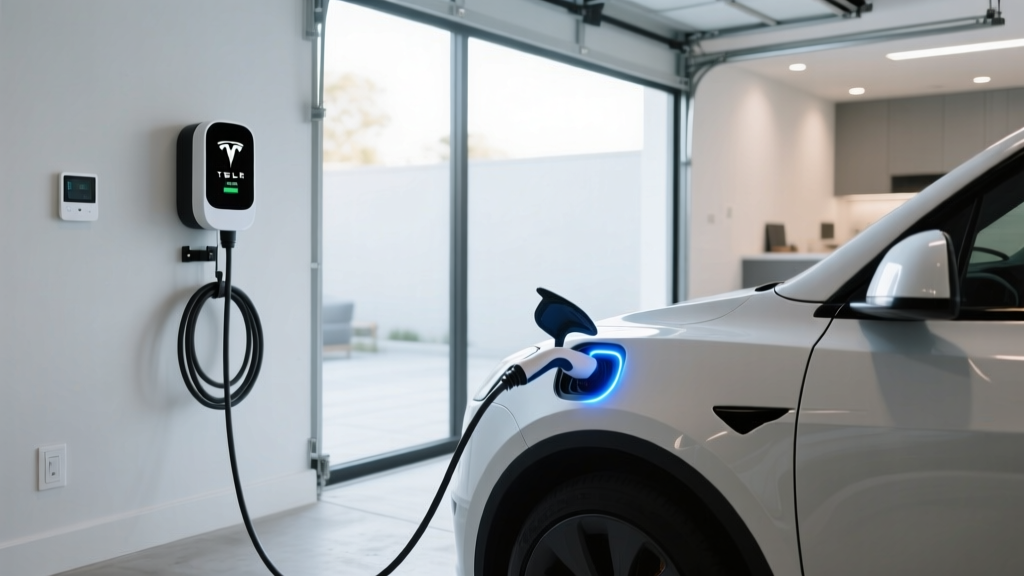
For optimal Model 3 charging, you'll want a 240V circuit rated at 60 amps, which supports a 48A continuous charger load (electrical code requires circuits to be rated at 125% of continuous load). The Tesla Wall Connector, for example, draws up to 48A and requires a 60A breaker.
Key requirements:
- Dedicated circuit: Your charger must have its own breaker — no sharing with other appliances.
- Panel capacity: Most modern homes with 200A service can accommodate a 60A EV circuit. Older homes with 100A panels may need a panel upgrade.
- GFCI protection: NEC 2020 and later require GFCI protection for EV charging outlets in garages. Hardwired chargers may bypass this requirement depending on local code interpretation.
- Outdoor rating: If your charger is installed outdoors (carport, driveway), it must carry a NEMA 4 or equivalent weather rating.
- Permit: Most jurisdictions require an electrical permit and inspection for a new 240V circuit. This is non-negotiable and protects your home insurance coverage.
Installation Cost Breakdown
| Cost Component | Typical Range | Notes |
|---|---|---|
| Level 2 Charger (Equipment) | $400–$700 | Tesla Wall Connector, ChargePoint, Emporia, etc. |
| Electrician Labor | $500–$2,000 | Depends on run length, wall material, conduit needs |
| Electrical Permit | $50–$200 | Varies by municipality |
| Panel Upgrade (if needed) | $1,500–$3,500 | 100A→200A upgrade; only for older/undersized panels |
| Total (No Panel Upgrade) | $950–$2,900 | Most homeowners fall in $1,200–$1,800 |
| Total (With Panel Upgrade) | $2,450–$6,400 | Significant but adds home value |
Connector Compatibility: NACS, CCS, and Adapters
The Tesla Model 3 uses the North American Charging Standard (NACS) connector natively. Since late 2024, NACS has become the dominant connector in North America, with Ford, GM, Rivian, Volvo, and most other automakers adopting it for their 2025+ models.
| Connector | Used By | Model 3 Compatibility |
|---|---|---|
| NACS (Tesla) | Tesla (all), Ford, GM, Rivian, Volvo, Hyundai (2025+) | Native — no adapter needed |
| CCS1 | Older VW, BMW, Hyundai/Kia (pre-2025), most non-Tesla DC stations | Tesla CCS adapter (sold separately, ~$175) required for non-Tesla CCS stations |
| CHAdeMO | Nissan Leaf, Mitsubishi (legacy) | Not compatible — no official adapter available |
| J1772 (AC Level 2) | All non-Tesla public Level 2 stations | Tesla J1772 adapter (included with vehicle) |
Practical tip: The Tesla Supercharger network is the most reliable DC fast-charging network in the U.S. (Tesla Supercharger map). With NACS now opening to other brands, congestion may increase at popular corridors, but Tesla owners retain priority at some locations. For non-Tesla DC chargers (Electrify America, EVgo), you'll need the optional Tesla CCS adapter.
Charging Cost: Per kWh, Per Mile, and vs. Gasoline
One of the strongest arguments for the Model 3 is fuel cost savings. Here's how different charging scenarios break down:
| Charging Scenario | Cost per kWh | Model 3 LR Efficiency | Cost per Mile |
|---|---|---|---|
| Home (Off-Peak Utility Rate) | $0.08–$0.14 | ~25 kWh/100 mi | $0.02–$0.035 |
| Home (Standard Rate) | $0.13–$0.20 | ~25 kWh/100 mi | $0.033–$0.05 |
| Public Level 2 (Workplace/Mall) | $0.20–$0.40 | ~25 kWh/100 mi | $0.05–$0.10 |
| Tesla Supercharger (V3) | $0.28–$0.48 | ~25 kWh/100 mi | $0.07–$0.12 |
| Gasoline Equivalent (30 MPG @ $3.50/gal) | — | — | $0.117 |
The Model 3 Long Range AWD has an EPA-rated efficiency of approximately 25 kWh per 100 miles (or ~4 mi/kWh), according to fueleconomy.gov. The RWD model is slightly more efficient at ~24 kWh/100 mi due to its lighter LFP battery and single motor.
Annual fuel cost comparison (12,000 miles/year):
- Home charging (average $0.16/kWh): ~$480/year
- 100% Supercharger (average $0.38/kWh): ~$1,140/year
- Gasoline sedan (30 MPG, $3.50/gal): ~$1,400/year
Even if you rely exclusively on Superchargers, the Model 3 costs less per mile than a 30 MPG gas car. But home charging is where the economics become compelling — saving roughly $900–$1,000 per year vs. gasoline.
Recommended Home Chargers for the Tesla Model 3
While the Tesla Wall Connector is the obvious default, several third-party chargers offer competitive features. Here are top picks for 2026:
Tesla Wall Connector
- Power: Up to 11.5 kW (48A)
- Connector: NACS native
- Cable: 24 ft
- Smart Features: Wi-Fi, OTA updates, power sharing (multiple units on one circuit)
- Price: ~$475
- Verdict: Best integration with Tesla vehicles. Clean design. No J1772 compatibility without adapter.
ChargePoint Home Flex
- Power: Up to 12 kW (50A) — adjustable down to 16A
- Connector: NACS or J1772 (select at purchase)
- Cable: 23 ft
- Smart Features: Wi-Fi, app scheduling, Alexa, flexible amperage for panel-limited homes
- Price: ~$599–$699
- Verdict: Best for homes with limited panel capacity — dial down to 32A if a 60A circuit isn't feasible.
Emporia Vue Smart Charger
- Power: Up to 11.5 kW (48A)
- Connector: NACS or J1772
- Cable: 24 ft
- Smart Features: Energy monitoring, solar integration, load management
- Price: ~$399–$499
- Verdict: Best value pick. Excellent if you have solar panels and want to charge on excess generation.
Grizzl-E Smart
- Power: Up to 10 kW (40A)
- Connector: NACS or J1772
- Cable: 24 ft
- Smart Features: OCPP-compatible, adjustable amperage, extreme cold rated (-40°F)
- Price: ~$549
- Verdict: Best for cold climates. Built in Canada, rugged aluminum case, proven in harsh winters.
Federal Tax Credit for Home Charging Equipment
The IRS residential clean energy provisions previously included a 30% credit (up to $1,000) for home EV charging equipment under §30C. However, this credit has specific eligibility requirements and has undergone changes in recent legislative sessions. As of 2026, check current IRS guidance to confirm whether the alternative fuel vehicle refueling property credit is still active and whether your installation qualifies. The credit historically applied to equipment and installation costs, but not to panel upgrades.
Separately, the §30D new clean vehicle credit of up to $7,500 may apply to the Model 3 itself, subject to MSRP caps ($55,000 for sedans), buyer income limits ($150K single / $300K joint), and battery component/critical mineral sourcing requirements. The Model 3 RWD and Long Range have historically qualified for partial or full credit depending on the model year and sourcing rules in effect. Always verify current eligibility on the IRS website or with a tax professional before purchase.
Frequently Asked Questions
How many kWh does a Tesla Model 3 battery hold?
The 2026 Tesla Model 3 RWD holds approximately 57 kWh of usable energy using LFP chemistry. The Long Range and Performance trims hold approximately 79 kWh usable using NMC chemistry. These are usable capacities — the total physical capacity is slightly higher, with a buffer to protect battery longevity.
How much does it cost to install a home EV charger for a Model 3?
Most homeowners spend between $1,200 and $1,800 for a professional Level 2 charger installation (equipment + electrician + permit) when no panel upgrade is needed. If your home requires a 100A-to-200A panel upgrade, total costs can reach $3,000–$6,000. Always get a load calculation from a licensed electrician first.
How fast will each charging level add range to my Model 3?
Level 1 (120V outlet) adds about 3–5 miles per hour. Level 2 (240V, 48A) adds roughly 44 miles per hour for a Long Range model. DC fast charging at a Tesla V3 Supercharger can add up to 175 miles in 15 minutes under optimal conditions (low SoC, preconditioned battery).
Do I need an adapter to charge my Tesla Model 3 at non-Tesla stations?
For AC Level 2 public chargers using J1772 connectors, Tesla includes a J1772 adapter with every Model 3. For non-Tesla DC fast chargers using CCS1 connectors (Electrify America, some EVgo stations), you'll need to purchase Tesla's CCS adapter (~$175). CHAdeMO stations are not compatible.
How much does charging a Model 3 cost per mile vs. gas?
Home charging at the national average electricity rate (~$0.16/kWh) costs roughly $0.04 per mile in a Model 3 Long Range. Gasoline at $3.50/gallon in a 30 MPG car costs about $0.12 per mile. That's roughly a 3:1 cost advantage for home EV charging.
What electrical upgrades might I need for a home charger?
The most common upgrade is adding a new 60A, 240V circuit from your panel. If your panel is at capacity (common in older homes with 100A service), you may need a full panel upgrade to 200A. Homes with existing 200A service typically accommodate a 60A EV circuit without issue, provided an electrician confirms adequate headroom on the load calculation.
Should I charge my Model 3 to 100% every night?
It depends on the chemistry. The RWD model's LFP battery is designed for regular 100% charging — Tesla actually recommends charging to 100% at least weekly to maintain cell balancing. For NMC batteries (Long Range and Performance), Tesla recommends a daily charge limit of 80% for longevity, reserving 100% for road trips. The vehicle's charge limit setting makes this easy to manage.