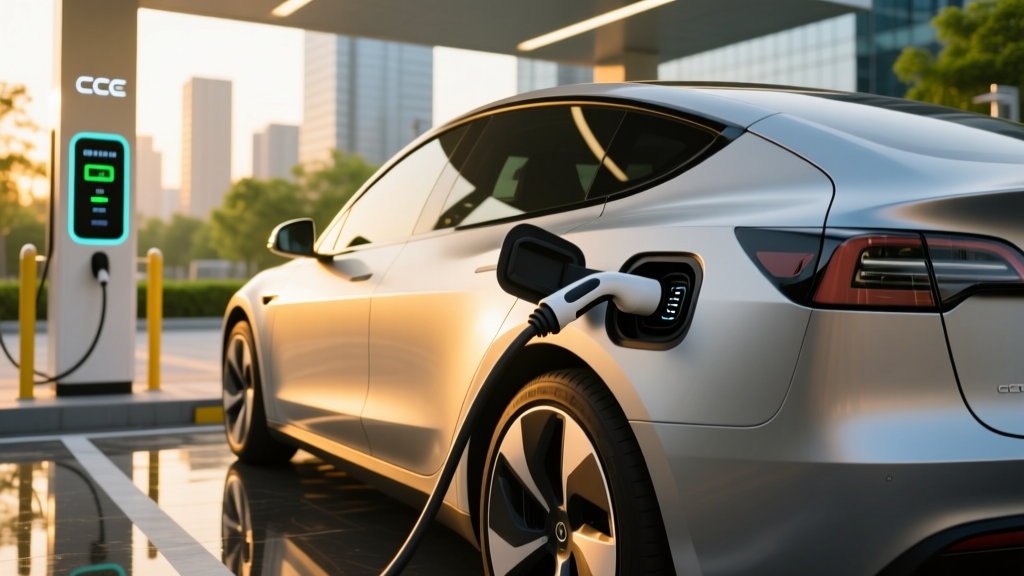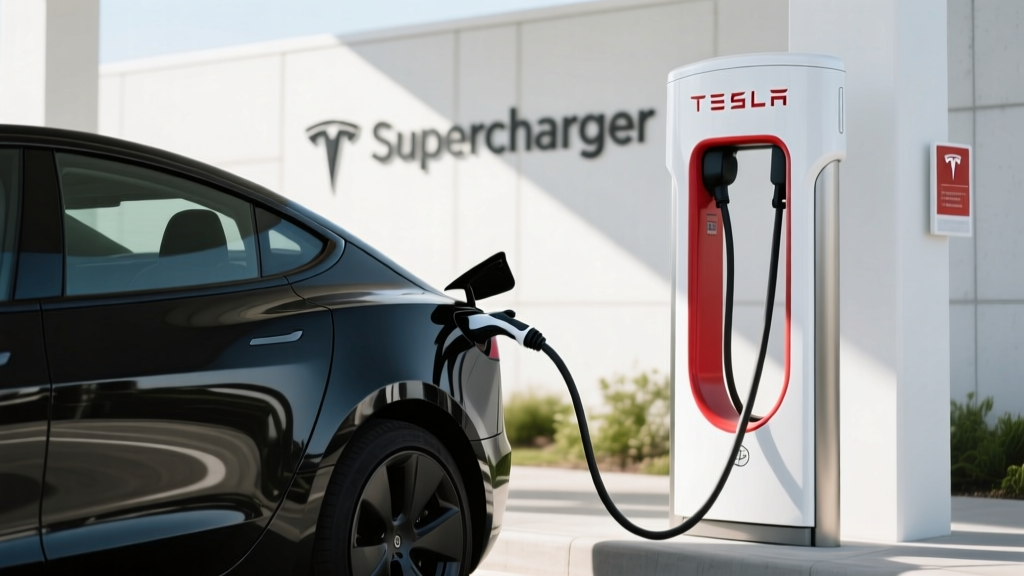
For years, Tesla used free Supercharging as a referral reward, a promotional incentive, and a loyalty perk for Model 3 buyers. But as the Supercharger network has grown past 60,000 stalls globally and Tesla's margins have shifted, those promotions have become far less common. If you're shopping for a Tesla Model 3 in 2026 and wondering whether free Supercharging is still on the table — or how to charge affordably without it — this guide covers the real landscape.
We'll walk through what free Supercharging actually means today, then give you a complete breakdown of Tesla Model 3 home and public charging: speeds, costs, equipment, and electrical requirements. Whether you land a promotional perk or pay full price at the pump, you'll know exactly what to budget.
Does Tesla Model 3 Free Supercharging Still Exist?
As of 2026, Tesla does not offer unlimited free Supercharging as a standard feature on any new Model 3 trim. The era of lifetime free Supercharging — once bundled with early Model S and Model X purchases — ended for most buyers years ago. However, free Supercharging credits still surface in three ways:
- Referral program credits: Tesla periodically runs referral promotions where existing owners can pass along Supercharging miles (typically 1,000–5,000 miles) to new buyers. These are time-limited and region-dependent.
- End-of-quarter or inventory-clearance deals: Tesla has been known to bundle 10,000–20,000 free Supercharging miles on in-stock vehicles during slower delivery periods. These are never advertised long-term.
- Loyalty perks for existing Tesla owners: Trade-in programs occasionally include limited Supercharging credits toward a new purchase.
The bottom line: don't count on free Supercharging when budgeting your Model 3. Plan for paid charging — and you'll be pleasantly surprised if a promotion appears at purchase time. Check Tesla's current offers on tesla.com/model3 before ordering.
Tesla Model 3 Charging Levels: Speeds and Range Added
The 2026 Tesla Model 3 comes in two primary trims with different battery sizes: the Long Range (approximately 79 kWh usable, NMC chemistry) and the Performance variant (same pack, higher output). The base Rear-Wheel Drive model uses a smaller ~60 kWh LFP (lithium iron phosphate) battery. Understanding how each charging level interacts with these batteries is essential for planning.
| Charging Level | Voltage / Power | Peak kW | Miles of Range Added per Hour | Typical Use Case |
|---|---|---|---|---|
| Level 1 (120V) | 120V / 1.4–1.9 kW | ~1.4 kW | 3–5 miles | Emergency trickle, overnight top-off |
| Level 2 (240V) | 240V / 7.7–19.2 kW | 11.5 kW (Model 3 onboard limit) | 30–44 miles | Daily home and workplace charging |
| DC Fast Charging | 400V+ / 50–250+ kW | 250 kW (V3 Supercharger) | ~175 miles in 15 min (peak) | Road trips, rapid top-ups |
Critical distinction — kW vs kWh: kW (kilowatts) measures power — how fast energy flows into your battery. kWh (kilowatt-hours) measures energy — the total capacity of your battery. A 250 kW charger delivers energy very quickly, but your battery holds a fixed number of kWh. Think of kW as the width of a hose and kWh as the size of the bucket.
The Model 3's onboard charger limits Level 2 AC charging to 11.5 kW (48 amps). Even if you install a 19.2 kW / 80-amp home charger, the car will only accept 11.5 kW. This means investing in a charger above 48 amps yields no speed benefit for the Model 3 specifically.
Home Charger Installation: Requirements, Costs, and Gotchas
Most Tesla Model 3 owners do the bulk of their charging at home on Level 2. A full charge from 10% to 100% on an 11.5 kW Level 2 connection takes roughly 7–8 hours for the Long Range — ideal for overnight replenishment. But getting that Level 2 circuit installed correctly requires understanding your home's electrical capacity.
Electrical Requirements
For optimal Model 3 home charging, you need:
- Circuit: 60-amp dedicated circuit (allows 48-amp continuous draw, matching the car's 11.5 kW onboard limit)
- Voltage: 240V (standard for large appliances in US homes)
- Wire gauge: 6 AWG copper (for runs up to ~50 feet; 4 AWG for longer runs)
- Breaker: 60-amp double-pole breaker
If your electrical panel is already near capacity — common in older homes with 100-amp service — you may need a panel upgrade to 200 amps. This is the single biggest variable in installation cost.
Installation Cost Breakdown
| Item | Cost Range | Notes |
|---|---|---|
| Level 2 EVSE (charger hardware) | $400 – $750 | Tesla Wall Connector, ChargePoint, Emporia |
| Electrician labor (standard install) | $500 – $1,500 | Depends on run length, wall type, conduit |
| Permit and inspection | $50 – $300 | Varies by municipality; required in most jurisdictions |
| Panel upgrade (if needed) | $1,500 – $4,000 | 100A to 200A service upgrade; common in pre-2000 homes |
| Total (no panel upgrade) | $950 – $2,550 | Most common scenario for newer homes |
| Total (with panel upgrade) | $2,450 – $6,550 | Older homes with limited panel capacity |
Pro tip: The federal Residential Clean Energy Credit (IRS §25D) does not cover EV charger hardware for 2026 — that separate §30C alternative fuel vehicle refueling property credit expired for most residential installations after 2021, though some state and utility rebates remain. Check with your local utility for charger rebates that can offset $200–$500 of equipment cost.
Charging Connectors: NACS, CCS, and Adapter Compatibility
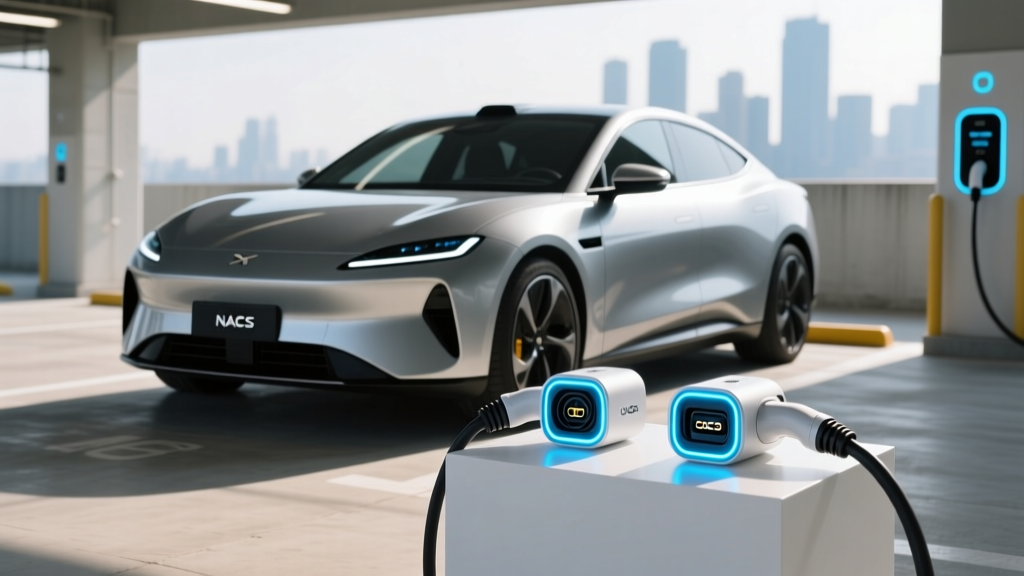
The 2026 Tesla Model 3 uses the North American Charging Standard (NACS) connector natively — Tesla's proprietary design that has now been adopted by Ford, GM, Rivian, Hyundai, and most major automakers. This gives Model 3 owners seamless access to Tesla Superchargers without adapters.
| Connector Type | Compatible with Model 3? | Adapter Needed? | Network Access |
|---|---|---|---|
| NACS (Tesla native) | Yes — built-in | No | Tesla Superchargers, Destination Chargers |
| CCS1 | Yes, with adapter | Tesla CCS Adapter (~$175) | Electrify America, EVgo, ChargePoint DC |
| CHAdeMO | Not supported | No viable adapter | Nissan Leaf network (legacy, declining) |
| J1772 (Level 2 AC) | Yes, with adapter | Tesla J1772 Adapter (included with car) | Public Level 2 stations, non-Tesla home chargers |
Every new Model 3 ships with a J1772-to-NACS adapter and a Tesla Mobile Connector (which includes 120V and 240V plug adapters). The CCS adapter is sold separately through the Tesla shop and is essential if you plan to use non-Tesla DC fast-charging networks on road trips through areas with sparse Supercharger coverage.
How Much Does Charging a Tesla Model 3 Cost Per Mile?
One of the strongest arguments for the Model 3 — free Supercharging or not — is the per-mile fuel cost advantage over gasoline. Let's run the numbers using the 2026 Model 3 Long Range, rated at approximately 132 MPGe combined by the EPA on fueleconomy.gov, consuming roughly 25 kWh per 100 miles.
| Charging Scenario | Rate ($/kWh) | Cost per 100 Miles | Cost per Mile |
|---|---|---|---|
| Home (off-peak utility rate) | $0.10 | $2.50 | $0.025 |
| Home (national avg residential) | $0.16 | $4.00 | $0.040 |
| Tesla Supercharger (avg 2026) | $0.32 | $8.00 | $0.080 |
| Electrify America / 3rd-party DC | $0.48 | $12.00 | $0.120 |
| Gas car (30 MPG, $3.40/gal) | — | $11.33 | $0.113 |
The takeaway: Even at full-price Supercharger rates ($0.32/kWh national average), the Model 3 costs about 30% less per mile than a 30 MPG gas car. At home off-peak rates, it's roughly 78% cheaper. Free Supercharging credits are a nice bonus, but the economics work without them — especially if you can charge at home.
For context, a Model 3 Long Range driver covering 12,000 miles annually would spend approximately $480/year charging at home (national avg rate) versus $1,360/year on gasoline in a comparable ICE sedan. That's $880 in annual fuel savings before any tax credits.
Recommended Home Charging Equipment for the Model 3
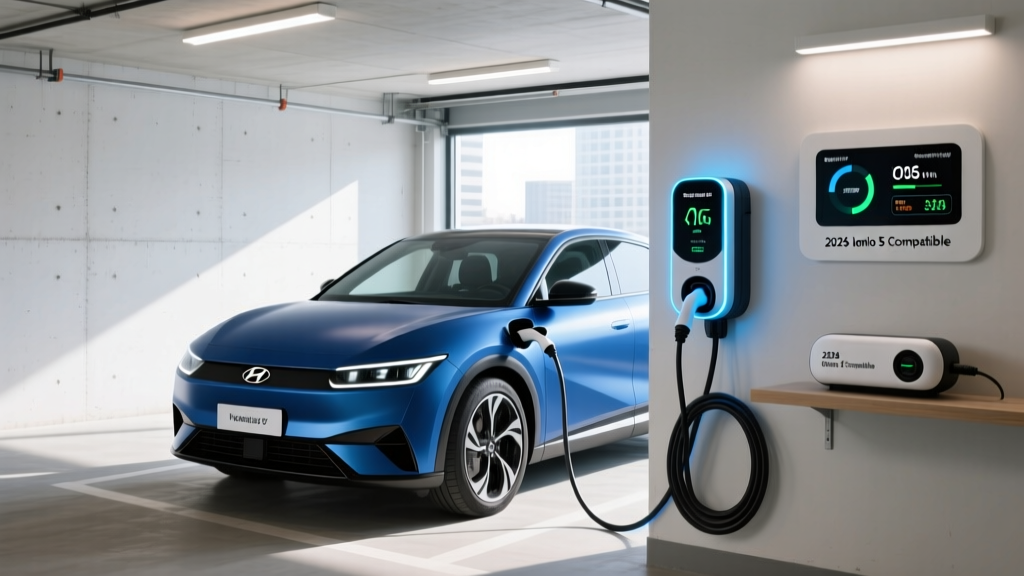
Since the Model 3 caps AC charging at 11.5 kW (48 amps), you want a Level 2 charger that can deliver at least 48 amps on a 60-amp circuit. Here are three proven options:
Tesla Wall Connector (Gen 3)
- Power output: Up to 11.5 kW (48A)
- Connector: NACS native — no adapter needed
- Cable length: 24 feet
- Smart features: Wi-Fi, OTA updates, power sharing (link two units on one circuit), access control
- Price: ~$475
- Best for: Tesla-only households wanting the cleanest integration
Emporia Vue Level 2 Charger
- Power output: Up to 11.5 kW (48A)
- Connector: J1772 (use included Tesla adapter)
- Cable length: 24 feet
- Smart features: Wi-Fi, app scheduling, energy monitoring, integrates with Emporia home energy panel
- Price: ~$399
- Best for: Multi-EV households or budget-conscious buyers
ChargePoint Home Flex
- Power output: Up to 12 kW (50A, configurable down to 48A)
- Connector: J1772 (use Tesla adapter)
- Cable length: 23 feet
- Smart features: Wi-Fi, Alexa integration, detailed app analytics, flexible amperage DIP-switch config
- Price: ~$699
- Best for: Households that may add a non-Tesla EV later
All three chargers are NEMA 4 rated for outdoor installation and UL-listed for safety. The Tesla Wall Connector is the obvious pick for dedicated Tesla owners — it eliminates the adapter step and supports power sharing if you install a second unit for a future EV.
DC Fast Charging: Supercharger Speeds and 10-80% Times
When you do need to charge on the road, the Model 3 Long Range supports peak DC fast charging at up to 250 kW on Tesla's V3 and V4 Superchargers. Here's what that looks like in practice:
- 10% to 80%: Approximately 25–28 minutes at a V3 Supercharger (250 kW peak)
- Peak rate duration: The car sustains above 200 kW only briefly — typically from ~10% to ~30% SoC — before the charge curve tapers. From 50% to 80%, expect rates closer to 80–120 kW.
- Miles added in 15 minutes: Approximately 175 miles (EPA basis) when starting at a low state of charge
Charge curve reality check: The advertised "250 kW peak" is a maximum, not a sustained rate. Like all lithium-ion batteries, the Model 3's pack accepts charge fastest at low states of charge and slows progressively above 50%. This is why manufacturers quote 10-80% times rather than 0-100% — the final 20% can take as long as the first 70%.
The Rear-Wheel Drive Model 3 with the LFP battery charges slightly differently: LFP cells tolerate regular charging to 100% without degradation concerns (unlike NMC, which benefits from an 80% daily limit), and the peak DC rate is approximately 170 kW. Expect a 10-80% charge in about 30–33 minutes.
Typical Supercharger pricing in 2026 ranges from $0.25 to $0.40 per kWh depending on location, time of day, and whether you're a Tesla owner (some stations charge non-Tesla EVs a higher rate). Tesla also offers a membership tier with reduced rates for non-Tesla vehicles, though Tesla owners automatically receive the lowest available price at Tesla-branded stalls.
Safety, Electrical Code, and Installation Best Practices
EV charging draws sustained high current for hours — far longer than a dryer or oven cycle. This makes proper installation non-negotiable.
- Dedicated circuit: Your Level 2 charger must be on its own dedicated breaker. Sharing a circuit with other appliances violates NEC (National Electrical Code) requirements and creates a fire risk.
- GFCI protection: The 2020 NEC update requires GFCI (ground-fault circuit interrupter) protection for all EV charging outlets. Most hardwired EVSEs have built-in ground-fault detection; if you use a NEMA 14-60 receptacle, your electrician must install a GFCI breaker.
- Outdoor rating: If your charger mounts outdoors, ensure the EVSE is rated NEMA 4 (weather-resistant) and that the connector holster protects the plug from rain and debris.
- Permit and inspection: Most US jurisdictions require an electrical permit for a new 240V circuit. The inspection verifies wire gauge, breaker sizing, grounding, and GFCI compliance — don't skip this step, as unpermitted work can void homeowners insurance claims.
- Wire gauge and run length: For runs over 50 feet from panel to charger, your electrician should upsize to 4 AWG wire to prevent voltage drop, which reduces charging speed and generates heat.
Always hire a licensed electrician experienced with EV charger installations. Ask whether they've installed EVSEs before and whether they pull permits — a qualified installer will handle both without hesitation.
Frequently Asked Questions
How much does it cost to install a home EV charger for a Tesla Model 3?
Most homeowners spend between $950 and $2,550 for a complete Level 2 installation (charger, electrician labor, and permit) when no panel upgrade is needed. If your home has a 100-amp panel that needs upgrading to 200 amps, expect total costs of $2,450 to $6,550. The Tesla Wall Connector itself costs about $475.
How fast will each charging level add range to my Model 3?
Level 1 (120V) adds 3–5 miles of range per hour — suitable only for emergency top-offs. Level 2 (240V, 48A) adds approximately 30–44 miles per hour, fully replenishing a Long Range battery overnight. DC fast charging at a V3 Supercharger adds up to 175 miles in 15 minutes at peak rate, with a 10-80% charge taking 25–28 minutes.
Which connector and charger is compatible with the Tesla Model 3?
The 2026 Model 3 uses NACS natively for both AC and DC charging. For non-Tesla Level 2 stations (J1772), use the included J1772 adapter. For non-Tesla DC fast chargers (CCS1), purchase the Tesla CCS Adapter (~$175). CHAdeMO is not supported.
How much does charging cost per mile compared to gas?
At the national average residential electricity rate ($0.16/kWh), the Model 3 Long Range costs about $0.04 per mile to charge at home — roughly 65% less than a 30 MPG gas car at $3.40/gallon ($0.113/mile). Even at Supercharger rates ($0.32/kWh), the Model 3 costs $0.08/mile, still 30% cheaper than gas.
What electrical upgrades might I need for home charging?
The most common upgrade is a panel capacity increase from 100A to 200A, needed in older homes where the existing panel is near its load limit. This costs $1,500–$4,000. You'll also need a dedicated 60-amp, 240V circuit with 6 AWG copper wire. Your electrician will perform a load calculation to determine if a panel upgrade is necessary.
Is Tesla's free Supercharging transferable if I sell my Model 3?
Generally, no. Free Supercharging tied to promotional credits or referral rewards is linked to the original owner's Tesla account and does not transfer on private sale. The rare exception is legacy "lifetime free Supercharging" on older Model S/X vehicles — but this has never applied to Model 3.
Should I charge my Model 3 to 100% every day?
It depends on your battery chemistry. The Long Range and Performance trims use NMC batteries — Tesla recommends a daily charge limit of 80% and charging to 100% only before long trips. The Rear-Wheel Drive trim uses an LFP battery, which Tesla explicitly recommends charging to 100% at least once per week to maintain accurate state-of-charge calibration.