If you are searching for Tesla Model 3 free charging, the short answer is that Tesla largely eliminated complimentary Supercharging for new Model 3 purchases years ago. However, free charging opportunities still exist through limited-time referral promotions, destination charging partnerships, and workplace programs. More importantly, understanding the true cost of charging your Model 3 — at home, on the road, and at public stations — is the real key to maximizing your EV savings.
This guide breaks down every charging tier, exact installation costs for a home Level 2 setup, real-world charge times for the 2025–2026 Model 3 battery packs, and how your cost per mile stacks up against a comparable gas sedan.
Does Free Tesla Supercharging Still Exist for Model 3?
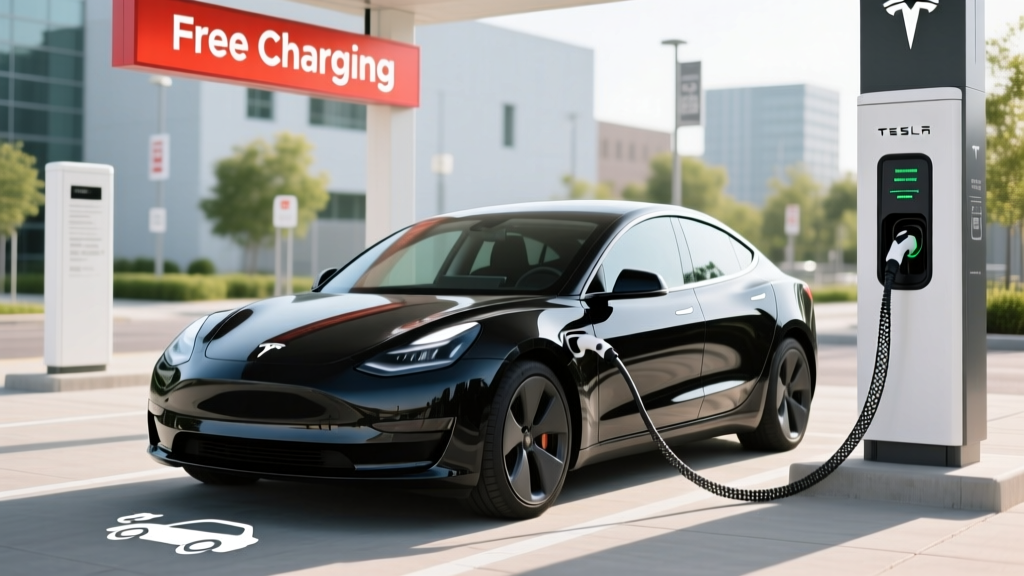
Tesla discontinued unlimited free Supercharging for new Model 3 orders in 2019. Since then, the automaker has occasionally offered limited free Supercharging credits (typically 1,000–10,000 miles) as a referral bonus or end-of-quarter sales incentive. As of early 2026, no standing free Supercharging program applies to new Model 3 buyers.
Where you can still find free or heavily subsidized charging:
- Destination Charging: Hotels, resorts, and some restaurants offer complimentary Level 2 Tesla Wall Connectors for guests. Power is typically 11.5 kW (48A), adding roughly 30–35 miles of range per hour.
- Workplace Charging: A growing number of employers provide free Level 2 charging as an employee benefit. Check with your HR department.
- Utility Off-Peak Programs: Some utilities (e.g., PG&E, ConEdison, Xcel Energy) offer EV-specific time-of-use plans with deeply discounted overnight rates — not free, but as low as $0.05–$0.08/kWh.
- Referral Credits: Tesla periodically runs referral programs awarding Supercharging miles. Check Tesla's current referral terms before purchase.
For day-to-day ownership, home Level 2 charging remains the most cost-effective and convenient method by a wide margin.
Charging Levels Explained: Speeds, Power, and Range Added
Before discussing costs, you need to understand the three charging tiers and how they differ. The critical distinction: kW (kilowatts) measures power — how fast energy flows into your car. kWh (kilowatt-hours) measures energy — the total capacity of your battery. Think of kW as the width of a hose and kWh as the size of the bucket.
| Level | Voltage | Max Power (kW) | Miles of Range Added per Hour | Best Use Case |
|---|---|---|---|---|
| Level 1 (120V) | 120V AC | 1.4–1.9 kW | 3–5 mi/hr | Overnight trickle; emergency backup |
| Level 2 (240V) | 240V AC | 7.2–19.2 kW | 20–55 mi/hr | Daily home & workplace charging |
| DC Fast Charging | 400–800V DC | 50–350 kW | 150–1,000+ mi/hr | Road trips and rapid top-ups |
The 2026 Tesla Model 3 Long Range AWD carries an ~75 kWh (usable) LFP or NMC battery pack (chemistry varies by trim and production batch) and accepts up to 11.5 kW on Level 2 AC and up to 250 kW peak on DC fast charging at V3/V4 Superchargers. The Rear-Wheel-Drive trim with its ~57.5 kWh LFP pack also peaks at 250 kW DC but sustains that rate longer due to LFP's charge-curve characteristics.
- Model 3 Long Range (75 kWh) at 250 kW Supercharger: ~25–28 minutes (peak rate tapers significantly above 60% SoC)
- Model 3 RWD LFP (57.5 kWh) at 250 kW Supercharger: ~22–25 minutes
- Model 3 Long Range on Level 2 (11.5 kW): ~7–8 hours (0–100%)
- Model 3 RWD on Level 2 (11.5 kW): ~5.5–6 hours (0–100%)
- Any Model 3 on Level 1 (120V/12A): 36+ hours for a full charge — not practical for daily use
Home Level 2 Charger Installation: Costs, Electrical Requirements, and Upgrades
Installing a dedicated Level 2 home charger is the single highest-impact upgrade for EV ownership. Here is exactly what is involved for a Tesla Model 3 owner.
Electrical Requirements
The Tesla Wall Connector (Gen 3) supports up to 48 amps continuous draw, which requires a 60-amp dedicated circuit on a 240V line (NEMA 14-50 outlet or hardwired). Hardwiring is strongly preferred — it avoids the 40A NEC derating limit that applies to plug-in outlets on a 50A circuit and enables the full 11.5 kW output.
Your home's electrical panel must have sufficient spare capacity. A 200-amp service panel is standard in most homes built after 2000 and typically supports a 60A EV circuit without upgrade. Older homes with 100A or 150A panels may require a panel upgrade or a load-management device.
Installation Cost Breakdown
| Component | Simple Install (panel nearby) | Complex Install (long run / panel upgrade) |
|---|---|---|
| Charger equipment (Tesla Wall Connector) | $475 | $475 |
| Electrician labor (2–4 hrs simple; 6–12+ hrs complex) | $300–$700 | $1,200–$3,000 |
| Electrical permit | $50–$150 | $50–$200 |
| Panel upgrade (if needed: 100A → 200A) | N/A | $1,500–$3,500 |
| Conduit, wire, mounting hardware | $50–$200 | $300–$800 |
| Total estimated cost | $875–$1,525 | $3,525–$7,975 |
The wide range reflects real-world variability. If your panel is adjacent to your garage and has spare capacity, expect to pay under $1,500 total. If you need a 50-foot conduit run through finished walls or a panel upgrade, costs climb quickly. Always get 2–3 quotes from licensed electricians and confirm they pull a permit — unpermitted work can void homeowner's insurance claims.
Safety and Code Considerations
- Dedicated circuit: NEC Article 625 requires EV charging equipment to be on its own dedicated circuit — no sharing with other appliances.
- GFCI protection: The 2020 NEC (and later) requires GFCI protection for outlet-based EV chargers. Hardwired units with integrated ground-fault protection (like the Tesla Wall Connector) satisfy this without a separate GFCI breaker.
- Outdoor rating: If installing outside, confirm the charger carries a NEMA 4 or IP65 rating. The Tesla Wall Connector is rated for indoor and outdoor use.
- Load management: If your panel is near capacity, devices like the Sense energy monitor or Tesla's built-in load-sharing feature (for multi-unit Wall Connector setups) can prevent breaker trips without a panel upgrade.
Which Connector Is Compatible With the Tesla Model 3?
The Tesla Model 3 sold in North America uses the NACS (North American Charging Standard) connector — Tesla's proprietary plug, now formally adopted as the industry standard by Ford, GM, Rivian, Volvo, and most major automakers.
| Connector Type | Compatibility | Adapter Required? |
|---|---|---|
| NACS (Tesla) | Native — direct plug at all Tesla Superchargers and Destination Chargers | No |
| CCS1 | Compatible with adapter (Tesla sells a CCS adapter, ~$250) | Yes — Tesla CCS Adapter |
| CHAdeMO | Compatible with third-party adapter (e.g., Setec, ~$275) | Yes — third-party adapter |
| J1772 (Level 2 public) | Compatible with included J1772-to-NACS adapter (ships with every Model 3) | Yes — included adapter |
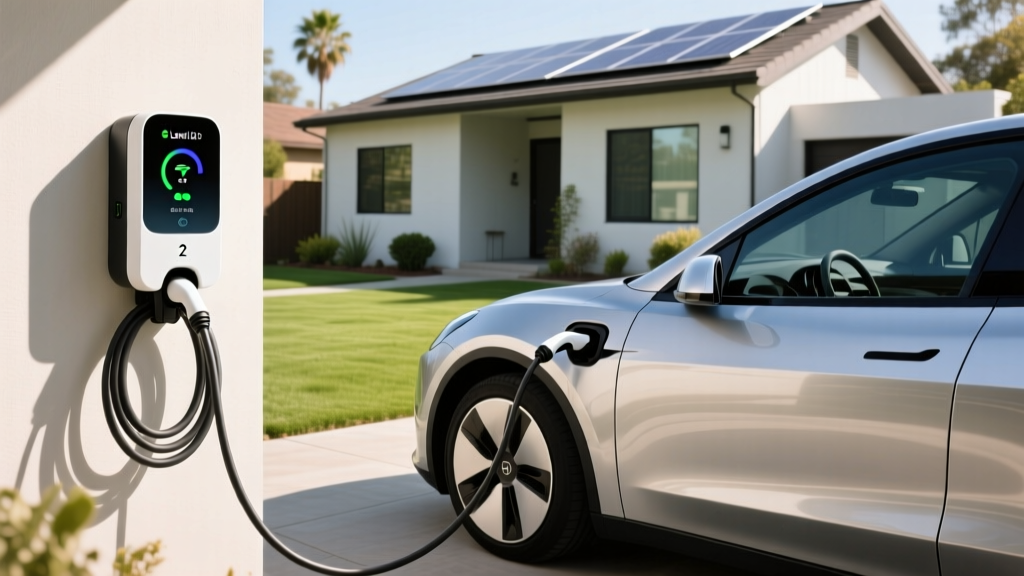
For home charging, the Tesla Wall Connector uses a native NACS plug — no adapter needed. For public Level 2 stations with J1772 connectors, use the adapter included in your Model 3's glovebox or trunk. For non-Tesla DC fast chargers (Electrify America, EVgo), the CCS adapter unlocks access to the broader network, which is useful in areas where Supercharger coverage has gaps.
Charging Cost Per Mile: Model 3 vs. Gas Sedan
The economics of EV ownership hinge on your local electricity rates and driving patterns. Below, we compare a 2026 Tesla Model 3 Long Range AWD (EPA-estimated 132 MPGe combined, ~26 kWh/100 mi per fueleconomy.gov) against a comparable 2026 Toyota Camry (EPA 32 MPG combined).
| Charging / Fueling Scenario | Rate | Model 3 Cost/Mile | Gas Sedan Cost/Mile (at $3.50/gal) |
|---|---|---|---|
| Home off-peak (utility TOU plan) | $0.08/kWh | $0.021 | $0.109 |
| Home standard rate | $0.16/kWh | $0.042 | $0.109 |
| Public Level 2 (ChargePoint, EVgo) | $0.30/kWh | $0.078 | $0.109 |
| Tesla Supercharger (average US) | $0.32/kWh | $0.083 | $0.109 |
| Electrify America DC fast | $0.48/kWh | $0.125 | $0.109 |
At home on an off-peak rate, the Model 3 costs roughly 80% less per mile than the gas sedan. Even at standard residential rates, you save about 60%. The savings narrow at public DC fast chargers — and on the most expensive networks, charging can actually exceed gasoline cost per mile. This is why home charging is so central to the EV value proposition.
Best Home Chargers for Tesla Model 3 (2026 Equipment Picks)
While the Tesla Wall Connector is the obvious default for Model 3 owners, several third-party chargers also work well via the NACS plug or an adapter. Here are our top picks based on power output, cable management, smart features, and price.
Tesla Wall Connector (Gen 3)
- Power: Up to 11.5 kW (48A, hardwired on 60A circuit)
- Connector: Native NACS
- Cable length: 24 ft
- Smart features: Wi-Fi, OTA firmware updates, load sharing (up to 6 units), access control
- Price: ~$475
- Verdict: Best native integration; no adapter needed. Top pick for Tesla-only households.
ChargePoint Home Flex
- Power: Up to 12 kW (50A, hardwired on 60A circuit); configurable down to 16A
- Connector: J1772 (use included Tesla adapter) or NACS pigtail version
- Cable length: 23 ft
- Smart features: Wi-Fi, Alexa/Google integration, detailed energy tracking app, TOU scheduling
- Price: ~$649
- Verdict: Best for multi-EV households (Tesla + non-Tesla). Superior app and scheduling.
Emporia Vue + EV Charger
- Power: Up to 11.5 kW (48A)
- Connector: J1772 (adapter required for Tesla) or NACS version
- Cable length: 24 ft
- Smart features: Whole-home energy monitoring integration, solar-aware charging, TOU scheduling
- Price: ~$599 (charger only); $799 with Emporia Vue panel monitor
- Verdict: Best for solar-equipped homes. Charge when your panels produce excess.
Grizzl-E Smart
- Power: Up to 10 kW (40A on 50A circuit)
- Connector: J1772 (adapter needed) or NACS version available
- Cable length: 24 ft
- Smart features: Wi-Fi, OCPP compatibility, adjustable amperage
- Price: ~$549
- Verdict: Built in Canada for extreme cold (rated to -40°F). Best for harsh-winter climates.
Federal Tax Credit and Utility Rebates for Home Charging
The federal Alternative Fuel Vehicle Refueling Property Credit (IRS Form 8911) covers 30% of home EV charger equipment and installation costs, up to a maximum of $1,000. However, eligibility is restricted to census tracts classified as low-income or non-urban. Check your address against the IRS eligibility tool before counting on this credit.
Many utilities offer additional rebates — typically $250–$750 for installing a smart Level 2 charger, sometimes more if you enroll in a managed-charging or time-of-use program. Check with your local utility's EV programs page.
Frequently Asked Questions
How much does it cost to install a home EV charger for a Tesla Model 3?
For a straightforward installation with a nearby 200A panel, expect $875–$1,525 total (Tesla Wall Connector + electrician + permit). If your home needs a panel upgrade or a long conduit run, costs can reach $3,500–$8,000. Always get multiple quotes and require a permit.
How fast will each charging level add range to my Model 3?
Level 1 (120V) adds 3–5 miles per hour — only useful for overnight trickle charging. Level 2 (240V, 48A) adds roughly 35–44 miles per hour, easily replenishing a full day's driving overnight. DC fast charging at a 250 kW Supercharger can add up to 175 miles in 15 minutes under optimal conditions, though the charge curve tapers significantly above 60% state of charge.
Which connector and charger is compatible with my Tesla Model 3?
The Model 3 uses the NACS connector natively. At home, the Tesla Wall Connector plugs in directly. For public J1772 Level 2 stations, use the J1772-to-NACS adapter included with your car. For non-Tesla DC fast chargers, a Tesla CCS adapter (~$250) is needed.
How much does charging a Model 3 cost per mile compared to gas?
At home on off-peak electricity ($0.08/kWh), a Model 3 Long Range costs about $0.021/mile — roughly 80% cheaper than a 32 MPG gas sedan at $3.50/gallon ($0.109/mile). On Tesla Superchargers averaging $0.32/kWh, cost rises to ~$0.083/mile, still a meaningful savings. Only the most expensive public DC chargers ($0.48+/kWh) push EV cost per mile above gasoline.
What electrical upgrades might I need before installing a Level 2 charger?
If your home has a 200A electrical panel with spare breaker slots and the run from panel to garage is short, you likely need no upgrade. Homes with 100A or 150A panels, or panels already near capacity, may require a panel upgrade ($1,500–$3,500) or a smart load-management device to avoid overloading the service. A licensed electrician can perform a load calculation to determine your exact needs.
Can I still get any free charging with a new Tesla Model 3 in 2026?
Tesla does not currently offer a standing free Supercharging program for new Model 3 purchases. Occasional limited-time referral bonuses or promotional credits may provide 1,000–10,000 free Supercharging miles. Destination Chargers at hotels and some workplaces remain the most reliable source of complimentary Level 2 charging.