If you've imported a China-built Tesla Model 3 Extended Range or are comparing it against the US-spec Long Range variant, charging logistics are likely top of mind. The China-market Model 3 Extended Range (often referred to as the "Long Range" in export markets) carries a different battery supplier mix and, in some cases, a different charging port standard depending on destination. This guide breaks down exactly how to charge this vehicle at home and on the road, what electrical work your house may need, and what it actually costs per mile.
China-Built Model 3 Extended Range: Battery & Charging Specs at a Glance
The China-built Tesla Model 3 Extended Range (Gigafactory Shanghai) typically ships with an LFP (lithium iron phosphate) or NMC battery depending on model year and destination market. For 2025–2026 export-spec Extended Range models, Tesla has largely standardized on a ~75 kWh usable NMC pack for the dual-motor Long Range variant, while the RWD Extended Range trims may use a CATL-supplied LFP pack around 60–66 kWh usable. Always verify your specific VIN's battery chemistry via the Tesla app or window sticker, as it directly affects charging behavior.
| Spec | Model 3 Extended Range (China-Built, Dual Motor) |
|---|---|
| Battery Capacity (usable) | ~75 kWh (NMC) / ~60 kWh (LFP RWD) |
| EPA-Equivalent Range | ~346 mi (NMC AWD); ~310 mi (LFP RWD) |
| Real-World Highway Range | ~280–310 mi (NMC); ~250–275 mi (LFP) |
| Max DC Fast Charge Rate | 250 kW peak (NMC); 170 kW peak (LFP) |
| 10–80% DC Fast Charge Time | ~25 min (NMC at 250 kW); ~30 min (LFP) |
| Max AC Level 2 Rate | 11 kW (onboard charger) |
| Charge Port (US Import) | NACS (Tesla proprietary) |
| Charge Port (China Domestic) | GB/T AC + GB/T DC |
Real-World Range Reality: The EPA-equivalent 346-mile figure assumes moderate temperatures and mixed driving. On a sustained 75 mph highway run in 30°F weather, expect roughly 240–260 miles from the NMC pack. LFP packs lose a slightly higher percentage in extreme cold due to different thermal characteristics. Always plan road-trip charging stops at ~60–70% of your sticker range in winter.
Charging Levels Explained: How Fast Will Each Level Add Range?
Understanding the three charging levels is essential before you spend a dollar on equipment. The critical distinction: kW (kilowatts) measures power — how fast energy flows into your car. kWh (kilowatt-hours) measures energy — the total capacity of your battery. Think of kW as the width of the hose and kWh as the size of the bucket.
| Level | Voltage / Amps | Power (kW) | Miles of Range Added Per Hour | Best For |
|---|---|---|---|---|
| Level 1 (Standard Outlet) | 120V / 12–16A | 1.4–1.9 kW | 3–5 mi/hr | Overnight top-ups, low-mileage drivers |
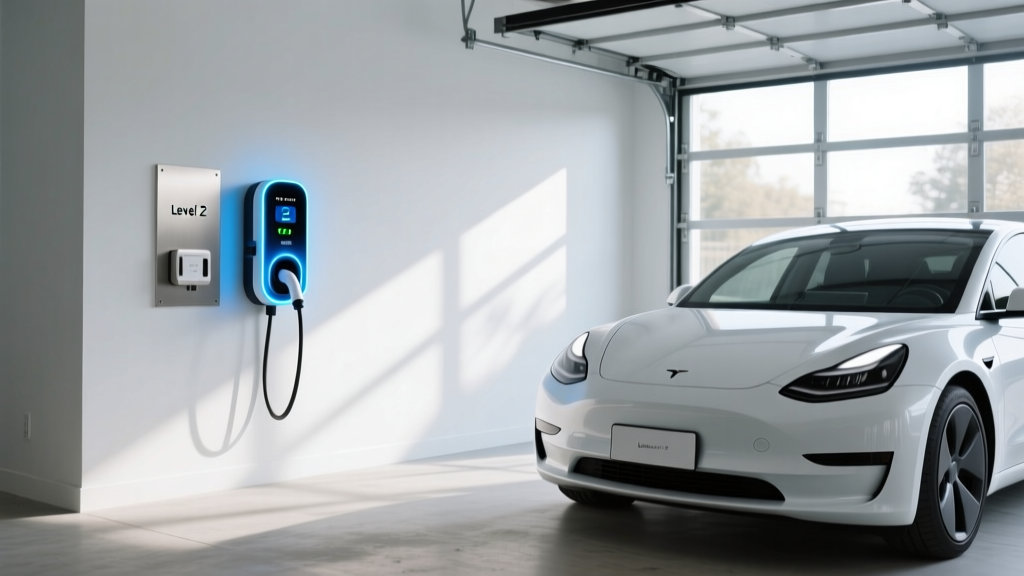
| Level 2 (Home/Public AC) | 240V / 32–48A | 7.7–11.5 kW | 25–44 mi/hr | Daily home charging, workplace |
| DC Fast Charging | 400–800V DC | 50–250 kW | 150–750+ mi/hr (peak) | Road trips, rapid top-ups |
For the China-built Model 3 Extended Range with its 11 kW onboard AC charger, a 48-amp Level 2 circuit delivers the maximum AC speed. Anything above 48A won't charge the car faster — the onboard charger is the bottleneck, not the wall unit.
Home Charger Installation: Electrical Requirements, Costs & Panel Upgrades
This is where most new EV owners get sticker shock. The charger unit itself is often $300–$700, but the electrical work can range from straightforward to expensive depending on your home's panel capacity and the distance from panel to garage.
Electrical Requirements for a Model 3 Level 2 Charger
To charge at the Model 3's maximum 11 kW AC rate, you need a 240V circuit rated for at least 60 amps (NEC code requires the circuit breaker to be rated at 125% of the continuous load, so a 48A charger requires a 60A breaker). If you're willing to charge at 7.7 kW, a 40A breaker and 32A charger suffice — and this is often the sweet spot for homes with 100A or 150A main panels.
Do You Need a Panel Upgrade?
Homes with a 200A main service panel typically have enough headroom for a 60A EV circuit, especially if you're not simultaneously running heavy loads (electric oven, dryer, HVAC). Homes with 100A service almost certainly need a panel upgrade or a smart load-management system like the Emporia Load Management or Span smart panel to avoid a full service upgrade.
A panel upgrade from 100A to 200A typically costs $1,500–$3,500 depending on your utility and local code. This is the single biggest variable in home charging cost.
| Component | Typical Cost Range | Notes |
|---|---|---|
| Level 2 Charger Unit (40A–48A) | $300–$700 | Tesla Wall Connector, ChargePoint, Emporia |
| Electrician Labor (standard install) | $500–$1,500 | Varies by run length, wall type, conduit |
| Permit & Inspection | $50–$300 | Required in most jurisdictions |
| Electrical Materials (wire, conduit, breaker) | $100–$400 | Longer runs = more copper = higher cost |
| Panel Upgrade (if needed) | $1,500–$3,500 | 100A → 200A service upgrade |
| Total (no panel upgrade) | $950–$2,900 | Most homes with 200A service |
| Total (with panel upgrade) | $2,450–$6,400 | Older homes with 100A service |
Pro tip: The IRS does not currently offer a federal tax credit for home EV charger installation for most taxpayers — the §30C Alternative Fuel Infrastructure Tax Credit expired for residential use after 2023, though some state and utility rebates remain. Check with your local utility for $200–$500 rebates on Level 2 equipment.
Connector Compatibility: NACS, CCS1, GB/T & Adapter Needs
This is where China-built Model 3 ownership gets nuanced. The charging port on your vehicle depends entirely on its destination market:
- US-spec / North America export: NACS (Tesla's proprietary connector, now the North American Charging Standard). Directly compatible with Tesla Superchargers and, with adapters, most CCS networks.
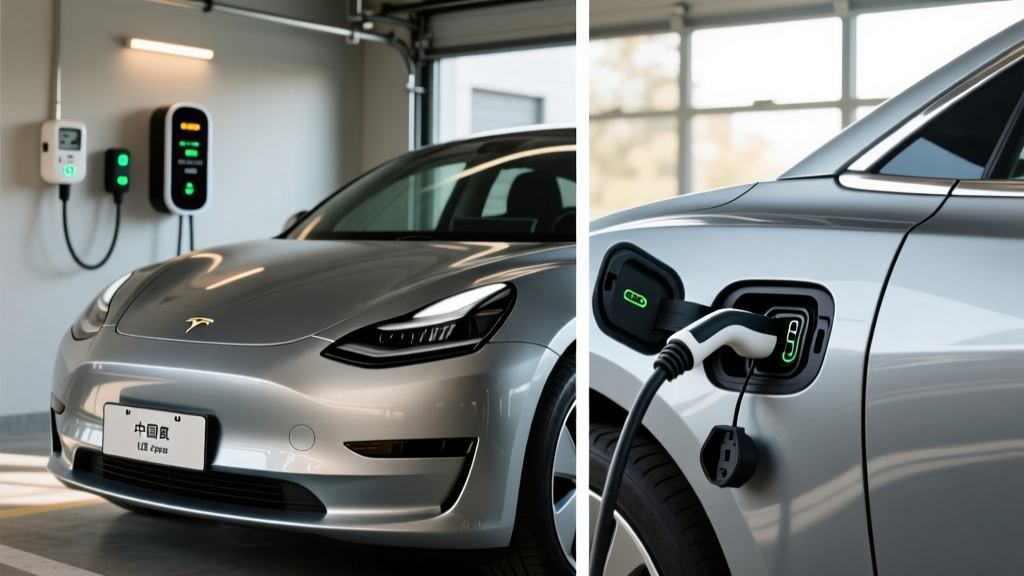
- China domestic market: GB/T for both AC and DC charging. If you've imported a China-domestic Model 3 to the US, you will need a GB/T-to-NACS or GB/T-to-J1772 adapter for Level 2, and public DC fast charging will be extremely limited without a dedicated GB/T DC adapter (which are expensive and not widely certified in the US).
- European export: CCS2 (Type 2 AC + CCS DC). Requires a CCS2-to-NACS adapter if brought to North America.
| Connector Standard | Region | AC Charging | DC Fast Charging | Adapter Needed for US Use? |
|---|---|---|---|---|
| NACS (Tesla) | North America | Yes (J1772 adapter included) | Yes — native | None |
| CCS1 | North America (non-Tesla) | Via J1772 | Yes | NACS-to-CCS1 adapter (~$200–$250) |
| GB/T | China | Yes | Yes | GB/T-to-NACS (rare, ~$300–$600) |
| CCS2 | Europe | Type 2 | Yes | CCS2-to-NACS (~$200–$350) |
| CHAdeMO | Legacy (Nissan, Mitsubishi) | N/A | Yes (declining network) | Not available for NACS vehicles |
If you're in the US with a standard NACS-port Model 3 (even if China-built), your adapter needs are minimal. Tesla includes a J1772-to-NACS adapter in the glovebox for non-Tesla Level 2 public chargers. For Electrify America and other CCS1 networks, Tesla sells an official NACS-to-CCS1 adapter. The Tesla charging adapters page lists current offerings.
Cost to Charge: Home vs. Public vs. Gas — The Per-Mile Breakdown
This is the financial argument for electrification, and the Model 3 Extended Range's efficiency makes it one of the strongest cases on the market. The dual-motor NMC variant achieves roughly 26–28 kWh/100 mi (about 120 MPGe combined per fueleconomy.gov).
| Charging Scenario | Rate ($/kWh) | Cost per 100 Miles | Cost per Mile | vs. Gas (30 MPG @ $3.40/gal) |
|---|---|---|---|---|
| Home — Off-Peak TOU Rate | $0.08–$0.12 | $2.16–$3.36 | $0.02–$0.03 | 75–80% cheaper |
| Home — Standard Flat Rate | $0.14–$0.18 | $3.78–$5.04 | $0.04–$0.05 | 55–65% cheaper |
| Public Level 2 (ChargePoint, etc.) | $0.20–$0.35 | $5.40–$9.45 | $0.05–$0.09 | 20–50% cheaper |
| DC Fast (Tesla Supercharger) | $0.28–$0.40 | $7.56–$10.80 | $0.08–$0.11 | Comparable to gas |
| DC Fast (Electrify America) | $0.35–$0.55 | $9.45–$14.85 | $0.09–$0.15 | Comparable or more |
| Gas Car (30 MPG avg) | — | $11.33 | $0.11 | Baseline |
The bottom line: If you charge at home on an off-peak rate, the Model 3 Extended Range costs roughly $0.03/mile — about a quarter of what a 30 MPG gas car costs. Even on Superchargers at $0.35/kWh, you're breaking even with gas. The savings only materialize if you have reliable home or workplace charging. Exclusive public-DC-charging ownership is not cheaper than gas.
Charging Time Examples: What to Expect with a 75 kWh Pack
Here's what your actual charging sessions look like with the Model 3 Extended Range's ~75 kWh usable battery (NMC dual-motor). Remember: charging is not linear. The peak kW rate only applies at low states of charge (typically 10–40%). Above 80%, the charge curve tapers significantly to protect battery health.
- Level 1 (120V, 12A): ~1.4 kW → Full charge from 10% takes ~50+ hours. Only practical for maintaining charge or adding ~40 miles overnight.
- Level 2 (240V, 48A, 11.5 kW): 10–80% in approximately 5.5 hours. A full overnight charge from 20% to 100% takes ~7 hours — easily done while you sleep.
- Level 2 (240V, 32A, 7.7 kW): 10–80% in approximately 7.5 hours. Still sufficient for overnight charging if you arrive home by 10 PM.
- DC Fast (250 kW V3 Supercharger): 10–80% in approximately 25 minutes. Peak rate of 250 kW holds from ~10–35% SoC, then tapers to ~150 kW through 60%, then ~75 kW through 80%.
- DC Fast (150 kW V2 Supercharger): 10–80% in approximately 35–40 minutes. V2 stations share power between two stalls — if the adjacent stall is in use, your peak may drop to ~90 kW.
LFP note: If your China-built Model 3 has a CATL LFP pack, Tesla recommends charging to 100% at least once per week for battery calibration. LFP chemistry doesn't suffer the same high-SoC degradation concerns as NMC. However, LFP DC fast charging peaks lower (~170 kW) and the charge curve is flatter, meaning 10–80% takes roughly 30 minutes at a V3 Supercharger.
Recommended Home Chargers for the Model 3 Extended Range
These are the Level 2 units we recommend based on power output, reliability, smart features, and value. All deliver the NACS connector natively or via included adapter.
Tesla Wall Connector (Gen 4)
- Power Output: Up to 11.5 kW (48A on 60A circuit)
- Connector: NACS native
- Cable Length: 24 ft
- Smart Features: Wi-Fi, OTA updates, Power Sharing (link multiple units on one circuit), access control
- Price: ~$450
- Why: Best integration with Tesla vehicles, cleanest aesthetic, reliable firmware. Power Sharing is ideal for two-EV households.
ChargePoint Home Flex
- Power Output: Up to 12 kW (50A, configurable down to 16A)
- Connector: NACS (2025+ models); J1772 with adapter for older units
- Cable Length: 24 ft
- Smart Features: Wi-Fi, app scheduling, Alexa integration, amperage dip-switch configurable
- Price: ~$550–$650
- Why: Adjustable amperage means you can match it to your panel capacity without swapping hardware. Excellent app.
Emporia Vue Level 2 Charger
- Power Output: Up to 11.5 kW (48A)
- Connector: NACS (2025+); J1772 available
- Cable Length: 24 ft
- Smart Features: Integrated energy monitoring (pairs with Emporia Vue panel monitor), solar-aware scheduling, load management
- Price: ~$400–$500
- Why: Best value if you want whole-home energy visibility. Load management feature can avoid a panel upgrade.
Safety, Code & Installation Best Practices
EV charging is a continuous high-amperage load — the National Electrical Code (NEC) treats it differently than intermittent appliances. Here's what your installation must address:
- Dedicated circuit: Your Level 2 charger must be on its own dedicated double-pole breaker. No sharing with other outlets or appliances.
- GFCI protection: NEC 2020 and later require GFCI protection for all EVSE installations. Most modern hardwired chargers have built-in GFCI; plug-in units (NEMA 14-50) require a GFCI breaker, which adds ~$50–$100.
- Outdoor rating: If your charger is mounted outside or in an unenclosed carport, it must carry a NEMA 4 (weatherproof) rating. All three units recommended above are NEMA 4 rated.
- Hardwired vs. plug-in: Hardwired installations (no plug, direct wire to the unit) are preferred for 48A+ circuits. NEMA 14-50 receptacles are rated for 50A continuous only — running a 48A charger on a 14-50 outlet is at the thermal limit and some jurisdictions prohibit it. Hardwired also eliminates the GFCI breaker requirement in some code interpretations.
- Permit & inspection: Nearly all jurisdictions require an electrical permit for EVSE installation. The inspection ensures wire gauge, breaker sizing, and grounding meet code. Skipping the permit risks insurance denial in the event of an electrical fire.
Always hire a licensed electrician who has EVSE installation experience. Ask if they're familiar with NEC Article 625 (Electric Vehicle Charging System Equipment). Get at least two quotes — prices vary significantly even within the same city.
Public Charging on the Road: Supercharger & Third-Party Networks
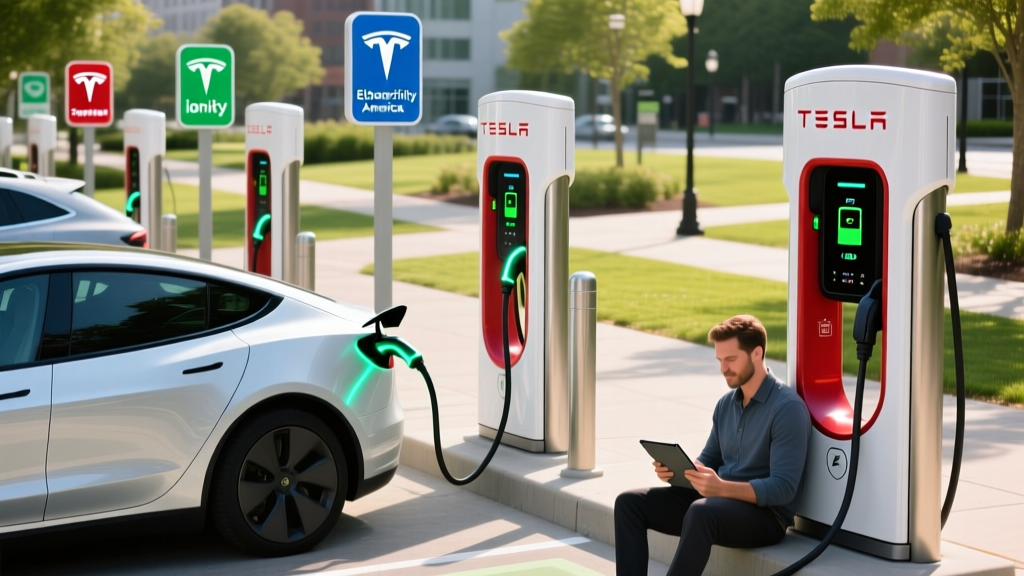
The China-built Model 3 Extended Range with a NACS port has the best public charging access of any EV in North America. You get native access to the Tesla Supercharger network (17,000+ V3/V4 stalls in the US), which remains the most reliable DC fast charging infrastructure by a wide margin based on uptime and plug-and-charge seamlessness.
For non-Tesla networks — Electrify America, EVgo, ChargePoint DC — you'll need the Tesla NACS-to-CCS1 adapter. In practice, CCS1 networks have improved but still trail Superchargers in reliability. Expect occasional stalls that are offline, have broken cables, or fail to initiate a session. The adapter adds a slight connection hassle but opens up thousands of additional DC stalls.
Preconditioning tip: When you navigate to a Supercharger in the Tesla navigation system, the car automatically preconditions (warms) the battery to optimize charge speed. If you drive to a Supercharger without using onboard navigation, preconditioning won't activate and your initial charge rate may be 30–50% slower, especially in cold weather. Always route through the car's nav for DC stops.
Frequently Asked Questions
How much does it cost to install a home EV charger for a Tesla Model 3?
For most homes with a 200A electrical panel, expect $950–$2,900 total including the charger unit ($300–$700), electrician labor ($500–$1,500), materials ($100–$400), and permit ($50–$300). Homes needing a panel upgrade from 100A to 200A should budget $2,450–$6,400 total. Get multiple quotes and ask about utility rebates.
How fast will each charging level add range to the Model 3 Extended Range?
Level 1 (120V) adds 3–5 miles per hour. Level 2 (240V, 48A) adds approximately 37–44 miles per hour — enough to fully replenish overnight. DC fast charging at a V3 Supercharger adds up to 175 miles in 15 minutes at peak rate, though the charge curve tapers significantly above 60% SoC.
Which connector is compatible with a China-built Tesla Model 3?
If your China-built Model 3 was exported to North America, it has a NACS port and is directly compatible with Tesla Superchargers and J1772 Level 2 stations (via included adapter). China-domestic models have GB/T ports and require specialized adapters for US use — this is a significant complication for grey-market imports.
How much does charging the Model 3 Extended Range cost per mile vs. gas?
At home on off-peak electricity ($0.10/kWh), it costs roughly $0.03/mile — about 75% less than a 30 MPG gas car at $3.40/gallon. On Tesla Superchargers ($0.35/kWh), it's roughly $0.09–$0.10/mile, comparable to gas. The financial case for EV ownership depends heavily on home charging access.
What electrical upgrades might I need for a Level 2 charger?
If your home has a 200A main panel with available capacity, you likely need only a new 60A double-pole breaker and a wire run to your garage. If you have a 100A panel, you'll need either a panel upgrade ($1,500–$3,500) or a smart load-management system that dynamically reduces charger amperage when other appliances are running. A licensed electrician can perform a load calculation to determine your options.
Can I charge a China-built Model 3 to 100% regularly?
If your vehicle has an LFP battery (common in RWD Extended Range trims from Shanghai), Tesla recommends charging to 100% at least weekly for accurate state-of-charge calibration. NMC variants (dual-motor Long Range) should be kept at 80% daily and charged to 100% only before road trips to minimize degradation.