Why the Tesla Model 3's China CATL Battery Changes the Charging Conversation
The Tesla Model 3 sold globally since late 2023 (the "Highland" refresh) relies heavily on lithium iron phosphate (LFP) battery cells manufactured by CATL in China. For the 2026 model year, the Model 3 Rear-Wheel Drive (RWD) ships with a ~60 kWh usable LFP pack sourced from CATL's Shanghai and Ningde facilities, while the Long Range All-Wheel Drive variant uses an NMC (nickel manganese cobalt) pack from Panasonic and LG. Understanding which chemistry is under your floor matters — it dictates how fast you can charge, how you should manage state of charge (SoC), and what real-world range you'll actually see versus the EPA sticker.
This guide covers everything you need to charge a Tesla Model 3 (with focus on the China-sourced LFP variant) at home and on the road: charging levels in exact kW, home installation costs, connector compatibility, and cost-per-mile math. If you've been searching for details on the Tesla Model 3 range from China-built cells and how to keep them charged efficiently, this is your reference.
EPA estimate: 272 miles
Real-world highway (70 mph, mild weather): ~240–250 miles
Real-world cold weather (below 32°F): ~200–220 miles
City/regenerative driving: ~260–270 miles
Charging Levels Explained: kW Speeds and Miles Per Hour
Before plugging in, you need to understand the difference between kW (kilowatts — the rate of power delivery, like water pressure from a hose) and kWh (kilowatt-hours — the total energy stored in your battery, like the size of the tank). A 60 kWh battery charged at 11.5 kW takes roughly 5.2 hours from 0–100%. A charger's kW rating tells you how fast energy flows; your battery's kWh tells you how much it holds.
| Level | Voltage | Max kW | Miles of Range Per Hour | Typical Use Case |
|---|---|---|---|---|
| Level 1 | 120V AC | 1.4–1.9 kW | 3–5 mi/hr | Emergency / overnight trickle |
| Level 2 | 240V AC | 7.2–19.2 kW | 20–55 mi/hr | Home daily charging, workplace |
| DC Fast Charge | 400–800V DC | 50–250+ kW | 150–600+ mi/hr | Road trips, highway corridors |
For the Model 3 RWD with the 60 kWh CATL LFP pack, the onboard AC charger accepts up to 11.5 kW (48A at 240V). On DC fast charging, Tesla rates this pack at a peak of 170 kW, though real-world sustained rates average closer to 100–120 kW across the 10–80% window due to charge-curve taper. Expect a 10–80% DC fast charge in approximately 25–30 minutes at a V3 Supercharger (250 kW capable) or comparable CCS/NACS station.
Battery: 60 kWh usable, LFP (CATL China)
Level 2 max: 11.5 kW (48A)
DC fast peak: 170 kW
10–80% DC time: ~25–30 min
EPA range: 272 mi | Efficiency: 132 MPGe combined
Base MSRP: $38,990
Home Charger Installation: Electrical Requirements and Costs
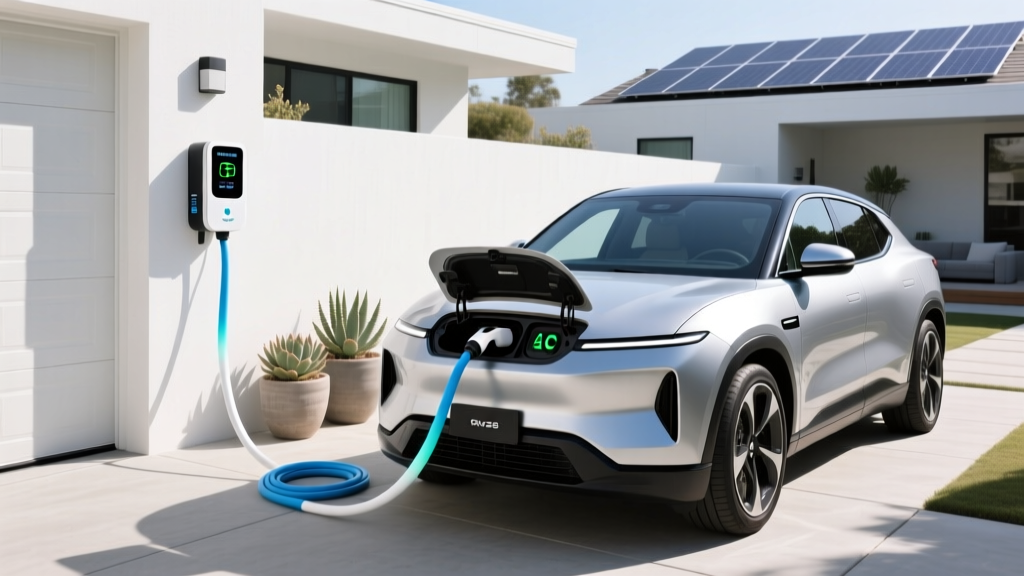
Charging a Model 3 at home on Level 2 is the most practical daily strategy — especially with the LFP chemistry, which Tesla explicitly recommends charging to 100% at least once per week to maintain cell-balancing accuracy. That means home charging is not optional; it's how you protect long-term range accuracy.
Electrical Requirements
To deliver the Model 3's maximum 11.5 kW AC charge rate, you need a 240V / 60A dedicated circuit with a hardwired wall connector rated for 48A continuous draw. The National Electrical Code (NEC) requires that continuous loads (like EV charging, which runs for 3+ hours) use only 80% of a circuit's rated capacity. So a 60A breaker supports 48A continuous — exactly what the Tesla Wall Connector delivers at peak.
If your home's electrical panel is 100A or 150A and already heavily loaded (central AC, electric range, dryer), adding a 60A EV circuit may require a panel upgrade to 200A. This is the single most variable cost in home EV charger installation and is especially common in homes built before 2000.
| Item | Cost Range | Notes |
|---|---|---|
| Level 2 Charger (hardware) | $400–$700 | Tesla Wall Connector, ChargePoint Home Flex, Emporia |
| Electrician labor (standard install) | $600–$1,500 | Run 6 AWG copper, 240V/60A circuit, ~30–50 ft from panel |
| Permit and inspection | $50–$250 | Varies by municipality; required for code compliance |
| Panel upgrade (if needed) | $1,500–$3,500 | 100A → 200A service; older homes only |
| Total (no panel upgrade) | $1,050–$2,450 | Typical for modern 200A-panel homes |
| Total (with panel upgrade) | $2,550–$5,950 | Common in pre-2000 construction |
A licensed electrician should always perform the installation. Per the NEC, a GFCI breaker is required for outdoor receptacles (NEMA 14-50), though hardwired wall connectors like the Tesla Wall Connector typically don't require an external GFCI since they have built-in ground-fault protection. If you're mounting outdoors, ensure the unit carries a NEMA 4 (or IP65+) weather rating.
Connector Compatibility: NACS, CCS, and Adapter Realities
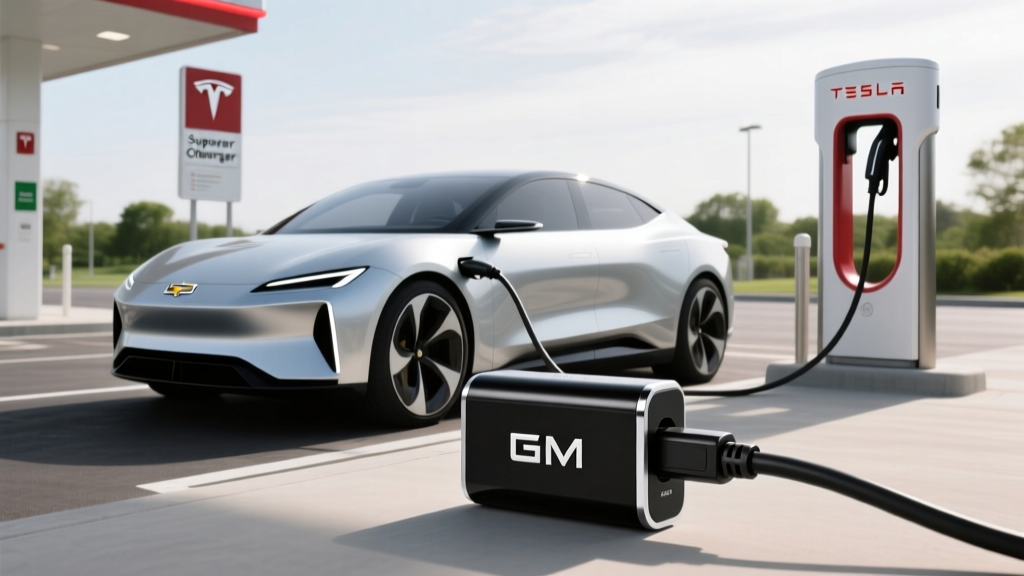
As of the 2026 model year, all new Tesla vehicles sold in North America ship with the NACS (North American Charging Standard) port — the proprietary Tesla connector now adopted by Ford, GM, Rivian, Hyundai, and most major automakers. This means your Model 3 plugs natively into every Tesla Supercharger and the growing number of non-Tesla chargers that have added NACS cables (Electrify America, EVgo, and ChargePoint are rolling these out through 2026–2027).
| Connector | Tesla Model 3 (2026) | Adapter Needed? | Network Access |
|---|---|---|---|
| NACS (Tesla native) | ✅ Built-in | No | Tesla Supercharger + growing third-party |
| CCS1 | ⚠️ Via adapter | Yes — Tesla CCS adapter (~$175) | Electrify America, EVgo (legacy CCS stalls) |
| CHAdeMO | ❌ Not supported | No reliable adapter exists | Effectively obsolete in North America |
| J1772 (Level 2) | ⚠️ Via adapter | Yes — included with vehicle (J1772→NACS) | Public Level 2 stations, non-Tesla destinations |
For daily home charging, the Tesla Wall Connector uses NACS natively — no adapter needed. For public Level 2 stations that still use J1772 connectors, Tesla includes a compact J1772-to-NACS adapter in the glovebox. Keep the CCS adapter in the trunk for road-trip redundancy, since some highway corridors still have CCS-only chargers that haven't been retrofitted with NACS cables.
Cost to Charge: Home vs. Public vs. Gas Comparison
The economics of charging a Model 3 with the 60 kWh CATL LFP pack depend heavily on where and when you plug in. Here's the real math using national average electricity rates and the Model 3's EPA-rated efficiency of approximately 25 kWh per 100 miles (4 miles per kWh).
| Charging Scenario | Rate ($/kWh) | Cost for 60 kWh (0→100%) | Cost Per Mile |
|---|---|---|---|
| Home — off-peak (utility TOU plan) | $0.09–$0.13 | $5.40–$7.80 | $0.023–$0.033 |
| Home — standard residential rate | $0.16 | $9.60 | $0.040 |
| Public Level 2 (workplace/retail) | $0.20–$0.30 | $12.00–$18.00 | $0.050–$0.075 |
| Tesla Supercharger (DC fast) | $0.28–$0.40 | $16.80–$24.00 | $0.070–$0.100 |
| Non-Tesla DC fast (EA, EVgo) | $0.35–$0.55 | $21.00–$33.00 | $0.088–$0.138 |
| Gasoline baseline (30 MPG, $3.40/gal) | — | — | $0.113 |
Even at the highest public DC fast charging rates, the Model 3 on a CATL LFP pack undercuts a 30 MPG gas car on a per-mile basis. But the real savings come from home charging on a time-of-use (TOU) plan, where overnight rates can drop below $0.10/kWh — yielding fuel costs under $0.03/mile. Over 15,000 miles per year, that's $450 in electricity versus $1,695 in gasoline.
Sources: fueleconomy.gov EV technology overview, U.S. EIA average electricity rates.
Level 2 Charger Equipment Recommendations for the Model 3
Not all Level 2 chargers deliver the same power or features. Here are three proven options matched to the Model 3's 11.5 kW onboard charger:
Tesla Wall Connector (Gen 3)
- Max output: 11.5 kW (48A)
- Connector: NACS native
- Cable length: 24 ft
- Smart features: Wi-Fi OTA updates, Power Sharing (link multiple units on one circuit), load management
- Price: ~$475
- Best for: Tesla-only households; seamless integration with Tesla app
ChargePoint Home Flex
- Max output: 12 kW (50A) — configurable down to 16A
- Connector: NACS (2025+ models); J1772 on older stock
- Cable length: 23 ft
- Smart features: Wi-Fi, Alexa integration, scheduling via app, energy tracking
- Price: ~$599
- Best for: Multi-EV households; future-proofing for non-Tesla EVs
Emporia Vue EV Charger
- Max output: 11.5 kW (48A)
- Connector: NACS (2025+); J1772 with adapter
- Cable length: 24 ft
- Smart features: Real-time energy monitoring via Emporia Vue panel integration, solar-aware scheduling
- Price: ~$399
- Best for: Solar-equipped homes; budget-conscious buyers who want granular energy data
All three require a 240V/60A circuit for maximum output. If your panel can only spare a 40A or 50A breaker, these units can be software-configured to draw less (9.6 kW or 7.7 kW respectively) — you'll just add slightly fewer miles per hour of charging.
LFP Battery Charging Best Practices: Why CATL Chemistry Matters
The CATL-sourced LFP pack in the Model 3 RWD has fundamentally different charging needs than the NMC packs in the Long Range and Performance trims. Understanding this is essential for long-term battery health and range accuracy.
LFP (Lithium Iron Phosphate) characteristics:
- More tolerant of 100% SoC storage — Tesla recommends charging to 100% at least weekly
- Flatter voltage curve makes SoC estimation harder; periodic full charges recalibrate the BMS
- Lower energy density than NMC (hence 272 mi EPA vs. 363 mi for Long Range NMC)
- Superior cycle life — CATL LFP cells are rated for 3,000+ full cycles before reaching 80% capacity
- Better thermal stability — lower risk of thermal runaway
- Reduced cold-weather charging speed — preconditioning is critical below 40°F
Charging protocol for Model 3 RWD (LFP/CATL):
- Set daily charge limit to 100% in the Tesla app (unlike NMC, which should be limited to 80%)
- Plug in every night — LFP thrives on regular full cycles
- Always precondition before DC fast charging (the car does this automatically when you navigate to a Supercharger)
- In sub-freezing weather, expect 20–35% slower DC charge rates unless the battery is preconditioned
- Avoid leaving the car at 0% SoC for extended periods — LFP cells can suffer copper-dissolution damage below ~2.5V per cell
The Model 3's battery and drive unit warranty covers 8 years / 100,000 miles (RWD) or 8 years / 120,000 miles (Long Range/Performance) with a minimum 70% capacity retention threshold, per Tesla's official warranty documentation.
Safety, Electrical Code, and Installation Checklist
EV charging draws significant continuous current — more than most household appliances. Cutting corners on installation risks fire, failed inspections, and voided insurance claims. Here's what a compliant installation requires:
- Dedicated circuit: The EV charger must have its own breaker — never share a circuit with a dryer, oven, or HVAC unit
- Wire gauge: 6 AWG copper for 60A circuits; 4 AWG if the run exceeds 100 feet (voltage drop compensation)
- Hardwired vs. receptacle: Hardwired connections (no plug) are preferred for reliability and are not subject to NEC receptacle derating rules. If using a NEMA 14-50 receptacle, a GFCI breaker is required for outdoor installations
- Permit: Most jurisdictions require an electrical permit for new 240V circuits. Budget $50–$250 and schedule the inspection
- Outdoor rating: If the charger is mounted outside, ensure the unit is rated NEMA 4 or IP65 for rain and dust ingress protection
- Load calculation: Your electrician should perform an NEC Article 220 load calculation to confirm your panel can handle the added 60A without exceeding 80% of its total capacity
If your panel is at capacity, alternatives to a full panel upgrade include a smart load management device (like the Emporia Smart Panel or Tesla's built-in Power Sharing), which dynamically reduces EV charging current when other major appliances are running. This can avoid a $2,000+ panel upgrade in many cases.
Frequently Asked Questions
How much does it cost to install a home EV charger for a Tesla Model 3?
For a typical home with a 200A panel, expect $1,050–$2,450 total (charger hardware + electrician labor + permit). If your home needs a panel upgrade from 100A to 200A, add $1,500–$3,500. The Tesla Wall Connector hardware itself costs ~$475.
How fast will each charging level add range to the Model 3 RWD?
Level 1 (120V): 3–5 miles per hour. Level 2 (240V, 48A): ~35–44 miles per hour. DC fast charging (170 kW peak): ~150–180 miles in 15 minutes under ideal conditions, though the charge curve tapers significantly above 60% SoC.
Which connector is compatible with my 2026 Tesla Model 3?
The 2026 Model 3 uses NACS natively for both AC and DC charging. For J1772 public Level 2 stations, use the included adapter. For legacy CCS1 DC chargers, purchase the Tesla CCS adapter (~$175). CHAdeMO is not supported.
How much does charging a Model 3 cost per mile versus gas?
Home charging at $0.13/kWh yields ~$0.033/mile. Even Tesla Supercharging at $0.35/kWh comes to ~$0.088/mile. A comparable 30 MPG gas car at $3.40/gallon costs $0.113/mile. Home charging saves roughly $0.08/mile, or $1,200/year at 15,000 miles.
What electrical upgrades might I need for a 60A EV charger circuit?
If your home has a 200A panel with available breaker slots and passes the NEC load calculation, no upgrade is needed. Homes with 100A or 150A service, or panels already near capacity, may require a panel upgrade ($1,500–$3,500) or a smart load management device to avoid one.
Does the CATL LFP battery from China charge differently than NMC?
Yes. LFP should be charged to 100% regularly (weekly minimum) for accurate SoC calibration, while NMC should be limited to 80% for daily use. LFP also charges more slowly in cold weather and has a lower peak DC rate (170 kW vs. 250 kW for Long Range NMC). However, LFP offers superior cycle life (3,000+ cycles) and better thermal safety.
Can I charge my Model 3 on a standard 120V outlet?
Yes, using the Tesla Mobile Connector with the included 120V adapter. Expect 1.4 kW (12A) delivering roughly 3–4 miles of range per hour. A full charge from 0–100% on the 60 kWh LFP pack would take approximately 43 hours. It's viable for emergency top-ups or very low-mileage drivers but impractical as a daily strategy.
Note: Federal tax credit eligibility for home charger installation (30C, up to $1,000) depends on census-tract qualification and current IRS rules. Consult irs.gov or a tax professional for your specific situation.