Understanding Tesla Model 3 Charging: Levels, Speeds, and Connectors
The 2026 Tesla Model 3 (Long Range AWD) carries a usable battery capacity of approximately 75 kWh (LFP chemistry on the base RWD; NMC on Long Range/Performance trims) and delivers an EPA-estimated range of up to 363 miles. But range is only half the ownership equation — understanding how much it costs to recharge that battery, and how fast each method adds miles, is where most new EV buyers get tripped up.
Before calculating cost, you need to know the difference between kW (kilowatts) and kWh (kilowatt-hours). A kW is a unit of power — it's the rate at which electricity flows into your car, like water pressure from a hose. A kWh is a unit of energy — it's the total amount of electricity stored in the battery, like gallons in a tank. Your electricity bill charges you per kWh consumed; your charger's speed is rated in kW. Confusing the two is the single most common EV literacy mistake.
| Level | Voltage / Phase | Max Power (kW) | Miles of Range Added per Hour | Typical Use Case |
|---|---|---|---|---|
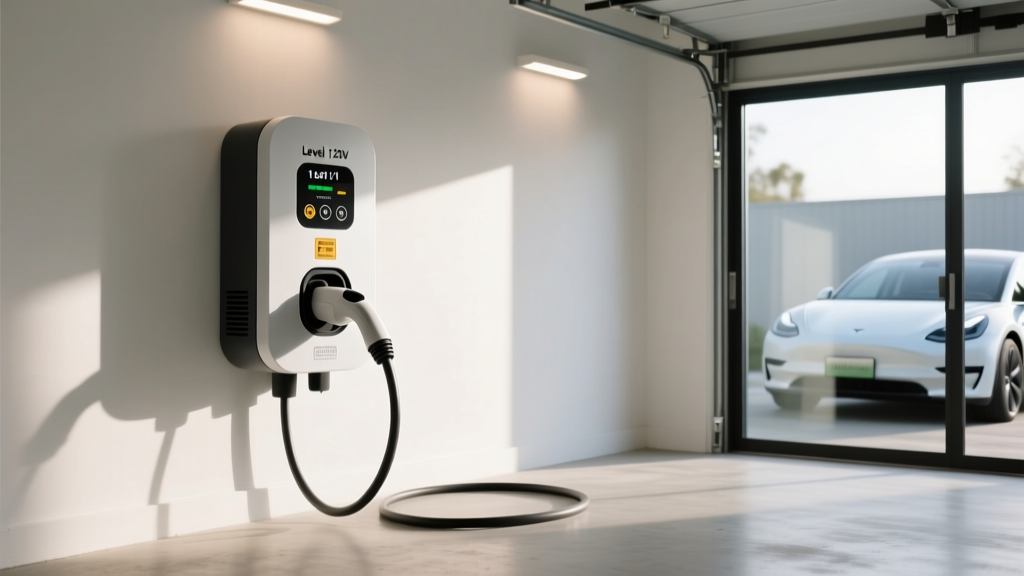
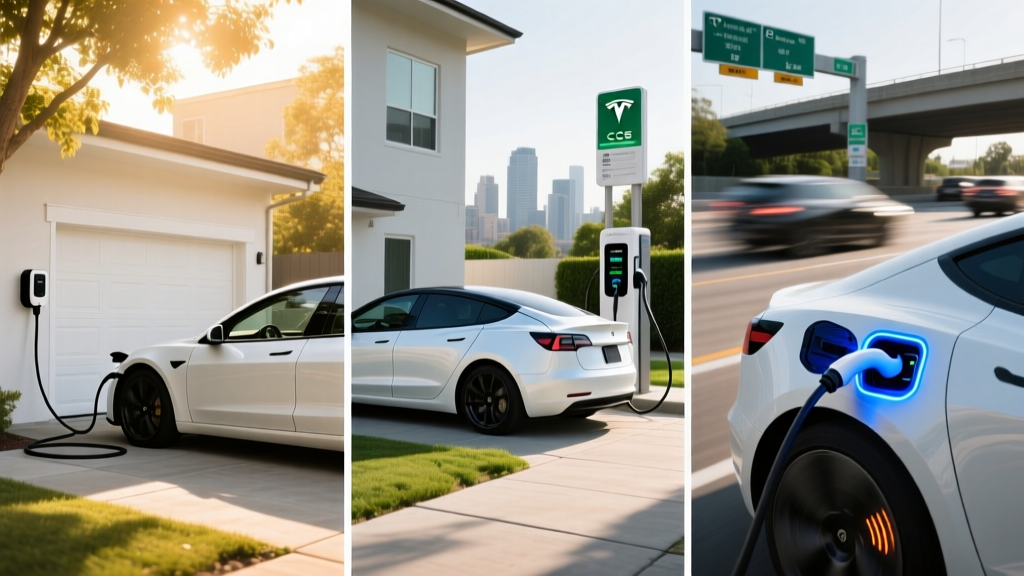
| Level 1 (120V) | 120V / Single-phase | ~1.4 kW | ~3–5 mi/hr | Emergency / overnight trickle |
| Level 2 (240V) | 240V / Single-phase | 7.2–11.5 kW | ~25–44 mi/hr | Home daily charging |
| DC Fast Charge | 400V+ DC | Up to 250 kW (Supercharger V3) | ~175+ mi in 15 min | Road trips, rapid top-ups |
The Model 3's onboard charger accepts up to 11.5 kW on Level 2 (48A at 240V). On DC fast charging, the Long Range variant can peak at 250 kW at a Tesla Supercharger V3 or V4 station, though sustained rates taper significantly above 50% State of Charge (SoC). Expect a 10–80% charge in roughly 25–30 minutes under ideal conditions, with the curve slowing to under 50 kW past 80%.
How Much Does Tesla Model 3 Charging Actually Cost?
Charging cost depends entirely on where and when you plug in. Below are realistic 2026 scenarios based on national averages and regional utility data.
| Charging Scenario | Typical $/kWh | Cost for 10–80% (~52.5 kWh) | Cost per Mile (EPA Basis) |
|---|---|---|---|
| Home — Off-Peak Utility Rate | $0.08–$0.12 | $4.20–$6.30 | $0.023–$0.035 |
| Home — Standard Residential Rate | $0.14–$0.18 | $7.35–$9.45 | $0.040–$0.052 |
| Tesla Supercharger (Average US) | $0.28–$0.36 | $14.70–$18.90 | $0.080–$0.103 |
| Third-Party DC Fast (Electrify America, EVgo) | $0.35–$0.55 | $18.38–$28.88 | $0.100–$0.158 |
For context, the average US gasoline price in early 2026 hovers around $3.20/gallon. A comparable midsize sedan achieving 30 MPG combined costs roughly $0.107/mile in fuel. Even at standard residential electricity rates, home-charging a Model 3 costs less than half per mile compared to gasoline. Supercharging approaches gas parity on a per-mile basis but remains more convenient for road trips.
Real-World Efficiency Note
The Model 3 Long Range AWD achieves an EPA-rated 132 MPGe combined (approximately 25 kWh/100mi). In real-world highway driving at 70+ mph, expect efficiency to drop to 28–32 kWh/100mi. In cold weather (below 30°F), battery conditioning and cabin heating can push consumption to 35+ kWh/100mi, increasing your cost per mile by 20–40% during winter months. Source: fueleconomy.gov.
Home EV Charger Installation: Costs, Requirements, and Panel Upgrades
The most cost-effective way to charge a Tesla Model 3 is a home Level 2 charger. But installation costs vary dramatically based on your home's electrical infrastructure.
Electrical Requirements for Level 2 Charging
A Level 2 charger for the Model 3 requires a 240V dedicated circuit. To achieve the car's maximum 11.5 kW AC charge rate, you need a 60A breaker (which delivers 48A continuous, per the NEC 80% rule for continuous loads). A 40A circuit (32A continuous) delivers 7.7 kW — still adequate for overnight charging of most daily driving needs.
| Component | Low Estimate | High Estimate | Notes |
|---|---|---|---|
| Level 2 Charger (Equipment) | $400 | $750 | Wall Connector, ChargePoint, Emporia |
| Electrician Labor | $500 | $1,800 | Depends on run length from panel |
| Electrical Permit | $50 | $250 | Varies by municipality |
| Panel Upgrade (if needed) | $1,500 | $4,000 | 100A → 200A service upgrade |
| Total (No Panel Upgrade) | $950 | $2,800 | Most homes with 200A service |
| Total (With Panel Upgrade) | $2,450 | $6,800 | Older homes with 100A panels |
Panel upgrade reality check: Homes built before the 1990s often have 100A electrical service. Adding a 60A EV circuit to a 100A panel may exceed the panel's capacity, especially if you also run electric HVAC, a dryer, and an oven. A licensed electrician will perform a load calculation per NEC Article 220 to determine if an upgrade is necessary. Do not skip this step — overloading a panel is a fire hazard.
Safety and Code Considerations
- Dedicated circuit: Your Level 2 charger must be on its own dedicated breaker — never shared with other appliances.
- GFCI protection: The 2023 NEC (adopted by most jurisdictions by 2026) requires GFCI protection for all EV receptacles. Hardwired chargers (like the Tesla Wall Connector) typically have built-in ground-fault protection.
- Outdoor rating: If installing outdoors, ensure the charger is NEMA 4 rated for weather resistance. The Tesla Wall Connector and Emporia Level 2 both carry outdoor ratings.
- Wire gauge: A 60A circuit requires 6 AWG copper wire (THHN in conduit) or 4 AWG aluminum. Your electrician will spec this based on run length and local code.
Which Connector and Charger Is Compatible with the Tesla Model 3?
Tesla uses the North American Charging Standard (NACS) connector — a compact, proprietary plug that is now becoming the industry standard. Every Tesla Model 3 built since 2018 ships with a NACS inlet. As of 2025–2026, Ford, GM, Rivian, Volvo, and others have adopted NACS as well, meaning Tesla Supercharger stalls are increasingly compatible with non-Tesla EVs via built-in CCS-to-NACS adapters.
| Connector Type | Native Compatibility | Adapter Required? | Where You'll Find It |
|---|---|---|---|
| NACS (Tesla) | Yes — built-in | No | Tesla Superchargers, Tesla Destination, new public NACS stations |
| CCS1 | No | Yes — CCS-to-NACS adapter (~$175–$250) | Electrify America, EVgo, ChargePoint DC stations |
| CHAdeMO | No | Yes — CHAdeMO-to-NACS adapter (rare, ~$300+) | Legacy Nissan Leaf stations (phasing out) |
| J1772 (Level 2) | Yes — Tesla includes J1772 adapter | No (adapter included) | Public Level 2 stations, hotels, workplaces |
The Tesla Model 3 ships with a J1772-to-NACS adapter in the glovebox, so public Level 2 charging at non-Tesla stations works out of the box. For DC fast charging on non-Tesla networks (Electrify America, EVgo), you'll need to purchase a CCS1-to-NACS adapter separately from Tesla or a certified third party. Tesla's Supercharger network remains the most reliable and widespread DC fast-charging option in the US, with over 20,000 stalls nationwide.
Best Home Chargers for Tesla Model 3: Equipment Picks
Not all Level 2 chargers are equal. Below are three recommended units based on power output, reliability, cable management, and smart features.
Tesla Wall Connector (Gen 3)
- Power Output: Up to 11.5 kW (48A at 240V)
- Connector: NACS native — no adapter needed
- Cable Length: 24 ft
- Smart Features: Wi-Fi enabled, OTA updates, power sharing between two units, Tesla app integration
- Price: ~$475
- Best For: Tesla-only households wanting maximum charge rate and seamless app experience
Emporia Vue Level 2 EV Charger
- Power Output: Up to 11.5 kW (48A at 240V)
- Connector: J1772 (Tesla adapters included)
- Cable Length: 24 ft
- Smart Features: Energy monitoring, solar integration, scheduling via app, load management
- Price: ~$400
- Best For: Multi-EV households or solar owners wanting energy tracking
ChargePoint Home Flex
- Power Output: Up to 12 kW (50A at 240V) — configurable down to 16A
- Connector: J1772 (NACS adapter available)
- Cable Length: 23 ft
- Smart Features: Alexa integration, flexible amperage dial, ChargePoint network access
- Price: ~$699
- Best For: Homes with limited panel capacity needing adjustable amperage
Pro tip: If your electrical panel is tight on capacity, the ChargePoint Home Flex's adjustable amperage (selectable from 16A to 50A) lets you match the charger to your available circuit without an expensive panel upgrade. At 32A (7.7 kW), you'll still add roughly 130 miles overnight — plenty for most daily driving.
Tesla Model 3 Charging Time: 10–80% Examples
Charging speed is not linear. Lithium-ion batteries accept charge fastest at low SoC and taper significantly as they fill — a phenomenon known as the charge curve. Here's what to expect with the 2026 Model 3 Long Range (75 kWh usable):
- Level 1 (120V, 1.4 kW): 10–80% in approximately 53 hours. Practical only for emergency trickle charging.
- Level 2 (240V, 11.5 kW): 10–80% in approximately 4.5–5 hours. Ideal for overnight charging.
- Level 2 (240V, 7.7 kW / 32A): 10–80% in approximately 6.5–7 hours. Still sufficient for overnight needs.
- DC Fast — Tesla Supercharger V3 (250 kW peak): 10–80% in approximately 25–30 minutes. Peak rate of 250 kW is sustained only from ~10–35% SoC, tapering to ~100 kW by 60% and ~50 kW by 80%.
- DC Fast — Electrify America (CCS adapter, 150 kW peak): 10–80% in approximately 35–45 minutes, limited by adapter throughput and station availability.
Preconditioning matters. The Model 3 automatically warms its battery when you navigate to a Supercharger via the car's built-in navigation. Arriving with a cold battery (especially below 50°F) without preconditioning can reduce peak charge rates by 30–50%, adding 10+ minutes to your stop. Always use the car's navigation for DC fast-charging stops.
Federal Tax Credit for Home Charger Installation
The IRS §30D-related Alternative Fuel Infrastructure Tax Credit (formally §30C) was reinstated and extended through 2032 under the Inflation Reduction Act. It covers 30% of home EV charger equipment and installation costs, up to $1,000. Eligibility requires:
- The charger must be installed at your primary residence.
- The property must be located in an eligible census tract (low-income or non-urban area — check IRS.gov §30C guidelines for the mapping tool).
- You must file IRS Form 8911 with your tax return.
This credit is non-refundable, meaning it can reduce your tax liability to zero but won't generate a refund beyond that. Consult a tax professional to confirm eligibility for your specific situation.
Cost per Mile: Tesla Model 3 vs. Gasoline Sedan
| Vehicle | Energy Source | Efficiency | Cost per Mile | Annual Cost |
|---|---|---|---|---|
| Tesla Model 3 LR (Home, $0.14/kWh) | Electricity | 25 kWh/100mi | $0.035 | $525 |
| Tesla Model 3 LR (Supercharger, $0.32/kWh) | Electricity | 25 kWh/100mi | $0.080 | $1,200 |
| Toyota Camry (30 MPG, $3.20/gal) | Gasoline | 30 MPG | $0.107 | $1,600 |
| BMW 330i (28 MPG, $3.20/gal) | Gasoline | 28 MPG | $0.114 | $1,714 |
A Model 3 owner who charges primarily at home saves roughly $1,000–$1,200 per year compared to a gasoline sedan in the same class. Over five years, that's $5,000–$6,000 in fuel savings — enough to offset a significant portion of the vehicle's price premium or home charger installation cost. Even exclusive Supercharger users save $400+ annually versus gas.
Frequently Asked Questions
How much does it cost to install a home EV charger for a Tesla Model 3?
Expect $950–$2,800 for a straightforward installation on an existing 200A panel. If your home has a 100A panel that needs upgrading, total costs range from $2,450–$6,800 including the panel upgrade, permit, electrician labor, and charger equipment.
How fast will each charging level add range to my Model 3?
Level 1 (120V) adds 3–5 miles per hour. Level 2 (240V, 48A) adds up to 44 miles per hour. DC fast charging at a Tesla Supercharger V3 can add 175+ miles in 15 minutes, though the rate tapers significantly above 50% SoC.
Which connector does the Tesla Model 3 use?
The Model 3 uses the NACS (North American Charging Standard) connector natively. A J1772 adapter is included for public Level 2 stations. For non-Tesla DC fast chargers (CCS1), you'll need to purchase a separate CCS-to-NACS adapter.
How much does charging a Tesla Model 3 cost per mile vs. gas?
At home on a standard $0.14/kWh rate, the Model 3 costs approximately $0.035/mile — about one-third the cost of a 30 MPG gasoline sedan at $3.20/gallon ($0.107/mile). Even Supercharging at $0.32/kWh ($0.080/mile) undercuts gasoline.
What electrical upgrades might I need for a home Level 2 charger?
You need a dedicated 240V circuit (40A or 60A breaker). Homes with 100A electrical service may need a panel upgrade to 200A to accommodate the additional load safely. A licensed electrician will perform a NEC Article 220 load calculation to determine this. Always get a permit — unpermitted electrical work can void home insurance claims.
Does the Tesla Model 3 support charging on non-Tesla networks?
Yes. Level 2 charging on J1772 stations works with the included adapter. For DC fast charging on Electrify America, EVgo, or other CCS networks, purchase a CCS1-to-NACS adapter. Tesla's Supercharger network is also opening to other brands, but Model 3 owners retain native compatibility with no adapter needed.