If you own or are shopping for a Tesla Model 3, understanding the correct charger type is essential for maximizing range, minimizing cost, and avoiding installation surprises. The 2024–2026 Tesla Model 3 (Highland refresh and beyond) uses the North American Charging Standard (NACS) connector — the same proprietary plug Tesla has used since 2012, now adopted industry-wide as the SAE J3400 standard. But knowing the connector is only the beginning. This guide breaks down every charging level, real-world speeds, home installation costs, and the best Level 2 equipment for your garage.
Which Connector Does the Tesla Model 3 Use?
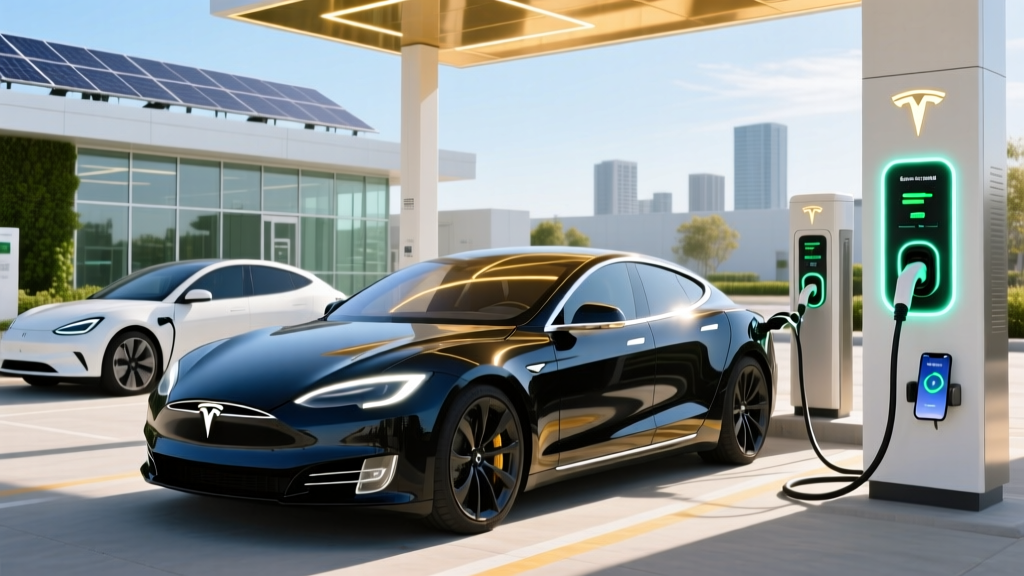
Every Tesla Model 3 sold in North America — from the 2018 launch through the current 2026 model year — is equipped with a NACS (Tesla) charge port. This single port handles AC Level 1, AC Level 2, and DC fast charging without any adapter when using Tesla's own network.
| Charger / Network | Connector | Adapter Needed? |
|---|---|---|
| Tesla Supercharger (V3/V4) | NACS (native) | No |
| Tesla Wall Connector (home) | NACS (native) | No |
| Tesla Destination Charger | NACS or J1772 | Only if J1772-only unit |
| Non-Tesla Level 2 (public) | J1772 | Yes — J1772-to-NACS adapter (included with Model 3) |
| Non-Tesla DC Fast (CCS1) | CCS1 | Yes — CCS-to-NACS adapter (sold separately, ~$175–$250) |
| CHAdeMO stations | CHAdeMO | Not supported (no reliable adapter exists) |
Tesla includes a J1772-to-NACS adapter in the glovebox of every new Model 3, so you can use the thousands of public Level 2 stations with J1772 connectors. For CCS1 DC fast chargers — increasingly important as networks like Electrify America and EVgo open to NACS-native vehicles — Tesla sells an official CCS-to-NACS adapter. As of 2025, most major DC fast networks have begun installing NACS cables natively, reducing adapter dependency for newer Model 3 owners.
Charging Levels Explained: Speeds in kW and Miles Per Hour
EV charging is measured in kW (kilowatts), which represents the rate of power delivery — think of it as how fast energy flows into the battery. The battery's capacity is measured in kWh (kilowatt-hours), which represents total energy stored. A 60 kWh battery charged at 11.5 kW would theoretically take about 5.2 hours from 0% to 100%, minus taper at the top of the charge curve.
| Level | Voltage / Amps | Power (kW) | Miles of Range Per Hour | Typical Use Case |
|---|---|---|---|---|
| Level 1 | 120V / 12A | ~1.4 kW | 3–5 mi/hr | Emergency / overnight trickle (standard outlet) |
| Level 2 (home) | 240V / 32–48A | 7.7–11.5 kW | 25–44 mi/hr | Daily home charging (garage or driveway) |
| DC Fast (V3 Supercharger) | 400V+ DC | Up to 250 kW peak | ~1,000 mi/hr (peak) | Road trips, rapid top-ups |
| DC Fast (V4 Supercharger) | 800V+ DC | Up to 350 kW peak | ~1,200+ mi/hr (peak) | Next-gen Tesla stations (select locations) |
Real-world charging times for a 2026 Tesla Model 3 Long Range (approximately 75 kWh usable battery, NMC chemistry, EPA range 363 miles):
- Level 1 (120V): 10% to 80% takes roughly 36+ hours — impractical for daily use but sufficient for plugging in over a weekend to recover 80–100 miles.
- Level 2 (240V, 48A / 11.5 kW): 10% to 80% in approximately 4.5 hours. Overnight charging easily restores a full day's driving.
- DC Fast (V3 Supercharger, 250 kW peak): 10% to 80% in approximately 25–28 minutes. Peak rate of ~250 kW is sustained only between roughly 10–30% State of Charge (SoC), then tapers progressively. Expect ~175 kW average from 10–50%, dropping to ~60 kW by 75%.
- DC Fast (V4 Supercharger, 350 kW peak): 10% to 80% in approximately 18–22 minutes at equipped stations. The Model 3 Long Range's architecture can accept higher peak rates with battery preconditioning active.
Real-world range note: The EPA rates the 2026 Model 3 Long Range at 363 miles. In real-world highway driving at 70–75 mph, expect approximately 290–320 miles. In cold weather (below 32°F / 0°C), range can drop 20–30%, yielding roughly 250–290 miles. Always precondition the battery via the Tesla app or scheduled departure before DC fast charging to achieve peak charge rates.
Home Charger Installation: Electrical Requirements and Cost Breakdown
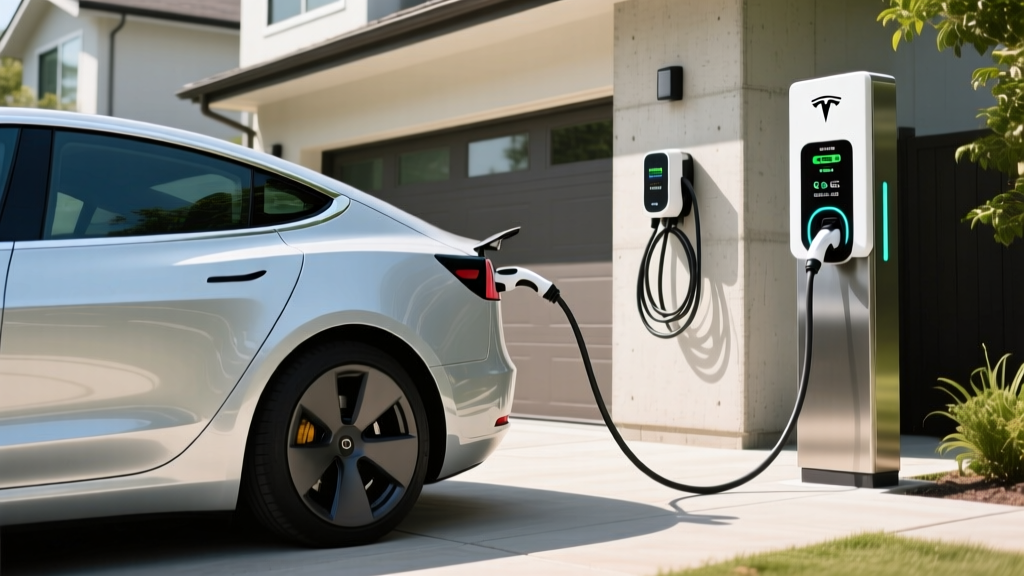
Installing a Level 2 home charger for your Tesla Model 3 is the single highest-impact upgrade for daily EV ownership. Here's what's involved electrically and financially.
Electrical Requirements
The Tesla Wall Connector (Gen 3) can be configured for any circuit from 16A to 48A on a 240V dedicated circuit. The Model 3's onboard charger accepts up to 11.5 kW (48A), so to maximize home charging speed, you'll want a 60A dedicated breaker (the National Electrical Code requires circuits to be rated at 125% of the continuous load, so a 48A charger needs a 60A breaker).
- Minimum viable setup: 240V / 20A breaker (16A continuous) = 3.8 kW — adequate for overnight if you drive under 60 miles daily.
- Recommended setup: 240V / 60A breaker (48A continuous) = 11.5 kW — fully replenishes most daily driving in 1–2 hours.
- Wire gauge: 6 AWG copper for 48A; 8 AWG for 32A; 10 AWG for 24A (your electrician will confirm based on run length and local code).
Panel Upgrade Considerations
Many homes built before 2000 have 100A or 150A main electrical panels. Adding a 60A EV circuit may push total load beyond the panel's capacity, requiring a panel upgrade to 200A. Signs you may need an upgrade:
- Your panel is already near capacity (electric range, dryer, HVAC, water heater all running).
- You have a 100A main breaker.
- Your utility requires a load calculation that shows insufficient headroom.
A panel upgrade typically costs $1,500–$3,500 depending on your utility, local labor rates, and whether a new meter base or service drop is needed. This is the single biggest variable in home charger installation cost.
| Component | Low Estimate | High Estimate | Notes |
|---|---|---|---|
| Tesla Wall Connector (Gen 3, 24' cable) | $420 | $475 | Direct from Tesla or authorized retailers |
| Third-party Level 2 charger (ChargePoint, Emporia, etc.) | $350 | $700 | With J1772 connector + adapter use |
| Electrician labor (simple install, panel adjacent) | $400 | $800 | Short wire run, no panel upgrade |
| Electrician labor (complex install, long run or subpanel) | $800 | $2,000 | 50+ ft wire run, conduit, subpanel add |
| Permit fees | $50 | $250 | Varies by municipality |
| Panel upgrade (if needed) | $1,500 | $3,500 | 100A → 200A service upgrade |
| Total (no panel upgrade) | $870 | $3,525 | Most homeowners: $1,200–$2,000 |
| Total (with panel upgrade) | $2,370 | $7,025 | Older homes with 100A service |
Many utilities offer rebates of $200–$500 for Level 2 charger installation, and some states provide additional incentives. Check with your local utility and the U.S. Department of Energy's EV charging resources for current programs. The federal Alternative Fuel Vehicle Refueling Property Credit (IRS §30C) may cover up to 30% of installation costs (max $1,000) if you live in an eligible census tract — consult a tax professional for eligibility.
Cost to Charge: Home vs. Public vs. Gas Comparison
One of the strongest ownership arguments for the Model 3 is the per-mile energy cost. Here's how charging costs compare across scenarios, using the Model 3 Long Range's efficiency of approximately 25 kWh per 100 miles (4.0 mi/kWh).
| Scenario | Rate | Cost Per 100 Miles | Cost Per Mile |
|---|---|---|---|
| Home charging (national avg. electricity) | $0.16/kWh | $4.00 | $0.040 |
| Home charging (off-peak TOU rate) | $0.09/kWh | $2.25 | $0.023 |
| Home charging (high-cost state, e.g., CA avg.) | $0.30/kWh | $7.50 | $0.075 |
| Tesla Supercharger (avg. 2026) | $0.32/kWh | $8.00 | $0.080 |
| Third-party DC fast (Electrify America, EVgo) | $0.40/kWh | $10.00 | $0.100 |
| Gas vehicle (30 MPG, $3.50/gal) | $3.50/gal | $11.67 | $0.117 |
| Gas vehicle (25 MPG, $3.50/gal) | $3.50/gal | $14.00 | $0.140 |
Even at public DC fast charging rates, the Model 3 costs less per mile than a 30 MPG gas car. At home off-peak rates, the savings are dramatic: roughly $600–$900 per year for a driver covering 12,000 miles annually, compared to a 25 MPG gas car at $3.50/gallon. According to fueleconomy.gov, the 2026 Model 3 Long Range achieves 132 MPGe combined, making it one of the most efficient EVs on the market.
Best Home Chargers for the Tesla Model 3 (2026 Equipment Picks)
The Tesla Wall Connector remains the default recommendation for Model 3 owners, but several third-party chargers offer compelling features. Here's how the top options compare:
Tesla Wall Connector (Gen 3) — Best Overall
- Power output: Up to 11.5 kW (48A) at 240V
- Connector: NACS (native — no adapter needed)
- Cable length: 24 feet
- Smart features: Wi-Fi, OTA updates, Power Sharing (link up to 6 units on one circuit), load management
- Price: ~$420–$475
- Best for: Tesla-only households wanting seamless integration and maximum charge rate
ChargePoint Home Flex — Best Multi-Vehicle
- Power output: Up to 12 kW (50A) at 240V — configurable via DIP switch
- Connector: J1772 (use included Tesla adapter) or NACS pigtail version (2025+)
- Cable length: 23 feet
- Smart features: Wi-Fi, ChargePoint app with scheduling, Alexa integration, energy tracking
- Price: ~$550–$650
- Best for: Households with a Tesla and a non-Tesla EV (J1772 native)
Emporia Vue Level 2 Charger — Best Value
- Power output: Up to 11.5 kW (48A) at 240V
- Connector: J1772 (use Tesla adapter) or NACS version available
- Cable length: 24 feet
- Smart features: Wi-Fi, Emporia app, solar integration, energy monitoring, scheduling
- Price: ~$350–$400
- Best for: Budget-conscious installers or homes with Emporia solar/battery monitoring
Grizzl-E Smart — Best for Cold Climates / Durability
- Power output: Up to 10 kW (40A) at 240V
- Connector: J1772 (use Tesla adapter) or NACS version
- Cable length: 24 feet
- Smart features: Wi-Fi, OCPP-compatible, app scheduling, extreme temp rating (-40°F to +122°F)
- Price: ~$450–$550
- Best for: Outdoor installations in cold climates; built in Canada for harsh conditions
For most Model 3 owners, the Tesla Wall Connector at 48A is the simplest, most cost-effective choice. It requires no adapter, integrates with the Tesla app for scheduling and preconditioning, and supports Power Sharing if you add a second EV later.
Safety, Code, and Installation Best Practices
EV charging is a continuous high-draw load — your charger will run at near-maximum capacity for hours. This places specific demands on your electrical system that differ from intermittent loads like a dryer or oven.
- Dedicated circuit required: Your Level 2 charger must be on its own dedicated breaker — never shared with other appliances. The NEC (National Electrical Code) Article 625 governs EV charging installations.
- GFCI protection: The 2020 NEC and later require GFCI protection for outdoor EV receptacles. Hardwired chargers (like the Wall Connector) typically do not require a separate GFCI breaker, as the unit includes internal ground-fault protection. Confirm with your local inspector.
- Outdoor rating: If mounting outdoors, ensure the charger is rated for outdoor use (NEMA 4 or IP65). The Tesla Wall Connector is rated for indoor and outdoor installation. The connector holster should be positioned to prevent water pooling.
- Hardwired vs. plug: Hardwired installations (no plug) are preferred for 48A circuits, as NEMA 14-50 receptacles are rated for 50A and some jurisdictions restrict plug-in EV chargers above 40A. Hardwiring also eliminates the risk of plug overheating under sustained load.
- Permit and inspection: Virtually all jurisdictions require an electrical permit for a new 240V circuit. Your electrician will pull the permit, and a city/county inspector will verify the work. Skipping the permit can void home insurance claims related to electrical fires.
- Use a licensed electrician: EV charger installation is not a DIY project. Improper wire gauge, loose connections, or undersized breakers can cause overheating and fire. Hire a licensed electrician experienced with EV installations — many Tesla-recommended installers are listed on Tesla's website.
Public Charging with the Model 3: Supercharger Network and Beyond
Tesla's Supercharger network remains the most reliable DC fast charging ecosystem in North America, with over 6,500 V3 and V4 stalls in the U.S. as of early 2026. Here's what Model 3 owners need to know about public charging:
- Tesla Superchargers: Native NACS — plug in and charge with no adapter, no app, no payment card needed (billing is automatic via your Tesla account). V3 stalls deliver up to 250 kW; V4 stalls (expanding through 2025–2026) deliver up to 350 kW. Average cost: $0.28–$0.36/kWh depending on location and time of day.
- Non-Tesla DC fast chargers (CCS1): With Tesla's CCS-to-NACS adapter (~$175–$250), you can use Electrify America, EVgo, and other CCS1 stations. This is useful in areas where Superchargers are sparse. Expect peak rates of 150–350 kW depending on the station, though the adapter may slightly reduce peak throughput.
- Non-Tesla Level 2 (J1772): Use the included J1772-to-NACS adapter. Hotels, shopping centers, and workplaces commonly offer J1772 Level 2 at 6.6–7.2 kW. Speeds will be lower than home (the adapter limits some units), but sufficient for destination charging.
- Preconditioning: When navigating to a Supercharger via the Tesla touchscreen, the car automatically preconditions the battery — warming it to optimal temperature for maximum charge rate. This is critical in cold weather; without preconditioning, peak charge rates can drop by 30–50%.
Frequently Asked Questions
How much does it cost to install a home EV charger for a Tesla Model 3?
Most homeowners pay between $1,200 and $2,000 for a complete Tesla Wall Connector installation (equipment + electrician + permit) when no panel upgrade is needed. If your home requires a 200A panel upgrade, total costs can range from $2,400 to $7,000+. Get quotes from at least two licensed electricians and check for utility rebates in your area.
How fast will each charging level add range to my Model 3?
Level 1 (120V) adds roughly 3–5 miles of range per hour. Level 2 at 48A (240V) adds approximately 44 miles per hour. DC fast charging at a V3 Supercharger adds up to 175 miles in 15 minutes at peak rate, though the charge curve tapers significantly above 50% SoC.
Which charger connector is compatible with the Tesla Model 3?
The Model 3 uses the NACS (Tesla) connector natively. It charges directly at Tesla Superchargers and with the Tesla Wall Connector. For J1772 Level 2 stations, use the included adapter. For CCS1 DC fast stations, purchase Tesla's CCS-to-NACS adapter separately.
How much does charging a Model 3 cost per mile compared to gas?
At home with the national average electricity rate ($0.16/kWh), a Model 3 Long Range costs approximately $0.04 per mile. A comparable 25 MPG gas car at $3.50/gallon costs $0.14 per mile — more than three times as much. Even at Supercharger rates ($0.32/kWh), the Model 3 costs ~$0.08/mile, still well below gasoline.
What electrical upgrades might I need for a home charger?
The most common upgrade is a 200A panel upgrade if your home has an older 100A or 150A service that lacks capacity for a 60A EV circuit. You may also need a new conduit run if your panel is far from the garage, or a subpanel if you're adding multiple EV circuits. A licensed electrician will perform a load calculation per NEC Article 220 to determine if your existing panel has sufficient capacity.
Can I use a NEMA 14-50 outlet instead of hardwiring?
Yes, but with caveats. A NEMA 14-50 outlet on a 50A breaker supports up to 40A continuous (9.6 kW). For the full 48A (11.5 kW), hardwiring on a 60A breaker is required. Some jurisdictions have also tightened rules around 14-50 receptacles for EV charging due to overheating concerns with sustained loads. Hardwiring is generally the more reliable and code-friendly approach for maximum charge rate.
Does the Tesla Model 3 support vehicle-to-home (V2H) or vehicle-to-grid (V2G)?
As of the 2026 model year, the Tesla Model 3 does not support V2H or V2G bidirectional charging. Tesla has announced V2L (vehicle-to-load) capability for the Cybertruck, but the Model 3 lineup has not received this feature. If bidirectional power is a priority, consider vehicles like the Ford F-150 Lightning or Hyundai Ioniq 5, which support V2L or V2H with compatible equipment.
Understanding your Tesla Model 3 charger type and home electrical requirements upfront prevents costly surprises and ensures you get the fastest, most convenient charging experience. For most owners, a hardwired Tesla Wall Connector on a 60A circuit delivers the best balance of speed, cost, and reliability — restoring a full day's driving in roughly two hours of overnight charging.