Tesla Model 3 Charge Time at a Glance: Supercharger vs Home
If you own or are shopping for a Tesla Model 3, charging speed is likely top of mind. The 2026 Tesla Model 3 Long Range AWD ships with a ~75 kWh usable lithium-ion (NMC) battery pack and an EPA-estimated 341 miles of range. The Rear-Wheel Drive (RWD) variant uses a ~60 kWh LFP (lithium iron phosphate) pack with an EPA 272-mile range. How quickly you replenish that energy depends entirely on which charging level you use — and the difference between a 120V wall outlet and a V4 Supercharger is measured in hours versus minutes.
This guide covers every charging scenario a Model 3 owner will encounter: DC fast charging on the Supercharger network, Level 2 home charging, and Level 1 trickle charging. We'll break down exact charge times, real-world costs per mile, electrical requirements for home installs, and the equipment we recommend in 2026.
Charging Levels Explained: kW, Miles Per Hour, and Charge Times
Before diving into specific numbers, let's clarify the most common point of confusion in EV charging: kW (kilowatts) measures power — the rate at which energy flows into your battery. kWh (kilowatt-hours) measures energy — the total capacity of your battery, like gallons in a fuel tank. A charger rated at 11.5 kW delivers 11.5 kWh of energy per hour (minus small efficiency losses).
| Level | Voltage / Amperage | Power (kW) | Miles of Range Per Hour | Best For |
|---|---|---|---|---|
| Level 1 | 120V / 12A | ~1.4 kW | 3–5 mi/hr | Overnight top-up, emergencies |
| Level 2 | 240V / 32–48A | 7.7–11.5 kW | 25–44 mi/hr | Daily home charging |
| DC Fast (Supercharger V3/V4) | 400–500V DC | Up to 250 kW | Up to 1,000+ mi/hr (peak) | Road trips, rapid replenishment |
Tesla Model 3 Charge Time: Supercharger (DC Fast)
The Tesla Model 3 Long Range AWD supports a peak DC fast-charge rate of 250 kW on V3 and V4 Superchargers. However — and this is critical — peak rate is not sustained rate. The charging curve tapers significantly as the battery fills:
- 10–80% charge: approximately 22–25 minutes at a V3/V4 Supercharger (250 kW peak)
- 10–50%: roughly 12–14 minutes (this is where peak power holds)
- 80–100%: an additional 20–30 minutes (taper charging to protect battery health)
The RWD model with the LFP battery can also accept up to 170 kW on DC fast charging, achieving a 10–80% charge in roughly 25–28 minutes. LFP chemistry tolerates regular charging to 100% without the degradation concerns of NMC, so Tesla recommends periodic full charges for the RWD variant — useful for recalibrating the battery management system.
On older V2 Superchargers (capped at 150 kW), expect 10–80% times closer to 30–35 minutes for either Model 3 variant.
Tesla Model 3 Charge Time: Level 2 Home Charging
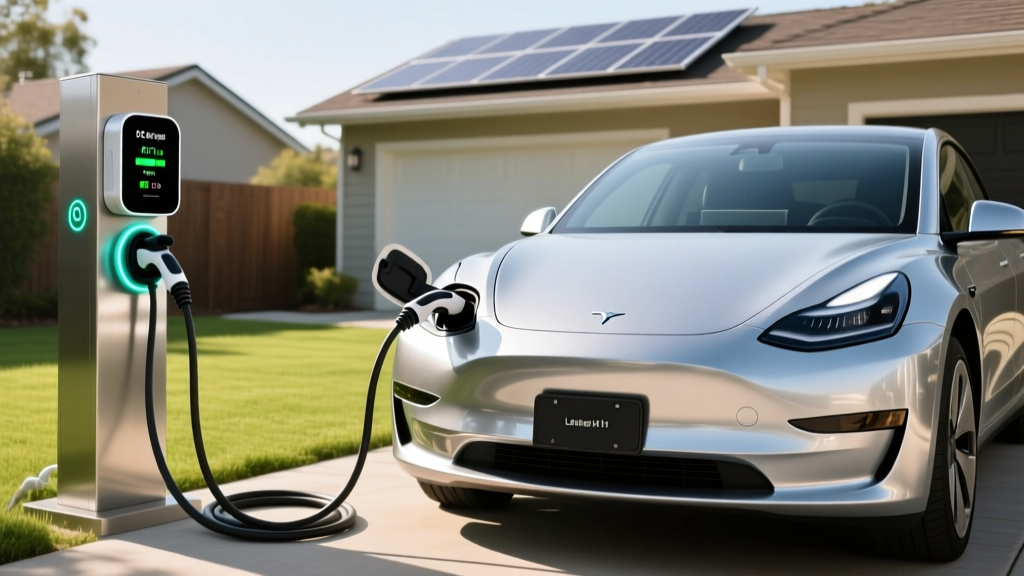
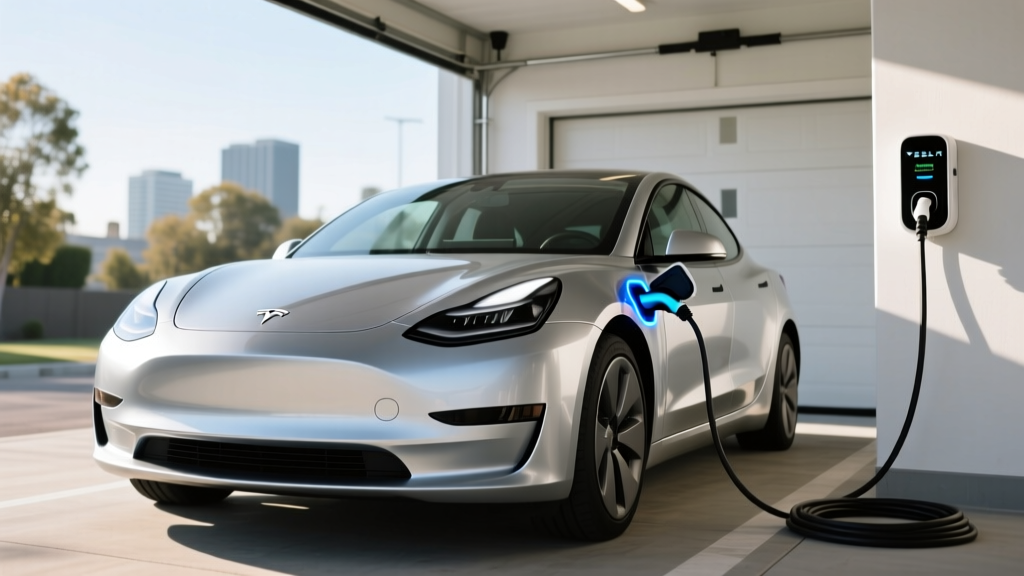
The Model 3's onboard charger accepts up to 11.5 kW (48A at 240V). At this rate, a fully depleted Long Range battery (75 kWh usable) replenishes in roughly 7–8 hours. In practice, most owners plug in at 20–40% state of charge and wake up to a full battery every morning.
On a 32A / 240V circuit (7.7 kW), the same battery takes about 10 hours from empty — still sufficient for overnight charging for virtually any daily driving pattern under 80 miles.
Home Charger Installation: Electrical Requirements, Costs, and Gotchas
Installing a Level 2 home charger is the single highest-impact upgrade for EV ownership. Here's what's involved electrically and financially.
Electrical Requirements
A 48A Level 2 charger requires a dedicated 60A, 240V circuit (the National Electrical Code requires circuits to be rated at 125% of the continuous load, so 48A × 1.25 = 60A). This means:
- Wire: 6 AWG copper (or 4 AWG aluminum) run from your panel to the charger location
- Breaker: 60A double-pole breaker occupying two slots in your panel
- Panel capacity: Your electrical panel must have both physical space (two slots) and sufficient amperage headroom. A 200A panel is standard for modern homes; older homes with 100A or 150A service may need a load calculation or a full panel upgrade
- Permit: Most jurisdictions require an electrical permit and inspection for a new 240V circuit
Home Charger Installation Cost Breakdown
| Component | Typical Range | Notes |
|---|---|---|
| Level 2 Charger (hardware) | $350–$700 | Tesla Wall Connector, ChargePoint, Emporia |
| Electrician labor + materials | $600–$2,000 | Depends on wire run length, wall type, conduit |
| Electrical permit | $50–$200 | Varies by municipality |
| Panel upgrade (if needed) | $1,500–$3,500 | 100A → 200A service upgrade |
| Total (no panel upgrade) | $1,000–$2,900 | Most common scenario |
| Total (with panel upgrade) | $2,500–$6,400 | Older homes |
Some utilities offer rebates of $200–$500 for Level 2 charger installation, and the federal Residential Clean Energy Credit (as outlined by the IRS) may cover up to 30% of qualified home charging equipment and installation costs (capped at $1,000 annually) through 2032. Confirm eligibility with a tax professional — income limits and equipment qualifications apply.
Safety and Code Considerations
- Dedicated circuit: Your Level 2 charger must be on its own dedicated breaker — never shared with other appliances
- GFCI protection: NEC 2020 and later require GFCI protection for outdoor receptacles; hardwired chargers may have this built into the unit
- Outdoor rating: If mounting outside, ensure the charger carries a NEMA 4 (or IP65+) rating for weather resistance
- Wire gauge: Undersized wire causes voltage drop and fire risk — always follow the charger manufacturer's spec and your electrician's load calculation
Connector Compatibility: NACS, CCS, and Adapter Needs
The Tesla Model 3 uses the North American Charging Standard (NACS) connector natively — the same compact plug found on all Tesla vehicles since 2012. As of 2025–2026, most major automakers (Ford, GM, Rivian, Hyundai, Volvo, and others) have adopted NACS for their North American EVs, and the Supercharger network has begun opening to non-Tesla vehicles.
| Connector | Tesla Model 3 | Other EVs (2026) | Adapter Needed? |
|---|---|---|---|
| NACS (Tesla) | Native — no adapter | Ford, GM, Rivian, Hyundai (new models) | None for Tesla; included with new non-Tesla EVs |
| CCS1 | Adapter required (~$175–$250) | VW, BMW, older Hyundai/Kia, Honda | Tesla sells CCS adapter; third-party options available |
| CHAdeMO | Adapter required (rare, ~$300+) | Nissan Leaf (legacy) | Rarely needed; network shrinking |
| J1772 (Level 2 AC) | Adapter included with car | All non-Tesla EVs (native) | Tesla includes J1772-to-NACS adapter in glovebox |
Practical takeaway: Your Model 3 charges natively at every Supercharger and Tesla Destination Charger. For Electrify America, EVgo, or ChargePoint DC fast stations that still use CCS1, purchase Tesla's official CCS adapter. For public Level 2 stations with J1772 connectors, use the adapter already included with your car.
Cost to Charge a Tesla Model 3: Home vs Supercharger vs Gas
Charging cost depends on your local electricity rate, time-of-use pricing, and whether you charge at home or on the road. Here are realistic 2026 scenarios for the Model 3 Long Range AWD (75 kWh usable battery, ~3.8 miles per kWh efficiency):
| Scenario | Rate ($/kWh) | Full Charge Cost | Cost Per Mile |
|---|---|---|---|
| Home (off-peak utility rate) | $0.10–$0.14 | $7.50–$10.50 | $0.026–$0.037 |
| Home (average US rate) | $0.16–$0.18 | $12.00–$13.50 | $0.042–$0.047 |
| Tesla Supercharger (average) | $0.28–$0.36 | $21.00–$27.00 | $0.073–$0.094 |
| Third-party DC fast (EA, EVgo) | $0.35–$0.55 | $26.25–$41.25 | $0.092–$0.144 |
| Gasoline car (28 MPG avg, $3.40/gal) | — | $34.00 (equivalent energy) | $0.121 |
At home on off-peak rates, the Model 3 costs roughly 3–4 cents per mile — about one-quarter the per-mile cost of a 28 MPG gasoline car at $3.40/gallon. Even at Supercharger rates, the Model 3 undercuts most gas cars. The economics strongly favor home charging; Supercharging is best reserved for road trips.
Recommended Home Charging Equipment for the Model 3
These are the Level 2 chargers we recommend for Tesla Model 3 owners in 2026, selected for reliability, power output, smart features, and value:
Tesla Wall Connector (Gen 3)
- Power: Up to 11.5 kW (48A)
- Connector: NACS (native Tesla)
- Cable length: 24 ft
- Smart features: Wi-Fi, OTA updates, power sharing between two units, load management
- Price: ~$475
- Best for: Tesla-only households; simplest plug-and-charge experience
Emporia Level 2 EV Charger
- Power: Up to 11.5 kW (48A)
- Connector: J1772 (use Tesla's included adapter) or NACS version available
- Cable length: 24 ft
- Smart features: Energy monitoring, scheduling, solar integration, works with Emporia Vue panel monitor
- Price: ~$399
- Best for: Budget-conscious owners; solar-panel households
ChargePoint Home Flex
- Power: Up to 12 kW (50A, configurable down to 16A)
- Connector: J1772 (use Tesla adapter) or NACS pigtail version
- Cable length: 23 ft
- Smart features: App scheduling, Alexa integration, flexible amperage for smaller panels
- Price: ~$699
- Best for: Mixed-EV households; adjustable amperage for panel-limited homes
Tesla Mobile Connector (Bundle)
- Power: Up to 7.7 kW (32A) with NEMA 14-50 adapter; 1.4 kW on 120V
- Connector: NACS (native)
- Cable length: 20 ft
- Smart features: Basic — no Wi-Fi or scheduling; portable
- Price: ~$300 (with adapter bundle)
- Best for: Renters, temporary setups, backup/road-trip use
Our pick: The Tesla Wall Connector is the default choice for a Tesla-only garage — native NACS plug, full 11.5 kW, and seamless integration with the Tesla app. If you plan to add a non-Tesla EV or want granular energy monitoring, the Emporia or ChargePoint Home Flex are strong alternatives.
Frequently Asked Questions
How much does it cost to install a home EV charger for a Tesla Model 3?
Most homeowners spend between $1,000 and $2,900 for a complete Level 2 installation (charger hardware, electrician labor, wire, breaker, and permit) when no panel upgrade is needed. If your home has an older 100A electrical panel that needs upgrading to 200A, total project costs can reach $2,500–$6,400. Always get a licensed electrician's load calculation before starting.
How fast will each charging level add range to my Model 3?
Level 1 (120V) adds roughly 3–5 miles of range per hour — enough for overnight recovery if your daily commute is under 30 miles. Level 2 (240V, 48A) adds approximately 44 miles per hour, fully recharging a Long Range Model 3 in about 7–8 hours. A V3/V4 Supercharger at 250 kW peak can add up to 175 miles in 15 minutes under ideal conditions, with a 10–80% charge taking 22–25 minutes.
Which connector and charger is compatible with my Tesla Model 3?
The Model 3 uses the NACS connector natively. It charges at all Tesla Superchargers and Destination Chargers without an adapter. For public CCS1 stations (Electrify America, some EVgo locations), you'll need Tesla's CCS adapter (~$175–$250). For public Level 2 stations with J1772 connectors, use the J1772-to-NACS adapter included in your glovebox.
How much does charging a Tesla Model 3 cost per mile compared to gas?
Charging at home on average US electricity rates ($0.16–$0.18/kWh), the Model 3 costs roughly 4–5 cents per mile. On off-peak utility rates, that drops to 3–4 cents. A comparable 28 MPG gasoline car at $3.40/gallon costs about 12 cents per mile. Home charging saves $0.07–$0.09 per mile, or roughly $1,050–$1,350 annually at 15,000 miles driven.
What electrical upgrades might I need for a Level 2 charger?
You'll need a dedicated 60A, 240V circuit with two available breaker slots. If your panel is full or undersized (100A service in older homes), you may need a panel upgrade to 200A ($1,500–$3,500). Some homeowners opt for a smart load-management device (like the Emporia Vue or Tesla Wall Connector power-sharing feature) to avoid a panel upgrade by dynamically limiting charger draw when other appliances are running.
Does frequent Supercharging degrade the Model 3 battery?
DC fast charging generates more heat than Level 2 charging, which accelerates degradation slightly over time. However, Tesla's thermal management system actively cools the battery during Supercharging. Data from Tesla's Impact Reports shows Model 3 batteries retain approximately 85% of original capacity after 200,000 miles. For daily use, Level 2 home charging is ideal; Supercharging for road trips has negligible long-term impact. The battery warranty covers 8 years / 120,000 miles (Long Range) or 8 years / 100,000 miles (RWD) with a minimum 70% capacity retention threshold, per Tesla's warranty documentation.
Should I precondition my Model 3 before Supercharging?
Yes — and the car does it automatically. When you navigate to a Supercharger in the Tesla navigation system, the vehicle preconditions (warms or cools) the battery to the optimal temperature for fast charging. This can shave 5–10 minutes off your 10–80% charge time, especially in cold weather. Always navigate to the Supercharger rather than just driving there manually to trigger preconditioning.
Sources: EPA Fuel Economy — Tesla Model 3, Tesla New Vehicle Limited Warranty, IRS Residential Clean Energy Credit.