Quick Verdict: Charging the Tesla Model 3 AWD Long Range
The Tesla Model 3 AWD Long Range remains one of the most efficient and fastest-charging sedans on the road. With its native NACS connector, access to the Supercharger network, and a peak DC fast-charge rate of 250 kW, it's remarkably easy to keep powered up — provided your home electrical setup is ready. This guide breaks down exactly what you'll need to install a Level 2 charger, what public charging actually costs, and how the Model 3 AWD Long Range's charging curve behaves in real-world conditions.
| Spec | Value |
|---|---|
| EPA Range (2025/2026) | 341 miles (AWD Long Range, 19" wheels) |
| Battery (Usable) | ~75 kWh, NMC chemistry |
| Max DC Fast Charge Rate | 250 kW (peak) |
| 10–80% DC Fast Charge | ~25 minutes (at V3 Supercharger) |
| Max Level 2 (AC) Rate | 11.5 kW (48A) |
| Level 2 Charge Time (0–100%) | ~7–8 hours at 11.5 kW |
| Connector | NACS (native Tesla) |
| EPA Efficiency | 132 MPGe combined (25 kWh/100 mi) |
| Base MSRP (AWD Long Range) | ~$47,240 (before incentives) |
| Battery & Drive Unit Warranty | 8 years / 120,000 miles |
Charging Levels Explained: Speeds and Range Added
Understanding the three charging levels is essential before investing in home equipment. The key distinction: kW (kilowatts) measures power — how fast energy flows into the battery. kWh (kilowatt-hours) measures energy — the total capacity stored. Think of kW as the flow rate of a hose and kWh as the size of the bucket.
| Level | Voltage | Max Power (kW) | Miles of Range per Hour | Best For |
|---|---|---|---|---|
| Level 1 (120V) | 120V AC | ~1.4 kW | ~3–5 mi/hr | Emergency/overnight trickle |
| Level 2 (240V) | 240V AC | Up to 11.5 kW (48A) | ~30–44 mi/hr | Daily home charging |
| DC Fast Charge | DC direct | Up to 250 kW | ~1,000+ mi/hr (peak) | Road trips, rapid top-ups |
For the Model 3 AWD Long Range's ~75 kWh battery, Level 1 charging from empty would take over 50 hours — impractical for daily use. Level 2 at 11.5 kW fully replenishes the battery in roughly 7–8 hours, making overnight charging effortless. DC fast charging at a V3 Supercharger (250 kW) adds approximately 175 miles in 15 minutes under ideal conditions, though the charge curve tapers significantly above 80% state of charge (SoC).
Home Level 2 Installation: Costs, Electrical Requirements, and Upgrades
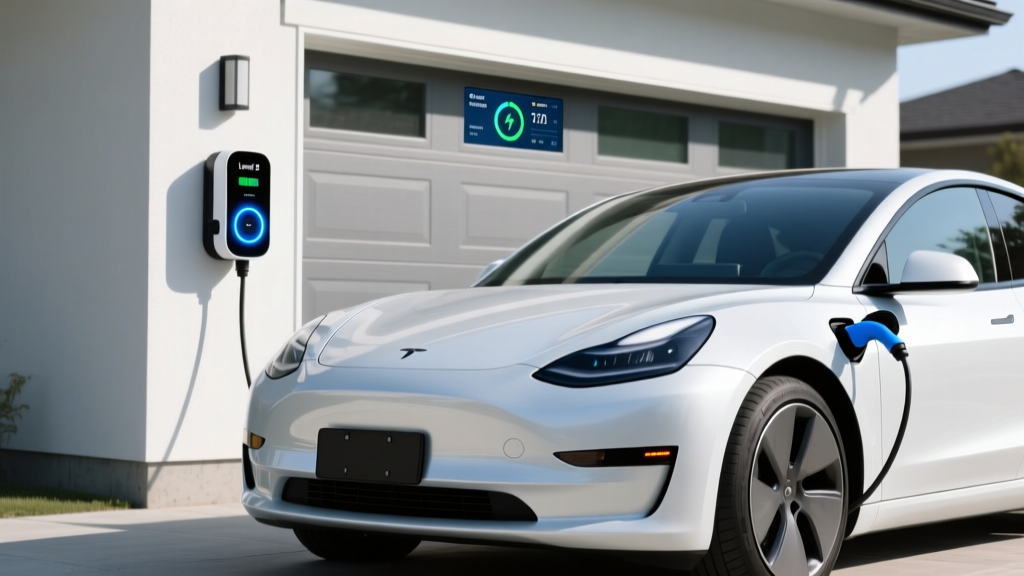
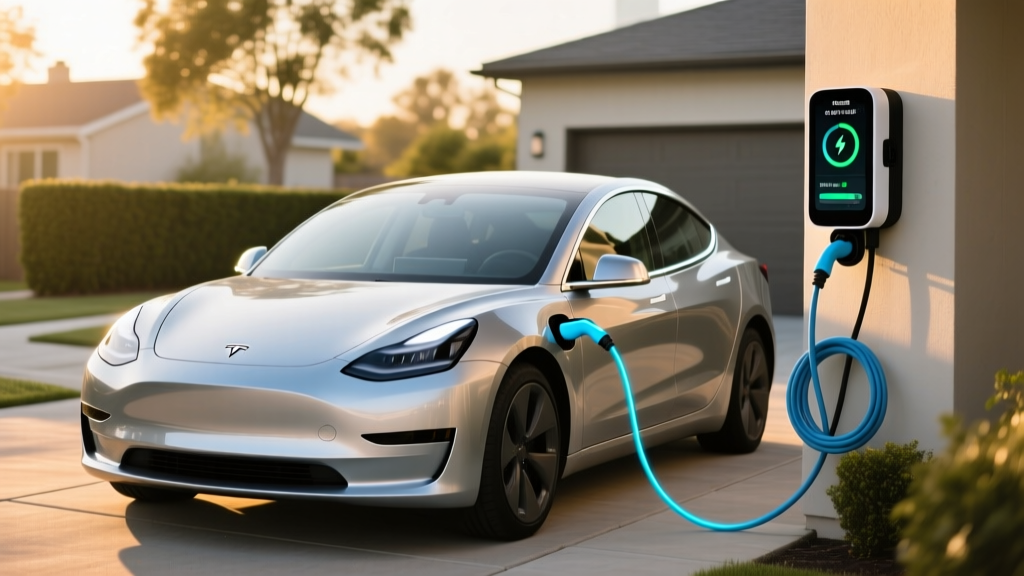
Most Model 3 AWD Long Range owners install a 240V Level 2 charger at home. Here's what that entails electrically and financially.
Electrical Requirements
The Tesla Wall Connector delivers up to 11.5 kW (48 amps) when connected to a 60-amp dedicated circuit. Per the National Electrical Code (NEC), continuous loads like EV charging can only use 80% of a circuit's rated capacity, so a 48A charger requires a 60A breaker. If your electrical panel lacks capacity, a lower-amperage setup (e.g., 40A breaker / 32A charge = 7.7 kW) is a common and effective alternative.
Panel Upgrade Considerations
Homes with 100-amp service panels often need an upgrade to 200 amps to safely support a 60A EV circuit alongside existing loads (HVAC, electric range, dryer). A panel upgrade typically costs $1,500–$3,000 depending on your utility and local labor rates. Newer homes with 200A panels usually have sufficient headroom. Always have a licensed electrician perform a load calculation before installation.
| Cost Component | Typical Range |
|---|---|
| Level 2 Charger Equipment (Tesla Wall Connector or equivalent) | $350–$600 |
| Electrician Labor (run 240V circuit, mount unit) | $500–$1,500 |
| Electrical Permit | $50–$200 |
| Panel Upgrade (if needed) | $1,500–$3,000 |
| Total (No Panel Upgrade) | $900–$2,300 |
| Total (With Panel Upgrade) | $2,400–$5,300 |
The IRS §30C alternative fuel vehicle refueling property credit offers up to $1,000 (30% of equipment and installation costs) for home charger installation, subject to census-tract eligibility and annual caps. Check with a tax professional for your specific situation.
Safety and Code Requirements
- Dedicated circuit: Your Level 2 charger must have its own breaker — never share a circuit with other large appliances.
- GFCI protection: NEC 2020 and later require GFCI protection for outdoor receptacles; hardwired units like the Tesla Wall Connector may not require a separate GFCI breaker, but confirm with your electrician and local code.
- Outdoor rating: If installing outside, ensure the charger is NEMA 4-rated (weatherproof). The Tesla Wall Connector is rated for indoor and outdoor use.
- Cable management: Choose a cable length (18 ft or 24 ft for the Wall Connector) that reaches your charge port without stretching across walkways.
Connector Compatibility: NACS, CCS, and Adapters
The Tesla Model 3 AWD Long Range uses the North American Charging Standard (NACS) connector natively — the same connector Tesla has used since its inception. As of 2025–2026, most major automakers (Ford, GM, Rivian, Volvo, Hyundai, and others) have adopted NACS, making it the dominant standard in North America.
| Connector | Compatible Vehicles | Model 3 AWD Long Range Support |
|---|---|---|
| NACS (Tesla) | Tesla (all), Ford, GM, Rivian, Hyundai, Volvo (2025+) | Native — no adapter needed |
| CCS1 (Combined Charging System) | Most non-Tesla EVs pre-2025 | Adapter needed (Tesla CCS adapter, ~$175) for CCS stations |
| CHAdeMO | Nissan Leaf, older Japanese EVs | Not supported; no official adapter |
| J1772 (Level 2 AC, non-Tesla) | All non-Tesla EVs | Tesla Mobile Connector includes J1772 adapter |
At home, you'll use NACS directly with the Tesla Wall Connector or Mobile Connector. On the road, Tesla's Supercharger network uses NACS natively. For the growing number of non-Tesla DC fast chargers (Electrify America, EVgo, ChargePoint) that still use CCS1, the Tesla CCS Combo 1 Adapter enables access, though charging speeds may be limited by the adapter and station output.
DC Fast Charging: Real-World Speeds and the Charge Curve
The Model 3 AWD Long Range peaks at 250 kW on a V3 Supercharger — but that peak is not sustained. Understanding the charge curve is critical for planning road trips.
Here's how a typical DC fast-charge session looks from a low state of charge (around 10% SoC):
- 10–30% SoC: Peaks near 250 kW. Extremely fast — roughly 8–10 minutes.
- 30–60% SoC: Steps down to approximately 150–175 kW. Still rapid.
- 60–80% SoC: Tapers to roughly 75–100 kW.
- 80–100% SoC: Drops sharply below 50 kW. Charging above 80% can take as long as 10–80%.
This taper is why Tesla (and most EV best practices) recommend charging to 80% on road trips for the best time efficiency. The 10–80% time of approximately 25 minutes is a realistic expectation at a V3 Supercharger with a preconditioned battery.
Equipment Recommendations: Best Chargers for the Model 3 AWD Long Range
Tesla Wall Connector (Gen 4)
- Power Output: Up to 11.5 kW (48A / 240V)
- Connector: NACS (native)
- Cable Length: 24 ft
- Smart Features: Wi-Fi, OTA updates, power sharing (link multiple units on one circuit), load management
- Price: ~$475
- Verdict: Best overall for Tesla owners. Seamless integration, clean design, and power-sharing capability make it ideal for multi-EV households.
ChargePoint Home Flex (NACS version)
- Power Output: Up to 12 kW (50A / 240V) — adjustable down to 16A
- Connector: NACS (available 2025+ models) or J1772 with Tesla adapter
- Cable Length: 23 ft
- Smart Features: Wi-Fi, Alexa integration, scheduling, energy tracking via app
- Price: ~$599
- Verdict: Strong alternative if you want a non-Tesla ecosystem charger or plan to own a mix of NACS and J1772 vehicles.
Tesla Mobile Connector (Included)
- Power Output: Up to 7.2 kW (30A / 240V) with NEMA 14-50 adapter; 1.4 kW on 120V
- Connector: NACS with J1772 adapter included
- Cable Length: 20 ft
- Smart Features: Basic — no Wi-Fi or scheduling
- Price: Included with vehicle (replacement ~$200)
- Verdict: Adequate for moderate daily driving (adds ~22 mi/hr at 7.2 kW). Install a NEMA 14-50 outlet for a budget-friendly Level 2 solution without a hardwired unit.
Cost to Charge: Home vs. Public vs. Gas Comparison
One of the strongest ownership arguments for the Model 3 AWD Long Range is its low cost per mile. At an EPA-rated 25 kWh/100 miles, here's what charging costs look like across scenarios:
| Charging Scenario | Typical $/kWh | Cost per 100 Miles | Cost per Mile |
|---|---|---|---|
| Home (off-peak utility rate) | $0.08–$0.12 | $2.00–$3.00 | $0.02–$0.03 |
| Home (average US rate) | $0.16 | $4.00 | $0.04 |
| Tesla Supercharger (V3) | $0.25–$0.35 | $6.25–$8.75 | $0.06–$0.09 |
| Public DC Fast (Electrify America, EVgo) | $0.30–$0.48 | $7.50–$12.00 | $0.08–$0.12 |
| Gasoline Car (28 MPG avg, $3.20/gal) | — | $11.43 | $0.11 |
| Gasoline Car (28 MPG avg, $3.80/gal) | — | $13.57 | $0.14 |
Home charging on an off-peak rate delivers fuel costs roughly one-quarter that of a comparable gas sedan. Even at Supercharger rates, the Model 3 AWD Long Range costs less per mile than most gasoline vehicles. The savings compound over ownership: driving 12,000 miles per year at home rates saves approximately $900–$1,200 annually versus gasoline at $3.50/gallon.
To maximize savings, check whether your utility offers time-of-use (TOU) rates or dedicated EV charging plans. Many utilities offer rates as low as $0.06–$0.09/kWh during overnight hours (typically 11 PM – 6 AM). The Tesla app and Wall Connector both support scheduled charging to automatically begin during off-peak windows.
Frequently Asked Questions
How much does it cost to install a home EV charger for the Tesla Model 3 AWD Long Range?
For a standard Level 2 installation without a panel upgrade, expect to spend $900–$2,300 total (charger equipment + electrician labor + permit). If your home needs a 200A panel upgrade, add $1,500–$3,000. The IRS §30C credit may offset up to $1,000 of equipment and installation costs if you're in an eligible census tract.
How fast will each charging level add range to the Model 3 AWD Long Range?
Level 1 (120V) adds roughly 3–5 miles per hour — useful only for emergencies or very low daily mileage. Level 2 (240V, 48A) adds approximately 30–44 miles per hour, fully recharging overnight. DC fast charging at a V3 Supercharger (250 kW) can add up to 175 miles in 15 minutes at peak rates, though speeds taper above 80% SoC.
Which connector and charger is compatible with the Tesla Model 3 AWD Long Range?
The Model 3 uses the NACS connector natively. At home, the Tesla Wall Connector or Mobile Connector are the best options. For public DC fast charging, Tesla Superchargers use NACS directly. For CCS1-equipped public stations, you'll need the Tesla CCS Combo 1 Adapter (~$175). CHAdeMO stations are not compatible.
How much does charging cost per mile versus gas?
At home on an average US electricity rate of $0.16/kWh, the Model 3 AWD Long Range costs approximately $0.04/mile. A comparable gas sedan at 28 MPG and $3.50/gallon costs about $0.125/mile. Home charging is roughly 3× cheaper per mile. Even at Supercharger rates ($0.25–$0.35/kWh), the Model 3 still costs $0.06–$0.09/mile — less than most gasoline vehicles.
What electrical upgrades might I need for a home charger?
The most common upgrade is a panel capacity increase from 100A to 200A service, required if your existing panel can't support a dedicated 60A circuit for the charger. Other potential needs include: running new conduit from the panel to your garage or parking spot (cost varies by distance), upgrading wiring gauge for longer runs, and ensuring your utility meter/transformer can handle the added load. A licensed electrician should perform a load calculation before you commit to equipment.
Should I charge my Model 3 AWD Long Range to 100% every day?
No. Tesla recommends setting the daily charge limit to 80% for NMC batteries to maximize long-term battery health. Charge to 100% only before road trips and try to avoid leaving the car at 100% SoC for extended periods. The Model 3's battery management system includes top and bottom buffers, but staying between 20–80% SoC for daily use reduces degradation over the battery's lifespan.
Does the Tesla Model 3 AWD Long Range qualify for the federal EV tax credit?
Federal tax credit eligibility under IRS §30D depends on multiple factors: buyer income caps ($150K single / $300K joint AGI), MSRP caps ($55,000 for sedans), and battery component and critical mineral sourcing requirements that tighten annually. As of 2025–2026, credit amounts vary — some Tesla configurations may qualify for partial or full credits depending on battery sourcing. The credit can now be transferred to the dealer at point of sale, reducing your purchase price directly. Confirm current eligibility on the IRS website or with a tax professional before purchasing.
Ownership Bottom Line
The Tesla Model 3 AWD Long Range is one of the easiest EVs to live with from a charging standpoint. Its native NACS connector, access to the most reliable DC fast-charging network in North America, and 250 kW peak charge rate make road trips practical. At home, a $1,000–$2,300 Level 2 installation (assuming no panel upgrade) delivers full overnight charging at roughly $0.04/mile — a fraction of gasoline costs.
The main variables are your home's electrical capacity and your utility's rate structure. If you have a 200A panel and can install a 60A circuit, the Tesla Wall Connector at 11.5 kW is the optimal setup. If panel capacity is limited, a 40A circuit delivering 7.7 kW still adds roughly 25–30 miles per hour — more than enough for most daily driving. Pair that with off-peak utility rates and scheduled charging, and the Model 3 AWD Long Range delivers some of the lowest per-mile operating costs of any vehicle on the road.