If you've just taken delivery of a Tesla — or are shopping for one — you've probably encountered the Tesla Mobile Connector bundled in the trunk (or sold separately at Tesla's shop). But what exactly is the Tesla Mobile Charger, and is it enough to keep your EV powered day to day? The short answer: it's a portable EV charging cable that swaps plug adapters to work on everything from a standard 120V household outlet to a 240V dryer-style receptacle. What it can't do is match a hardwired wall charger. Here's a data-driven breakdown of what it delivers, what it costs to set up properly, and how it stacks up against dedicated Level 2 equipment in 2026.
Tesla Mobile Connector vs. Wall Connector: The Hardware Explained
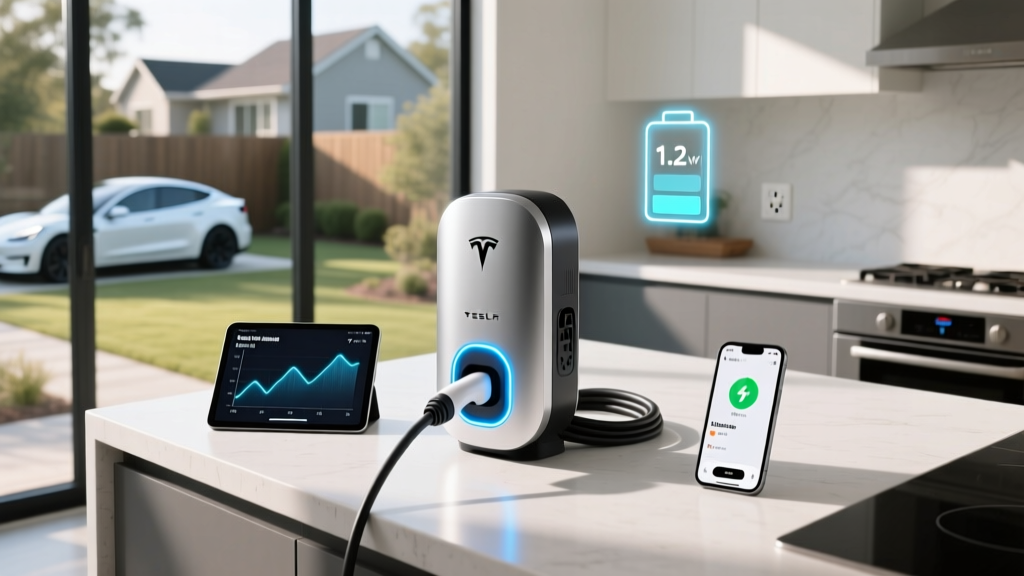
The Tesla Mobile Connector (often called the "Tesla Mobile Charger") is a 19-foot portable cable with a control box near the plug end and a NACS (North American Charging Standard) connector on the vehicle end. It ships with — or you can purchase — interchangeable adapter pigtails for different outlet types.
- Gen 2 Mobile Connector (discontinued): Max 32A / 7.7 kW on a 14-50 outlet.
- Gen 3 Mobile Connector (current, 2026): Max 32A / 7.7 kW on a NEMA 14-50, or ~4.8 kW on a NEMA 6-20 (240V/20A). On a standard 120V/15A household outlet, it delivers roughly 1.3–1.4 kW.
By contrast, the Tesla Wall Connector (Gen 3) is a hardwired, Wi-Fi-enabled unit rated for up to 48A / 11.5 kW on a 60A dedicated circuit. That's roughly 50% faster than the Mobile Connector at its peak, and it doesn't occupy a receptacle you might need for other appliances.
Charging Levels: Speeds in kW and Miles of Range Per Hour
Before comparing chargers, let's nail down the three EV charging levels. kW (kilowatts) measures power — how fast energy flows into your battery. kWh (kilowatt-hours) measures energy — the actual capacity stored. Think of kW as the flow rate of a hose and kWh as the size of the bucket.
| Level | Voltage / Amps | Max Power (kW) | Miles of Range Added Per Hour | Typical Use |
|---|---|---|---|---|
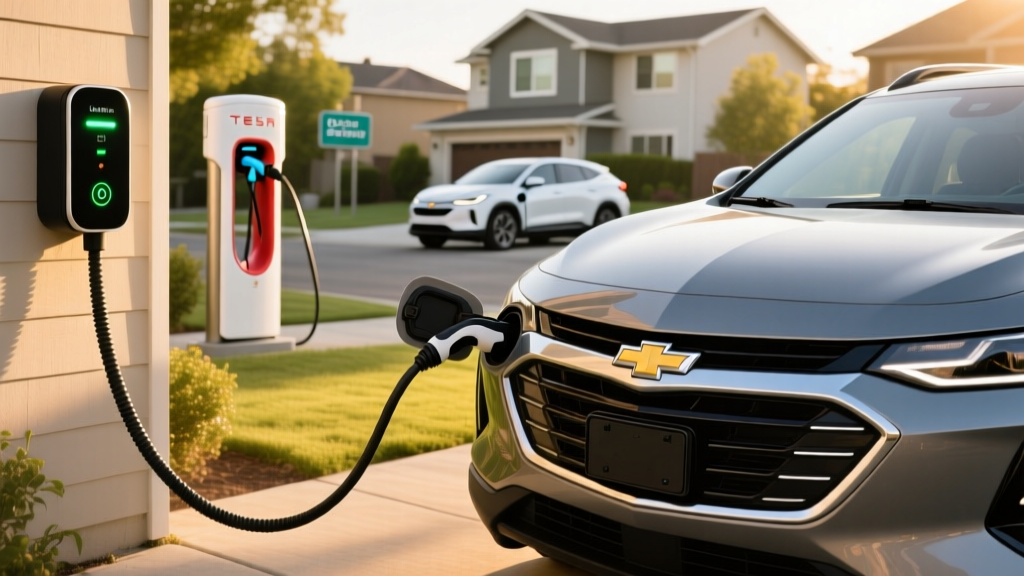
| Level 1 | 120V / 12–15A | 1.3–1.8 kW | 3–5 mi/hr | Overnight top-off, PHEVs, low-mileage drivers |
| Level 2 (portable) | 240V / 20–32A | 4.8–7.7 kW | 14–28 mi/hr | Daily home charging with Mobile Connector |
| Level 2 (wall unit) | 240V / 40–48A | 9.6–11.5 kW | 32–44 mi/hr | Dedicated home charging, larger batteries |
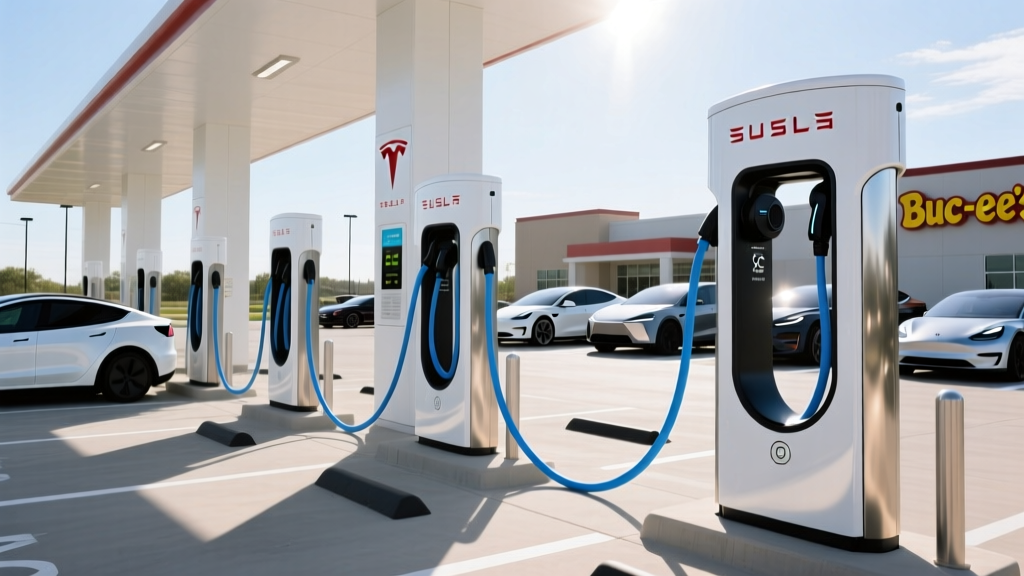
| DC Fast Charging | 400–800V DC | 50–350 kW | 150–1,000+ mi/hr (peak) | Road trips, highway corridor charging |
How Fast Does the Tesla Mobile Charger Add Range?
Here's what the Mobile Connector actually delivers across common Tesla models when plugged into different outlets. These figures assume a ~250 Wh/mile efficiency average (real-world highway driving may be 280–320 Wh/mi, which reduces miles-per-hour proportionally).
| Outlet | Power (kW) | Model Y LR (~250 Wh/mi) | Model 3 LR (~240 Wh/mi) | Cybertruck AWD (~370 Wh/mi) |
|---|---|---|---|---|
| NEMA 5-15 (120V/15A) | ~1.3 kW | ~5 mi/hr | ~5 mi/hr | ~3.5 mi/hr |
| NEMA 6-20 (240V/20A) | ~4.8 kW | ~19 mi/hr | ~20 mi/hr | ~13 mi/hr |
| NEMA 14-50 (240V/32A) | ~7.7 kW | ~30 mi/hr | ~32 mi/hr | ~21 mi/hr |
For a driver who covers 30–40 miles per day, a NEMA 14-50 setup with the Mobile Connector provides more than enough overnight replenishment — roughly 10 hours of charging yields 300 miles of range. But if you regularly drive 60+ miles daily or own a Cybertruck with its larger battery and higher consumption, a 48A Wall Connector becomes the more practical choice.
Home Charger Installation: Electrical Requirements, Costs, and Gotchas
How much does it cost to install a home EV charger? The answer depends entirely on your electrical panel, the distance from panel to garage, and whether your home needs a service upgrade. Here's the honest breakdown.
Electrical Requirements by Charger Type
- NEMA 14-50 receptacle (for Mobile Connector): Requires a 50A breaker, 6-gauge copper wire (or 4-gauge aluminum), and a 240V circuit. NEC code requires the continuous load to be no more than 80% of breaker rating, hence the Mobile Connector's 32A max.
- Hardwired Wall Connector (48A): Requires a 60A breaker and 4-gauge copper wire (or 2-gauge aluminum). Hardwired connections avoid the receptacle and are generally considered safer for continuous high-amperage use.
- Panel capacity: A licensed electrician will perform a load calculation per NEC Article 220. If your home has a 100A service panel already near capacity, adding a 50–60A EV circuit may require a panel upgrade to 200A — a significant added cost.
| Component | NEMA 14-50 Receptacle | Hardwired 48A Wall Connector | 200A Panel Upgrade (if needed) |
|---|---|---|---|
| Charger Equipment | $200 (Mobile Connector) + $45 (adapter) | $450–$500 (Wall Connector) | N/A |
| Electrician Labor | $400–$900 | $600–$1,400 | $2,000–$4,500 |
| Materials (wire, conduit, breaker) | $100–$300 | $150–$400 | $500–$1,200 |
| Permit & Inspection | $50–$200 | $50–$200 | $100–$300 |
| Total Estimated Cost | $795–$1,445 | $1,250–$2,500 | $2,600–$6,000 |
Safety and Code Considerations
- Dedicated circuit: EV chargers must be on a dedicated circuit — no sharing with other outlets or appliances.
- GFCI protection: NEC 2023 (and adopted by most jurisdictions in 2026) requires GFCI protection for all 125V–250V receptacles rated 50A or less in garages. Hardwired chargers are exempt from this requirement, which is one reason many electricians prefer hardwired installations.
- Outdoor rating: If mounting outside, ensure the receptacle has an in-use weatherproof cover (NEMA 3R rated) or choose a Wall Connector, which is rated for outdoor installation (NEMA 3R).
- Permitting: Most municipalities require an electrical permit and post-installation inspection. Skipping this can void homeowner's insurance coverage for electrical fires.
Connector Compatibility: NACS, CCS1, and CHAdeMO in 2026
The connector landscape has shifted dramatically. Tesla's NACS connector is now the de facto North American standard, with Ford, GM, Rivian, Volvo, Hyundai, and most other major automakers adopting it for 2025–2026 model-year vehicles. Here's where things stand.
| Connector | Brands Using It (2026 Models) | Adapter Needed for Tesla Mobile Connector? |
|---|---|---|
| NACS (Tesla) | Tesla (all), Ford (2025+), GM (2025+), Rivian, Volvo, Polestar, Hyundai/Kia (2026+), Nissan (Ariya) | None — native Tesla connector |
| CCS1 | Legacy VW ID.4 (pre-2025), BMW iX/i4 (pre-NACS transition), some Stellantis models | Yes — Tesla sells a CCS adapter (~$250) or use a third-party NACS-to-CCS adapter |
| CHAdeMO | Nissan Leaf (legacy), Mitsubishi Outlander PHEV | Yes — limited third-party adapters; CHAdeMO infrastructure declining |
The Tesla Mobile Connector only physically connects to NACS-equipped vehicles. If you own a non-Tesla EV with a CCS1 port, you'll need a CCS adapter to use Tesla's Mobile Connector — but a more practical solution is a universal Level 2 charger with a J1772/CCS connector. Note that Tesla Superchargers now welcome many non-Tesla EVs via the Magic Dock adapter at select stations, though this applies to DC fast charging, not the Mobile Connector.
Charging Cost Per Mile: Home Electricity vs. Public DC Fast vs. Gas
How much does charging cost per mile compared to gasoline? Let's run the numbers with concrete $/kWh scenarios and a 28 MPG gas vehicle as baseline.
| Scenario | Rate | Cost Per Mile (at 250 Wh/mi) | Annual Cost (12,000 mi) |
|---|---|---|---|
| Home Level 2 (off-peak utility rate) | $0.09/kWh | $0.023/mi | $270 |
| Home Level 2 (avg. US residential) | $0.17/kWh | $0.043/mi | $510 |
| Public Level 2 (ChargePoint, EVgo) | $0.30–$0.45/kWh | $0.075–$0.113/mi | $900–$1,350 |
| DC Fast Charging (Electrify America, Tesla Supercharger) | $0.35–$0.55/kWh | $0.088–$0.138/mi | $1,050–$1,650 |
| Gasoline Vehicle (28 MPG avg, $3.40/gal) | $3.40/gal | $0.121/mi | $1,455 |
Even at public DC fast-charging rates, EVs typically cost less per mile than a 28 MPG gasoline car at $3.40/gallon. But the real savings come from home charging — off-peak utility rates can slash fuel costs to roughly one-fifth of gasoline. If your utility offers time-of-use (TOU) pricing, scheduling charges between 11 PM and 6 AM maximizes savings. The Tesla app and Wall Connector both support scheduled charging natively.
Equipment Recommendations: Best Home Chargers for Every Setup
If the Tesla Mobile Connector doesn't meet your needs — or if you drive a non-Tesla EV — here are top-performing Level 2 chargers for 2026 with exact specs.
Tesla Wall Connector (Gen 3)
- Power: 11.5 kW (48A, hardwired, 60A breaker)
- Connector: NACS native; J1772 version also available
- Cable length: 24 ft
- Smart features: Wi-Fi, OTA updates, Power Sharing (load-balance two units on one circuit), Tesla app integration, Access Control (restrict to authorized vehicles)
- Price: ~$475
- Best for: Tesla owners wanting max Level 2 speed
ChargePoint Home Flex
- Power: Up to 12 kW (50A, adjustable 16–50A via DIP switches)
- Connector: J1772 (CCS-compatible); NACS adapter available
- Cable length: 23 ft
- Smart features: Wi-Fi, ChargePoint app, Alexa integration, flexible amperage to match your circuit
- Price: ~$550–$650
- Best for: Non-Tesla EVs, adjustable amperage for older panels
Emporia Level 2 EV Charger
- Power: Up to 11.5 kW (48A)
- Connector: J1772 (NACS adapter available)
- Cable length: 24 ft
- Smart features: Wi-Fi, Emporia energy monitoring (pairs with Emporia Vue whole-home monitor), scheduled charging, solar integration
- Price: ~$350–$400
- Best for: Budget-conscious buyers wanting energy monitoring
Grizzl-E Smart
- Power: Up to 10 kW (40A)
- Connector: J1772
- Cable length: 24 ft
- Smart features: OCPP-compatible, basic app, adjustable amperage
- Price: ~$450–$550
- Best for: Extreme cold climates (rated to -40°C), rugged outdoor installs
Is the Tesla Mobile Charger Enough? Decision Framework
Choose the Tesla Mobile Connector if:
- You drive under 40 miles per day and can charge overnight on a NEMA 14-50 (7.7 kW adds ~240+ miles in 8 hours).
- You want portability — take it on road trips for destination charging at RV parks or rental properties with 240V outlets.
- You're budget-conscious and don't want to spend $475+ on a wall unit plus higher install costs.
- You own only one Tesla and don't need to charge two vehicles simultaneously.
Upgrade to a hardwired Wall Connector if:
- You drive 60+ miles daily and need faster turnaround (48A charges ~44 mi/hr vs. ~30 mi/hr on the Mobile Connector).
- You own a Cybertruck or large-battery EV where 7.7 kW means 12+ hour charge sessions.
- You want smart features like Power Sharing, Access Control, or solar-integrated scheduling.
- Your garage install location is far from the nearest 14-50 outlet and hardwiring is simpler.
Frequently Asked Questions
Does the Tesla Mobile Charger come with the car?
Tesla discontinued including the Mobile Connector standard with new vehicles in mid-2022. As of 2026, it's sold separately through the Tesla Shop for approximately $200, with additional adapter pigtails (NEMA 6-20, 14-50, etc.) sold for ~$35–$45 each. Some dealers include it as a courtesy — confirm at purchase.
Can I use the Tesla Mobile Charger on a regular 120V outlet?
Yes, with the included NEMA 5-15 adapter. At 120V/12A, it delivers roughly 1.3 kW, adding about 3–5 miles of range per hour. This is adequate for plug-in hybrids or Tesla owners who drive fewer than 30 miles per day and charge over 10–12 hours overnight. For any meaningful daily driving, a 240V outlet is strongly recommended.
Is it safe to leave the Mobile Connector plugged in permanently?
Technically yes, but it's not ideal. The Mobile Connector is designed for portability, not permanent installation. Continuous plugging/unplugging can wear the receptacle contacts over time. For a permanent garage setup, a hardwired Wall Connector on a dedicated 60A circuit is safer, more reliable, and eliminates the GFCI nuisance-trip issue that some owners experience with 14-50 receptacles under NEC 2023 rules.
What electrical upgrades might I need for a Tesla charger?
Three common upgrades: (1) New 240V circuit — most homes need a 50A or 60A breaker and appropriate-gauge wire run from the panel to the garage ($400–$1,400). (2) Panel upgrade — if your home has a 100A panel or less, a 200A service upgrade may be required ($2,000–$4,500). (3) Trenching — if your panel is on the opposite side of the house from the garage, underground conduit runs add $500–$2,000 depending on distance. Always get a load calculation from a licensed electrician before committing.
Does the Tesla Mobile Charger work with non-Tesla EVs?
Only if the non-Tesla EV has a NACS charge port. As of 2026, Ford, GM, Rivian, and several other brands have transitioned to NACS, so their vehicles can use the Tesla Mobile Connector natively. For CCS1-equipped vehicles (older VW, BMW, etc.), you'd need a NACS-to-CCS adapter, which adds cost and complexity. A universal J1772 charger like the ChargePoint Home Flex is more practical for mixed-EV households.
How does the 30D federal tax credit apply to home charger installation?
The IRS §30 Alternative Fuel Vehicle Refueling Property Credit covers up to 30% of home charger equipment and installation costs, capped at $1,000. Eligibility depends on your home being in a qualifying census tract (non-urban or low-income area per IRS guidance). This is separate from the §30D vehicle purchase credit. Consult a tax professional to confirm eligibility based on your address and income.
How fast is DC fast charging compared to the Mobile Connector?
A Tesla Supercharger V4 delivers up to 250–350 kW depending on the station and vehicle. On a Model Y Long Range, a 250 kW Supercharger adds roughly 200 miles in 15 minutes (10–80% in ~25–30 minutes). The Mobile Connector on a 14-50 outlet takes 8–9 hours for the same session. DC fast charging is essential for road trips but shouldn't be your daily strategy — frequent DC fast charging can accelerate battery degradation slightly compared to Level 2 home charging. According to fueleconomy.gov, Level 2 home charging remains the most cost-effective and battery-friendly approach for daily use.