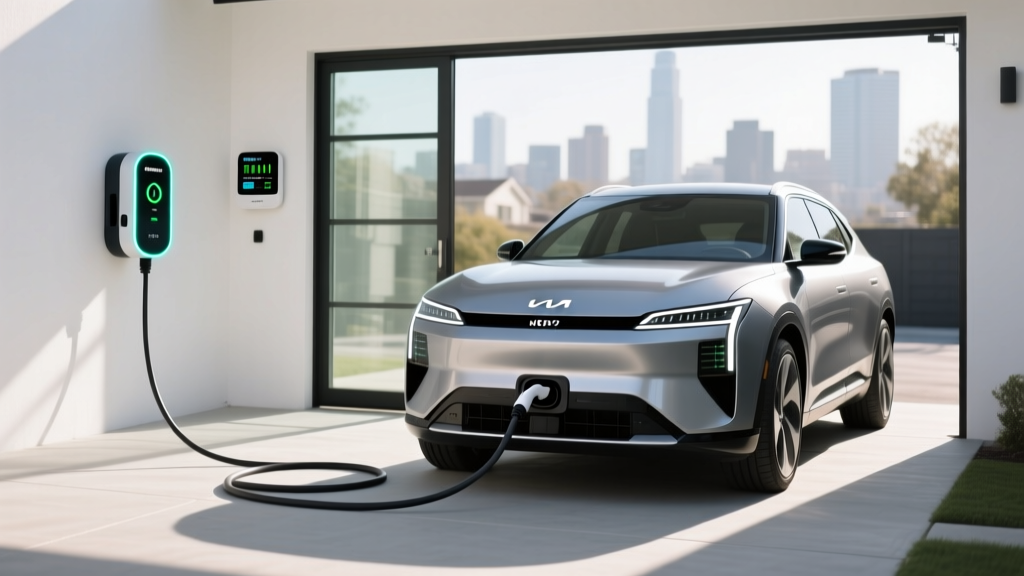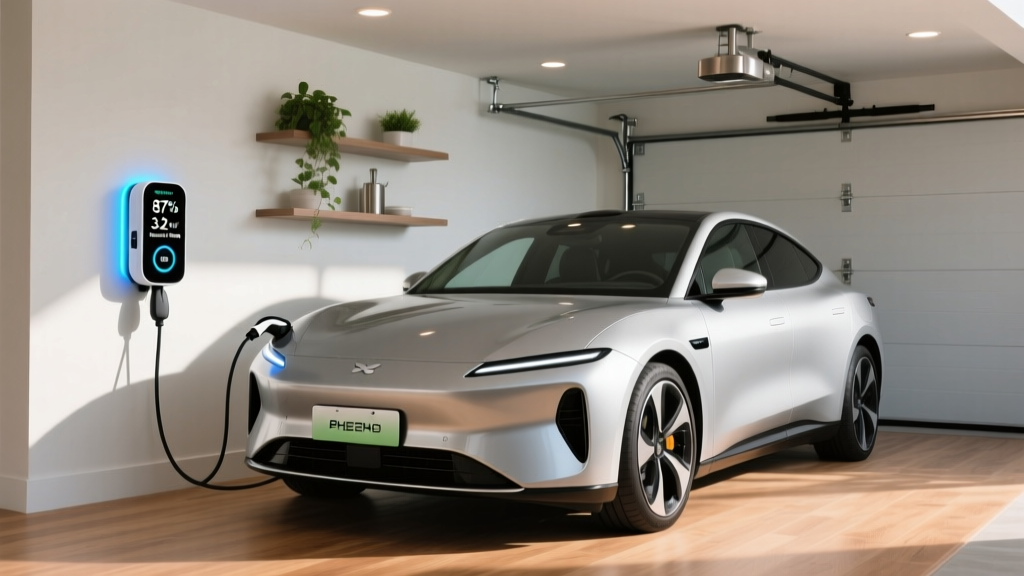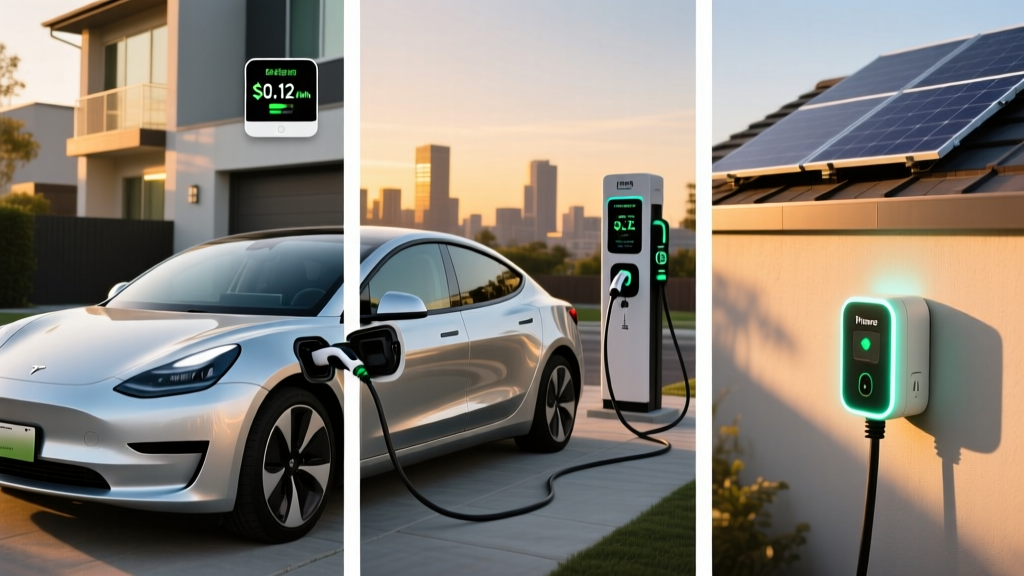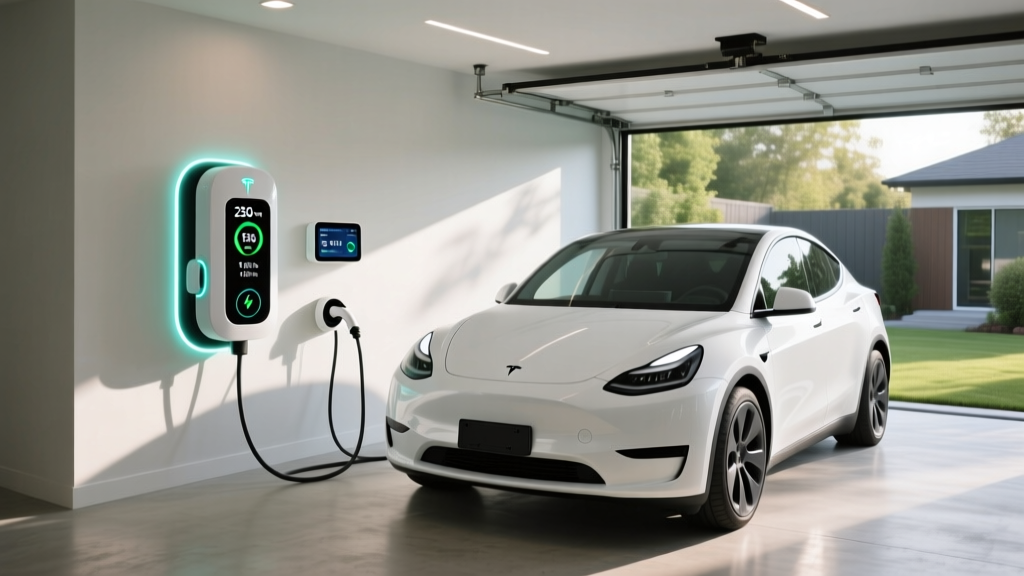
If you own a Tesla—or are about to buy one—the single biggest factor in preserving its advertised mileage range isn't your driving style. It's how you charge. A Model 3 Long Range carries an EPA-estimated 363 miles of range, but real-world highway driving at 75 mph in cold weather can trim that to roughly 280–300 miles. Pair that with a poorly configured home charger that tops out at 3 kW, and you'll wake up to a battery that barely recovered overnight. This guide maps every charging tier to real Tesla mileage range recovery, breaks down the exact electrical work a home install demands in 2026, and shows you what each mile actually costs versus gasoline.
How Each Charging Level Restores Tesla Mileage Range
Before comparing hardware, you need to understand the three charging tiers and how they translate to miles on your odometer. The distinction between kW (kilowatts, a measure of power or charge rate) and kWh (kilowatt-hours, a measure of energy stored in the battery) is the most common source of EV confusion. Think of kW as the flow rate of a hose and kWh as the size of the tank. A bigger hose (higher kW) fills the tank faster, but the tank size (kWh) determines your total mileage range.
| Level | Voltage / Amps | Power (kW) | Miles of Range Added per Hour | Best Use Case |
|---|---|---|---|---|
| Level 1 (120V) | 120V / 12A | ~1.4 kW | 3–5 mi/hr | Overnight trickle, PHEVs, emergency |
| Level 2 (240V) | 240V / 48A | ~11.5 kW | 30–44 mi/hr | Daily home charging, full overnight recovery |
| DC Fast (Supercharger V3) | 400V+ DC | Up to 250 kW | ~1,000 mi/hr (peak) | Road trips, rapid top-ups |
| DC Fast (Supercharger V4) | 800V+ DC | Up to 350 kW (compatible models) | ~1,200+ mi/hr (peak) | Next-gen Tesla architecture |
Those "miles per hour" figures assume roughly 250 Wh/mi efficiency, which is typical for a Model 3 but optimistic for a Model X. The Cybertruck, with its heavier curb weight and less aerodynamic profile, averages closer to 400–450 Wh/mi, so the same charger will add fewer miles per hour.
Home Charger Installation: Electrical Requirements and True Costs
A Level 2 home charger is the backbone of practical Tesla ownership. It's what lets you wake up every morning with a full battery and never think about range during the workweek. But the sticker price of the charger itself is only part of the equation—the electrical work often costs more than the hardware.
What Your Electrical Panel Needs to Support
A standard Tesla Wall Connector or equivalent Level 2 unit draws up to 48 amps on a 240-volt circuit. The National Electrical Code (NEC) requires that continuous loads (anything running 3+ hours, which includes EV charging) use only 80% of a circuit's rated capacity. That means a 48A charger requires a 60-amp dedicated breaker.
Homes built after 2000 typically have a 200-amp main panel with enough spare capacity. Older homes with 100-amp service may need a panel upgrade—a $2,000–$5,000 expense that catches many new EV owners off guard. A licensed electrician will perform a load calculation to determine if your panel can handle the additional draw alongside your HVAC, electric oven, dryer, and other major appliances.
Installation Cost Breakdown
| Component | Simple Install (panel nearby, short run) | Complex Install (long run, conduit, panel upgrade) |
|---|---|---|
| Level 2 Charger Hardware | $400–$600 | $400–$600 |
| Electrical Permit | $50–$150 | $100–$300 |
| Electrician Labor (60A circuit, wiring, breaker) | $600–$1,200 | $1,500–$3,000 |
| Panel Upgrade (if needed, 200A→400A or new sub-panel) | N/A | $2,000–$5,000 |
| Conduit & Materials | $100–$200 | $300–$800 |
| Total Estimated Cost | $1,150–$2,150 | $4,300–$9,700 |
Most homeowners fall in the $1,500–$3,000 range for a straightforward install. The key variables are the distance from your electrical panel to the charger location (longer wire runs = more copper = higher cost), whether conduit is required by local code, and whether your panel has spare breaker slots and amperage headroom. Always hire a licensed electrician and pull a permit—unpermitted work can void your homeowner's insurance and create fire hazards.
Connector Compatibility: NACS, CCS1, and What You Need to Know
As of 2026, Tesla's North American Charging Standard (NACS) connector has become the dominant EV charging plug in the United States. Nearly every major automaker—Ford, GM, Rivian, Hyundai, Kia, BMW, and others—has adopted NACS for new vehicles starting with 2025–2026 model years. For Tesla owners, this is excellent news: the Supercharger network is now more accessible than ever, and third-party chargers increasingly offer native NACS connectors.
| Connector | Native Vehicles | Adapter Required For | Availability |
|---|---|---|---|
| NACS (Tesla) | All Tesla models, Ford F-150 Lightning (2025+), GM EVs (2025+), Rivian (2025+) | CCS1 vehicles using CCS→NACS adapter | Dominant at home & Superchargers |
| CCS1 | Hyundai Ioniq 5/6, Kia EV6/EV9, VW ID.4, BMW iX (pre-2025) | Tesla vehicles using NACS→CCS adapter | Electrify America, EVgo, ChargePoint DC stations |
| CHAdeMO | Nissan Leaf (legacy), Mitsubishi Outlander PHEV | N/A (no practical adapter to NACS) | Declining; mostly legacy stations |
If you own a Tesla, your vehicle uses NACS natively. You can charge at any NACS-equipped home charger or Supercharger without an adapter. For the rare CCS1-only public DC fast charger, Tesla sells a CCS adapter (~$250) that enables access, though Supercharger coverage is so extensive that most Tesla owners never need it. Conversely, if a family member drives a non-Tesla EV with CCS1, they can now access Tesla Superchargers using the Magic Dock adapter built into select Supercharger stalls, or with their own NACS adapter cable.
Charging Cost Per Mile: Home Electricity vs. Gasoline
One of the strongest arguments for going electric is the per-mile fuel cost. But the savings vary dramatically depending on where and when you charge. Here's a realistic comparison using 2026 average rates.
| Charging Scenario | Rate ($/kWh) | Cost to Add 100 Miles* | Cost Per Mile |
|---|---|---|---|
| Home, off-peak (utility time-of-use) | $0.08–$0.12 | $2.00–$3.00 | $0.02–$0.03 |
| Home, standard residential rate | $0.14–$0.18 | $3.50–$4.50 | $0.035–$0.045 |
| Public Level 2 (ChargePoint, workplace) | $0.20–$0.35 | $5.00–$8.75 | $0.05–$0.09 |
| Tesla Supercharger V3/V4 | $0.28–$0.42 | $7.00–$10.50 | $0.07–$0.105 |
| Gas vehicle (30 MPG, $3.40/gal) | — | $11.33 | $0.113 |
*Based on 250 Wh/mile (Model 3 efficiency). Heavier Teslas like the Model X or Cybertruck will consume 350–450 Wh/mile, increasing costs proportionally.
Home off-peak charging is the gold standard: at $0.10/kWh, you're paying roughly $0.025 per mile—about one-quarter the cost of gasoline. Even at Supercharger rates, most Tesla owners still save 10–40% versus gas on a per-mile basis. The key is to minimize reliance on public DC fast charging for daily needs and maximize home Level 2 charging during off-peak utility hours. Many utilities offer EV-specific time-of-use plans that make overnight charging even cheaper.
How Long Does It Actually Take to Charge a Tesla?
Charging speed isn't linear. A Tesla's battery management system (BMS) allows peak charge rates only when the battery is at a low state of charge (SoC) and properly preconditioned. As the battery fills past 50% and especially past 80%, the charge rate tapers significantly to protect cell longevity. This "charge curve" means the advertised peak kW is sustained for only a portion of the session.
Typical 10–80% Charging Times by Tesla Model
| Model (2026) | Battery (usable kWh) | Peak DC Fast Rate | 10–80% at Supercharger V3 (250 kW) | Full Charge on Level 2 (11.5 kW) |
|---|---|---|---|---|
| Model 3 Long Range AWD | ~79 kWh (NMC) | 250 kW | ~25–28 min | ~7.5 hours |
| Model 3 RWD (LFP) | ~60 kWh (LFP) | 170 kW | ~30–35 min | ~5.5 hours |
| Model Y Long Range AWD | ~79 kWh (NMC) | 250 kW | ~25–28 min | ~7.5 hours |
| Model S Plaid | ~95 kWh (NMC) | 250 kW | ~30–35 min | ~9 hours |
| Cybertruck AWD | ~123 kWh (NMC) | 250 kW (350 kW on V4 where supported) | ~38–44 min (V3) | ~11.5 hours |
A critical tip: always enable charge preconditioning by navigating to a Supercharger in your Tesla's navigation system before arriving. This warms the battery to the optimal temperature for fast charging and can shave 5–10 minutes off your session, especially in cold weather. Without preconditioning, a cold battery may accept only 50–100 kW initially, even at a 250 kW stall.
Best Home Chargers for Tesla Owners in 2026
The market for Level 2 home chargers has matured considerably. Here are the top picks based on power output, build quality, smart features, connector type, and real-world reliability.
Tesla Wall Connector (Gen 4)
- Power: Up to 11.5 kW (48A / 240V)
- Connector: Native NACS (no adapter needed)
- Cable Length: 24 ft
- Smart Features: Wi-Fi, OTA updates, load sharing with 2nd unit, Tesla app integration
- Price: ~$475
- Best For: Tesla-only households seeking seamless integration
ChargePoint Home Flex
- Power: Up to 12 kW (50A / 240V, configurable down to 16A)
- Connector: NACS or CCS1 (choose at purchase)
- Cable Length: 23 ft
- Smart Features: Wi-Fi, Alexa/Google Home, scheduling, energy tracking, flexible amperage
- Price: ~$550–$650
- Best For: Multi-EV households or renters who may move (adjustable amperage)
Emporia Level 2 EV Charger
- Power: Up to 11.5 kW (48A / 240V)
- Connector: NACS (2025+ models) or J1772 with adapter
- Cable Length: 24 ft
- Smart Features: Wi-Fi, solar integration, energy monitoring, scheduling
- Price: ~$400
- Best For: Budget-conscious buyers with solar panels
Grizzl-E Smart
- Power: Up to 10 kW (40A / 240V)
- Connector: NACS or J1772
- Cable Length: 24 ft
- Smart Features: Wi-Fi, OCPP support, extreme cold rated (-40°F)
- Price: ~$500
- Best For: Cold-climate owners needing rugged outdoor durability
For most Tesla owners, the Tesla Wall Connector is the obvious default—native NACS, reliable firmware, and the ability to share a single circuit between two Wall Connectors (useful for two-Tesla garages). If your household includes a non-Tesla EV, the ChargePoint Home Flex offers the most flexibility with configurable amperage and connector choice.
Safety, Electrical Code, and What Your Inspector Will Check
EV charging places a sustained high-amperage load on your home's electrical system—more continuous draw than almost any other household appliance. Cutting corners here risks fire, equipment damage, and insurance claim denials. Here's what code requires and what you should insist on:
- Dedicated circuit: Your Level 2 charger must have its own breaker—no sharing with outlets, lights, or other appliances.
- GFCI protection: The 2023 NEC (adopted by most jurisdictions by 2026) requires GFCI protection for all EV charging outlets. Hardwired units like the Tesla Wall Connector typically have built-in ground fault protection, but plug-in units on a NEMA 14-50 receptacle require a GFCI breaker—which adds $50–$100 to the electrical cost.
- Outdoor rating: If your charger is installed outdoors or in an unenclosed carport, both the charger (NEMA 4 rating) and any receptacle must be rated for wet locations with a weatherproof in-use cover.
- Wire gauge: A 60A circuit requires 4 AWG copper wire (or 3 AWG aluminum). Undersized wire is a fire hazard and will fail inspection.
- Permit and inspection: Virtually all jurisdictions require an electrical permit for a new 240V circuit. The inspection ensures the work meets NEC standards. Do not skip this step.
Frequently Asked Questions
How much does it cost to install a home EV charger for a Tesla?
For a straightforward install with the electrical panel close to the charger location and sufficient spare capacity, expect $1,150–$2,150 total (hardware, permit, electrician labor). If your home needs a panel upgrade, long wire runs through conduit, or a new sub-panel, costs can reach $4,300–$9,700. The Tesla Wall Connector itself costs ~$475; the rest is electrical work. Always get 2–3 quotes from licensed electricians.
How fast will each charging level add mileage range to my Tesla?
Level 1 (120V standard outlet) adds about 3–5 miles of range per hour—fine for plug-in hybrids but painfully slow for a Tesla with a 60–123 kWh battery. Level 2 (240V, 48A) adds 30–44 miles per hour, enough to fully replenish a Model 3 overnight in about 7–8 hours. DC Fast Charging at a Tesla Supercharger V3 adds up to 200 miles in roughly 15 minutes under optimal conditions, though the charge curve tapers significantly above 50% SoC.
Which connector and charger is compatible with my Tesla?
All Tesla vehicles use the NACS (North American Charging Standard) connector natively. For home charging, the Tesla Wall Connector, ChargePoint Home Flex (NACS version), and Emporia Level 2 (NACS version) all plug directly into your Tesla without adapters. For public charging, Tesla Superchargers use NACS natively. CCS1 public chargers require Tesla's CCS adapter (~$250), but these are increasingly rare as stations add NACS cables.
How much does charging a Tesla cost per mile vs. gas?
Charging at home on off-peak utility rates ($0.10/kWh) costs roughly $0.025 per mile—about 78% less than a 30 MPG gas car at $3.40/gallon ($0.113/mile). Even at Tesla Supercharger rates ($0.28–$0.42/kWh), you'll pay $0.07–$0.105 per mile, still below gasoline. The biggest savings come from consistent home charging; frequent reliance on public DC fast charging narrows the gap significantly.
What electrical upgrades might I need before installing a Tesla charger?
The most common upgrade is a panel capacity increase. Homes with 100-amp main panels often cannot spare the 60 amps a Level 2 charger requires alongside existing loads (HVAC, electric range, dryer). Upgrading to a 200A or 400A panel costs $2,000–$5,000. Alternatively, some homeowners install a smart load-management device (like the Emporia Smart Load Center or Tesla's built-in load sharing) that dynamically reduces charger amperage when other large appliances are running, avoiding a panel upgrade entirely. A licensed electrician can perform a load calculation to determine your specific needs. For detailed IRS rules on the §30D clean vehicle credit and whether any home charging equipment qualifies for the Residential Clean Energy Credit, consult a tax professional as rules vary by year and eligibility.
For official EPA range and efficiency data on all current Tesla models, check fueleconomy.gov's EV comparison tool, which provides side-by-side MPGe and range figures verified under standardized testing conditions.