Efficiency is the most underrated spec in electric vehicles. While shoppers fixate on battery size and peak horsepower, the number that actually determines your daily cost and road-trip charging time is miles per kWh — how far the car travels on one kilowatt-hour of energy. For Tesla owners and prospective buyers, understanding Tesla mileage per kWh is the key to accurately budgeting home electricity, comparing public charging networks, and choosing the right Level 2 charger for your garage.
This guide breaks down real-world Tesla efficiency data across the 2026 lineup, translates those figures into actual charging costs per mile, and walks through everything you need to install a home charger — including the electrical upgrades that catch first-time EV buyers off guard.
Tesla Mileage Per kWh Across the 2026 Lineup
Tesla's efficiency advantage has been a competitive moat for years. Thanks to low drag coefficients, heat pump standardization, and powertrain refinements, Teslas consistently outperform similarly sized EVs from legacy automakers on the miles-per-kWh metric. Here's how the current models stack up based on EPA data from fueleconomy.gov:
| Model / Trim | Usable Battery (kWh) | EPA Range (mi) | EPA Efficiency (mi/kWh) | MPGe (Combined) | Real-World Highway Note |
|---|---|---|---|---|---|
| Model 3 RWD | ~60 (LFP) | 272 | 4.53 | 132 | ~3.8–4.1 mi/kWh at 75 mph |
| Model 3 Long Range AWD | ~75 (NMC) | 363 | 4.84 | 134 | ~4.0–4.3 mi/kWh at 75 mph |
| Model Y Long Range AWD | ~75 (NMC) | 320 | 4.27 | 122 | ~3.5–3.9 mi/kWh at 75 mph |
| Model S Long Range | ~95 (NMC) | 402 | 4.23 | 120 | ~3.6–3.9 mi/kWh at 75 mph |
| Model X Long Range | ~95 (NMC) | 335 | 3.53 | 102 | ~3.0–3.3 mi/kWh at 75 mph |
kW vs kWh: The Distinction Every EV Owner Must Know
Before calculating costs, let's lock in the terminology that trips up more new EV owners than any other:
- kWh (kilowatt-hour) = energy capacity. Your battery holds a certain number of kWh, like a gas tank holds gallons. A Model 3 Long Range battery stores roughly 75 kWh.
- kW (kilowatt) = power, or the rate at which energy flows. Your charger delivers a certain number of kW, like a fuel pump delivers gallons per minute. A 48-amp Level 2 charger delivers up to 11.5 kW.
When you ask "how many kWh does it take to charge my Tesla?" — that's energy (battery size). When you ask "how fast does my charger fill the battery?" — that's power (kW rating). Your Tesla mileage per kWh bridges the two: it tells you how far each unit of energy takes you.
Charging Levels Explained: Speeds, Miles Per Hour, and Use Cases
| Level | Voltage / Amps | Power (kW) | Miles Added Per Hour | Best For |
|---|---|---|---|---|
| Level 1 | 120V / 12A | 1.4 kW | 3–5 mi/hr | Overnight trickle, PHEVs, emergencies |
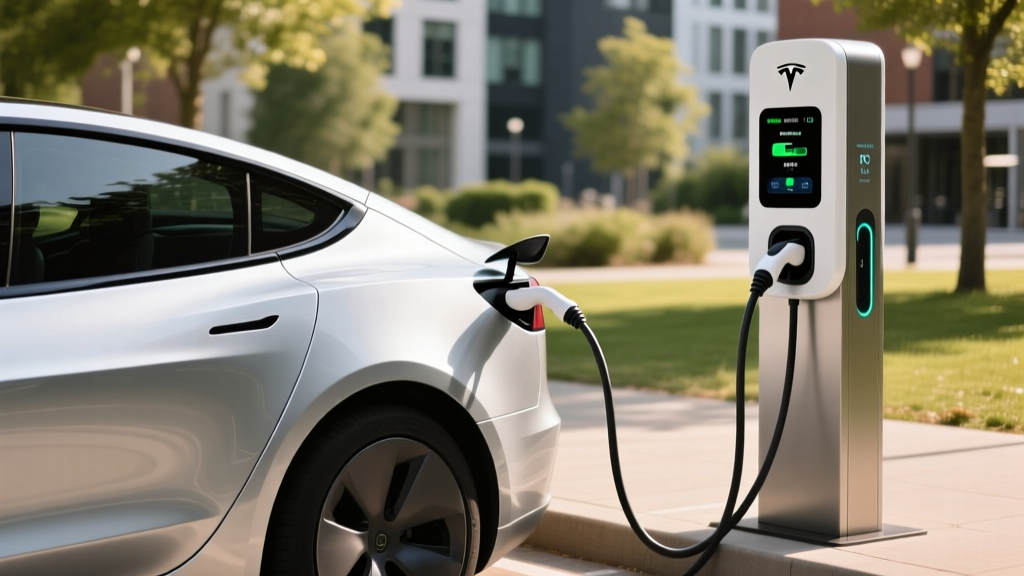
| Level 2 (Home) | 240V / 32–48A | 7.7–11.5 kW | 25–44 mi/hr | Daily home charging, overnight full charge |
| Level 2 (Public) | 208–240V / 30–80A | 6.6–19.2 kW | 22–60 mi/hr | Workplace, shopping, apartment complexes |
| DC Fast Charging | 400–800V DC | 50–250+ kW | 150–1,000+ mi/hr | Road trips, highway corridors |
For a Tesla Model 3 Long Range averaging 4.3 mi/kWh in mixed driving, a 48-amp Level 2 charger (11.5 kW) adds roughly 49 miles of range per hour of charging. That means an overnight session from 10 PM to 6 AM delivers ~390 miles of range — more than a full battery.
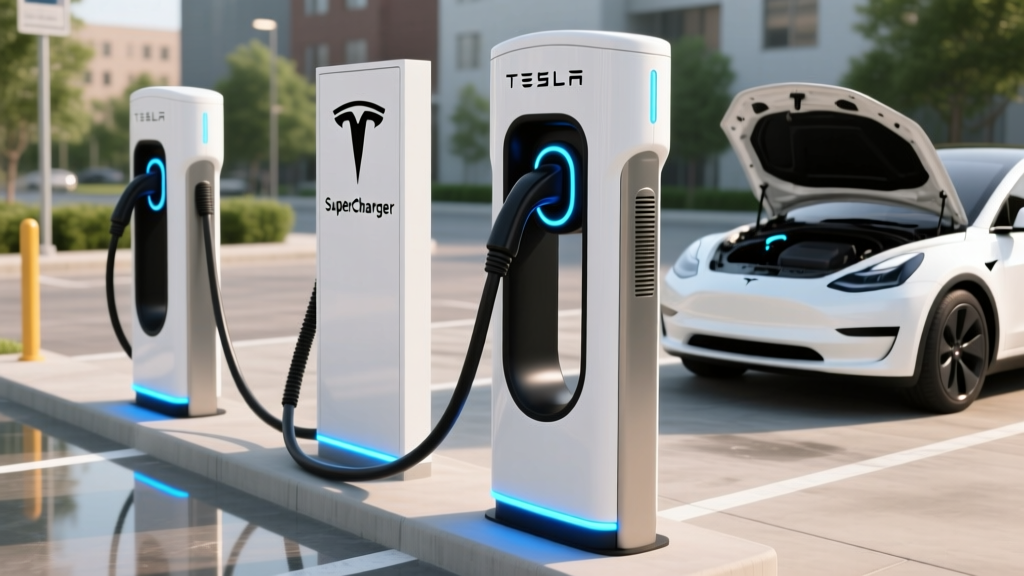
On a Tesla V4 Supercharger (250 kW peak for most current stalls), a Model 3 Long Range can add approximately 200 miles in 15 minutes under ideal conditions. However, charging curves taper significantly above 80% State of Charge — that 250 kW peak only sustains for the bottom portion of the battery, and the final 20% may take as long as the first 60%.
How Much Does Charging Cost Per Mile vs Gas?
The financial case for EVs hinges on the gap between electricity cost per mile and gasoline cost per mile. Let's run the numbers for a Tesla Model 3 Long Range (4.3 mi/kWh real-world average) against a comparable gas sedan getting 30 MPG combined:
| Scenario | Rate | Tesla Cost/Mile | Gas Car Cost/Mile (30 MPG) |
|---|---|---|---|
| Home charging (national avg electricity) | $0.16/kWh | $0.037 | $0.117 (at $3.50/gal) |
| Home off-peak / time-of-use | $0.09/kWh | $0.021 | $0.117 |
| Public Level 2 (network avg) | $0.30/kWh | $0.070 | $0.117 |
| DC Fast Charging (Supercharger avg) | $0.35/kWh | $0.081 | $0.117 |
| DC Fast Charging (peak pricing) | $0.50/kWh | $0.116 | $0.117 |
Home Level 2 Charger Installation: Requirements, Costs & Gotchas
Installing a Level 2 home charger is the single highest-impact upgrade an EV owner can make. Here's what the project actually involves and what it costs:
Electrical Requirements
A Level 2 charger requires a dedicated 240-volt circuit, similar to what powers an electric dryer or oven. Common configurations:
- 32-amp charger: Requires a 40-amp breaker (NEC rule: circuit must be rated 125% of continuous load). Delivers 7.7 kW.
- 40-amp charger: Requires a 50-amp breaker. Delivers 9.6 kW.
- 48-amp charger: Requires a 60-amp breaker. Delivers 11.5 kW.
- 80-amp charger (Tesla Wall Connector max): Requires a 100-amp breaker. Delivers 19.2 kW — but few residential panels support this without upgrade.
Panel Upgrade Reality
Many homes built before 2000 have 100-amp or 150-amp main electrical panels. Adding a 60-amp EV circuit to an already-loaded 100-amp panel may require a panel upgrade to 200 amps — this is the surprise cost that blindsides buyers. An electrician will perform a load calculation per NEC Article 220 to determine if your panel has headroom.
Installation Cost Breakdown
| Component | Simple Install (panel nearby) | Complex Install (long run / panel upgrade) |
|---|---|---|
| Level 2 charger (hardware) | $400–$700 | $400–$700 |
| Electrical permit | $50–$200 | $50–$300 |
| Electrician labor (2–4 hrs simple) | $400–$800 | $1,200–$3,000 |
| Conduit, wire, breaker | $100–$300 | $300–$800 |
| Panel upgrade (if needed) | N/A | $1,500–$4,000 |
| Total | $950–$2,000 | $3,450–$8,800 |
Always get at least two quotes from licensed electricians, and confirm they have specific EV charger installation experience. Some utilities offer rebates of $250–$1,000 for Level 2 installations — check with your local provider before scheduling work.
Connector Compatibility: NACS, CCS, and Adapters
The connector landscape has consolidated significantly since 2023, when Ford and GM committed to adopting Tesla's North American Charging Standard (NACS). By 2026, NACS is the dominant connector for new EVs sold in North America, but CCS1 vehicles remain on the road in large numbers.
| Connector | Native Vehicles | Tesla Supercharger Access | Adapter Needed? |
|---|---|---|---|
| NACS (Tesla) | All Teslas; Ford, GM, Rivian, Volvo, Hyundai (2025+ models) | Direct plug | None for Superchargers; CCS adapter for non-Tesla DCFC |
| CCS1 | Hyundai/Kia (pre-2025), BMW, VW, most legacy OEMs | With NACS adapter (OEM-provided or aftermarket) | NACS-to-CCS adapter required for Superchargers |
| CHAdeMO | Nissan Leaf (discontinued), older Mitsubishi | Not compatible | Limited adapter options; network shrinking |
For Tesla owners: your vehicle has a native NACS port. You can use Tesla Superchargers directly, and Tesla sells a CCS adapter (~$175) for accessing Electrify America, EVgo, and other CCS networks. This adapter is worth carrying on road trips outside major corridors.
Recommended Level 2 Chargers for Tesla Owners (2026)
Tesla Wall Connector
- Power: Up to 11.5 kW (48A) on 60A circuit; up to 19.2 kW (80A) on 100A circuit
- Connector: Native NACS (24 ft cable)
- Smart features: Wi-Fi updates, power sharing between units, Tesla app integration
- Price: ~$475
- Verdict: Best value for Tesla-only households. No NACS adapter hassle.
ChargePoint Home Flex
- Power: Up to 12 kW (50A) on 60A circuit; adjustable amperage
- Connector: NACS or J1772 (23 ft cable)
- Smart features: Alexa integration, ChargePoint app scheduling, utility demand-response
- Price: ~$650
- Verdict: Best for multi-EV households (Tesla + non-Tesla).
Emporia Vue EV Charger
- Power: Up to 11.5 kW (48A) on 60A circuit
- Connector: NACS or J1772 (24 ft cable)
- Smart features: Energy monitoring via Emporia Vue panel integration, solar-aware scheduling
- Price: ~$400
- Verdict: Best budget smart charger with detailed energy tracking.
Safety, Code & Installation Best Practices
EV charging draws sustained high current for hours — this is a continuous load under NEC Article 511, and it demands proper installation:
- Dedicated circuit: Your Level 2 charger must have its own breaker — no sharing with other appliances.
- GFCI protection: NEC 2020 and later require GFCI protection for outdoor receptacles used for EV charging. Hardwired installations (no plug) are generally exempt from the GFCI breaker requirement and are preferred by most installers for reliability.
- Outdoor rating: If your charger is mounted outside or in an unsealed garage, ensure the unit carries a NEMA 4 or IP65 weather rating. The Tesla Wall Connector and ChargePoint Home Flex both meet this standard.
- Wire gauge: 6 AWG copper for 48A circuits; 4 AWG for 60A+ circuits. Your electrician will size wire to the circuit breaker and run length.
- Permit and inspection: Every jurisdiction requires an electrical permit for new 240V circuits. Skipping this risks insurance claim denial in the event of a fire.
Charging Time Examples: 10% to 80% at Each Level
Real charging times depend on battery size, charger power, and the charge curve. Here are realistic 10–80% estimates for common Tesla configurations:
| Vehicle (Battery) | Level 1 (1.4 kW) | Level 2 — 48A (11.5 kW) | Supercharger (250 kW peak) |
|---|---|---|---|
| Model 3 RWD (60 kWh LFP) | ~30 hours | ~3.5 hours | ~22 minutes* |
| Model 3 LR (75 kWh NMC) | ~37 hours | ~4.3 hours | ~25 minutes* |
| Model Y LR (75 kWh NMC) | ~37 hours | ~4.3 hours | ~25 minutes* |
| Model S LR (95 kWh NMC) | ~47 hours | ~5.5 hours | ~30 minutes* |
*DC fast charge times assume optimal battery preconditioning and moderate ambient temperature. Cold batteries, high SoC starts, and V2 (150 kW) Superchargers will increase times by 30–50%. LFP batteries (Model 3 RWD) tolerate frequent 100% charging better than NMC and can use the full range of the battery without degradation concerns.
Frequently Asked Questions
How much does it cost to install a home EV charger?
A straightforward Level 2 installation (short wire run from a 200-amp panel with available capacity) typically costs $950–$2,000 including hardware, labor, and permit. If your home needs a panel upgrade from 100A to 200A, expect total costs of $3,500–$8,800. Always get a load calculation from a licensed electrician before committing.
How fast will each charging level add range to my Tesla?
Level 1 (120V) adds 3–5 miles per hour — too slow for daily use unless you drive under 30 miles per day. Level 2 (240V, 48A) adds 35–49 miles per hour depending on your Tesla's efficiency. DC fast charging at a Supercharger adds 150–200+ miles in 15 minutes under ideal conditions, though the charge curve slows significantly above 80% SoC.
Which connector and charger is compatible with my Tesla?
All Tesla vehicles use the native NACS connector. The Tesla Wall Connector is the simplest plug-and-play option. If you also own a non-Tesla EV, a ChargePoint Home Flex with a NACS cable or a J1772 cable with a J1772-to-NACS adapter covers both vehicles.
How much does charging a Tesla cost per mile vs a gas car?
Home charging at the national average of $0.16/kWh costs roughly $0.037/mile in a Model 3 Long Range — about one-third the cost of a 30 MPG gas car at $3.50/gallon ($0.117/mile). Off-peak home rates can push Tesla costs below $0.02/mile. Public DC fast charging at $0.35–$0.50/kWh narrows the gap to near parity with gas.
What electrical upgrades might I need for a Level 2 charger?
The most common upgrade is a panel capacity increase from 100A to 200A ($1,500–$4,000). Older homes may also need service-line upgrades from the utility, new conduit runs, or sub-panel installation if the garage is far from the main panel. A licensed electrician's load calculation will identify exactly what's required — do not skip this step.
Does Tesla mileage per kWh change in winter?
Yes, significantly. Cold temperatures increase battery internal resistance and require energy for cabin and battery heating. Expect 15–30% efficiency loss in sustained sub-freezing conditions. A Model 3 Long Range that achieves 4.3 mi/kWh in summer may drop to 3.0–3.5 mi/kWh in January at 20°F. Preconditioning the battery while plugged in (via the Tesla app) recovers some of this loss by warming the pack using grid power rather than battery energy.