Understanding Tesla Mile Range and Charging Fundamentals
Getting the most from your Tesla mile range starts with understanding how charging actually works. The EPA rates the 2026 Model 3 Long Range at 341 miles, Model Y Long Range at 320 miles, and Model S at 402 miles—but real-world range varies significantly based on charging habits, temperature, and driving conditions.
- EPA Sticker: 320-402 miles depending on model
- Highway Driving (70+ mph): Expect 85-90% of EPA (270-360 miles)
- Cold Weather (below 40°F): 70-80% of EPA due to battery chemistry and cabin heating
- Fast Charging Impact: Frequent DC fast charging to 100% accelerates degradation—Tesla recommends 80% daily limit for NMC batteries
The distinction between kW (kilowatts) and kWh (kilowatt-hours) is critical: kW measures charging power (how fast energy flows), while kWh measures battery capacity (total energy stored). A 75 kWh Tesla battery charging at 11.5 kW (Level 2) takes roughly 7-8 hours from empty to full.
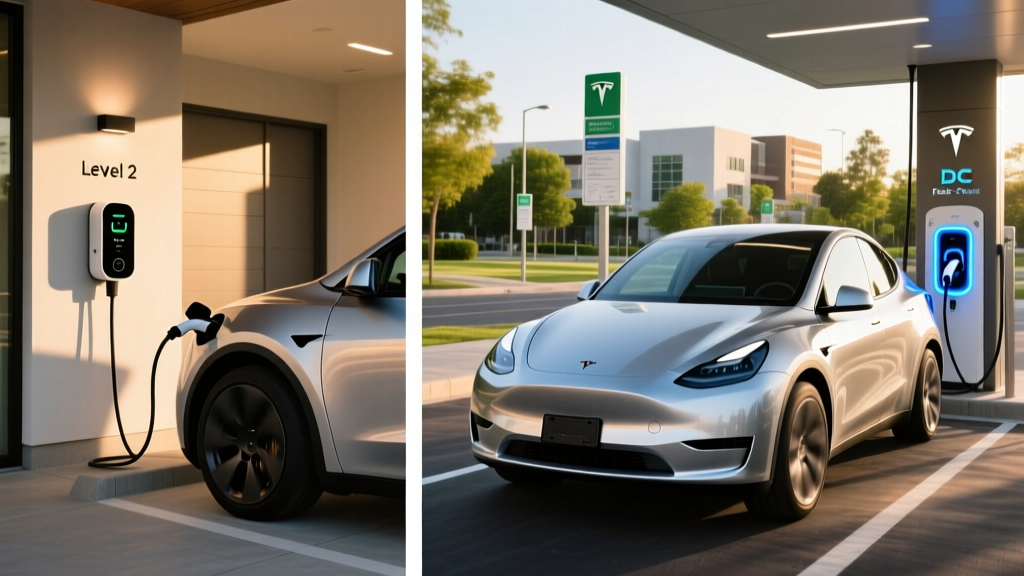
Charging Levels: Speed and Range Addition
| Level | Power (kW) | Voltage/Amps | Miles Added/Hour | Best Use Case |
|---|---|---|---|---|
| Level 1 | 1.2-1.9 kW | 120V / 12-16A | 3-5 miles | Overnight top-up, emergency |
| Level 2 | 7.2-19.2 kW | 240V / 30-80A | 22-60 miles | Daily home charging |
| DC Fast | 50-250 kW | 400-800V DC | 180-1,000+ miles | Road trips, rapid top-up |
Tesla-Specific Charging Times (10-80% State of Charge):
- Model 3/Y (75 kWh battery): 20-25 minutes at 250 kW Supercharger, 8-10 hours at 11.5 kW Level 2
- Model S/X (100 kWh battery): 25-30 minutes at 250 kW Supercharger, 10-12 hours at 11.5 kW Level 2
Home Charger Installation: Costs and Electrical Requirements
Installing a Level 2 home charger requires a dedicated 240V circuit, typically 40-60 amps. The total investment breaks down into equipment, electrician labor, permits, and potential panel upgrades.
| Component | Cost Range | Notes |
|---|---|---|
| Level 2 Charger | $400-$800 | Tesla Wall Connector, ChargePoint, Emporia |
| Electrician Labor | $300-$1,200 | Varies by run length, conduit needs |
| Permit Fees | $50-$300 | Required in most jurisdictions |
| Panel Upgrade (if needed) | $1,500-$4,000 | 100A to 200A service upgrade |
| Total (no panel upgrade) | $750-$2,300 | Most homes with 200A service |
| Total (with panel upgrade) | $2,250-$6,300 | Older homes with 100A service |
Electrical Requirements for Tesla Wall Connector:
- Recommended Circuit: 60A breaker, 48A continuous draw (11.5 kW)
- Minimum Circuit: 40A breaker, 32A continuous (7.7 kW)
- Wire Gauge: 6 AWG copper for 60A, 8 AWG for 40A
- Panel Capacity: Load calculation must show 20% spare capacity after EVSE addition
Homes built before 1990 often have 100A or 150A electrical service. Adding a 60A EV circuit may exceed panel capacity, requiring a service upgrade to 200A. A licensed electrician performs a load calculation per NEC Article 220 to determine if your panel can handle the additional draw.
Connector Compatibility: NACS, CCS, and Adapters
| Connector | Brands Using It | Tesla Compatibility |
|---|---|---|
| NACS (Tesla) | Tesla, Ford, GM, Rivian, Volvo, Polestar (2025+) | Native on all Teslas |
| CCS1 | Most non-Tesla EVs pre-2025 | Adapter required (Magic Dock at some Superchargers) |
| CHAdeMO | Nissan Leaf, Mitsubishi (legacy) | Not compatible, adapter unavailable |
Tesla's NACS Advantage: Tesla's North American Charging Standard (NACS) is now the dominant connector, with Ford, GM, and others adopting it for 2025+ models. All current Teslas use NACS natively, accessing 50,000+ Superchargers globally without adapters.
Non-Tesla Access: Some Supercharger stations now feature "Magic Dock" connectors that accommodate CCS vehicles, but availability remains limited. Check the Tesla app for Magic Dock locations if you own a non-Tesla EV.
Charging Cost Analysis: Home vs Public vs Gas
| Charging Scenario | $/kWh | Cost for 300 miles (75 kWh) | Cost per mile |
|---|---|---|---|
| Home (off-peak utility rate) | $0.12-$0.18 | $9-$13.50 | $0.03-$0.045 |
| Home (standard rate) | $0.18-$0.25 | $13.50-$18.75 | $0.045-$0.063 |
| Public Level 2 | $0.25-$0.40 | $18.75-$30 | $0.063-$0.10 |
| Tesla Supercharger | $0.28-$0.45 | $21-$33.75 | $0.07-$0.113 |
| Gas Vehicle (25 MPG, $3.50/gal) | N/A | $42 | $0.14 |
Annual Savings Calculation: Driving 12,000 miles per year, a Tesla charged primarily at home (off-peak) costs $360-$540 annually versus $1,680 for a 25 MPG gas car—saving $1,140-$1,320 per year. Over 5 years, that's $5,700-$6,600 in fuel savings, partially offsetting the higher purchase price.
Time-of-use (TOU) utility plans offer significant savings. Charging overnight (10 PM - 6 AM) at $0.12/kWh versus peak afternoon rates ($0.35/kWh) cuts costs by 65%. Most Tesla owners program charging to start at 11 PM via the vehicle's scheduled charging feature.
Recommended Home Charging Equipment
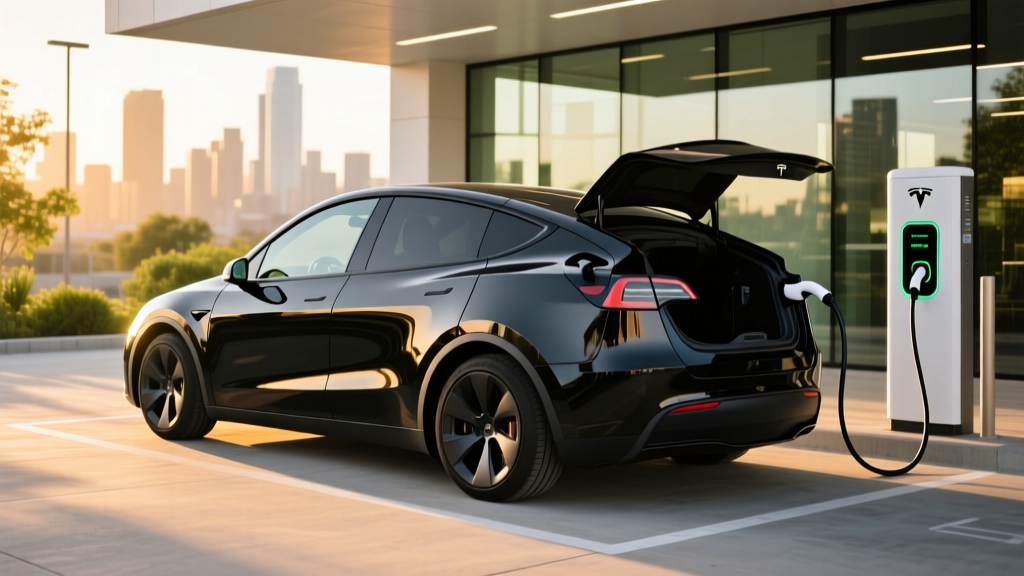
Tesla Wall Connector (Best for Tesla Owners)
- Power Output: 11.5 kW (48A) on 60A circuit
- Connector: NACS (native Tesla)
- Cable Length: 18 feet or 24 feet options
- Smart Features: Wi-Fi connectivity, power sharing (up to 6 units on one circuit), load management
- Price: $475 (18ft) / $525 (24ft)
- Warranty: 4 years
ChargePoint Home Flex (Universal Option)
- Power Output: Up to 12 kW (50A) on 60A circuit
- Connector: J1772 (CCS-compatible) with NACS adapter included
- Cable Length: 23 feet
- Smart Features: App scheduling, energy tracking, Alexa integration
- Price: $699
- Warranty: 3 years
Emporia Vue EV Charger (Budget Smart Option)
- Power Output: 11.5 kW (48A) on 60A circuit
- Connector: J1772 (NACS adapter available)
- Cable Length: 24 feet
- Smart Features: Real-time energy monitoring, solar integration, load management
- Price: $449
- Warranty: 3 years
For Tesla-only households, the Tesla Wall Connector offers the best integration and value. Mixed-EV households benefit from the ChargePoint Home Flex's universal connector and included NACS adapter.
Safety, Code Compliance, and Installation Best Practices
EV charger installation must comply with the National Electrical Code (NEC) Article 625 and local building codes. Key requirements include:
- Dedicated Circuit: EVSE requires its own breaker—no sharing with other loads
- GFCI Protection: Required for outdoor installations and garages (NEC 2020+)
- Outdoor Rating: NEMA 4 enclosure for outdoor mounting (weather-resistant)
- Cable Management: Strain relief and proper support to prevent damage
- Ventilation: Not required for Level 2, but garage mounting should avoid battery storage areas
Permit requirements vary by jurisdiction but typically involve electrical inspection to verify proper grounding, breaker sizing, and wire gauge. Skipping permits risks insurance coverage denial if electrical issues arise later.
Frequently Asked Questions
How much does it cost to install a home EV charger?
Total installation costs range from $750-$2,300 for homes with adequate 200A electrical service, or $2,250-$6,300 if a panel upgrade is required. The breakdown: $400-$800 for the charger, $300-$1,200 for electrician labor, $50-$300 for permits, and $1,500-$4,000 for panel upgrades when needed.
How fast will each charging level add range to my Tesla?
Level 1 (120V) adds 3-5 miles per hour—suitable only for overnight top-ups. Level 2 (240V, 48A) adds 44 miles per hour, fully charging a 75 kWh Model 3 in 8-10 hours. DC Fast Charging at 250 kW adds 200+ miles in 15 minutes (10-80% State of Charge), but charging slows significantly above 80%.
Which connector is compatible with my Tesla?
All Teslas use the NACS (North American Charging Standard) connector natively. This provides direct access to Tesla Superchargers and destination chargers without adapters. For non-Tesla public Level 2 chargers (J1772 connector), Tesla includes a J1772 adapter with every vehicle.
How much does charging cost per mile compared to gas?
Home charging at off-peak rates ($0.12-$0.18/kWh) costs $0.03-$0.045 per mile. Public charging and Superchargers ($0.28-$0.45/kWh) cost $0.07-$0.113 per mile. A comparable 25 MPG gas vehicle at $3.50/gallon costs $0.14 per mile—making home-charged Tesla ownership 3-4x cheaper per mile.
What electrical upgrades might I need for home charging?
Homes with 100A or 150A electrical service often require a panel upgrade to 200A to safely support a 60A EV circuit. The electrician performs a load calculation per NEC Article 220—if existing loads (AC, electric range, dryer) consume 80%+ of panel capacity, an upgrade is mandatory. Panel upgrades cost $1,500-$4,000 and require utility coordination.
Does frequent Supercharging degrade my Tesla battery faster?
DC fast charging generates more heat than Level 2, accelerating battery degradation slightly. Tesla's battery management system mitigates this, but the company recommends limiting Supercharging to road trips and using Level 2 for daily charging. For NMC batteries (Model S/X, Long Range variants), set daily charge limit to 80%; LFP batteries (Model 3/Y RWD) can charge to 100% regularly without degradation concerns.
Can I install a Tesla charger myself?
DIY installation is not recommended and often illegal. NEC Article 625 requires permits and inspection for EVSE installations. Improper wiring risks fire, voids equipment warranty, and may invalidate home insurance coverage. Licensed electricians carry liability insurance and guarantee code compliance.
Optimizing your Tesla mile range means pairing smart charging habits with proper infrastructure. Home Level 2 charging at off-peak rates delivers the lowest cost per mile while preserving battery health through moderate charge rates and avoiding the 80-100% State of Charge zone where degradation accelerates. The upfront $750-$2,300 investment pays back within 3-5 years through fuel savings, while providing the convenience of a full charge every morning.