If you're buying the Tesla with longest range in 2026 — the Model S Long Range with an EPA-estimated 402 miles — you need a charging plan that actually supports that massive 100 kWh (usable ~95 kWh) battery pack. Plugging into a standard 120V wall outlet will take days. This guide breaks down exactly how fast each charging level replenishes a large Tesla battery, what a Level 2 home install costs, and which DC fast-charging networks keep you moving on road trips.
Charging Levels Explained: Speeds, kW, and Real Miles Added
EV charging operates at three primary levels. Understanding the difference between kW (power, or the rate of energy flow) and kWh (energy, or battery capacity) is critical. Think of kW as the width of the pipe, and kWh as the size of the tank you're filling.
| Level | Voltage | Power (kW) | Miles of Range Per Hour | 10–80% Time (100 kWh) | Best Use Case |
|---|---|---|---|---|---|
| Level 1 | 120V AC | 1.4–1.9 kW | 3–5 mi/hr | ~50–65 hours | Emergency / overnight trickle |
| Level 2 (Home/Public AC) | 240V AC | 7.2–19.2 kW | 20–56 mi/hr | ~5–12 hours | Daily home charging |
| DC Fast Charging | 400V+ DC | 50–250 kW | 150–400+ mi/hr (peak) | ~25–40 min | Road trips, quick top-ups |
Home Charger Installation: Costs, Electrical Requirements, and Gotchas
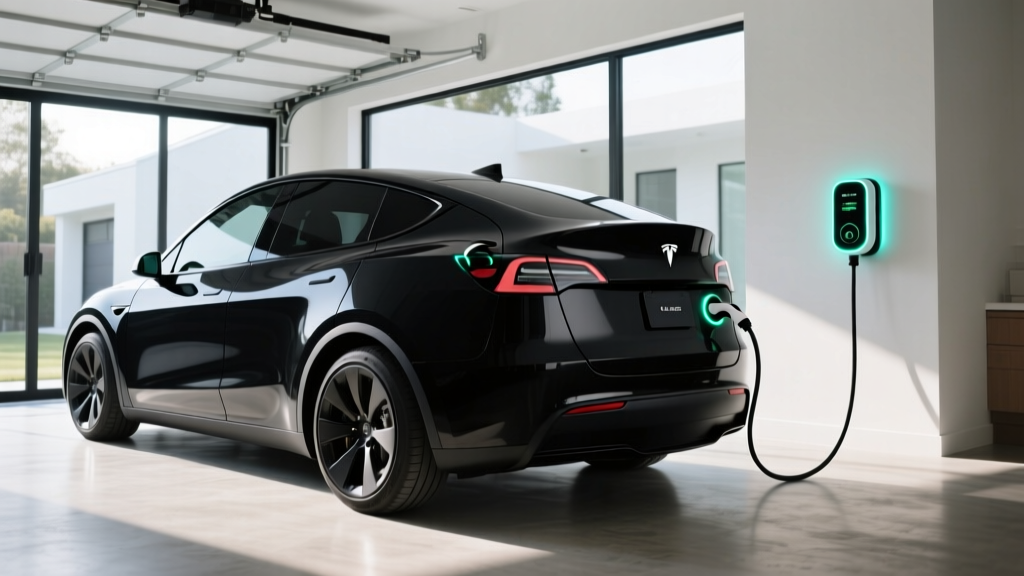
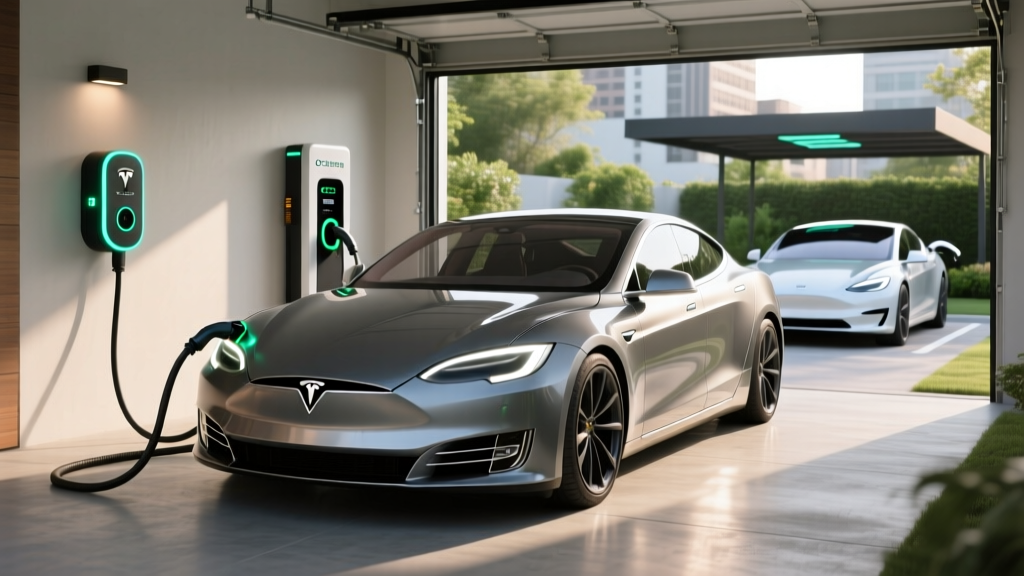
Most Tesla owners install a Level 2 wall connector at home. For a vehicle with a 100 kWh battery, you want a charger that delivers at least 11.5 kW (48A on a 60A circuit) to fully replenish overnight. Tesla's Wall Connector supports up to 11.5 kW on a 60A breaker, adding roughly 34 miles of range per hour — enough to restore a full day's driving in about 3 hours.
Electrical Requirements
- Circuit: Dedicated 60A breaker for a 48A continuous load (NEC requires circuits rated at 125% of continuous load)
- Voltage: 240V split-phase (standard US residential)
- Wire gauge: 6 AWG copper (THHN/THWN-2 in conduit) or 4 AWG aluminum
- Panel capacity: Your main service panel must have spare amperage headroom — a 200A panel with existing loads near 160A+ may need an upgrade to support a 60A EV circuit
- GFCI: NEC 2020+ requires GFCI protection for EV receptacles; hardwired chargers like the Wall Connector may not require a GFCI breaker depending on local code interpretation — your electrician will confirm
| Component | Low End | High End | Notes |
|---|---|---|---|
| Level 2 Charger Equipment | $400 | $750 | Tesla Wall Connector ~$475; third-party smart chargers $500–$750 |
| Electrician Labor (install) | $600 | $2,000 | Depends on run length, conduit, wall material |
| Electrical Permit | $50 | $300 | Varies by municipality |
| Panel Upgrade (if needed) | $1,500 | $4,000+ | Required if existing panel lacks capacity; 200A→200A with space or 200A→400A |
| Total (no panel upgrade) | $1,050 | $3,050 | Typical for most homes with adequate panel space |
| Total (with panel upgrade) | $2,550 | $7,050+ | Older homes (100A service) face the high end |
Charging Cost: Home vs. Public vs. Gas Per Mile
One of the biggest ownership advantages of the Tesla with longest range is fuel cost. Here's how charging costs compare across scenarios, using the Model S Long Range's efficiency of approximately 28 kWh/100 miles (about 120 MPGe combined per fueleconomy.gov):
| Scenario | Rate | Cost per 100 Miles | Cost per Mile |
|---|---|---|---|
| Home (off-peak utility rate) | $0.09/kWh | $2.52 | $0.025 |
| Home (national avg residential) | $0.16/kWh | $4.48 | $0.045 |
| Tesla Supercharger V3/V4 | $0.28–$0.36/kWh | $7.84–$10.08 | $0.078–$0.101 |
| Electrify America / third-party DC | $0.31–$0.48/kWh | $8.68–$13.44 | $0.087–$0.134 |
| Gas car (30 MPG, $3.40/gal) | $3.40/gal | $11.33 | $0.113 |
Even at peak Supercharger rates, charging the Model S Long Range costs less per mile than a 30 MPG gas car at $3.40/gallon. Home charging at off-peak rates is roughly one-quarter the cost of gasoline per mile. Over 15,000 annual miles, that's a savings of $1,050–$1,320 per year versus gas.
Connector Compatibility: NACS, CCS, and Adapter Realities
Tesla's North American Charging Standard (NACS) connector is now the dominant EV charging connector in North America. As of 2026, Ford, GM, Rivian, Volvo, Polestar, and others have adopted NACS natively. But if you own a Tesla and use non-Tesla public chargers, or own a non-Tesla EV and want to access Superchargers, here's what you need:
| Connector | Native Vehicles | DC Network Access | Adapter Needed? |
|---|---|---|---|
| NACS (Tesla) | Tesla (all), Ford, GM, Rivian, Volvo, Polestar, others | Tesla Supercharger, Electrify America (new stalls), ChargePoint | No — native on new vehicles |
| CCS1 | Hyundai, Kia, BMW, VW, older Ford/GM models | Electrify America, EVgo, ChargePoint | Tesla CCS Adapter (~$175) for Supercharger access |
| CHAdeMO | Nissan Leaf (legacy) | Limited — shrinking network | No direct Tesla adapter available |
All current Tesla vehicles ship with NACS. Tesla also sells a CCS Adapter for $175 that allows non-Tesla CCS-equipped EVs to access the Supercharger network where enabled. For Tesla owners, the included Mobile Connector (with NEMA 14-50 adapter) provides Level 2 charging at up to 7.7 kW from a 240V dryer-style outlet — a viable budget option if your electrical panel is near the garage.
Level 2 Charger Equipment Picks for High-Capacity Tesla Batteries
When charging a 100 kWh battery, charger power output matters. A 7.2 kW (32A) charger needs nearly 13 hours for a 10–80% fill. Step up to 11.5 kW (48A) and that drops to about 6 hours. Here are top picks for 2026:
Tesla Wall Connector
- Power: Up to 11.5 kW (48A)
- Connector: NACS native
- Cable: 24 ft
- Smart Features: Wi-Fi updates, load sharing (pair two on one circuit), access control
- Price: ~$475
- Verdict: Best value for Tesla owners; cleanest integration with the Tesla app
ChargePoint Home Flex
- Power: Up to 12 kW (50A, configurable)
- Connector: NACS (2026 model) or CCS/J1772
- Cable: 23 ft
- Smart Features: Alexa, scheduling, energy tracking, NEMA 14-50 or hardwired
- Price: ~$649
- Verdict: Best multi-EV household pick; flexible amperage dial avoids panel overdraw
Emporia Vue Level 2 Charger
- Power: Up to 11.5 kW (48A)
- Connector: J1772 (NACS adapter included)
- Cable: 24 ft
- Smart Features: Energy monitoring, solar integration, scheduling
- Price: ~$399
- Verdict: Budget pick with solar-aware scheduling; great for homes with rooftop PV
Grizzl-E Smart
- Power: Up to 10 kW (40A)
- Connector: J1772 or NACS
- Cable: 24 ft
- Smart Features: OCPP protocol, adjustable amperage, extreme cold rating (-40°C)
- Price: ~$549
- Verdict: Built for harsh climates; Canadian-made, IP67-rated for outdoor install
DC Fast Charging on the Road: Supercharger Network Realities
The Tesla Model S Long Range supports peak DC fast charging at approximately 250 kW on V3/V4 Superchargers. Tesla's Supercharger network now exceeds 6,500 stations and 65,000+ connectors in North America, with increasing open access to non-Tesla EVs at select locations.
For road-trip planning, expect the following at a V3 Supercharger (250 kW peak):
- 10–80% in ~30–35 minutes with battery preconditioned (car navigates to Supercharger, triggering automatic thermal prep)
- 10–80% in ~40–50 minutes without preconditioning (cold-soaked battery, e.g., winter morning departure)
- Peak rate sustained to ~30% SoC, then tapering: ~150 kW at 50%, ~80 kW at 70%, ~40 kW above 85%
Safety, Code, and Outdoor Installation Considerations
Level 2 home charging is safe when installed to code. Key requirements per the National Electrical Code (NEC) and best practices:
- Dedicated circuit: Your EV charger must be on its own breaker — never share with other appliances
- Hardwired vs. plug-in: Hardwired installations (no plug) avoid the NEC GFCI breaker requirement in many jurisdictions and provide a cleaner look. Plug-in (NEMA 14-50) offers portability but may require a $75–$150 GFCI breaker
- Outdoor rating: All recommended chargers above carry NEMA 4 or IP65+ ratings for outdoor installation. Ensure the conduit and junction box are also rated for wet locations
- Cable management: Use a holster or retractor to keep the cable off the ground and prevent tripping hazards
- Utility notification: Some utilities require you to report EV charger installation. This can unlock time-of-use (TOU) rate plans that dramatically reduce charging costs
Always hire a licensed electrician familiar with NEC Article 625 (Electric Vehicle Charging). Verify their experience with EV installs specifically — the continuous-load calculation and wire sizing differ from standard appliance circuits. Check NHTSA and your local building department for any recall or code updates relevant to your charger model.
Frequently Asked Questions
How much does it cost to install a home EV charger?
A typical Level 2 home charger installation costs $1,050–$3,050 if your electrical panel has capacity. This includes the charger ($400–$750), electrician labor ($600–$2,000), and permit ($50–$300). If your panel needs upgrading from 100A to 200A, add $1,500–$4,000+. Always get a load calculation from a licensed electrician before committing.
How fast will each charging level add range?
Level 1 (120V) adds 3–5 miles per hour — essentially unusable for a 100 kWh battery. Level 2 (240V, 48A) adds roughly 34 miles per hour, fully replenishing overnight. DC Fast Charging (250 kW peak) can add 200+ miles in 15 minutes, but tapers significantly above 80% SoC.
Which connector/charger is compatible with my EV?
All 2026 Tesla vehicles use the NACS connector natively. The Tesla Wall Connector is the most seamless home option. Non-Tesla EVs with NACS (Ford, GM, Rivian) can also use Tesla's Wall Connector and Supercharger network. CCS-equipped EVs need Tesla's CCS Adapter ($175) for Supercharger access. CHAdeMO vehicles (Nissan Leaf) have no adapter path to Superchargers.
How much does charging cost per mile vs gas?
Home charging at the national average ($0.16/kWh) costs about $0.045/mile for the Model S Long Range. Off-peak rates drop this to ~$0.025/mile. A comparable gas car at 30 MPG and $3.40/gallon costs $0.113/mile. Even the most expensive DC fast charging ($0.36–$0.48/kWh) remains competitive with or cheaper than gasoline per mile.
What electrical upgrades might I need?
The most common upgrade is a panel capacity increase. Homes with 100A service almost always need a 200A upgrade ($2,500–$4,000). Homes with 200A panels may still need one if existing loads (HVAC, electric oven, dryer) consume most of the capacity. A secondary issue: some older homes lack a 240V circuit run to the garage, requiring new conduit and wiring ($600–$1,500 depending on distance). Always get a professional load calculation per NEC Article 220 before purchasing equipment.