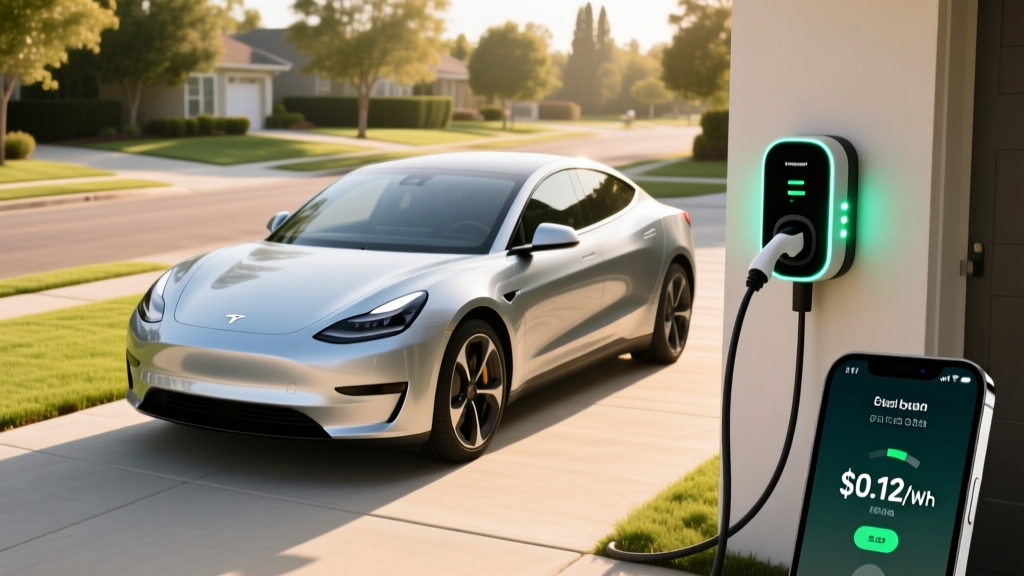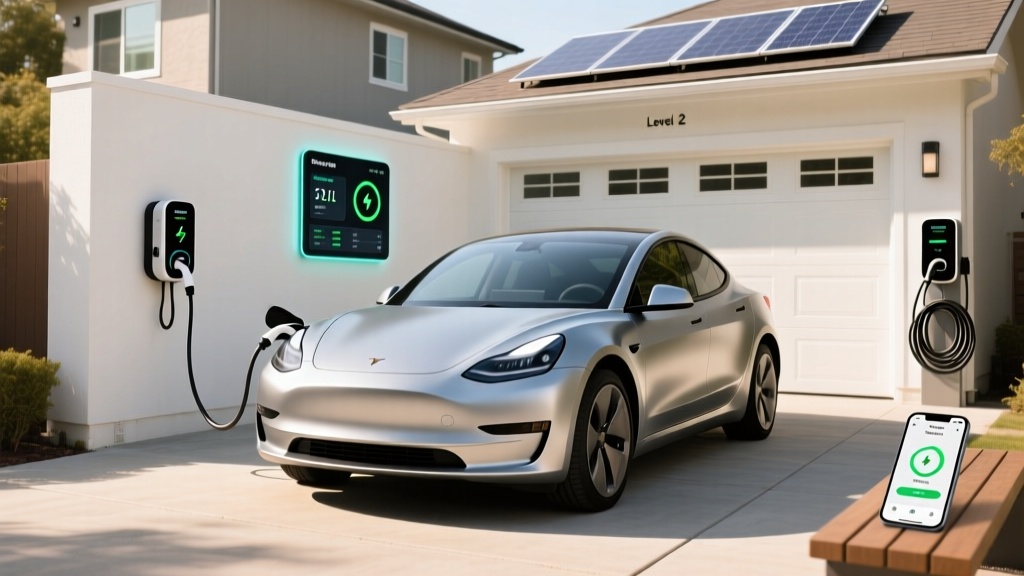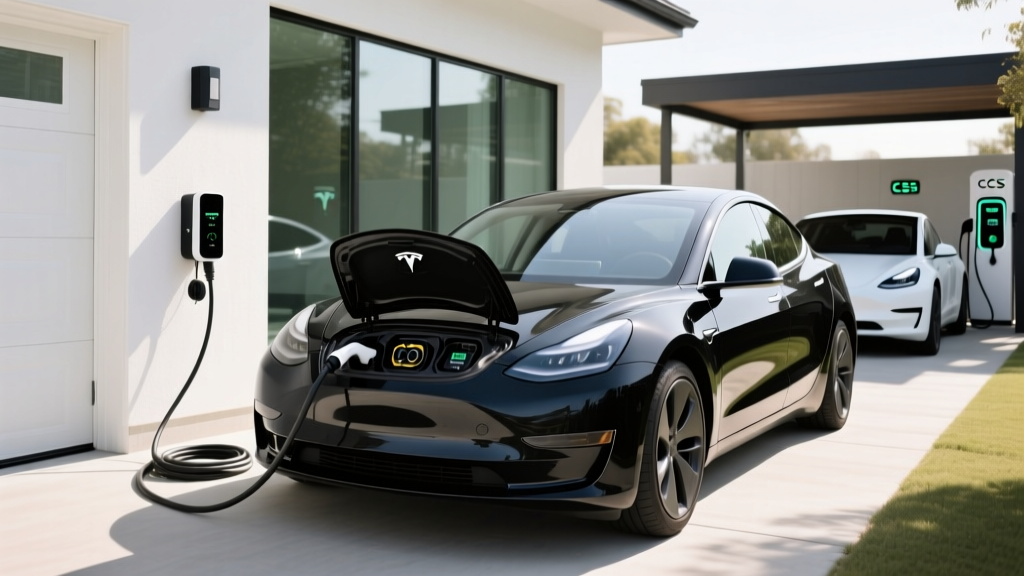
If you own or are considering a Tesla Long Range Model 3, understanding your charging options is the single most important factor in daily satisfaction. The 2026 Long Range Model 3 packs a ~79 kWh usable battery (NMC chemistry) with an EPA-estimated 363 miles of range, but how quickly you replenish those miles — and what it costs — depends entirely on your charging setup. This guide breaks down every charging scenario, from a standard 120V outlet to a 250 kW Supercharger, with exact numbers for the Long Range Model 3.
Tesla Long Range Model 3: Key Charging Specs at a Glance
| Specification | Value |
|---|---|
| Battery Capacity (usable) | ~79 kWh (NMC) |
| EPA Range | 363 miles |
| Real-World Highway Range | ~290–320 mi (75+ mph, moderate temps) |
| Real-World Cold-Weather Range | ~240–270 mi (below 32°F) |
| Max DC Fast Charge Rate | 250 kW peak (CCS/NACS) |
| 10–80% DC Fast Charge Time | ~25–30 minutes (at V3 Supercharger) |
| Max Level 2 (AC) Charge Rate | 11.5 kW (48A onboard charger) |
| Level 2 Charge Time (0–100%) | ~8–9 hours at 11.5 kW |
| Connector | NACS (native Tesla) |
| Efficiency | 132 MPGe combined (25 kWh/100 mi) |
| Base MSRP (2026) | ~$47,740 (before incentives) |
Charging Levels Explained: Speeds in kW and Miles Per Hour
EV charging falls into three tiers. The critical distinction: kW (kilowatts) measures power — how fast energy flows into the battery. kWh (kilowatt-hours) measures energy capacity — the size of the battery. Think of kW as the width of a hose and kWh as the size of the bucket.
| Level | Voltage | Max Power (kW) | Miles Added/Hour | Best For |
|---|---|---|---|---|
| Level 1 (120V) | 120V AC | 1.0–1.4 kW | 3–5 mi/hr | Overnight top-off, low-mileage drivers |
| Level 2 (240V) | 240V AC | 3.3–19.2 kW | 12–75 mi/hr | Daily home & workplace charging |
| DC Fast Charging | 200–500V DC | 50–350 kW | 150–1,000+ mi/hr | Road trips, rapid replenishment |
For the Tesla Long Range Model 3 specifically:
- Level 1 (120V, 12A): Adds ~4 miles per hour. A full 0–100% charge takes roughly 80+ hours. Only practical for emergency or very low-mileage use (under 30 miles/day).
- Level 2 (240V, 48A): The Long Range Model 3's onboard charger accepts up to 11.5 kW. At this rate, you'll add approximately 44 miles per hour of charging, and a full 0–100% charge completes in about 8–9 hours. A typical overnight session (8 hours) restores roughly 350 miles — essentially a full battery.
- DC Fast Charging (250 kW peak): At a Tesla V3 Supercharger or any 250 kW NACS-equipped DC fast charger, the Long Range Model 3 peaks near 250 kW at low state of charge, then tapers as the battery fills. Expect a 10–80% charge in approximately 25–30 minutes. Above 80%, the charge rate slows significantly to protect battery health — going from 80–100% can take as long as the 10–80% session.
Home Charger Installation: Electrical Requirements and Costs
Most Tesla Long Range Model 3 owners install a Level 2 home charger — it's the most cost-effective and convenient way to keep the battery full. Here's what's involved electrically and financially.
Electrical Requirements
To achieve the Model 3's maximum 11.5 kW Level 2 charge rate, you need a 240V, 60-amp dedicated circuit (the charger draws a continuous 48A; electrical code requires the circuit to be rated at 125% of continuous load, hence 60A). If you're willing to accept slower charging, a 240V/30A circuit (yielding ~7.2 kW or 28 mi/hr) or 240V/20A circuit (~4.8 kW or 18 mi/hr) can reduce installation complexity and cost.
Panel upgrade considerations: Most modern homes with 200-amp electrical panels can accommodate a 60A EV circuit without a panel upgrade. However, older homes with 100-amp service, or homes already running heavy loads (electric heat, hot tub, electric range, dryer), may need a panel upgrade to 200A — a significant added expense. A licensed electrician will perform a load calculation to determine this.
Installation Cost Breakdown
| Component | Cost Range | Notes |
|---|---|---|
| Level 2 Charger (Equipment) | $250–$700 | Tesla Wall Connector ~$420; third-party smart chargers $400–$700 |
| Electrician Labor | $500–$2,000 | Depends on run length from panel to garage/driveway |
| Electrical Permit | $50–$250 | Required in most jurisdictions; varies by municipality |
| Panel Upgrade (if needed) | $1,500–$3,500 | Only if existing panel lacks capacity (100A → 200A) |
| Conduit & Wiring Materials | $100–$500 | Longer runs require more copper and conduit |
| Total (No Panel Upgrade) | $900–$3,450 | Most common scenario for modern homes |
| Total (With Panel Upgrade) | $2,400–$7,150 | Older homes or high-load homes |
Always get at least two quotes from licensed electricians and verify they pull the required permit. Unpermitted work can void insurance coverage and cause issues during a home sale. Per the National Electrical Code, EV chargers require a dedicated circuit and, for outdoor installations, a GFCI breaker.
Connector Compatibility: NACS, CCS1, and Adapter Needs
The 2026 Tesla Long Range Model 3 uses the NACS (North American Charging Standard) connector natively. This is the same connector Tesla has used since 2012, now adopted as the industry standard by Ford, GM, Rivian, Volvo, BMW, and most other major automakers for 2025+ models.
| Connector | Native to Tesla? | Adapter Needed? | Availability |
|---|---|---|---|
| NACS (Tesla) | Yes — native | No | Tesla Superchargers (20,000+ stalls), growing third-party networks |
| CCS1 | No | Yes — Tesla CCS Adapter (~$175) | Electrify America, EVgo, ChargePoint DC stations |
| CHAdeMO | No | Yes — third-party adapter (~$300–$450) | Largely legacy; Nissan Leaf, older DC stations |
| J1772 (Level 2 AC) | No | Yes — included with Tesla Mobile Connector | Public Level 2 stations, non-Tesla home chargers |
Practical recommendation: Buy the Tesla CCS Adapter ($175 from Tesla's shop) and keep it in the car. This unlocks Electrify America and other CCS-only DC fast chargers, which is essential for road trips through areas where Supercharger coverage has gaps. The J1772 adapter comes included with the Tesla Mobile Connector kit.
Cost to Charge: Home vs. Public vs. Gas Comparison
Charging cost depends on electricity rates, which vary enormously by location, time of day, and charging source. Here's a realistic breakdown for the Long Range Model 3, which consumes approximately 25 kWh per 100 miles (per fueleconomy.gov).
| Charging Scenario | Rate ($/kWh) | Cost per 100 Miles | Cost per Mile |
|---|---|---|---|
| Home (off-peak utility rate) | $0.08–$0.12 | $2.00–$3.00 | $0.02–$0.03 |
| Home (average US residential) | $0.16 | $4.00 | $0.04 |
| Home (high-cost state — CA, HI, MA) | $0.25–$0.35 | $6.25–$8.75 | $0.06–$0.09 |
| Public Level 2 (ChargePoint, etc.) | $0.20–$0.40 | $5.00–$10.00 | $0.05–$0.10 |
| Tesla Supercharger (average) | $0.28–$0.36 | $7.00–$9.00 | $0.07–$0.09 |
| DC Fast (Electrify America) | $0.35–$0.55 | $8.75–$13.75 | $0.09–$0.14 |
Cost Per Mile vs. a Comparable Gas Car
A comparable gas sedan averaging 30 MPG combined with gas at $3.30/gallon costs roughly $0.11 per mile. Here's how the Long Range Model 3 stacks up:
- Home charging (national average): $0.04/mile — saves ~$0.07/mile, or roughly $700/year at 10,000 miles driven annually.
- Home charging (off-peak rate): $0.025/mile — saves ~$0.085/mile, or roughly $850/year.
- Exclusive Supercharger use: $0.08/mile — saves ~$0.03/mile, or roughly $300/year.
The savings are largest when you charge at home on off-peak rates. If you rely entirely on public DC fast charging in a high-cost market, the per-mile advantage narrows considerably.
Recommended Home Chargers for the Tesla Long Range Model 3
Since the Model 3's onboard charger caps at 11.5 kW (48A), you don't need an 80A charger to get maximum speed. A 48A or 60A-capable unit is ideal. Here are top picks:
Tesla Wall Connector
- Power Output: Up to 11.5 kW (48A) — matches the Model 3's max AC rate
- Connector: NACS (native Tesla, no adapter needed)
- Cable Length: 24 ft
- Smart Features: Wi-Fi, OTA firmware updates, power sharing between two units, access control
- Price: ~$420
- Verdict: Best value for Tesla owners. Clean integration, no adapter clutter. Lacks energy metering in-app.
ChargePoint Home Flex
- Power Output: Up to 12 kW (50A), configurable from 16A–50A via DIP switches
- Connector: NACS (2025+ model) or J1772 (use Tesla's included adapter)
- Cable Length: 23 ft
- Smart Features: Wi-Fi, scheduling, energy tracking, Alexa integration, flexible amperage
- Price: ~$550–$650
- Verdict: Best for multi-EV households or those wanting detailed energy data. Configurable amperage is ideal for older panels.
Emporia Vue Level 2 Charger
- Power Output: Up to 11.5 kW (48A)
- Connector: J1772 (use Tesla adapter) or NACS version available
- Cable Length: 24 ft
- Smart Features: Wi-Fi, solar integration with Emporia Vue energy monitor, scheduling, load management
- Price: ~$400–$500
- Verdict: Best budget smart charger. Excellent if you have or plan to add solar — can charge only on excess solar production.
Safety, Code, and Installation Best Practices
EV charging draws sustained high current for hours — this is unlike any other household appliance. Proper installation is non-negotiable for safety and code compliance.
- Dedicated circuit: Your EV charger must be on its own dedicated circuit — it cannot share with other outlets or appliances. A 48A charger requires a 60A breaker.
- GFCI protection: The 2023 NEC (and most local codes that have adopted it) requires GFCI protection for outdoor EV charging outlets. Hardwired chargers may be exempt in some jurisdictions — your electrician will know local requirements.
- Outdoor rating: If installing outside, ensure the charger carries a NEMA 4 (or NEMA 4X) rating for weather resistance. The Tesla Wall Connector and ChargePoint Home Flex are both rated for indoor and outdoor use.
- Wire gauge: A 60A circuit typically requires 6 AWG copper wire (THHN in conduit) or 4 AWG NM-B cable. Your electrician will size this based on run length and local code.
- Permit and inspection: Most municipalities require an electrical permit and post-installation inspection for EV charger installations. This protects you legally and ensures the work meets code. Typical permit cost: $50–$250.
- Utility rebates: Many utilities offer rebates of $250–$1,000 for Level 2 charger installation, especially if you agree to time-of-use rates. Check with your local utility before installing — some require pre-approval.
Frequently Asked Questions
How much does it cost to install a home EV charger for a Tesla Long Range Model 3?
For most homes with a 200A electrical panel, expect to pay between $900 and $3,450 total — that includes the charger ($250–$700), electrician labor ($500–$2,000), permit ($50–$250), and wiring materials ($100–$500). If your home has a 100A panel or insufficient spare capacity, a panel upgrade adds $1,500–$3,500 to the total.
How fast will each charging level add range to the Long Range Model 3?
Level 1 (120V): approximately 3–5 miles per hour. Level 2 (240V, 48A): approximately 44 miles per hour. DC Fast Charging (250 kW peak): approximately 200+ miles in 15 minutes at the start of the session, tapering as the battery fills. A 10–80% DC fast charge takes roughly 25–30 minutes at a V3 Supercharger.
Which connector and charger is compatible with the Tesla Long Range Model 3?
The Long Range Model 3 uses NACS natively. It charges at any Tesla Supercharger or third-party NACS-equipped station without an adapter. For CCS1 stations (Electrify America, EVgo), you'll need the Tesla CCS Adapter (~$175). For J1772 Level 2 public chargers, use the J1772 adapter included with the Tesla Mobile Connector.
How much does charging the Long Range Model 3 cost per mile vs. gas?
Charging at home on the national average electricity rate (~$0.16/kWh) costs about $0.04 per mile. A comparable 30 MPG gas car at $3.30/gallon costs $0.11 per mile. That's a savings of roughly $700 per year at 10,000 miles driven. Off-peak home charging drops the cost to ~$0.025/mile. Exclusive Supercharger use costs ~$0.08/mile.
What electrical upgrades might I need for a home charger?
If your home has a 200A panel with sufficient spare capacity (determined by a load calculation), no upgrade is needed. Homes with 100A panels, or those running multiple high-draw electric appliances (heat pump, electric range, dryer, hot tub), may require a panel upgrade to 200A ($1,500–$3,500). Some utilities offer "smart panel" solutions or load-management devices that allow EV charging without a full upgrade — ask your electrician about options like the Emporia Smart Panel or Span electrical panel.
Should I charge my Long Range Model 3 to 100% daily?
Tesla recommends setting the charge limit to 80% for daily driving to preserve long-term battery health, since the Long Range uses NMC chemistry. Charge to 100% before road trips as needed. If you had an LFP-equipped Standard Range model, daily 100% charges would be recommended — but that does not apply to the Long Range.
Does the Tesla Long Range Model 3 qualify for the federal EV tax credit?
The federal §30D tax credit offers up to $7,500 for qualifying new EVs, but eligibility depends on several factors: the vehicle's MSRP must be at or below $55,000 for sedans (the Long Range Model 3 qualifies), the buyer's adjusted gross income must fall below IRS thresholds ($150,000 single / $300,000 joint), and the vehicle must meet critical mineral and battery component sourcing requirements that tighten annually. As of 2026, the credit can be transferred to the dealer as a point-of-sale discount. Verify current eligibility on IRS.gov and consult a tax professional for your specific situation.
For more on EPA efficiency ratings, visit fueleconomy.gov's Model 3 listing. For safety ratings, check the NHTSA ratings page.