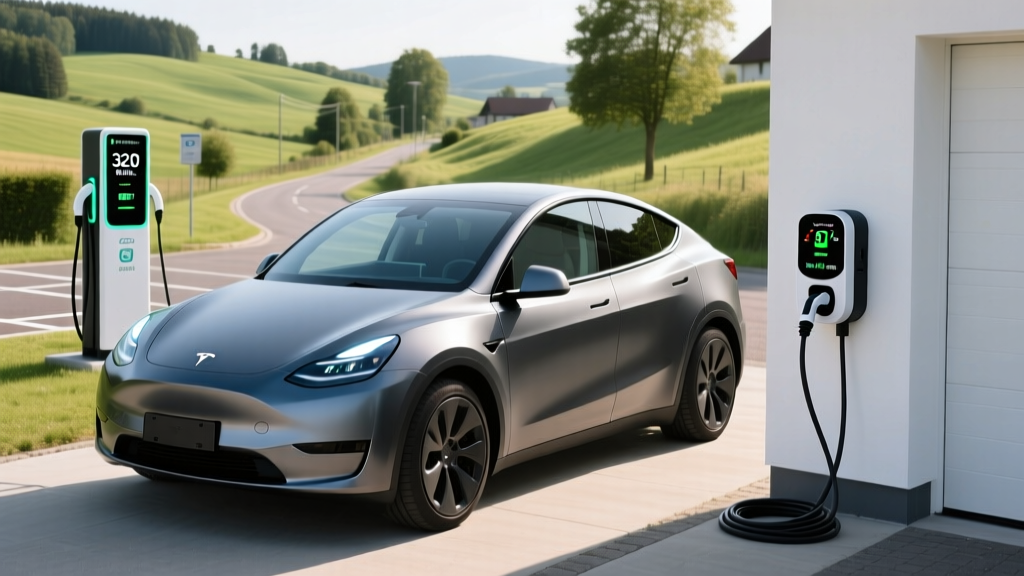
If you own or are shopping for a Tesla Model Y Long Range or Model 3 Long Range, the EPA sticker is only the starting point. The 2026 Model Y Long Range AWD carries an EPA-estimated 320 miles of range, while the refreshed Model 3 Long Range RWD delivers an EPA 363 miles. But your actual Tesla Long Range mileage on any given day depends far more on how you charge, where you charge, and how your battery is managed than on the window sticker alone.
This guide breaks down every charging level, the real cost and electrical work behind a home Level 2 install, connector compatibility as the industry shifts to NACS, and the exact dollars-per-mile math versus gasoline. Whether you're extracting maximum daily range or planning a cross-country road trip, these numbers will shape your ownership experience.
Real-World Tesla Long Range Mileage vs. EPA Estimates
Before plugging in, it's critical to understand what the EPA range number actually means — and what it doesn't.
Real-world expectation: ~270–290 mi at 70 mph highway in mild weather; ~230–260 mi in sub-30°F cold; ~300+ mi in city/regen-heavy driving at moderate temps.
2026 Tesla Model 3 Long Range RWD: EPA 363 mi | 79 kWh usable battery (NMC) | 245 Wh/mi combined
Real-world expectation: ~310–335 mi highway in mild weather; ~260–290 mi in cold weather; ~345+ mi city driving.
Highway speed is the single biggest range killer. At 80 mph, aerodynamic drag increases roughly 20% compared to 70 mph, shaving 30–40 miles off a full charge. Cold weather reduces battery chemical efficiency and demands cabin/seat heating, typically costing 15–25% of range. Tesla's heat pump (standard on all current Long Range models) recovers some of this loss compared to resistive heating, but physics still wins in deep winter.
Source: EPA Fuel Economy – 2026 Tesla Model Y
Charging Levels Explained: kW Speeds and Miles Per Hour
Understanding charging requires separating two concepts: kW (kilowatts) measures power — the rate at which energy flows into your battery. kWh (kilowatt-hours) measures energy — the total capacity stored. Think of kW as the width of a hose and kWh as the size of the bucket. A Tesla Long Range battery holds roughly 78–79 kWh of usable energy. How fast you fill it depends on the kW rate.
| Charging Level | Voltage | Max Power (kW) | Miles Added Per Hour | Typical Use Case |
|---|---|---|---|---|
| Level 1 (Standard Outlet) | 120V | 1.0–1.4 kW | 3–5 mi/hr | Emergency top-off, overnight trickle |
| Level 2 (Home/Public AC) | 240V | 7.2–19.2 kW | 25–65 mi/hr | Daily home charging, destination charging |
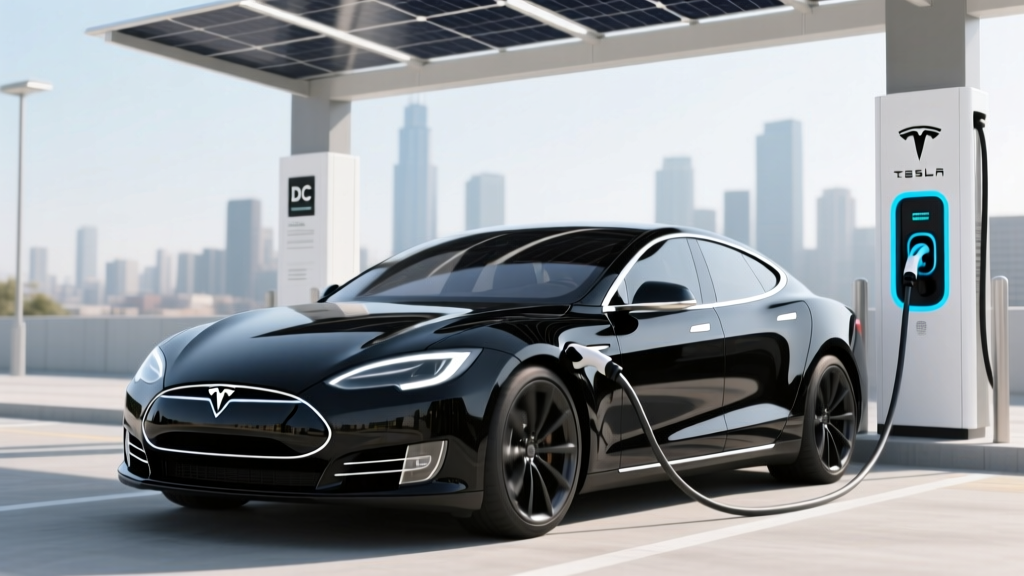
| DC Fast Charging (Supercharger) | 400V+ DC | 150–250 kW | 500–1,000+ mi/hr (peak) | Road trips, rapid top-ups |
For a Tesla Model Y Long Range with a 78 kWh battery, Level 1 charging from empty to full would take 65–78 hours — impractical for daily use. Level 2 at 11.5 kW (48A circuit) adds roughly 40 miles per hour, meaning a full overnight charge is easily achievable. DC fast charging at a V3 Supercharger (250 kW peak) can take you from 10% to 80% in approximately 25–28 minutes, though the charge curve tapers significantly above 80% to protect battery health.
Home Level 2 Installation: Electrical Requirements and Costs
The biggest question new EV owners face: How much does it cost to install a home EV charger? The answer depends heavily on your electrical panel's capacity and the distance from panel to charger location.
Electrical Requirements
A standard home Level 2 setup for Tesla uses a 240V dedicated circuit. The National Electrical Code (NEC) requires circuits to be rated at 125% of the continuous load. This means:
- A 48-amp charger (11.5 kW) requires a 60-amp breaker
- A 40-amp charger (9.6 kW) requires a 50-amp breaker
- A 32-amp charger (7.7 kW) requires a 40-amp breaker
Your home's electrical panel must have sufficient spare capacity. Most modern 200-amp panels can accommodate a 60-amp EV circuit. Older homes with 100-amp service may require a panel upgrade to 200 amps, which is the single largest variable in installation cost.
Installation Cost Breakdown
| Component | Simple Install (panel nearby, no upgrade) | Complex Install (long run, panel upgrade) |
|---|---|---|
| Level 2 Charger Equipment | $350–$600 | $350–$600 |
| Electrician Labor (2–6 hrs) | $400–$800 | $1,200–$2,500 |
| Electrical Permit | $50–$150 | $50–$200 |
| Panel Upgrade (if needed) | $0 | $1,500–$3,500 |
| Conduit/Wiring Materials | $100–$300 | $400–$1,200 |
| Total Estimated Cost | $900–$1,850 | $3,500–$8,000 |
A licensed electrician should perform a load calculation per NEC Article 220 before any installation. Some utilities offer rebates of $250–$1,000 for Level 2 installations, and the federal Residential Clean Energy Credit may cover up to 30% of charger equipment and installation costs (capped at $1,000) through 2032 — consult a tax professional for eligibility.
Which Connector and Charger Is Compatible With My EV?
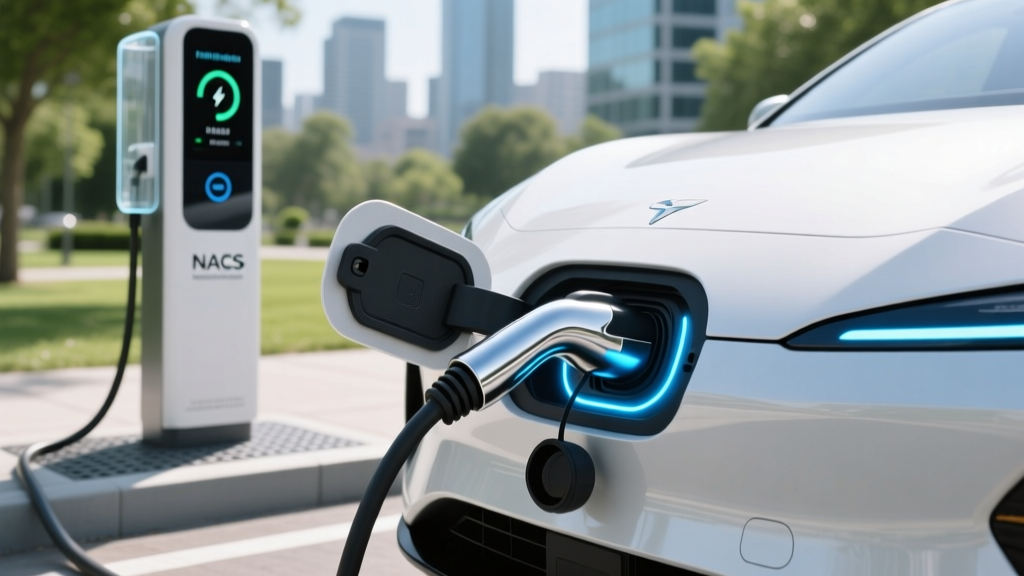
Tesla vehicles use the North American Charging Standard (NACS) connector, which Tesla designed and opened to other manufacturers starting in 2024. As of 2026, NACS is the dominant connector in the US market, adopted by Ford, GM, Rivian, Hyundai, and most major automakers.
| Connector Type | Compatible Vehicles (2026) | Tesla Adapter Needed? |
|---|---|---|
| NACS (Tesla native) | Tesla (all models), Ford, GM, Rivian, Hyundai, Kia, Volvo, and others | No — native plug on all Teslas |
| CCS1 (Combo) | Legacy non-Tesla EVs (older Bolt, Mach-E pre-2025, Ioniq 5 pre-adapter) | Yes — Tesla CCS adapter (~$175) needed for CCS public chargers |
| CHAdeMO | Nissan Leaf (legacy), Mitsubishi Outlander PHEV | No Tesla adapter available; network phasing out |
If you own a Tesla, you can charge natively at any Supercharger and at most new public DC fast chargers equipped with NACS cables. For older CCS-only public stations, Tesla sells a CCS1-to-NACS adapter. For home Level 2 charging, any J1772 charger works with Tesla's included J1772-to-NACS adapter, or you can buy a native NACS wall connector.
Recommended Home Chargers for Tesla Long Range Models
Not all Level 2 chargers deliver the same experience. Here are three proven options matched to different installation scenarios:
Tesla Wall Connector (Gen 4)
- Power Output: Up to 11.5 kW (48A on 60A circuit)
- Connector: Native NACS — no adapter needed
- Cable Length: 24 feet
- Smart Features: Wi-Fi, OTA updates, power sharing between two units, load management
- Price: ~$475
- Best For: Tesla-only households wanting maximum charge speed
ChargePoint Home Flex (NACS)
- Power Output: Up to 12 kW (50A, configurable down to 16A)
- Connector: NACS version available (2025+)
- Cable Length: 23 feet
- Smart Features: App scheduling, Alexa/Google integration, utility demand-response programs
- Price: ~$550
- Best For: Multi-EV households or utility time-of-use optimization
Emporia Vue Smart Charger
- Power Output: Up to 11.5 kW (48A on 60A circuit)
- Connector: J1772 (use Tesla adapter) or NACS
- Cable Length: 24 feet
- Smart Features: Solar integration, real-time energy monitoring, scheduled charging
- Price: ~$400
- Best For: Budget-conscious installs, solar homes
All three support NEMA 14-50 plug-in installation (if you want portability) or hardwired connection (preferred for maximum amperage and code compliance in many jurisdictions). Hardwired units avoid the NEC requirement for a GFCI breaker on receptacle outlets, saving $50–$150 on the breaker itself.
Charging Cost Per Mile: EV vs. Gasoline
The financial case for electric driving hinges on the cost-per-mile gap between electricity and gasoline. Here's how Tesla Long Range charging costs compare across scenarios:
| Charging Scenario | Typical $/kWh | Cost to Add 200 Miles* | Cost Per Mile |
|---|---|---|---|
| Home Off-Peak (utility TOU rate) | $0.08–$0.12 | $4.00–$6.00 | $0.02–$0.03 |
| Home Standard Rate | $0.13–$0.18 | $6.50–$9.00 | $0.033–$0.045 |
| Public Level 2 (ChargePoint, etc.) | $0.25–$0.40 | $12.50–$20.00 | $0.063–$0.10 |
| DC Fast (Supercharger V3/V4) | $0.28–$0.48 | $14.00–$24.00 | $0.07–$0.12 |
| Gasoline (30 MPG @ $3.50/gal) | — | $23.33 | $0.117 |
*Based on Tesla Model Y Long Range efficiency of ~275 Wh/mi (0.275 kWh/mi). Actual costs vary by local utility rates and Supercharger pricing.
Home charging at off-peak rates delivers the strongest economics — roughly 75–80% cheaper per mile than gasoline. Even at peak Supercharger rates, a Tesla Long Range is typically cheaper to "fuel" than a comparable 30-MPG gasoline SUV. Over 15,000 annual miles, a home-charging Tesla owner might spend $450–$675 per year on electricity versus $1,750+ on gasoline.
Charging Times: How Long to Charge Common Tesla Batteries
Here are approximate charge times for the 78–79 kWh battery in Tesla Long Range models at each level:
- Level 1 (120V, 1.2 kW): 10% to 80% in approximately 45–50 hours. Practical only for emergencies or maintaining charge during storage.
- Level 2 (240V, 48A/11.5 kW): 10% to 80% in approximately 5–5.5 hours. A depleted battery fully recharges overnight.
- Level 2 (240V, 32A/7.7 kW): 10% to 80% in approximately 7.5–8 hours. Sufficient for most daily driving patterns.
- DC Fast – V3 Supercharger (250 kW peak): 10% to 80% in approximately 25–28 minutes. Peak rate sustains to ~50% SoC, then tapers to ~100 kW, then ~50 kW above 70%.
- DC Fast – V4 Supercharger (up to 350 kW for newer architectures): Current Model Y/3 Long Range vehicles are limited to ~250 kW intake; V4 benefits apply more to Cybertruck and future platforms.
The charge curve matters more than peak kW. A charger that sustains 200 kW from 10–60% will fill your battery faster in practice than one that peaks at 250 kW but drops sharply after 30% SoC. Tesla's battery thermal management system preconditions the battery when you navigate to a Supercharger, optimizing the curve — always navigate to the charger via the car's built-in routing for best results.
Safety, Code, and Installation Best Practices
EV charging involves sustained high-current draw — far more demanding on your wiring than typical household appliances. Key safety and code considerations:
- Dedicated Circuit: Your Level 2 charger must be on its own dedicated circuit — no sharing with other outlets or appliances.
- GFCI Protection: NEC 2023/2026 requires GFCI protection for outdoor receptacles. Hardwired installations may exempt you from this requirement in some jurisdictions, which is why many electricians recommend hardwiring.
- Outdoor Rating: If installing outdoors, ensure the charger carries a NEMA 4 or NEMA 4X rating for weather resistance. All recommended chargers above meet this standard.
- Wire Gauge: A 60-amp circuit requires 6 AWG copper wire (or 4 AWG aluminum). Your electrician will size wire based on run length to minimize voltage drop.
- Permit and Inspection: Most jurisdictions require an electrical permit and post-installation inspection. Never skip this — unpermitted work can void home insurance and create fire risk.
Frequently Asked Questions
How much does it cost to install a home EV charger for my Tesla?
A straightforward installation with an adequate electrical panel typically costs $900–$1,850 including equipment, labor, and permit. If your home needs a panel upgrade from 100A to 200A service, total costs can reach $3,500–$8,000. The federal Alternative Fuel Vehicle Refueling Property Credit may offset up to $1,000 (30% of costs) — check IRS guidelines for eligibility.
How fast will each charging level add range to my Tesla Long Range?
Level 1 adds 3–5 miles per hour. Level 2 at 48 amps adds approximately 40 miles per hour. DC fast charging at a V3 Supercharger adds up to 175 miles in 15 minutes at peak rate, though the speed tapers as the battery fills past 50–60% State of Charge.
Do I need a Tesla Wall Connector, or will any Level 2 charger work?
Any Level 2 charger with a J1772 connector works with the Tesla adapter included with your vehicle. However, a native NACS charger like the Tesla Wall Connector eliminates the adapter, offers faster communication, and supports features like automatic charge-port opening and power sharing. For a Tesla-only household, the Wall Connector is the cleanest solution.
How much does charging a Tesla Long Range cost per mile versus gas?
Home charging at typical utility rates costs $0.02–$0.045 per mile. Public DC fast charging costs $0.07–$0.12 per mile. A comparable 30-MPG gasoline vehicle at $3.50/gallon costs about $0.117 per mile. Home-charged Tesla owners save $1,000–$1,400 annually over gas at 15,000 miles/year.
What electrical upgrades might my home need for a Level 2 charger?
Homes with 200-amp panels and available breaker slots usually need no upgrades beyond the dedicated circuit. Homes with 100-amp service, older wiring, or panels near capacity may need a panel upgrade ($1,500–$3,500), a service upgrade from the utility, or a smart load-management device like the Emporia Vue with automatic panel monitoring to avoid overloading the service. A licensed electrician's load calculation will determine your specific needs.
Should I charge my Tesla Long Range to 100% daily?
Tesla recommends setting the daily charge limit to 80–90% for NMC batteries to maximize long-term battery health. Reserve 100% charges for road trips when you need maximum Tesla Long Range mileage. The vehicle's battery management system includes a buffer (roughly 2–3 kWh below the stated capacity) to protect against deep discharge degradation.