If you're researching Tesla lifetime Supercharging, you've likely encountered a tangle of legacy perks, transfer restrictions, and per-kWh pricing that makes it hard to know what you're actually getting. In 2026, the landscape is clearer but less generous than the early days: free unlimited Supercharging transfers are rare, most new Teslas pay per kWh at the plug, and the math increasingly favors a home Level 2 setup for daily driving. This guide untangles what "lifetime Supercharging" means today, what it costs per mile versus gas, and how to set up a home charger that pays for itself.
What Tesla Lifetime Supercharging Actually Means in 2026
Tesla's "free lifetime Supercharging" was a promotional incentive offered primarily on Model S and Model X vehicles purchased between 2012 and 2017, and briefly revived in limited referral or end-of-quarter promotions through 2019. The perk attaches to the vehicle, not the owner, with a critical caveat: it is generally non-transferable on private resale. If you buy a used Model S with free Supercharging from a private party, you will almost certainly lose the perk. Tesla-certified resale vehicles occasionally retain it, but availability is inconsistent.
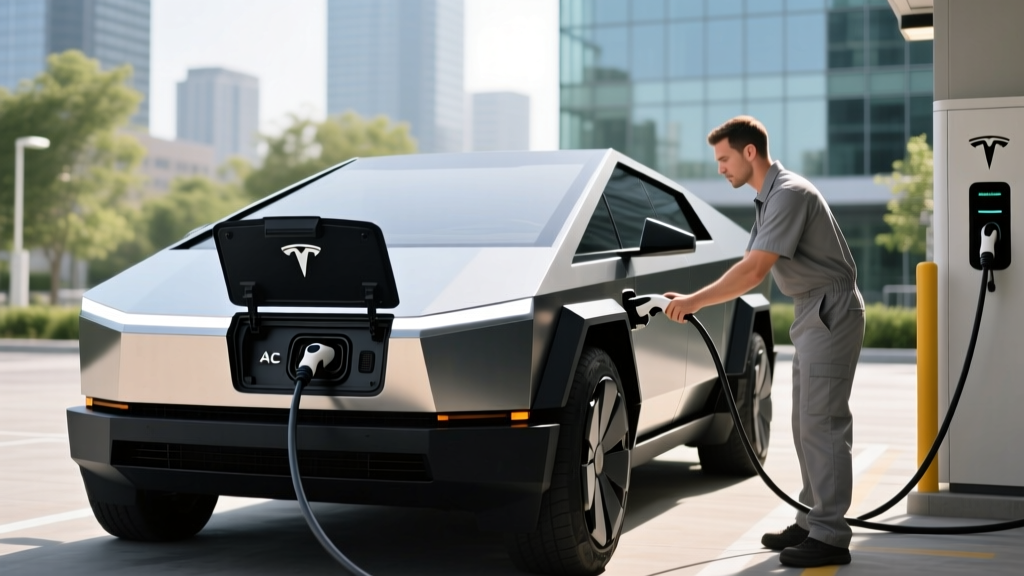
As of 2026, Tesla charges per kWh at Supercharger stations in most U.S. markets, with rates typically ranging from $0.28 to $0.48/kWh depending on location, time of day, and whether you're a Tesla owner or using a non-Tesla EV via the open NACS network. Some urban Superchargers also levy idle fees of $0.50–$1.00/minute once charging completes. For the vast majority of Tesla buyers today, "lifetime Supercharging" is not a financial factor — it's a legacy artifact on a shrinking number of older vehicles.
Charging Levels Explained: Speeds, Power, and Range Added
Before comparing costs, let's establish the three charging tiers every EV owner should understand. Power is measured in kW (kilowatts) — the rate of energy delivery — while battery capacity is measured in kWh (kilowatt-hours), the total energy stored. Confusing the two is the most common EV literacy gap.
| Level | Power (kW) | Voltage / Amps | Miles of Range per Hour | Typical Use |
|---|---|---|---|---|
| Level 1 (120V) | 1.0–1.4 kW | 120V / 12A | 3–5 mi/hr | Overnight trickle; PHEVs |
| Level 2 (240V) | 7.2–19.2 kW | 240V / 30–80A | 22–60 mi/hr | Home daily; workplace |
| DC Fast Charging | 50–350 kW | 400–800V DC | 150–1,000+ mi/hr | Road trips; rapid top-ups |
For context, a Tesla Model Y Long Range (75 kWh usable battery, ~310 miles EPA) charging on a 48A Level 2 circuit at 11.5 kW will add roughly 44 miles of range per hour. A full 10–80% session takes about 5.5 hours. On a V3 Supercharger (peak 250 kW), that same 10–80% session takes approximately 25–28 minutes, though peak rate only sustains up to roughly 40–50% State of Charge before tapering. At a V4 Supercharger (up to 350 kW on capable vehicles), future Model iterations may see 10–80% in under 15 minutes.
How Much Does It Cost to Install a Home EV Charger?
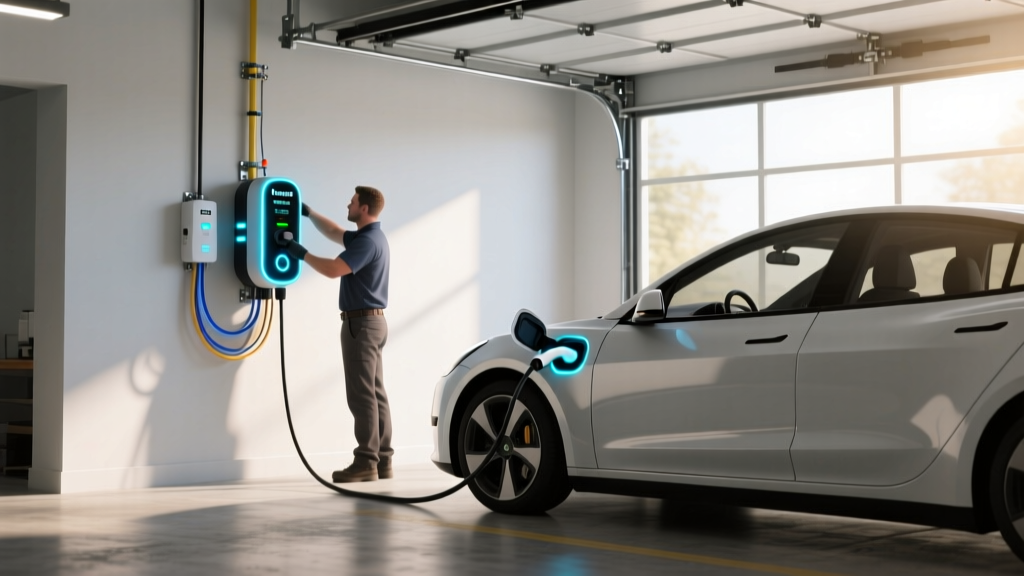
Home charging is where most EV owners do 80–90% of their charging, and the installation cost varies enormously based on your electrical panel's capacity, the distance from panel to charger location, and local permitting. Here's a realistic breakdown for a typical 240V / 48A Level 2 home charger installation in 2026:
| Component | Cost Range | Notes |
|---|---|---|
| Level 2 Charger (Equipment) | $350–$700 | 48A smart charger, NACS connector, 24ft cable |
| Electrician Labor | $500–$2,000 | Depends on run length, conduit, drywall work |
| Permit & Inspection | $50–$250 | Required in most jurisdictions; varies by city/county |
| Electrical Panel Upgrade (if needed) | $1,500–$4,000 | Common in pre-2000 homes with 100A service |
| Total (no panel upgrade) | $900–$2,950 | Most homes with 200A service |
| Total (with panel upgrade) | $2,400–$6,950 | Older homes or high-load panels |
Electrical Requirements You Need to Know
A 48A Level 2 charger requires a 60A dedicated circuit (the National Electrical Code requires circuits be rated at 125% of continuous load, so 48A × 1.25 = 60A). This means 6-gauge copper wire (or 4-gauge aluminum) in conduit, a NEMA 14-60 outlet or hardwired connection, and a GFCI breaker if the charger is installed outdoors per NEC 2020+ requirements. Your electrician will perform a load calculation on your panel to confirm capacity.
Panel upgrade warning: Homes built before 2000 often have 100A or 150A main service panels that are already near capacity with HVAC, electric oven, and dryer loads. Adding a 60A EV circuit may push you over, triggering a panel upgrade to 200A or even 400A. This is the single biggest cost surprise for new EV owners — budget for it if your home is older.
Cost to Charge: Supercharger vs. Home vs. Gas Per Mile
The economics of EV charging depend on your electricity rate, your driving habits, and whether you can charge at home on off-peak utility rates. Let's compare using a Tesla Model Y Long Range (75 kWh battery, ~310 EPA miles, ~260–280 miles real-world highway) as a baseline:
| Scenario | Rate | Cost for Full Charge (75 kWh) | Cost per Mile (est. 270 mi) |
|---|---|---|---|
| Home Off-Peak (utility TOU rate) | $0.09/kWh | $6.75 | $0.025/mi |
| Home Standard Rate | $0.16/kWh | $12.00 | $0.044/mi |
| Tesla Supercharger (avg. U.S.) | $0.35/kWh | $26.25 | $0.097/mi |
| Third-Party DC Fast (EA, EVgo) | $0.43/kWh | $32.25 | $0.119/mi |
| Gasoline (25 MPG avg. ICE) | $3.40/gal | $36.72 (9.7 gal equiv.) | $0.136/mi |
At home off-peak rates, a Tesla Model Y costs roughly 5× less per mile than a comparable gas vehicle. Even at average Supercharger rates, you're still saving ~30% per mile versus gasoline. The takeaway: Tesla lifetime Supercharging perks were valuable when gas was cheap and Supercharging was free; today, home charging is where the real savings live.
Connector Compatibility: NACS, CCS, and What You Need for Your EV
Tesla's North American Charging Standard (NACS) has become the dominant connector in North America as of 2025–2026, with Ford, GM, Rivian, Volvo, Polestar, and others adopting it for new vehicles. Here's how the connector landscape breaks down:
| Connector | Vehicles Using It | Adapter Needed? |
|---|---|---|
| NACS (Tesla) | All Teslas; Ford F-150 Lightning (2025+), GM Ultium (2025+), Rivian (2025+) | None for Teslas; CCS-to-NACS adapter for older non-Tesla |
| CCS1 (Combined Charging System) | Hyundai Ioniq 5/6 (pre-2025), VW ID.4 (pre-2025), BMW iX, older non-Tesla EVs | NACS-to-CCS adapter (~$200) to use Tesla Superchargers |
| CHAdeMO | Nissan Leaf (legacy); largely discontinued for new models | Not compatible with NACS or CCS without specialized adapter |
If you own a Tesla, you're already on NACS — no adapter needed for Superchargers or home charging. If you own a non-Tesla EV with CCS and want access to Tesla's Supercharger network (now open to non-Tesla vehicles at select locations via the Tesla Supercharger network), you'll need the official CCS-to-NACS adapter, typically $199–$249. Verify compatibility on the manufacturer's site before purchasing, as firmware updates may be required.
Recommended Level 2 Home Chargers for 2026
Based on reliability data, connector options, smart features, and real-world owner feedback, here are three Level 2 chargers worth considering for a Tesla or NACS-equipped EV:
| Charger | Max Power | Connector | Cable Length | Smart Features | Price (2026) |
|---|---|---|---|---|---|
| Tesla Wall Connector (Gen 4) | 11.5 kW (48A) | NACS (native) | 24 ft | Wi-Fi, OTA updates, Power Sharing, load management | $475 |
| ChargePoint Home Flex (NACS) | 12 kW (50A adjustable) | NACS (2025+ model) | 23 ft | App scheduling, Alexa, utility TOU integration | $599 |
| Emporia Vue Level 2 | 11.5 kW (48A) | NACS or J1772 | 24 ft | Solar integration, energy monitoring, V2H-ready | $399 |
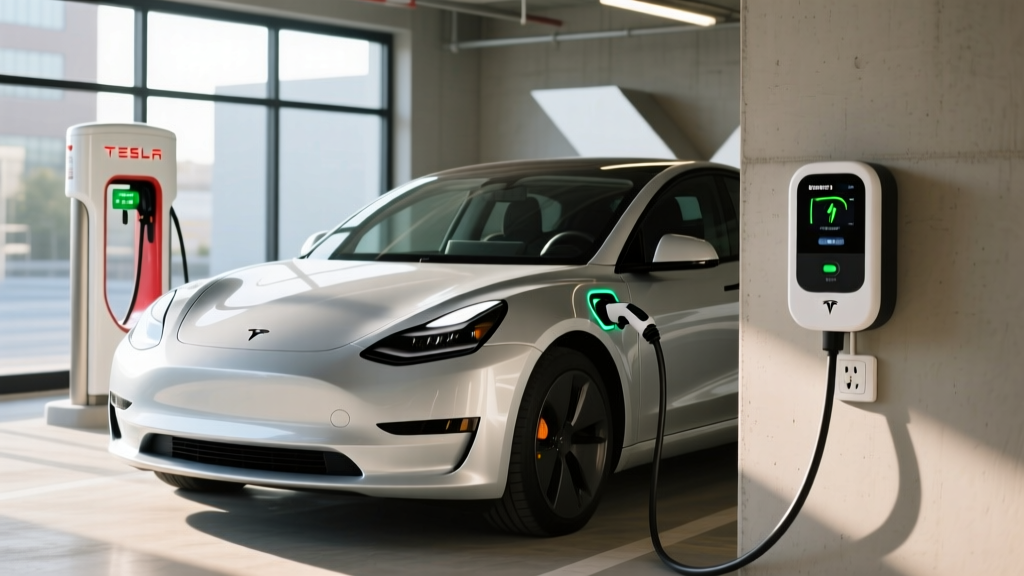
The Tesla Wall Connector Gen 4 remains the default pick for Tesla owners — seamless integration, competitive price, and Power Sharing lets you daisy-chain two units on one 60A circuit if you have two EVs. The ChargePoint Home Flex is the best choice if you want utility demand-response integration or have non-Tesla EVs alongside a Tesla. The Emporia Vue is the budget pick with excellent solar-panel integration for homes with rooftop PV.
Charging Times for Common Tesla Battery Sizes (10–80%)
Charge times depend on battery capacity, charger power output, and the vehicle's charge curve. Tesla batteries accept peak charge rates only up to ~40–50% State of Charge, then taper to protect cell longevity. Here are realistic 10–80% times:
| Vehicle | Battery (usable kWh) | Level 2 (11.5 kW) | V3 Supercharger (250 kW peak) | V4 Supercharger (350 kW peak)* |
|---|---|---|---|---|
| Model 3 RWD (LFP) | 57.5 kWh | ~4.5 hrs | ~30 min | ~22 min* |
| Model Y Long Range | 75 kWh | ~5.5 hrs | ~27 min | ~18 min* |
| Model S Plaid | 95 kWh | ~7 hrs | ~33 min | ~24 min* |
*V4 Supercharger 350 kW times are estimates based on capable 800V architecture vehicles; current 400V Tesla models may not sustain peak V4 rates. Always check fueleconomy.gov for EPA-verified efficiency data.
Safety, Electrical Code, and Installation Best Practices
Level 2 charging involves continuous high-current draw over many hours, making proper installation critical. Key code and safety requirements for 2026:
- Dedicated circuit: Your EV charger must have its own breaker — never share a circuit with a dryer, oven, or HVAC unit.
- GFCI protection: NEC 2020 and later require Ground Fault Circuit Interrupter protection for all outdoor EV outlets. Hardwired installations may be exempt in some jurisdictions — confirm with your local inspector.
- Outdoor rating: If your charger is installed outdoors (garage exterior, carport, driveway), ensure it carries a NEMA 4 or IP65 weather rating.
- Cable management: Use a holster or cable organizer to prevent tripping hazards and protect the connector from ground moisture and road salt.
- Permit and inspection: Skipping the permit saves $50–$250 upfront but can void homeowner's insurance coverage for electrical fires and complicate future home sales. Always pull the permit.
Frequently Asked Questions
Is Tesla lifetime Supercharging still available on new vehicles?
No. Tesla discontinued free lifetime Supercharging as a standard promotion after 2019. Occasional limited-time referral or end-of-quarter promotions have offered 1–3 years of free Supercharging, but true lifetime perks are only found on legacy 2012–2017 Model S/X vehicles — and they typically do not transfer on private resale.
How much does it cost to install a home EV charger?
A standard 48A Level 2 charger installation costs $900–$2,950 in most homes with adequate 200A panel capacity. Homes needing a panel upgrade to support a 60A dedicated circuit should budget $2,400–$6,950 total, including equipment, electrician labor, conduit, and permits.
How fast will each charging level add range?
Level 1 (120V) adds 3–5 miles per hour. Level 2 (240V, 48A) adds roughly 35–44 miles per hour depending on vehicle efficiency. DC Fast Charging at 250 kW can add 150–200+ miles in 15 minutes during peak charge-curve acceptance, tapering significantly above 80% SoC.
Which connector and charger is compatible with my Tesla?
All Tesla vehicles use the NACS connector natively. For home charging, the Tesla Wall Connector (Gen 4) is the most seamless option at $475 with an 11.5 kW output. Any J1772 Level 2 charger will also work with the included J1772-to-NACS adapter that ships with every Tesla.
How much does charging cost per mile vs. gas?
Home off-peak charging averages $0.025/mile for a Model Y; Supercharging averages ~$0.097/mile. A comparable 25 MPG gas vehicle at $3.40/gallon costs $0.136/mile. Home charging is roughly 5× cheaper per mile than gasoline. Source: fueleconomy.gov efficiency data.
What electrical upgrades might I need for a home charger?
If your home has a 100A or 150A main panel (common in pre-2000 construction), adding a 60A EV circuit will likely require a panel upgrade to 200A or higher — a $1,500–$4,000 job. Homes with modern 200A panels typically have sufficient headroom. Your electrician will perform an NEC Article 220 load calculation to confirm.