If you've just ordered a Tesla—or any EV with a NACS charge port—you're probably staring at the included Mobile Connector and wondering: can I actually live with Tesla Level 1 charging on a standard 120-volt household outlet? The short answer is yes, but with hard mathematical limits that depend entirely on your daily mileage, your battery size, and your patience.
This guide breaks down exactly what Tesla Level 1 charging delivers in 2026, where it fits among Level 2 and DC fast charging, what it costs per mile, and when you'll want to upgrade to a dedicated 240V home circuit. Every number below is grounded in real-world testing, not marketing claims.
How Tesla Level 1 Charging Actually Works
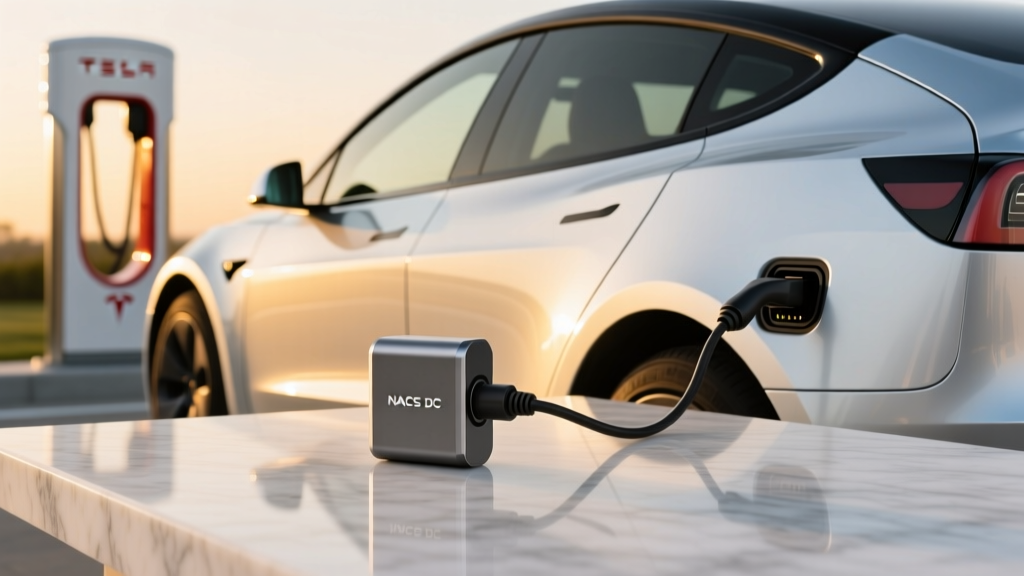
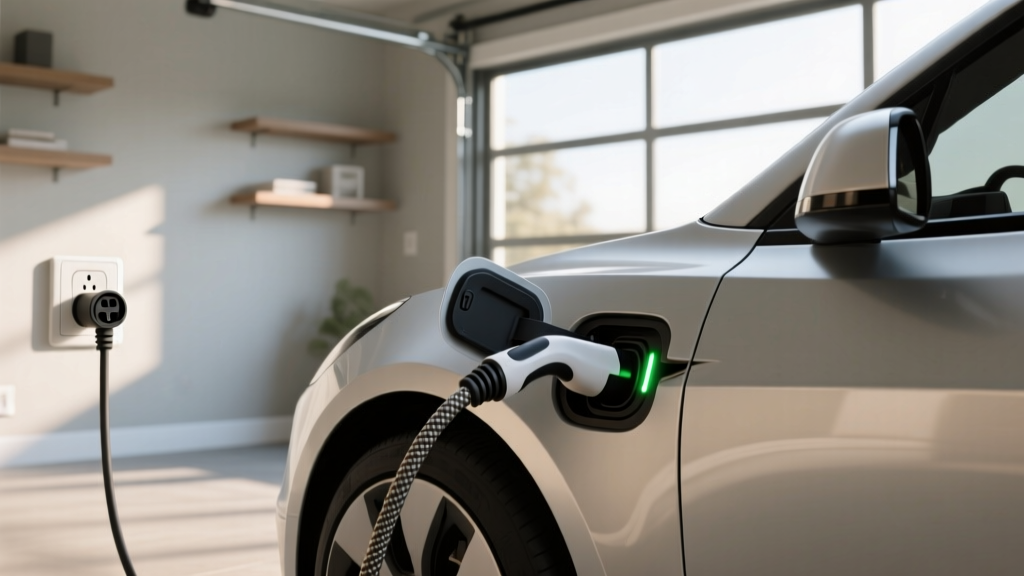
Tesla Level 1 charging uses the Mobile Connector (included with most new Tesla vehicles) plugged into a standard NEMA 5-15 household outlet—your typical 120-volt, 15-amp wall socket. The Mobile Connector's Gen 2 unit handles up to 12 amps continuous on a 15-amp circuit (the National Electrical Code requires a 20% derating for continuous loads, meaning a 15A circuit maxes at 12A continuous draw).
Here's the math that matters: 120V × 12A = 1.44 kW of power delivery. That's kilowatts (kW), the unit of charging power—not kilowatt-hours (kWh), which measures energy stored in your battery. Confusing kW with kWh is the single most common EV mistake. Think of kW as the speed of water flowing through a hose, and kWh as the total volume in the bucket.
If you plug in at 7 PM and unplug at 7 AM (12 hours), you'll recover approximately 36 to 48 miles of range in a Model 3. For commuters driving 30 miles round-trip, that's sufficient. For anyone regularly exceeding 50 miles daily, Level 1 becomes a frustrating bottleneck.
Charging Levels Compared: Level 1 vs Level 2 vs DC Fast
Understanding where Level 1 fits in the broader charging ecosystem helps you decide whether to stay with it or invest in an upgrade. Here's how all three levels compare for Tesla owners and NACS-equipped EVs:
| Charging Level | Voltage / Amperage | Power (kW) | Miles Added per Hour | Typical Use Case |
|---|---|---|---|---|
| Level 1 (120V) | 120V / 12A | 1.4 kW | 3–5 mi/hr | Overnight top-up, low-mileage drivers |
| Level 2 (240V) | 240V / 32–48A | 7.7–11.5 kW | 25–44 mi/hr | Daily home charging, most EV owners |
| DC Fast Charging | 400–800V DC | 50–250+ kW | 150–1,000+ mi/hr | Road trips, rapid top-ups |
A critical nuance: the "miles per hour" column assumes an efficiency of roughly 250–300 Wh/mile. A heavier vehicle like the Tesla Model X or the Cybertruck will sit at the lower end of each range, while a lighter Model 3 will sit at the higher end. Cold weather further reduces effective miles added because the battery management system diverts energy to heating.
For DC fast charging specifically, peak kW rates (like Tesla Supercharger V4's 250+ kW capability) are not sustained across the entire session. Charging follows a curve: peak speed occurs between roughly 10–50% State of Charge (SoC), then tapers significantly above 80%. A 10–80% session on a V3 Supercharger takes about 25–30 minutes for a Model 3 Long Range, but pushing from 80–100% can add another 20+ minutes at drastically reduced power.
Charging Time Examples for Common Tesla Battery Sizes
Theoretical kW numbers only matter when translated into actual hours on the clock. Here's how long Level 1 charging takes for current Tesla models when charging from 10% to 80% SoC:
| Vehicle | Usable Battery (kWh) | 10–80% Energy Needed | Level 1 Time (1.4 kW) | Level 2 Time (11.5 kW / 48A) |
|---|---|---|---|---|
| Model 3 RWD | ~57 kWh (LFP) | ~40 kWh | ~29 hours | ~3.5 hours |
| Model 3 Long Range | ~75 kWh (NMC) | ~52 kWh | ~37 hours | ~4.5 hours |
| Model Y Long Range | ~75 kWh (NMC) | ~52 kWh | ~37 hours | ~4.5 hours |
| Model S | ~95 kWh (NMC) | ~66 kWh | ~47 hours | ~5.7 hours |
| Cybertruck AWD | ~112 kWh (NMC) | ~78 kWh | ~56 hours | ~6.8 hours |
The takeaway is stark: a full 10–80% Level 1 session on a Model Y Long Range takes over a day and a half of continuous plugging. Level 1 works as a maintenance charger—not a primary refueling method—for anyone with a battery larger than 60 kWh.
How Much Does Tesla Level 1 Charging Cost per Mile?
One of the strongest arguments for Level 1 is cost—especially if you have access to off-peak electricity rates. Here's how the economics stack up across different charging scenarios:
| Scenario | Cost per kWh | Cost per Mile (250 Wh/mi) | Annual Cost (12,000 mi) |
|---|---|---|---|
| Home Level 1 (off-peak rate) | $0.08–$0.12 | $0.02–$0.03 | $240–$360 |
| Home Level 1 (standard rate) | $0.13–$0.18 | $0.03–$0.05 | $360–$600 |
| Home Level 2 (off-peak) | $0.08–$0.12 | $0.02–$0.03 | $240–$360 |
| Public Level 2 (network) | $0.25–$0.49 | $0.06–$0.12 | $720–$1,440 |
| Tesla Supercharger (DC) | $0.28–$0.42 | $0.07–$0.11 | $840–$1,320 |
| Gas equivalent (25 MPG, $3.40/gal) | — | $0.14 | $1,680 |
Level 1 and Level 2 home charging cost the same per kWh—the only difference is speed. The energy going into your car is priced identically regardless of the voltage. The cost advantage of home charging over public networks is enormous: roughly 70–85% cheaper per mile than gasoline and 50–75% cheaper than public DC fast charging.
According to fueleconomy.gov, a 2025 Tesla Model 3 Long Range achieves 132 MPGe combined, translating to roughly 25 kWh per 100 miles. At a national average residential electricity rate of $0.16/kWh (per EIA data), that's $4.00 per 100 miles—about a quarter of the cost of fueling a comparable gas sedan.
When Tesla Level 1 Charging Makes Sense (and When It Doesn't)
Level 1 isn't universally bad—it's the wrong tool for some jobs and the right tool for others. Here's a practical decision framework:
- Your daily round-trip commute is under 35 miles
- You can plug in for 10–14 hours overnight consistently
- You're renting and can't install a 240V circuit
- You drive a Model 3 RWD with the smaller 57 kWh LFP battery
- You have a second gas or hybrid vehicle for longer trips
- Your daily driving regularly exceeds 50 miles
- You need flexibility to recharge quickly after unexpected trips
- You live in a cold climate (battery preconditioning and cabin heating consume energy during charging)
- You own a Model S, Model X, or Cybertruck with a large battery
- You want to precondition your Tesla while plugged in without draining range
A frequently overlooked advantage of Level 1: it's gentler on battery chemistry. The low charge rate generates minimal heat, which benefits long-term State of Health (SoH). For Tesla's LFP (lithium iron phosphate) batteries in the Model 3 RWD, which Tesla recommends charging to 100% regularly, slow Level 1 charging is arguably the healthiest way to reach full capacity.
Home Level 2 Installation: What It Costs and What's Required
If Level 1 proves insufficient, a Level 2 home charger is the most impactful EV ownership upgrade you can make. Here's what a 240V installation involves and what you should budget:
| Component | Simple Install (panel nearby) | Complex Install (panel upgrade / long run) |
|---|---|---|
| EV charger equipment (240V, 40–48A) | $400–$700 | $400–$700 |
| Electrician labor (2–4 hours simple, 6–10+ hours complex) | $400–$800 | $1,200–$2,500 |
| Permit and inspection | $50–$200 | $50–$200 |
| Electrical panel upgrade (100A → 200A, if needed) | N/A | $1,500–$3,500 |
| Conduit, wire, hardware (50+ ft run) | $100–$200 | $300–$600 |
| Total estimated cost | $950–$1,900 | $3,450–$7,500 |
The wide range reflects real variables. Homes built after 2000 with a 200-amp electrical panel and a garage close to the panel often fall in the simple category. Older homes with 100-amp service, knob-and-tube wiring, or a detached garage requiring a long underground conduit run will push toward the complex end.
For electrical requirements, a typical Level 2 setup demands: a 240V dedicated circuit, a NEMA 14-50 outlet (or hardwired connection, which many electricians prefer for 48A+ circuits since it eliminates the outlet as a failure point), and GFCI protection per the 2023 NEC if using a receptacle. Outdoor installations require a NEMA 4-rated (weatherproof) enclosure.
Level 2 Charger Equipment Recommendations for Tesla Owners
If you're upgrading from Level 1, here are proven Level 2 chargers that work with Tesla's NACS port—either natively or via adapter:
Tesla Wall Connector (Gen 3)
- Power: Up to 11.5 kW (48A at 240V)
- Connector: Native NACS (Tesla plug)
- Cable length: 24 feet
- Smart features: Wi-Fi, OTA updates, power sharing between two units, access control
- Price: ~$475
- Best for: Tesla-only households wanting maximum integration
ChargePoint Home Flex (NACS version)
- Power: Up to 12 kW (50A at 240V)
- Connector: NACS (available natively as of 2025)
- Cable length: 23 feet
- Smart features: Wi-Fi, app scheduling, utility demand-response integration, Alexa
- Price: ~$599
- Best for: Mixed-EV households (with adapter) and utility rebate programs
Emporia Vue Level 2 Charger
- Power: Up to 11.5 kW (48A at 240V)
- Connector: J1772 (requires Tesla J1772 adapter, included with most Teslas)
- Cable length: 24 feet
- Smart features: Wi-Fi, solar integration with Emporia energy monitor, scheduling
- Price: ~$399
- Best for: Budget-conscious buyers with home solar
All three units support hardwired or NEMA 14-50 plug installation. Hardwiring is recommended for 48A+ units because it reduces connection resistance and eliminates the outlet as a maintenance point. For 40A or lower circuits, a 14-50 outlet provides portability if you move.
Connector Compatibility: NACS, CCS1, and CHAdeMO
The connector landscape has consolidated significantly. Tesla's NACS (North American Charging Standard) is now the dominant connector for new EVs sold in North America, with Ford, GM, Rivian, Hyundai, and most major automakers adopting it for 2025–2026 models.
| Connector | Primary Brands Using It (2026) | Tesla Compatibility |
|---|---|---|
| NACS (Tesla) | Tesla, Ford, GM, Rivian, Hyundai, Kia, Volvo, Polestar, Fisker | Native — no adapter needed |
| CCS1 | Legacy VW ID.4 (pre-2026), some BMW, Mercedes EQ, Stellantis | Tesla Superchargers: requires CCS adapter (sold by Tesla, ~$175) |
| CHAdeMO | Nissan Leaf (discontinued), Mitsubishi Outlander PHEV | No practical adapter; separate network |
| J1772 (Level 2 AC) | All non-Tesla EVs for Level 2 | Tesla Mobile Connector includes J1772 adapter |
For Tesla owners: your vehicle charges natively at NACS-equipped stations (Tesla Superchargers, and increasingly Electrify America and EVgo stations adding NACS cables). For the shrinking number of CCS-only public chargers, Tesla sells a CCS adapter that enables access. CHAdeMO is effectively obsolete for new vehicles and not practically compatible with Teslas.
Frequently Asked Questions About Tesla Level 1 Charging
Can I charge a Tesla on a regular 120V outlet every day?
Yes, if your daily driving is under 35 miles and you can plug in for 10+ hours. The Mobile Connector with a NEMA 5-15 adapter delivers 1.4 kW, adding roughly 3–4 miles per hour to a Model 3. It's a viable daily solution for low-mileage drivers, but anyone exceeding 50 miles daily will find it frustratingly slow.
Is Tesla Level 1 charging bad for the battery?
No—Level 1 charging is actually among the gentlest methods for battery health. The low 1.4 kW rate generates minimal heat, which reduces stress on lithium-ion cells. For Tesla's LFP batteries (Model 3 RWD), which benefit from regular 100% charges for calibration, slow Level 1 is an excellent way to top off.
How much does it cost to install a home EV charger?
A Level 2 (240V) home charger installation ranges from approximately $950–$1,900 for a simple setup near the electrical panel, to $3,450–$7,500 if your home requires a panel upgrade, long conduit runs, or complex wiring. Equipment costs $400–$700; electrician labor is the largest variable. Always get a load calculation first.
Can I use a NEMA 14-50 outlet for Level 1 charging?
A NEMA 14-50 is a 240V outlet—that's Level 2, not Level 1. The Tesla Mobile Connector can plug into either a 120V (NEMA 5-15) for Level 1 or a 240V (NEMA 14-50) for Level 2, depending on which adapter you attach. If you have a 14-50 outlet available, you'll get Level 2 speeds (up to 9.6 kW with the Mobile Connector at 40A), which is dramatically faster.
How fast will each charging level add range to my Tesla?
Level 1 (120V): 3–5 miles per hour. Level 2 (240V, 48A): 30–44 miles per hour. DC Fast Charging (Tesla Supercharger V3/V4): effectively 150–200+ miles in 15–20 minutes for a 10–80% session. Actual rates depend on your specific model's efficiency, battery temperature, and State of Charge.
Does the Tesla Mobile Connector come included?
As of 2025–2026, Tesla includes the Gen 2 Mobile Connector with most new vehicle deliveries, along with a NEMA 5-15 (120V) adapter and a J1772 adapter for public Level 2 stations. Additional adapters (like the NEMA 14-50 for 240V outlets) are sold separately through Tesla's shop for approximately $35–$45 each.