Understanding Tesla Home Charging Levels and Speeds
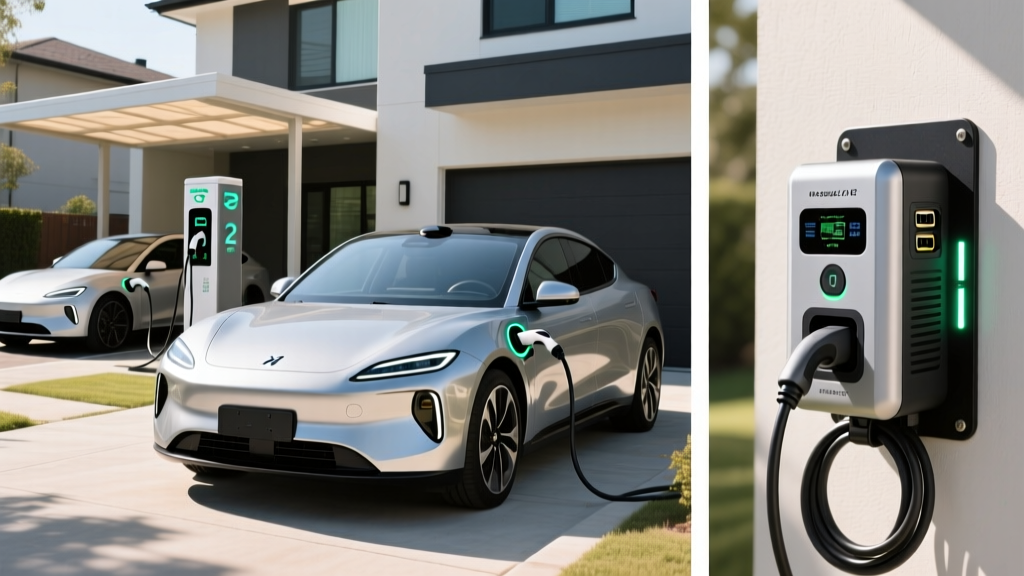
Before diving into Tesla home charging station installation cost, it's essential to understand the three charging levels and how they translate to real-world range recovery. This distinction between power (kW) and energy (kWh) is fundamental: kW measures the rate of charging (like water pressure), while kWh measures the total energy delivered (like gallons filled).
| Charging Level | Voltage/Amps | Power (kW) | Miles Added Per Hour | Typical Use Case |
|---|---|---|---|---|
| Level 1 | 120V / 12A | 1.4 kW | 3-5 miles | Overnight trickle, PHEVs |
| Level 2 | 240V / 32-80A | 7.7-19.2 kW | 23-58 miles | Home charging, daily use |
| DC Fast Charging | 400-800V DC | 50-350 kW | 150-300+ miles | Road trips, Superchargers |
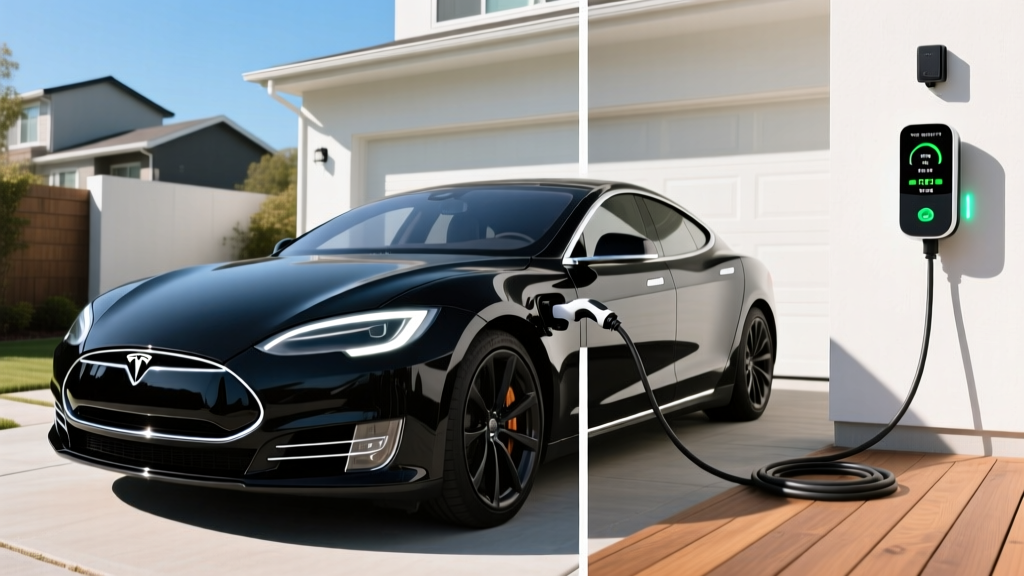
For Tesla owners, Level 2 home charging delivers the sweet spot: fast enough to replenish a full battery overnight, but not requiring the infrastructure investment of DC fast charging. A Tesla Model Y with a 75 kWh battery (2026 models) charging at 11.5 kW (48A on a 60A circuit) adds roughly 30-35 miles of range per hour, achieving a 10-80% charge in approximately 5-6 hours.
Tesla Home Charging Station Installation Cost Breakdown
The total Tesla home charging station installation cost varies dramatically based on your electrical panel's capacity, distance from panel to installation location, and local permit requirements. Here's what you're actually paying for:
| Component | Cost Range | Notes |
|---|---|---|
| Tesla Wall Connector (hardware) | $400-$475 | Gen 3, 48A max, 24' cable |
| Electrician labor (standard install) | $500-$1,500 | Panel to garage, same wall or short run |
| Electrician labor (complex install) | $1,500-$3,000+ | Long conduit runs, trenching, attic work |
| Electrical permit | $50-$300 | Varies by jurisdiction |
| Panel upgrade (if needed) | $1,500-$4,000 | 100A to 200A service upgrade |
| Total (no panel upgrade) | $950-$2,275 | Most common scenario |
| Total (with panel upgrade) | $2,450-$6,275+ | Older homes, high-load panels |
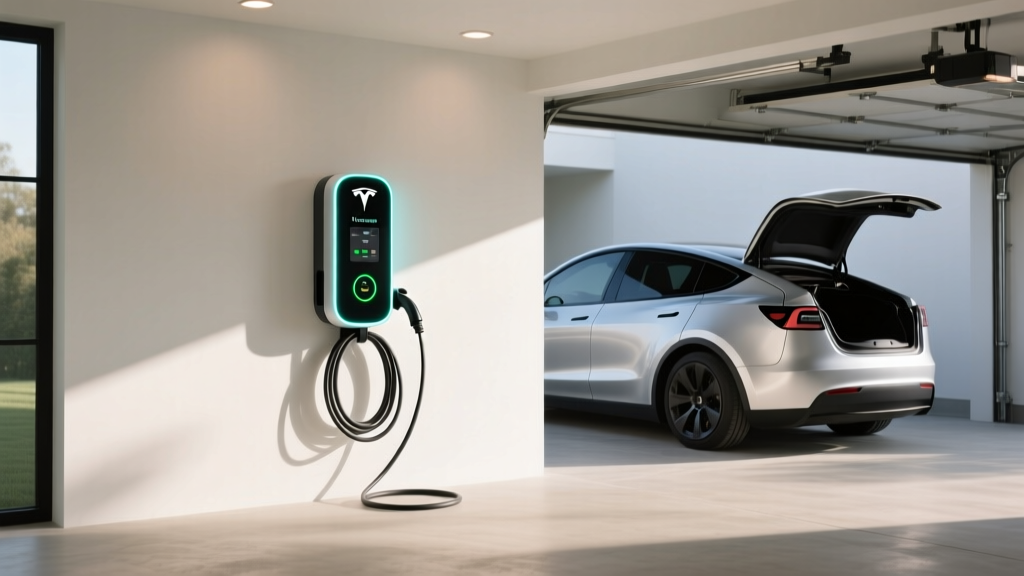
The Tesla Wall Connector itself is competitively priced at $475 (2026 pricing) for the Generation 3 unit with a 24-foot cable. This includes Wi-Fi connectivity for software updates, load-sharing capability for multi-charger setups, and a NACS (North American Charging Standard) connector native to all 2025+ Tesla vehicles.
Electrical Requirements: What Your Home Needs
The Tesla Wall Connector requires a dedicated 240V circuit, typically 60 amps to deliver the full 48A continuous charging rate (electrical code requires circuits rated 125% above continuous load). This translates to 11.5 kW of charging power.
Panel capacity check: Your electrical panel must have sufficient spare capacity. A 200-amp panel serving a modern home with electric HVAC, water heater, and dryer may have only 40-60 amps of headroom. Adding a 60A EV circuit could exceed safe capacity, requiring either a panel upgrade or a smart load-management system like the Tesla Powerwall integration or third-party solutions that throttle charging when household demand spikes.
Distance matters: Installation cost scales with the distance from your electrical panel to the charging location. A panel in the garage next to your parking spot might cost $500-$800 in labor. A panel in the basement requiring 80 feet of conduit through finished walls or underground trenching can push labor costs to $2,500-$3,500.
Connector Compatibility: NACS, CCS, and Adapters
Tesla's NACS connector is now the de facto North American standard, with Ford, GM, Rivian, Volvo, and most major automakers adopting it for 2025+ models. However, if you're installing a Tesla Wall Connector and own or plan to own non-Tesla EVs, connector compatibility matters.
| Connector Type | Compatible Vehicles | Adapter Needed? |
|---|---|---|
| NACS (Tesla) | All Tesla models (2012+), Ford F-150 Lightning (2025+), GM Ultium vehicles (2025+), Rivian (2025+) | No (native for Tesla); yes for pre-2025 non-Tesla EVs |
| CCS1 | Most non-Tesla EVs (2019-2024), Hyundai Ioniq 5, Kia EV6, VW ID.4, BMW i4 | Tesla CCS Adapter ($250) or third-party NACS-to-CCS ($150-$200) |
| CHAdeMO | Nissan Leaf (legacy), Mitsubishi Outlander PHEV | No direct NACS adapter; use CHAdeMO station or replace vehicle |
The Tesla Wall Connector ships with a NACS plug. For households with both a Tesla and a pre-2025 CCS-equipped EV (like a 2023 Hyundai Ioniq 5), you'll need a NACS-to-CCS adapter. Tesla sells an official CCS adapter for $250 that enables Supercharger access for CCS vehicles; for home charging, third-party adapters from brands like Lectron or A2Z work but verify UL certification before purchasing.
Charging Time Examples: How Long to Charge Common Battery Sizes
Charging time depends on battery capacity, charging power, and the 10-80% window most owners use for daily charging (Tesla recommends charging to 80% for daily use to preserve battery longevity, reserving 100% for road trips).
| Vehicle | Battery Size (kWh) | Charger Power (kW) | 10-80% Time | Full 0-100% Time |
|---|---|---|---|---|
| Tesla Model 3 RWD (2026) | 60 kWh (LFP) | 11.5 kW | ~3.5 hours | ~5.2 hours |
| Tesla Model Y Long Range (2026) | 75 kWh (NMC) | 11.5 kW | ~4.5 hours | ~6.5 hours |
| Tesla Model S Plaid (2026) | 100 kWh (NMC) | 11.5 kW | ~6 hours | ~8.7 hours |
| Ford F-150 Lightning Extended (2026) | 131 kWh (NMC) | 11.5 kW | ~8 hours | ~11.4 hours |
These times assume you're charging at the full 48A (11.5 kW). If your electrical panel can only support a 40A circuit (9.6 kW), add roughly 20% to these times. For most owners parking overnight for 8-12 hours, even a 40A circuit provides ample time to fully recharge.
Cost to Charge: Home vs. Public vs. Gas
The economics of home charging versus public DC fast charging versus gasoline vary significantly by location and utility rates. Here's the real cost per mile for a 2026 Tesla Model Y Long Range (averaging 3.5 miles per kWh based on EPA data):
| Charging Scenario | Cost per kWh | Cost per Mile | Annual Cost (12,000 mi) |
|---|---|---|---|
| Home (off-peak utility rate) | $0.12-$0.18 | $0.034-$0.051 | $408-$612 |
| Home (peak utility rate) | $0.25-$0.35 | $0.071-$0.100 | $852-$1,200 |
| Public Level 2 (ChargePoint, EVgo) | $0.30-$0.50 | $0.086-$0.143 | $1,032-$1,716 |
| Tesla Supercharger (2026 rates) | $0.30-$0.45 | $0.086-$0.129 | $1,032-$1,548 |
| Gasoline vehicle (30 MPG, $3.50/gal) | N/A | $0.117 | $1,404 |
Home charging during off-peak hours (typically 9 PM to 6 AM, depending on your utility) delivers the lowest cost per mile—roughly 70-75% cheaper than gasoline. Even at peak rates, home charging typically beats gas. Public DC fast charging approaches gas costs but offers convenience for road trips.
- Choose home charging if: You have garage/driveway access, can install a Level 2 charger, and your utility offers time-of-use rates with off-peak discounts
- Rely on public charging if: You live in an apartment without charging access, drive less than 8,000 miles annually, or your workplace offers free Level 2 charging
- Consider a PHEV if: You lack reliable home charging but want electric-only commuting (30-40 miles) with gas backup for longer trips
Equipment Recommendations: Tesla Wall Connector vs. Alternatives
The Tesla Wall Connector is the default choice for Tesla owners, but third-party chargers offer competitive features. Here's how the top options compare:
Tesla Wall Connector (Gen 3)
- Power: 48A max (11.5 kW at 240V)
- Connector: NACS native
- Cable length: 24 feet
- Smart features: Wi-Fi updates, load sharing, Tesla app integration
- Price: $475
- Pros: Seamless Tesla integration, sleek design, reliable
- Cons: No display screen, limited to Tesla ecosystem without adapter
ChargePoint Home Flex
- Power: 50A max (12 kW at 240V), adjustable down to 16A
- Connector: NACS or CCS1 (select at purchase)
- Cable length: 23 feet
- Smart features: Wi-Fi, app scheduling, Alexa integration, detailed energy tracking
- Price: $699
- Pros: Flexible amperage for older panels, works with all EVs, excellent app
- Cons: Higher upfront cost, bulkier design
Emporia Vue Smart Home EV Charger
- Power: 48A max (11.5 kW at 240V)
- Connector: NACS or CCS1
- Cable length: 24 feet
- Smart features: Solar integration, energy monitoring, load management
- Price: $599
- Pros: Best-in-class energy monitoring, solar panel integration, competitive price
- Cons: Newer brand, less long-term reliability data
Grizzl-E Smart
- Power: 40A max (9.6 kW at 240V)
- Connector: NACS or CCS1
- Cable length: 24 feet
- Smart features: Wi-Fi, OCPP compatibility, rugged build
- Price: $549
- Pros: Extreme durability (IP67, -40°F to 122°F), Canadian-made, 3-year warranty
- Cons: Lower max amperage, basic app
For pure Tesla households, the Wall Connector's integration and price are hard to beat. For mixed-EV households or homes with solar panels, the ChargePoint Home Flex or Emporia Vue offer compelling advantages.
Safety, Permits, and Code Compliance
EV charger installation isn't a DIY project. Electrical code (NEC Article 625) mandates specific safety requirements:
- Dedicated circuit: Your EV charger must have its own dedicated breaker—no sharing with other appliances
- GFCI protection: Outdoor installations require Ground Fault Circuit Interrupter protection (built into most modern chargers or the breaker itself)
- Outdoor rating: If installing outside, the charger must be rated for outdoor use (NEMA 4 or IP65/IP67). The Tesla Wall Connector is rated for both indoor and outdoor installation
- Permit and inspection: Most jurisdictions require an electrical permit ($50-$300) and post-installation inspection to verify code compliance
- Load calculation: Your electrician must perform a load calculation per NEC Article 220 to ensure your panel can safely handle the added circuit
Skip the permit, and you risk voiding your homeowner's insurance if an electrical fire occurs. Most licensed electricians handle permitting as part of their service—confirm this upfront.
Federal Tax Credit: Can You Reduce Installation Cost?
As of 2026, the Alternative Fuel Vehicle Refueling Property Credit (IRS Form 8911) offers a 30% tax credit on EV charger hardware and installation costs, up to $1,000. However, eligibility is restricted:
- Your home must be in a qualified census tract (low-income or rural area)—check the IRS eligibility tool
- The credit applies to both the charger hardware and installation labor
- You must have sufficient tax liability to claim the credit (it's non-refundable)
- The credit is available for both primary and secondary residences
Many suburban and urban homes don't qualify due to census tract restrictions. Consult a tax professional to verify eligibility before counting on this credit to offset costs.
Frequently Asked Questions
How much does it cost to install a Tesla home charger?
Total Tesla home charging station installation cost ranges from $950 to $2,275 for most homes (no panel upgrade needed), or $2,450 to $6,275+ if your electrical panel requires an upgrade. The Tesla Wall Connector itself costs $475, with electrician labor typically $500-$1,500 for straightforward installations.
Do I need to upgrade my electrical panel for a Tesla charger?
Possibly. A Tesla Wall Connector at 48A requires a 60A dedicated circuit. If your panel is 100A or already near capacity (common in homes with electric heat, water heater, and dryer), you'll need a panel upgrade to 200A service, costing $1,500-$4,000. Your electrician will perform a load calculation to determine this.
How fast will a Tesla Wall Connector charge my car?
The Tesla Wall Connector delivers up to 11.5 kW (48A at 240V), adding approximately 30-35 miles of range per hour to a Model Y. A 10-80% charge takes 4-6 hours depending on battery size. This is 6-8x faster than Level 1 charging from a standard 120V outlet.
Can I use a Tesla Wall Connector with non-Tesla EVs?
Yes, but you'll need an adapter for CCS-equipped vehicles. Tesla sells a CCS adapter for $250. Third-party NACS-to-CCS adapters are available for $150-$200. For 2025+ vehicles from Ford, GM, Rivian, and others adopting NACS, no adapter is needed.
Is it cheaper to charge at home or use Tesla Superchargers?
Home charging during off-peak hours costs $0.03-$0.05 per mile, while Superchargers cost $0.09-$0.13 per mile (2026 rates). Over 12,000 miles annually, home charging saves $700-$1,000 compared to exclusive Supercharger use. Home charging also reduces battery wear from repeated high-power DC fast charging.
How long does Tesla Wall Connector installation take?
The physical installation typically takes 2-4 hours for a straightforward setup (panel in garage, short conduit run). Complex installations requiring long conduit runs, trenching, or panel upgrades can take 6-10 hours or span multiple days. Permit approval and inspection add 1-3 weeks depending on your jurisdiction.
Should I charge my Tesla to 100% every night?
No. Tesla recommends setting your daily charge limit to 80% for NMC batteries (Model Y Long Range, Model S/X) to maximize battery longevity. LFP batteries (Model 3 RWD) can be charged to 100% regularly without degradation concerns. Reserve 100% charging for road trips where you need maximum range.