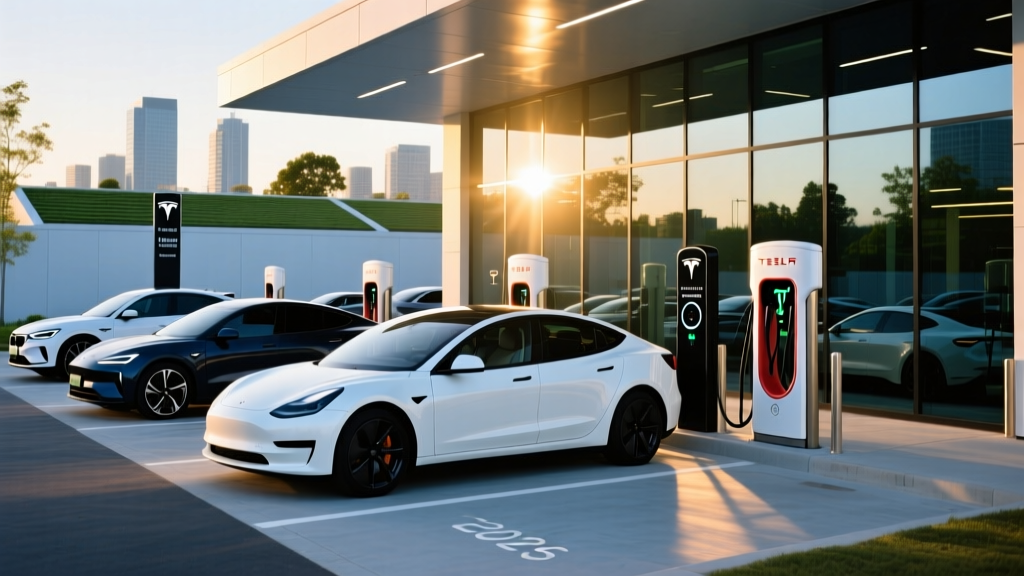
Searches for "how much does a Tesla charging station cost to build" have surged as Tesla's Supercharger network opened to non-Tesla EVs via NACS adoption and as the Wall Connector remains one of the most capable home chargers on the market. But "building" a Tesla charging setup at home means different things depending on whether you're plugging into a standard outlet, hardwiring a Level 2 Wall Connector, or dreaming of a commercial-grade Supercharger-style DC fast charger in your garage (spoiler: that last one isn't realistic for residential use).
This guide breaks down the real costs — equipment, electrical labor, permits, and potential panel upgrades — to install a Tesla home charging station in 2026, plus how those costs compare to public charging and gasoline on a per-mile basis.
Understanding Tesla Charging Levels: Speeds and What They Mean
Before pricing anything out, you need to understand the three charging levels available to Tesla owners (and NACS-equipped EVs from other brands). The critical distinction: kW (kilowatts) measures power — how fast energy flows into your battery. kWh (kilowatt-hours) measures energy — the total capacity of your battery. A 250 kW charger doesn't deliver 250 kWh; it delivers energy at a rate of 250 kW.
| Level | Voltage | Max Power (kW) | Miles of Range Added Per Hour | Typical Use Case |
|---|---|---|---|---|
| Level 1 (120V) | 120V AC | 1.4–1.9 kW | 3–5 miles/hr | Overnight trickle, emergency backup |
| Level 2 (240V) | 240V AC | 7.2–19.2 kW | 20–55+ miles/hr | Home daily charging, workplace |
| DC Fast Charging | 400–800V DC | 50–350+ kW | 150–1,000+ miles/hr (peak) | Road trips, Supercharger/EA/Ionity |
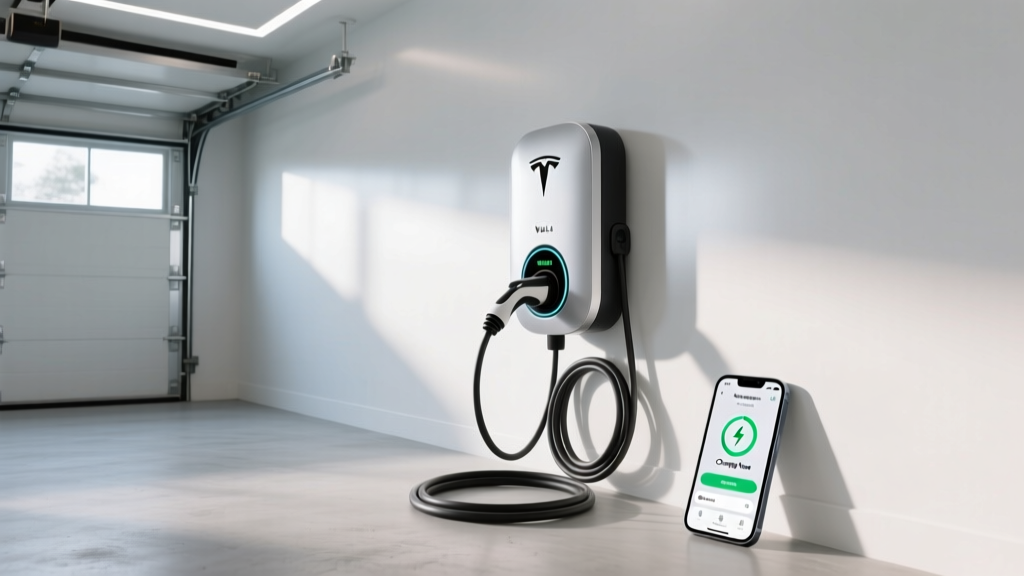
For home "building" of a Tesla charging station, Level 2 is the target. The Tesla Wall Connector (Gen 3) delivers up to 11.5 kW on a 60-amp circuit (48A continuous), adding roughly 44 miles of range per hour to a Model 3 Long Range. That's the sweet spot for overnight replenishment.
Level 1 via the Tesla Mobile Connector and a standard 120V outlet is technically free if you already have the cord, but at 3–5 miles of range per hour, fully recharging a 75 kWh Model Y battery could take 40+ hours. It's a backup option, not a daily solution.
DC fast charging at home is impractical. A Tesla Supercharger stall requires 480V three-phase power, dedicated utility transformer capacity, and equipment costing $100,000–$175,000+ per stall before installation. This is why the question "how much does a Tesla charging station cost to build" has two very different answers depending on whether you mean a home Wall Connector or a commercial Supercharger site.
How Much Does It Cost to Install a Home Tesla Charger?
The total cost to build a Tesla Level 2 home charging station in 2026 typically ranges from $800 on the very low end to $3,500+ when panel upgrades or long conduit runs are involved. Here's the breakdown:
| Cost Component | Low Estimate | High Estimate | Notes |
|---|---|---|---|
| Tesla Wall Connector (Gen 3) | $420 | $475 | 24-foot cable; 18-foot version ~$420 |
| Electrician labor (install + wiring) | $300 | $1,500 | Depends on run length from panel to garage |
| Electrical materials (conduit, wire, breaker) | $100 | $400 | 6 AWG copper for 60A; longer runs cost more |
| Permit and inspection | $50 | $300 | Varies by municipality; some jurisdictions waive for EV |
| Panel upgrade (if needed) | $1,500 | $4,000+ | 100A → 200A service upgrade for older homes |
| Total (no panel upgrade) | $870 | $2,675 | Most homeowners land in $1,200–$1,800 range |
| Total (with panel upgrade) | $2,370 | $6,675+ | Common in pre-1990 homes with 100A panels |
What About the Tesla Mobile Connector?
If you're on a tight budget, the Tesla Mobile Connector ($200) with a NEMA 14-50 adapter plug delivers up to 7.6 kW (32A) on a 240V/50A outlet — about 30 miles of range per hour. Installing a NEMA 14-50 receptacle typically costs $300–$800 with an electrician (no hardwire required). The trade-off: the Mobile Connector is designed for portability, not permanent daily use, and it lacks the Wall Connector's integrated cable management and Wi-Fi smart features.
Electrical Requirements for a Tesla Wall Connector Installation
Hardwiring a Tesla Wall Connector for maximum output requires specific electrical infrastructure:
- Circuit: 60-amp dedicated breaker (supports 48A continuous draw per NEC 80% rule)
- Voltage: 240V single-phase (standard US residential split-phase)
- Wire gauge: 6 AWG copper THHN/THWN in conduit, or 4 AWG aluminum for longer runs
- Connection: Hardwired into a junction box — no plug/receptacle required for 60A
- GFCI protection: NEC 2020/2023 requires GFCI protection for EV charging circuits; the Wall Connector has built-in ground-fault protection, which typically satisfies code without a separate GFCI breaker (confirm with your inspector)
For lower-power installations, the Wall Connector can be configured via DIP switches to operate on 40A, 30A, or even 20A circuits — useful if your panel can't spare 60 amps. At 40A, you still get 9.6 kW (about 37 miles/hr for a Model 3), which is plenty for overnight charging.
Charging Time Examples: How Long to Charge a Tesla at Home?
Charge times depend on battery size (kWh), onboard charger acceptance rate, and circuit capacity. Here are real-world estimates for 2026 Tesla models charging at home on a 48A (11.5 kW) Wall Connector circuit:
| Vehicle | Battery (usable kWh) | Max AC Acceptance | 10–80% Time at 11.5 kW | 10–80% Time at 7.6 kW (14-50) |
|---|---|---|---|---|
| Model 3 RWD | 57.5 kWh (LFP) | 11.5 kW | ~3.5 hours | ~5.3 hours |
| Model 3 Long Range | 75 kWh (NMC) | 11.5 kW | ~4.6 hours | ~6.9 hours |
| Model Y Long Range | 75 kWh (NMC) | 11.5 kW | ~4.6 hours | ~6.9 hours |
| Cybertruck AWD | 123 kWh (NMC) | 11.5 kW | ~7.5 hours | ~11.3 hours |
Key insight: the Cybertruck's massive 123 kWh battery means even Level 2 charging is an overnight affair. If you regularly drive 100+ miles daily in a Cybertruck, you'll rely more heavily on Tesla Supercharger stops (250 kW peak, 10–80% in roughly 30–35 minutes) for mid-day top-ups.
Also note that LFP (lithium iron phosphate) batteries in the Model 3 RWD tolerate regular charging to 100% better than NMC chemistries — Tesla recommends daily 100% charges for LFP, while NMC owners should set a daily limit of 80% and reserve 100% for road trips.
Which Connector and Charger Is Compatible with My EV?
The connector landscape shifted dramatically between 2023 and 2026. Tesla's North American Charging Standard (NACS) is now the dominant connector for new EVs in the US, but CCS1 and CHAdeMO vehicles are still on the road.
| Connector | Brands Using It (2026 Models) | Home Charging | DC Fast Charging | Adapter Needed for Tesla Charger? |
|---|---|---|---|---|
| NACS (Tesla) | Tesla, Ford, GM, Rivian, Volvo, Polestar, Nissan (new), Hyundai/Kia (new) | Direct plug into Wall Connector | Direct plug at Superchargers | No — native |
| CCS1 | VW ID.4 (pre-2025), older BMW iX, older Hyundai/Kia | Requires CCS-to-NACS adapter for Wall Connector | Native at Electrify America, EVgo | Yes — Tesla sells CCS adapter (~$175) |
| CHAdeMO | Nissan Leaf (legacy only) | Requires J1772 adapter for Level 2 | Declining network availability | Not compatible with Wall Connector |
| J1772 | All non-Tesla EVs for Level 2 AC | Universal for Level 2 (with adapter if NACS vehicle) | N/A (AC only) | Tesla includes J1772 adapter with Mobile Connector |
If you own a non-Tesla NACS vehicle (2025+ Ford F-150 Lightning, GM Equinox EV, Rivian R1T Gen 2, etc.), you can plug directly into a Tesla Wall Connector and access Tesla Superchargers natively. If you drive a CCS1 vehicle, the Tesla CCS Combo 1 Adapter enables Level 2 charging on the Wall Connector, though DC fast charging still requires CCS networks.
Cost to Charge: Home Electricity vs. Public Charging vs. Gasoline
The economics of home charging are where Tesla owners see the biggest savings. Here's a cost-per-mile comparison using a Model Y Long Range (averaging 3.5 miles per kWh, per EPA data):
| Charging/Fueling Method | Cost per kWh or Gallon | Cost Per Mile (Model Y LR) | Annual Cost (12,000 mi/yr) |
|---|---|---|---|
| Home Level 2 (national avg electricity) | $0.16/kWh | $0.046 | $549 |
| Home Level 2 (off-peak TOU rate) | $0.08/kWh | $0.023 | $274 |
| Tesla Supercharger (avg US) | $0.32/kWh | $0.091 | $1,097 |
| Electrify America / EVgo DCFC | $0.40/kWh | $0.114 | $1,371 |
| Gasoline (25 MPG avg SUV) | $3.40/gallon | $0.136 | $1,632 |
Home off-peak charging at $0.023/mile versus gasoline at $0.136/mile represents an 83% fuel cost reduction. Even at the national average electricity rate, home charging costs roughly one-third what gasoline does per mile.
The catch: if you can't charge at home and rely entirely on DC fast charging at $0.32–$0.40/kWh, your per-mile cost approaches gasoline parity. This is why home charger installation is the single most impactful investment an EV owner can make.
Check whether your utility offers time-of-use (TOU) rates or dedicated EV charging plans. Many utilities in 2026 offer rates as low as $0.06–$0.10/kWh for overnight charging (midnight–6 AM), which dramatically improves the economics.
Recommended Home Chargers for Tesla and NACS Vehicles
The Tesla Wall Connector isn't your only option. Here's how the top contenders compare for NACS-equipped vehicles in 2026:
Tesla Wall Connector (Gen 3) — Best Overall
- Power: Up to 11.5 kW (48A)
- Connector: NACS native
- Cable: 24 feet
- Smart features: Wi-Fi, OTA updates, power sharing between two units, access control
- Price: $420–$475
- Best for: Tesla owners and NACS vehicles wanting seamless integration
ChargePoint Home Flex (NACS) — Best Universal
- Power: Up to 12 kW (50A)
- Connector: NACS (2025+ model) or J1772 with adapter
- Cable: 23 feet
- Smart features: App scheduling, Alexa, energy reports, load management
- Price: $549–$599
- Best for: Multi-EV households with mixed connectors
Emporia Level 2 EV Charger — Budget Pick
- Power: Up to 11.5 kW (48A)
- Connector: J1772 (NACS adapter needed for Tesla)
- Cable: 24 feet
- Smart features: App control, solar integration, energy monitoring
- Price: $299–$349
- Best for: Budget-conscious installers who don't mind a J1772-to-NACS adapter
Grizzl-E Smart — Rugged Outdoor
- Power: Up to 10 kW (40A)
- Connector: J1772 or NACS (configurable)
- Cable: 24 feet
- Smart features: OCPP compatible, extreme cold rated (-40°C)
- Price: $449–$499
- Best for: Cold-climate outdoor installations, Canadian/northern US
Federal Tax Credits and Incentives for Home Charger Installation
The IRS §30C Alternative Fuel Vehicle Refueling Property Credit offers a tax credit of up to 30% of the cost of home EV charging equipment and installation, capped at $1,000 for residential property. This applies to the Wall Connector hardware AND electrician labor costs.
Key eligibility requirements for 2026:
- The charger must be installed at your primary residence
- The property must be located in an eligible census tract (qualified low-income or non-urban area — check IRS guidance for your zip code)
- The credit is non-refundable (it reduces your tax liability but won't generate a refund beyond zero)
- Equipment must be new and placed in service during the tax year
Many states and utilities offer additional rebates on top of the federal credit. California's utility programs, for example, have offered $250–$1,000 rebates for Level 2 charger installations. Check with your local utility and state energy office for current programs, as these change annually.
How Much Does a Commercial Tesla Supercharger Station Cost to Build?
For context on why the home vs. commercial distinction matters: building an actual Tesla Supercharger station (the kind you see at highway rest stops and shopping centers) is a fundamentally different project.
Industry estimates for a commercial Supercharger site with 4–8 stalls range from $400,000 to $1.2 million+, including:
- Supercharger hardware: ~$100,000–$175,000 per stall
- Utility transformer and 480V three-phase service: $50,000–$200,000
- Site preparation, concrete, bollards, signage: $30,000–$80,000
- Permitting, engineering, utility interconnection studies: $20,000–$100,000
- Ongoing demand charges and maintenance: variable by utility
This is commercial infrastructure — not a residential project. If you're a homeowner asking "how much does a Tesla charging station cost to build," the answer is the Level 2 home installation detailed above: $870–$2,675 for most homes without a panel upgrade.
Frequently Asked Questions
How much does it cost to install a home Tesla charger?
A Tesla Wall Connector installed on a 60-amp dedicated circuit typically costs $870–$2,675 total (equipment + electrician + permit) if no panel upgrade is needed. Homes requiring a 100A-to-200A service upgrade should budget $2,370–$6,675+.
How fast will each charging level add range?
Level 1 (120V): 3–5 miles per hour. Level 2 (240V, Tesla Wall Connector at 48A): approximately 44 miles per hour for a Model 3 Long Range. DC fast charging (Supercharger at 250 kW): up to 200 miles in 15 minutes at peak rate, though the charge curve tapers significantly above 60% State of Charge.
Can I install a Tesla Wall Connector myself?
Technically possible if you're a licensed electrician, but strongly discouraged for most homeowners. A 60-amp 240V circuit carries lethal current, requires proper torque specifications, and must pass local inspection. Improper installation creates fire risk and will void both the Wall Connector warranty and potentially your homeowner's insurance.
Do I need a permit to install a home EV charger?
Yes, in virtually all US jurisdictions. Electrical permits for EV charger installations typically cost $50–$300 and require a post-installation inspection. Skipping the permit risks code violations, insurance claim denials, and problems during a future home sale.
Will a Tesla Wall Connector work with non-Tesla EVs?
Yes. Any vehicle with a NACS charge port (2025+ Ford, GM, Rivian, Volvo, Polestar, Nissan, Hyundai/Kia models) can plug directly into a Tesla Wall Connector. CCS1 vehicles require a CCS-to-NACS adapter. CHAdeMO vehicles (Nissan Leaf) are not compatible with the Wall Connector.
What electrical upgrades might I need?
The most common upgrade is a panel service increase from 100A to 200A ($1,500–$4,000). Other potential upgrades include adding a sub-panel in a detached garage ($800–$2,000), running new conduit for long wire distances (cost scales with distance), or upgrading from aluminum to copper wiring if your home has older aluminum branch circuits.
Is it cheaper to charge a Tesla at home or at a Supercharger?
Home charging is dramatically cheaper. At the national average electricity rate of $0.16/kWh, home charging costs about $0.046 per mile. Supercharging averages $0.32/kWh nationally, or about $0.091 per mile — roughly double. Over 12,000 annual miles, that's a $548 savings by charging at home.