The Real Cost of Charging a Tesla at Home
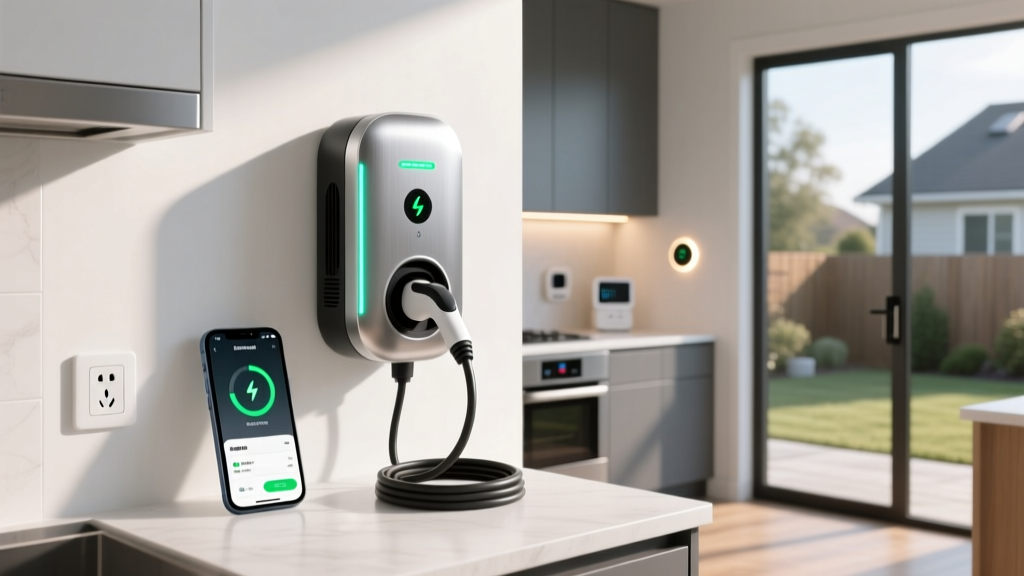
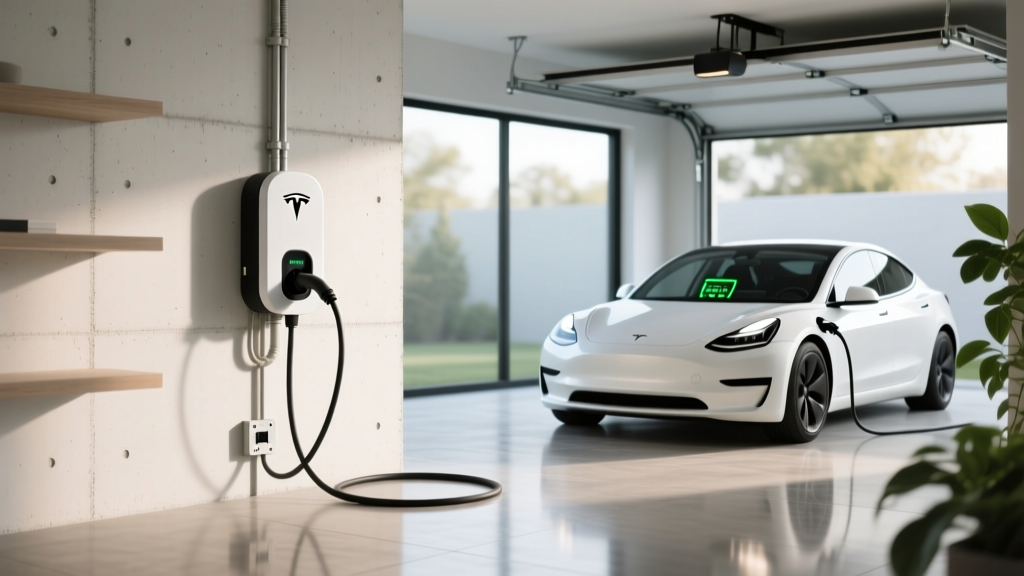
Plugging in at home is the single biggest advantage of owning an electric vehicle, but the upfront investment to install a dedicated Level 2 charger can vary wildly depending on your home's electrical infrastructure. When researching the Tesla at home charger cost, most buyers focus on the price of the Wall Connector itself — currently $475 for the Gen 2 Universal model — but the installation labor, electrical panel capacity, and permitting often double or triple that figure.
This guide breaks down every line item: the hardware, the electrician's labor, the permit fees, and the ongoing cost per mile. We'll also cover which connector your EV actually needs, because the charging landscape has shifted dramatically now that the North American Charging Standard (NACS) has become the dominant plug across nearly every major automaker.
Understanding Charging Levels: Speed and Power Explained
Before estimating costs, you need to understand what each charging level delivers. The critical distinction in EV charging is between kW (kilowatts), which measures power — how fast energy flows into your car — and kWh (kilowatt-hours), which measures energy capacity — how much your battery holds. Think of kW as the width of a hose and kWh as the size of the bucket.
| Level | Voltage | Power (kW) | Miles of Range Per Hour | Best For |
|---|---|---|---|---|
| Level 1 | 120V (standard outlet) | 1.0–1.4 kW | 3–5 miles | Overnight top-ups, PHEVs, low-mileage drivers |
| Level 2 | 240V (dryer-style outlet) | 7.2–19.2 kW | 25–75 miles | Daily home charging, most EV owners |
| DC Fast Charge | 400–800V DC | 50–350+ kW | 150–1,000+ miles (equivalent rate) | Road trips, quick top-ups on the go |
For a Tesla Model Y with a 75 kWh usable battery, Level 1 charging from 10% to 80% would take roughly 50+ hours — essentially impractical for daily use. Level 2 at 11.5 kW (the Tesla Wall Connector on a 60-amp circuit) accomplishes the same 10–80% charge in about 6.5 hours, meaning you wake up to a full battery every morning. DC fast charging at a Tesla Supercharger (peak 250 kW for V3 stalls, up to 350 kW at newer V4 sites) can take a Model Y from 10–80% in approximately 20–25 minutes, though the charge curve tapers significantly above 80% State of Charge (SoC) to protect battery health.
A 48-amp Level 2 charger delivers up to 11.5 kW of power. If you charge for 5 hours at that rate, you add approximately 57.5 kWh of energy to your battery. The kW is the rate; the kWh is the total. Never confuse the two when reading charger specs or your electricity bill.
Breaking Down the Tesla At Home Charger Cost
Here is where the rubber meets the road. Your total cost depends on three variables: the charger hardware, the complexity of the electrical work, and local permitting. Below is a realistic cost breakdown for a typical 2026 installation.
| Item | Low Estimate | Typical Estimate | High Estimate |
|---|---|---|---|
| Tesla Wall Connector (Gen 2 Universal, NACS + J1772 adapter) | $475 | $475 | $475 |
| Alternative: ChargePoint Home Flex (NACS or CCS1) | $549 | $549 | $699 |
| Electrician labor (run 240V/60A circuit, mount charger, ~2–6 hours) | $500 | $1,200 | $2,500 |
| Electrical panel upgrade (100A → 200A service, if needed) | $0 (not needed) | $1,500 | $3,500 |
| Permit and inspection fees | $50 | $150 | $400 |
| Conduit, wiring materials, junction box | $100 | $300 | $600 |
| Total (no panel upgrade) | $1,125 | $2,125 | $4,175 |
| Total (with panel upgrade) | $2,625 | $3,625 | $7,675 |
The wide range in electrician labor reflects real-world variables: if your electrical panel is in the garage next to where you park, the run is short and inexpensive. If the panel is in the basement and your parking spot is on the far side of the house, the electrician may need to run 60+ feet of 6 AWG copper wire through walls, attic spaces, or underground conduit — which adds significantly to labor time and material cost.
The Panel Upgrade Reality Check
Many homes built before 1990 have 100-amp electrical service. Adding a 48-amp continuous-draw EV charger (which requires a 60-amp breaker per the National Electrical Code 125% rule) can push a 100A panel past its safe capacity, especially if you also run central air, an electric dryer, and an electric oven simultaneously. A licensed electrician will perform a load calculation to determine whether your panel can handle the additional circuit. If it can't, a service upgrade to 200A typically costs $1,500–$3,500 depending on your utility and local rates.
Some homeowners opt for a lower-amperage circuit — a 30-amp breaker feeding a 24-amp charger delivering 5.8 kW — which may avoid the panel upgrade entirely. You'll charge slower (roughly 20 miles of range per hour for a Model Y), but for drivers covering under 40 miles daily, this is often sufficient and saves $1,500+.
Connector Compatibility: NACS, CCS1, and Adapters
The connector landscape has consolidated rapidly since Tesla opened its North American Charging Standard (NACS) to other automakers. As of the 2026 model year, nearly every new EV sold in the US ships with a NACS port — Tesla, Ford, GM, Rivian, Hyundai, Kia, and others. This simplifies home charger selection enormously.
| Connector | Automakers Using It | Home Charger Options |
|---|---|---|
| NACS (Tesla-style) | Tesla, Ford, GM, Rivian, Hyundai, Kia, Volvo, Polestar, Nissan (new models) | Tesla Wall Connector, ChargePoint Home Flex (NACS config), Emporia Vue |
| CCS1 | Remaining Stellantis models, some legacy VW/Audi models | ChargePoint Home Flex (CCS1 config), Enel X JuiceBox |
| CHAdeMO | Discontinued (Nissan Leaf ended production 2025) | Limited home options; adapter available |
The Tesla Wall Connector Gen 2 Universal ships with a built-in J1772 adapter, meaning it can charge both NACS-equipped vehicles and any remaining J1772/CCS1 vehicles (with the appropriate adapter). If you own a non-Tesla EV with a CCS1 port and want to use Tesla Superchargers, you'll need a NACS-to-CCS adapter — Ford and GM provide these to owners, and aftermarket options from companies like Lectron run $150–$250.
What It Costs to Charge Per Mile: Home vs. Public vs. Gas
The financial case for home charging rests on the per-mile cost advantage over both public DC fast charging and gasoline. Your exact savings depend on your local electricity rate, whether your utility offers time-of-use (TOU) pricing, and your driving patterns.
| Scenario | Rate / Price | Cost Per Mile (Tesla Model Y, ~3.5 mi/kWh) | Annual Cost (12,000 miles) |
|---|---|---|---|
| Home, off-peak TOU rate | $0.09/kWh | $0.026 | $309 |
| Home, standard residential rate | $0.16/kWh | $0.046 | $549 |
| Public Level 2 (ChargePoint, EVgo) | $0.25–$0.39/kWh | $0.071–$0.111 | $857–$1,337 |
| Tesla Supercharger (V3/V4) | $0.28–$0.42/kWh | $0.080–$0.120 | $960–$1,440 |
| Gasoline vehicle (28 MPG combined, $3.40/gal) | $3.40/gallon | $0.121 | $1,457 |
The data from fueleconomy.gov confirms that a Tesla Model Y achieves roughly 3.5 miles per kWh (approximately 122 MPGe combined). At an off-peak home rate of $0.09/kWh, that's under 3 cents per mile — roughly one-quarter the cost of gasoline. Even at standard residential rates, home charging costs less than half what gasoline does per mile.
The savings compound over ownership. According to the U.S. Department of Energy, residential electricity rates vary from under $0.08/kWh in Louisiana to over $0.40/kWh in Hawaii. If you live in a high-rate state, a solar panel system paired with your EV charger can lock in effectively free charging after the solar payback period.
Recommended Home EV Chargers for 2026
Below are three chargers that represent the best options across price, features, and reliability for Tesla and NACS-equipped EV owners.
Tesla Wall Connector (Gen 2 Universal)
- Power output: Up to 11.5 kW (48 amps on a 60A circuit)
- Connector: NACS native, includes J1772 adapter
- Cable length: 24 feet
- Smart features: Wi-Fi connectivity, over-the-air firmware updates, Power Sharing (link multiple units on one circuit), Tesla app integration
- Price: $475
- Best for: Tesla owners and NACS-equipped EVs who want seamless integration
ChargePoint Home Flex
- Power output: Configurable from 16A to 50A (3.8–12 kW), adjustable via DIP switches to match your circuit
- Connector: Available in NACS or CCS1 configurations
- Cable length: 23 feet
- Smart features: Wi-Fi, ChargePoint app scheduling, Alexa integration, detailed energy tracking, works with non-Tesla networks
- Price: $549–$699
- Best for: Multi-EV households or those wanting network-agnostic smart features
Emporia Level 2 EV Charger
- Power output: Up to 11.5 kW (48 amps)
- Connector: NACS (2026 model), J1772 (prior model)
- Cable length: 24 feet
- Smart features: Wi-Fi, Emporia energy monitoring ecosystem integration, solar-aware charging (pairs with Emporia Vue home energy monitor), TOU scheduling
- Price: $399
- Best for: Budget-conscious buyers and solar-panel owners who want energy-aware charging
Electrical Requirements, Safety, and Code Compliance
A proper Level 2 installation is not a DIY project. The National Electrical Code (NEC Article 625) governs EV charging equipment, and your local building department will require a permit and inspection. Here's what your installation must satisfy:
- Dedicated circuit: Your EV charger must be on its own dedicated breaker — it cannot share a circuit with other appliances. A 48-amp charger requires a 60-amp double-pole breaker (the NEC 125% continuous-load rule means the breaker must be rated 25% higher than the charger's maximum draw).
- Wire gauge: A 60-amp circuit requires 6 AWG copper wire (THHN in conduit or NM-B/Romex for indoor runs). Longer runs may require 4 AWG to minimize voltage drop.
- GFCI protection: The 2020 NEC and later require Ground Fault Circuit Interrupter (GFCI) protection for all EV charging outlets. Many modern chargers, including the Tesla Wall Connector, have built-in GFCI protection. If hardwired (no plug), the charger's internal GFCI typically satisfies code. If installed with a NEMA 14-50 receptacle, a GFCI breaker is required — these cost $50–$80 more than standard breakers.
- Outdoor rating: If your charger is mounted outside, it must carry a NEMA 4 (weatherproof) rating. The Tesla Wall Connector and ChargePoint Home Flex are both NEMA 4 rated and suitable for outdoor installation in any climate.
- Permit and inspection: Most jurisdictions require an electrical permit ($50–$400) and a post-installation inspection. Skipping the permit risks insurance claim denials if an electrical fire occurs and can cause issues during a home sale.
Hardwired vs. Plug: Which Should You Choose?
The Tesla Wall Connector can be installed either hardwired directly into a junction box or plugged into a NEMA 14-50 receptacle. Hardwired installations eliminate the GFCI breaker requirement (the charger's internal GFCI suffices) and avoid the known issue of some NEMA 14-50 receptacle brands overheating under continuous EV-charging loads. If you choose a receptacle, use an industrial-grade Hubbell or Bryant brand — avoid the cheaper Leviton models that have documented thermal issues under sustained 40A+ draw. A hardwired install is generally the safer and more reliable choice for daily charging.
Charging Times for Common Tesla and EV Battery Sizes
Charge time depends on the battery's usable capacity (in kWh), the charger's power output (in kW), and the charge curve — batteries accept power fastest between roughly 10–50% SoC, then taper to protect cell health. Here are representative times for common vehicles on a Level 2 Tesla Wall Connector at 11.5 kW:
| Vehicle | Usable Battery (kWh) | Approx. 10–80% Time | Miles Added Per Hour |
|---|---|---|---|
| Tesla Model 3 RWD (LFP) | 57.5 kWh | ~4 hours | ~38 miles |
| Tesla Model Y Long Range | 75 kWh | ~5.5 hours | ~40 miles |
| Tesla Model S Plaid | 95 kWh | ~7 hours | ~42 miles |
| Ford F-150 Lightning (Extended Range) | 131 kWh | ~9.5 hours | ~28 miles |
| Hyundai Ioniq 5 (Long Range) | 77.4 kWh | ~5.5 hours | ~38 miles |
Note that the F-150 Lightning's large 131 kWh battery takes considerably longer to fill on Level 2 because of sheer capacity, not because the charger is slow. For trucks and large-battery vehicles, a 60-amp circuit delivering the full 11.5 kW is strongly recommended over a 30-amp or 40-amp circuit to keep overnight charging practical.
Frequently Asked Questions
How much does it cost to install a home EV charger?
For a Tesla Wall Connector on a 60-amp circuit with no panel upgrade needed, expect to pay $1,200–$2,500 total (hardware + electrician + permit). If your home needs a 200A panel upgrade, add $1,500–$3,500. The national average for a straightforward installation sits around $2,000–$2,500 in 2026.
How fast will each charging level add range?
Level 1 (120V) adds 3–5 miles per hour — fine for plug-in hybrids with small batteries but impractical for full EVs. Level 2 (240V, 48A) adds 25–45 miles per hour depending on vehicle efficiency. DC fast charging adds 150–1,000+ miles per hour equivalent, but is designed for 20–30 minute road-trip stops, not daily use.
Which connector/charger is compatible with my EV?
If you own a Tesla or any 2025+ model-year EV from Ford, GM, Hyundai, Kia, Rivian, or Volvo, your vehicle uses NACS. The Tesla Wall Connector is the natural fit. If you own an older CCS1 vehicle (e.g., 2023 VW ID.4), you'll need a CCS1-configured charger like the ChargePoint Home Flex, plus a NACS-to-CCS adapter if you want Supercharger access.
How much does charging cost per mile vs. gas?
Home charging at an average US rate of $0.16/kWh costs roughly $0.046/mile in a Tesla Model Y — about 62% less than gasoline at $3.40/gallon in a 28 MPG vehicle ($0.121/mile). Off-peak TOU rates as low as $0.09/kWh push the cost below $0.03/mile.
What electrical upgrades might I need?
The most common upgrade is a panel service increase from 100A to 200A ($1,500–$3,500). You may also need a new breaker slot (if your panel is full), upgraded meter socket, or a trench for underground conduit if your parking spot is detached from the house. A licensed electrician's load calculation will identify these requirements before work begins.
Is there a tax credit for home charger installation?
The federal Alternative Fuel Vehicle Refueling Property Credit (IRS Form 8911) covers up to 30% of home charger hardware and installation costs, capped at $1,000. However, eligibility depends on whether your census tract qualifies as a non-urban or low-income area per IRS guidelines. Check the IRS tool or consult a tax professional before claiming.