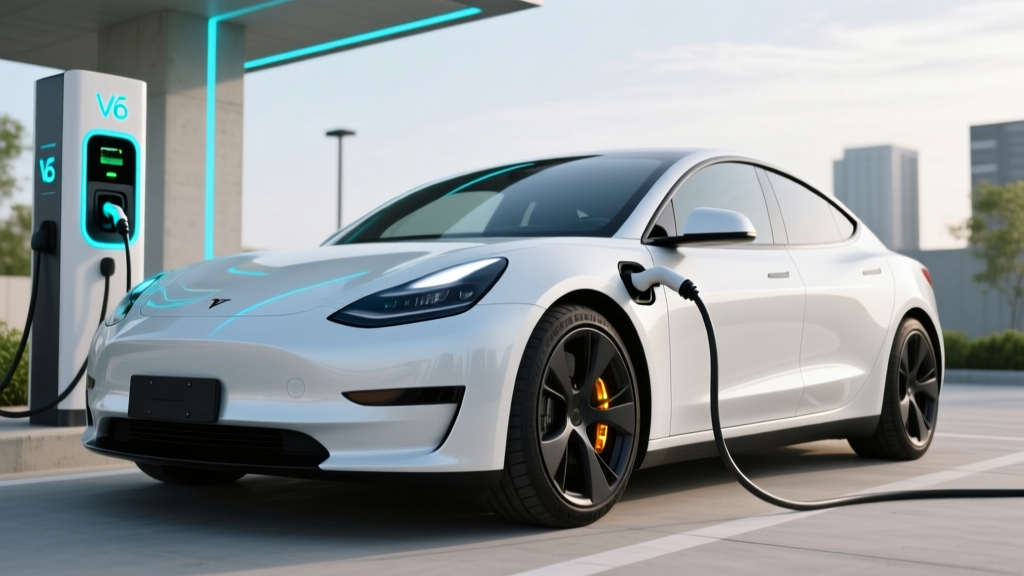
The Free Supercharging Promotion Explained
When Tesla offers free Supercharging for premium Model 3 purchases, it's typically a limited-time incentive aimed at clearing inventory or pushing higher-trim configurations like the Long Range AWD and Performance variants. These promotions aren't permanent fixtures on Tesla's website — they appear and disappear based on quarterly delivery targets and market demand. If you're shopping a Model 3 in 2026 and see this offer, here's exactly what it means for your wallet and your charging habits.
Free Supercharging credits usually cover a set period (often 12 months) or a mileage cap (commonly 10,000 miles), whichever comes first. They apply exclusively to Tesla's Supercharger network — not to third-party DC fast chargers like Electrify America or EVgo, and not to home charging. For premium Model 3 trims equipped with the 75 kWh (usable) battery and an EPA-estimated range of up to 363 miles (Long Range AWD), that credit can offset a meaningful chunk of your first year's energy costs, especially if you lack home charging access.
Charging Levels: How Fast Will Each Level Add Range?
Understanding charging speed starts with distinguishing kW (power — the rate of energy flow) from kWh (energy — the battery's capacity). Think of kW as how wide the hose is, and kWh as the size of the bucket. A 75 kWh battery charged at 7.2 kW takes roughly 10 hours from empty to full; at 150 kW, it can reach 80% in about 25 minutes.
| Charging Level | Voltage / Typical kW | Miles of Range Added per Hour | Best Use Case |
|---|---|---|---|
| Level 1 (standard outlet) | 120V / 1.0–1.4 kW | 3–5 miles/hr | Overnight top-up for short commutes |
| Level 2 (home or public AC) | 240V / 7.2–19.2 kW | 25–60+ miles/hr | Daily charging, overnight full charges |
| DC Fast Charging (Supercharger/EA/EVgo) | 400–800V / 50–350 kW | 150–1,000+ miles/hr (peak) | Road trips, rapid top-ups |
For the Model 3 Long Range, Tesla's V4 Supercharger stalls deliver peak rates up to 250 kW. In real-world conditions with a preconditioned battery, you'll see 10–80% in approximately 25–28 minutes. Above 80%, the charge curve tapers sharply — going from 80–100% can take an additional 20+ minutes, which is why road-trip strategy favors shorter, more frequent stops between 10% and 80%.
How Much Does It Cost to Install a Home EV Charger?
Free Supercharging credits are a nice bridge, but the long-term play for any EV owner is home Level 2 charging. It's cheaper per mile, more convenient, and gentler on battery health than exclusive DC fast charging. The installation cost, however, varies wildly depending on your home's electrical panel, the distance from panel to charger location, and local permitting fees.
| Cost Component | Simple Install (panel near garage) | Complex Install (panel far or upgrade needed) |
|---|---|---|
| Level 2 charger hardware | $400–$700 | $400–$700 |
| Electrician labor (240V circuit, 40–60A) | $600–$1,200 | $1,500–$3,000 |
| Permit & inspection | $50–$200 | $100–$400 |
| Electrical panel upgrade (100A → 200A, if needed) | N/A | $1,500–$3,500 |
| Total estimated cost | $1,050–$2,100 | $3,500–$7,600 |
Homes built before 2000 often have 100-amp service panels with limited spare capacity. Adding a 40-amp or 60-amp dedicated circuit for EV charging may push total load beyond the panel's rating, triggering a mandatory upgrade to 200 amps. This is the single biggest cost surprise for new EV buyers in older homes — budget accordingly. A licensed electrician will perform a load calculation before quoting final numbers. According to the National Electrical Contractors Association, panel upgrades averaged $2,500–$3,500 nationally in 2025.
Note: The federal Residential Clean Energy Credit (IRC §25D) previously offered up to 30% of home charging equipment and installation costs (capped at $1,000). Check current-year IRS guidance, as incentive structures and expiration dates shift. Some utilities and states also offer rebates — check your local provider.
Which Connector Is Compatible With My EV?
As of 2026, the connector landscape has consolidated significantly around the North American Charging Standard (NACS), which Tesla pioneered and which most major automakers have adopted. Here's where things stand:
| Connector | Brands Using It (2026) | Notes |
|---|---|---|
| NACS (Tesla) | Tesla, Ford, GM, Rivian, Volvo, Polestar, Hyundai/Kia (new models), most others | Native on new vehicles; CCS-to-NACS adapters available for transition |
| CCS1 | Legacy models from VW, BMW, older Ford/GM EVs, Honda Prologue (early builds) | Still widely available at public stations; being phased out on new vehicles |
| CHAdeMO | Nissan Leaf (remaining stock), Mitsubishi Outlander PHEV | Effectively legacy; minimal new infrastructure investment |
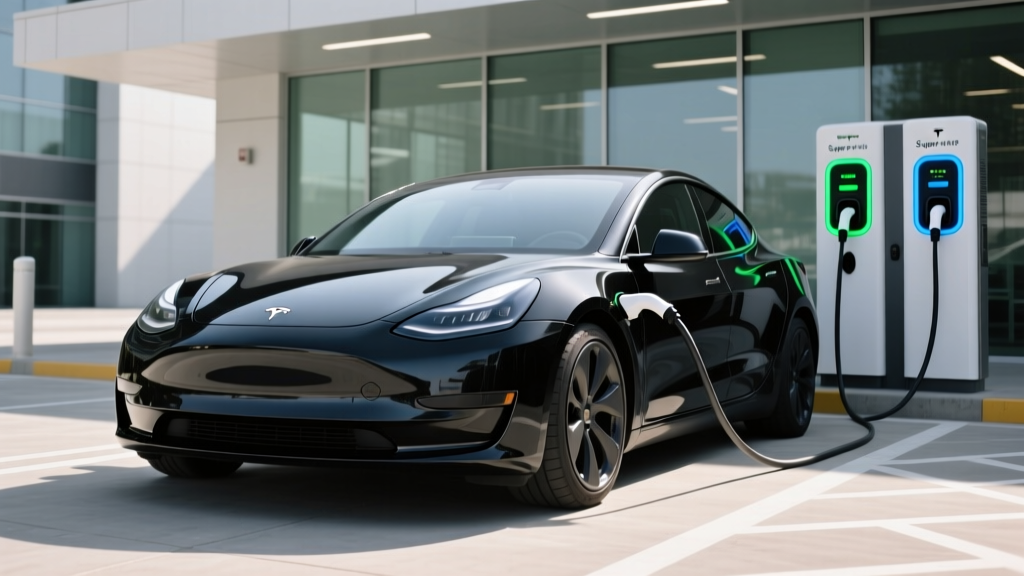
Every new Tesla Model 3 ships with a native NACS port — no adapter needed at Superchargers. If you own a non-Tesla EV with CCS and want Supercharger access, Tesla sells a CCS-to-NACS adapter (~$250) and has opened select Supercharger stalls to non-Tesla vehicles via the Tesla app. Conversely, if you buy a Tesla and want to charge at Electrify America or other CCS networks, a NACS-to-CCS adapter (available from Tesla and third parties like Lectron) is required.
Cost to Charge: Per-Mile Breakdown vs. Gasoline
Free Supercharging credits make your first year of Tesla ownership remarkably cheap on a per-mile basis, but once those credits expire, you'll want to know what charging actually costs. The answer depends heavily on where and when you plug in.
| Charging Scenario | Rate ($/kWh) | Cost to Add 200 mi (Model 3 LR, ~25 kWh/100mi) | Cost per Mile |
|---|---|---|---|
| Home (off-peak utility rate) | $0.08–$0.14 | $10.00–$17.50 | $0.05–$0.09 |
| Home (standard rate, no TOU) | $0.15–$0.22 | $18.75–$27.50 | $0.09–$0.14 |
| Tesla Supercharger (2026 avg) | $0.28–$0.40 | $35.00–$50.00 | $0.18–$0.25 |
| Public Level 2 (ChargePoint, etc.) | $0.20–$0.35 | $25.00–$43.75 | $0.13–$0.22 |
| Gasoline (28 MPG avg, $3.40/gal) | — | $24.29 | $0.12 |
The Model 3 Long Range AWD achieves an EPA-rated 132 MPGe combined, translating to roughly 25 kWh per 100 miles. At home off-peak rates, you're paying $0.05–$0.09 per mile — roughly half the cost of a 28 MPG gas car at $3.40/gallon. Even at Supercharger rates, the Model 3 competes with gasoline on per-mile cost, though the gap narrows. The free Supercharging promotion effectively drops your road-trip fuel cost to $0 during the credit period, which can save a frequent traveler $800–$1,500 in the first year alone.
Recommended Home Charging Equipment
If you're installing a Level 2 charger at home, here are proven units that pair well with the Model 3 and other NACS-equipped EVs:
Tesla Wall Connector (Gen 4)
- Power Output: Up to 11.5 kW (48A on a 60A circuit)
- Connector: Native NACS — no adapter needed for Tesla
- Cable Length: 24 feet
- Smart Features: Wi-Fi connectivity, OTA firmware updates, power sharing between two units, integrated cable management
- Price: ~$425
- Best For: Tesla-only households seeking seamless integration
ChargePoint Home Flex (NACS version)
- Power Output: Up to 12 kW (50A, configurable down to 16A for panel-limited homes)
- Connector: NACS (2025+ models) or J1772 with adapter
- Cable Length: 23 feet
- Smart Features: Alexa integration, scheduling via app, flexible amperage dip-switch settings
- Price: ~$550–$600
- Best For: Multi-EV households or homes needing adjustable amperage
Emporia Level 2 Smart Charger
- Power Output: Up to 11.5 kW (48A)
- Connector: NACS or J1772 variants
- Cable Length: 24 feet
- Smart Features: Real-time energy monitoring, solar integration, load management with Emporia Vue panel monitor
- Price: ~$400
- Best For: Solar-equipped homes and budget-conscious buyers wanting smart features
All three chargers are hardwired (preferred for 48A+ circuits) or available with NEMA 14-50 plugs. Hardwired installations avoid the requirement for a GFCI breaker that plug-in setups demand on 240V circuits — GFCI breakers for 50A+ circuits can cost $150–$300 on their own and are a common source of nuisance trips.
Safety, Electrical Code, and Installation Best Practices
Level 2 EV charging draws sustained high current for hours — this isn't like running a dryer for 45 minutes. The National Electrical Code (NEC Article 625) treats EV charging as a continuous load, meaning the circuit must be rated at 125% of the charger's maximum draw. A 48A charger requires a 60A circuit; a 40A charger needs a 50A circuit. Never undersize the breaker or wire gauge.
- Dedicated circuit: Your EV charger must be on its own dedicated breaker — no sharing with other appliances.
- Wire gauge: 6 AWG copper for 50A circuits; 4 AWG for 60A. Your electrician will size this based on run length and local code.
- Outdoor rating: If your charger is mounted outside, ensure the unit carries a NEMA 4 or IP65 rating. The Tesla Wall Connector and ChargePoint Home Flex both qualify.
- GFCI protection: Required for plug-in (NEMA 14-50) receptacles per NEC 2020+ in garages and outdoors. Hardwired installations may not require a separate GFCI breaker depending on jurisdiction — confirm with your inspector.
- Permit and inspection: Virtually all jurisdictions require an electrical permit for a new 240V circuit. Skipping this can void homeowner's insurance claims related to electrical fires.
Charging Time Examples: 10–80% for Common Battery Sizes
Here's what charging looks like in practice for popular EV battery sizes at different power levels:
| Battery Size (usable kWh) | Level 2 at 11.5 kW (0–100%) | DC Fast 10–80% (peak kW) | Example Vehicles |
|---|---|---|---|
| 60 kWh | ~5.2 hours | ~22 min (170 kW peak) | Model 3 RWD, Hyundai Ioniq 6 SE |
| 75 kWh | ~6.5 hours | ~25 min (250 kW peak) | Model 3 Long Range, Model Y LR |
| 84 kWh | ~7.3 hours | ~18 min (239 kW peak, 800V) | Hyundai Ioniq 5, Kia EV6 |
| 100 kWh | ~8.7 hours | ~30 min (250 kW peak) | Model S, Rivian R1T (Max Pack) |
These DC fast-charging times assume a preconditioned battery (the car's navigation routes through a Supercharger or fast charger, warming the pack to optimal temperature). In cold weather without preconditioning, peak charge rates can drop 30–50% until the battery warms, extending 10–80% times significantly. Always precondition before a fast-charge stop — the Model 3 does this automatically when you navigate to a Supercharger.
Frequently Asked Questions
How much does it cost to install a home EV charger?
A straightforward Level 2 installation with the electrical panel near the garage typically costs $1,050–$2,100 (hardware, electrician labor, and permit combined). Complex installs requiring long wire runs, trenching, or a panel upgrade from 100A to 200A can push costs to $3,500–$7,600. Always get a load calculation from a licensed electrician before committing.
How fast will each charging level add range to my Model 3?
Level 1 (120V) adds 3–5 miles per hour — adequate only for overnight top-ups on short commutes. Level 2 (240V, 11.5 kW) adds roughly 44 miles per hour, easily refilling a Model 3 Long Range overnight. DC fast charging at a V4 Supercharger can add up to 175 miles in 15 minutes at peak rates, though sustained speed tapers as the battery fills.
Which connector and charger are compatible with my Tesla Model 3?
All 2026 Model 3 vehicles use the native NACS connector. At home, the Tesla Wall Connector provides the simplest plug-and-charge experience. For public charging, Tesla Superchargers require no adapter. To use CCS-based networks (Electrify America, EVgo), you'll need a NACS-to-CCS adapter.
How much does charging cost per mile compared to gas?
At home off-peak rates ($0.10/kWh), a Model 3 Long Range costs roughly $0.06/mile to fuel — about half the per-mile cost of a 28 MPG gasoline car at $3.40/gallon ($0.12/mile). Even at average Supercharger rates ($0.34/kWh), the Model 3 costs around $0.21/mile. Free Supercharging credits drop road-trip fueling to $0 during the promotional period.
What electrical upgrades might I need for a home charger?
If your home has a 100-amp electrical panel or minimal spare breaker slots, you'll likely need a panel upgrade to 200 amps ($1,500–$3,500). Homes with 200-amp panels and available capacity typically only need a new dedicated 50A or 60A breaker and a wire run to the garage. Older homes with knob-and-tube or aluminum wiring may require additional remediation. An electrician's load calculation will determine your exact needs.
Is free Supercharging transferable if I sell the Model 3?
Promotional free Supercharging credits tied to a specific vehicle purchase are generally non-transferable — they stay with the original purchaser's Tesla account and expire when the promotional period ends. This differs from the older unlimited free Supercharging that Tesla attached to some Model S/X vehicles, which did transfer with the car in certain cases. Always confirm the specific terms at the time of purchase.