Free Supercharging was once Tesla's signature incentive—a perk that made road-tripping an EV virtually cost-free. But as Tesla's lineup has expanded and the Supercharger network has opened to non-Tesla EVs via the North American Charging Standard (NACS), the availability and terms of free Supercharging have shifted significantly. If you're researching Tesla models with free Supercharging in 2026, the answer depends heavily on whether you're buying new, buying used, or evaluating a legacy perk tied to an older vehicle.
This guide breaks down which Tesla models and purchase scenarios still include free Supercharging, how those credits transfer (or don't), and—because free miles won't cover daily driving—exactly what you'll pay to charge at home and on the road.
Which Tesla Models Still Come With Free Supercharging?
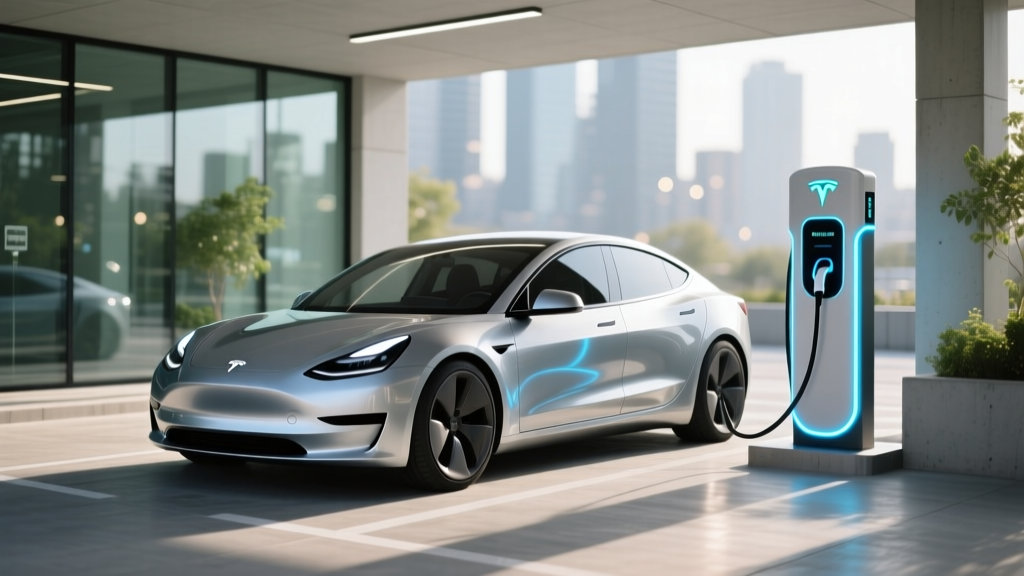
As of 2026, Tesla does not include unlimited free Supercharging as a standard feature on any new Model 3, Model Y, Model S, or Model X. The perk has been replaced by limited-time promotional credits, referral-program rewards, and legacy transfers tied to older vehicles. Here's the current landscape:
| Scenario | Free Supercharging? | Details |
|---|---|---|
| New Model 3 / Model Y (2026) | No (standard) | Occasional promotional credits (e.g., 10,000 miles via referral or end-of-quarter deals) |
| New Model S / Model X (2026) | No (standard) | Legacy unlimited free Supercharging ended; promotional credits may apply |
| Used Model S / Model X (pre-2017) | Yes (if VIN-tied) | Unlimited free Supercharging transfers with the car, not the owner |
| Used Model S / Model X (2017–2019) | Varies | Some have owner-tied credits (non-transferable); check Tesla account |
| CPO (Certified Pre-Owned) Tesla | Rarely | Tesla CPO vehicles typically do not include free Supercharging unless promotional |
| Referral program (2026) | Credits, not unlimited | Referral rewards may include Supercharging miles, not indefinite access |
Key takeaway: The only Tesla models that reliably still carry unlimited free Supercharging are pre-March 2017 Model S and Model X vehicles where the perk was permanently tied to the VIN. These are now 9+ year-old vehicles with aging battery packs—so the "free charging" benefit must be weighed against potential battery replacement costs ($12,000–$20,000 out of warranty).
How Tesla's Free Supercharging Transfers Work
Understanding transferability is critical if you're buying a used Tesla specifically for the Supercharging perk. Tesla has applied different rules across different eras:
- Pre-March 2017 Model S/X: Unlimited free Supercharging is tied to the vehicle's VIN. It transfers to every subsequent owner automatically. No action required.
- March 2017–September 2018 Model S/X: Tesla offered 400 kWh of free Supercharging annually (~1,000 miles), tied to the original owner. This credit does not transfer on resale.
- Late 2018–2019 promotional periods: Some vehicles received limited-duration free Supercharging (e.g., 6 months or 1 year). These expire on a calendar basis and are typically owner-tied.
- 2023–2025 referral and promotional credits: Awarded as Supercharging miles to a Tesla account, non-transferable between accounts.
If you're evaluating a used Tesla listing that advertises "free Supercharging," ask the seller for the vehicle's Tesla app screenshot showing the Supercharging status, or verify through a Tesla Service Center using the VIN before purchasing.
Charging Levels Explained: How Fast Will Each Level Add Range?
Whether or not you have free Supercharging credits, understanding the three charging levels is essential for planning daily driving and road trips. Power is measured in kW (kilowatts—the rate of energy flow), while battery capacity is measured in kWh (kilowatt-hours—the total energy stored). Think of kW as the speed of water flowing from a hose, and kWh as the size of the bucket.
| Level | Voltage / Amps | Power (kW) | Miles of Range per Hour | Typical Use Case |
|---|---|---|---|---|
| Level 1 (120V outlet) | 120V / 12A | ~1.4 kW | 3–5 mi/hr | Overnight top-off, PHEVs, emergencies |
| Level 2 (240V home/public) | 240V / 32–48A | 7.7–11.5 kW | 25–44 mi/hr | Daily home charging, workplace, destination |
| DC Fast Charging | 400V–800V DC | 50–350 kW (peak) | 150–1,000+ mi/hr (at peak) | Road trips, highway corridors |
Real-world charging time examples (10–80% State of Charge):
- Tesla Model 3 Long Range (79 kWh battery, NACS): ~25–28 minutes at a 250 kW V3 Supercharger; ~8–9 hours on a 48A Level 2 home charger.
- Tesla Model Y Long Range (78 kWh battery, NACS): ~25–30 minutes at a V3 Supercharger; ~8 hours on Level 2.
- Tesla Model S (100 kWh battery): ~30–35 minutes at a V3 Supercharger; ~10 hours on Level 2.
Note that DC fast charging follows a charge curve—peak kW is only sustained between roughly 10–50% SoC. Above 80%, charging speed tapers significantly to protect battery health. This is why 10–80% times are the industry standard measurement.
Home Charger Installation: Electrical Requirements and Costs
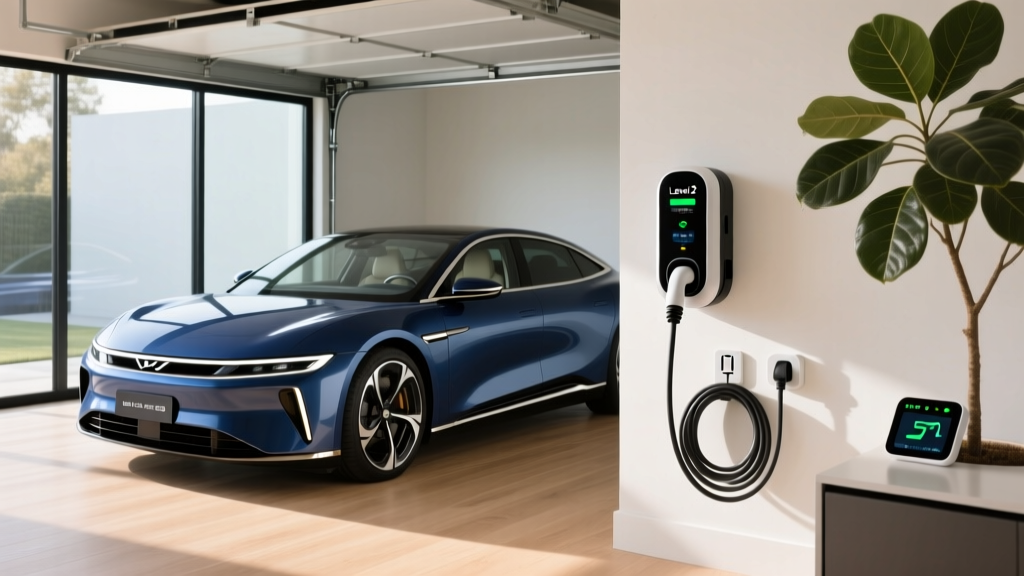
Most Tesla owners do the majority of their charging at home on Level 2. Installing a dedicated 240V circuit is the single biggest upfront cost of EV ownership—but it pays for itself quickly versus public charging.
Electrical Requirements
- Circuit: Dedicated 240V circuit, typically 40A or 60A breaker (supporting 32A or 48A continuous draw, respectively—electrical code requires a 20% buffer).
- Wire gauge: 6 AWG copper for 48A circuits; 8 AWG for 32A (varies by run length and local code).
- Connector: NEMA 14-50 receptacle (most common) or hardwired connection (required for some chargers above 40A).
- GFCI protection: Required by NEC 2020+ for garage receptacles; many hardwired chargers have built-in ground-fault protection.
- Panel capacity: Your home's main electrical panel must have sufficient spare capacity. A 200A panel is standard in modern homes; older 100A panels often require an upgrade.
| Item | Typical Cost Range | Notes |
|---|---|---|
| Level 2 charger (hardware) | $250–$700 | Tesla Wall Connector, ChargePoint Home Flex, Emporia, etc. |
| Electrician labor | $500–$2,000 | Depends on panel distance, conduit run, wall material |
| Permit & inspection | $50–$300 | Required in most jurisdictions; varies by city/county |
| Electrical panel upgrade (if needed) | $1,500–$4,000 | Upgrading from 100A to 200A service |
| Total (no panel upgrade) | $800–$3,000 | Most homes with 200A panel fall in this range |
| Total (with panel upgrade) | $2,300–$7,000 | Common in homes built before 1990 |
Always hire a licensed electrician and pull a permit. Unpermitted electrical work can void home insurance and create fire hazards. The National Electrical Contractors Association maintains a directory of certified EV charger installers.
Connector Compatibility: NACS, CCS, and Adapters
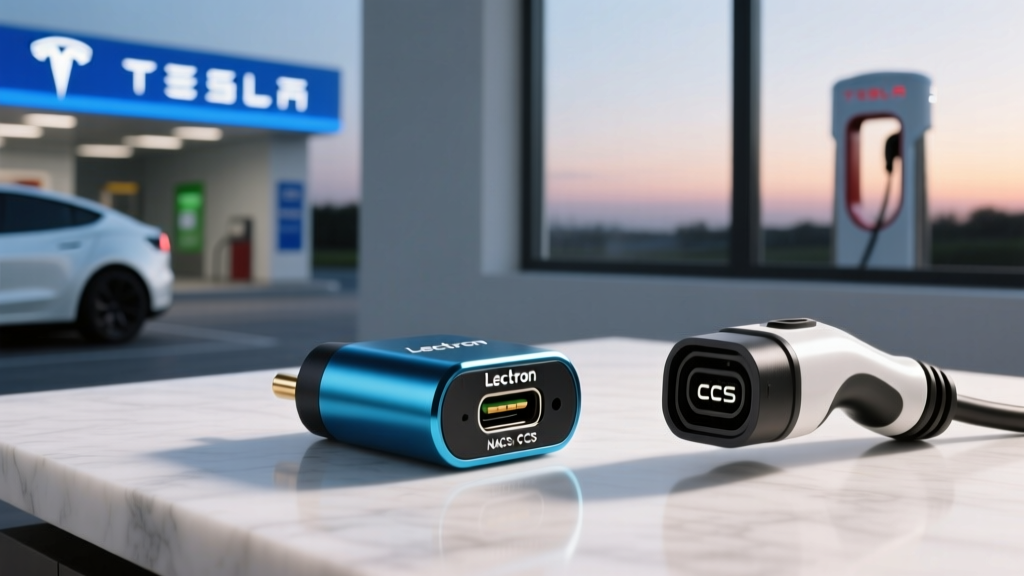
As of 2026, the North American Charging Standard (NACS)—originally Tesla's proprietary connector—has become the dominant EV charging standard in the U.S. Nearly every major automaker has adopted NACS for 2025+ models. Here's what that means for Tesla owners:
| Connector | Used By | Notes for Tesla Owners |
|---|---|---|
| NACS (Tesla) | All Teslas; Ford, GM, Rivian, Hyundai, Kia, BMW, Mercedes, Volvo, and most 2025+ EVs | Native connector on all Teslas—no adapter needed at Superchargers |
| CCS1 | Legacy non-Tesla EVs (2024 and older); Electrify America, EVgo stations | Tesla provides a CCS adapter (~$175) for non-Tesla DC fast chargers |
| CHAdeMO | Nissan Leaf (discontinued in U.S.), Mitsubishi Outlander PHEV | Effectively obsolete for new vehicles; Tesla has no CHAdeMO adapter |
| J1772 (Level 2 AC) | All non-Tesla EVs for Level 2 public charging | Tesla includes a J1772 adapter with every vehicle for non-Tesla Level 2 stations |
Bottom line for Tesla owners: Your NACS connector gives you direct access to the entire Supercharger network (over 28,000 stalls in North America) plus growing NACS-equipped public networks. For Electrify America or older CCS stations, the Tesla CCS adapter handles compatibility.
Charging Cost Per Mile: Home vs. Public vs. Gas
Free Supercharging credits are a bonus, but most of your charging—roughly 80–90%—will happen at home. Here's what you can actually expect to pay:
| Scenario | Cost per kWh | Cost per Mile (Model 3 LR, ~3.5 mi/kWh) | Annual Cost (12,000 mi) |
|---|---|---|---|
| Home charging (national avg.) | $0.16/kWh | $0.046 | $549 |
| Home off-peak (time-of-use rate) | $0.08–$0.12/kWh | $0.023–$0.034 | $274–$411 |
| Public Level 2 (ChargePoint, etc.) | $0.25–$0.49/kWh | $0.071–$0.14 | $857–$1,680 |
| Tesla Supercharger V3/V4 | $0.28–$0.40/kWh | $0.08–$0.114 | $960–$1,371 |
| Electrify America DC Fast | $0.36–$0.56/kWh | $0.103–$0.16 | $1,234–$1,920 |
| Gas vehicle (28 MPG avg., $3.30/gal) | — | $0.118 | $1,414 |
The math is clear: Even without free Supercharging, home-charging a Tesla costs roughly 60–70% less per mile than fueling a comparable gas car. A time-of-use utility rate (charging overnight at off-peak rates) can push savings above 80%. Public DC fast charging is more expensive and can approach gas-car costs, which is why home Level 2 is the economic backbone of EV ownership.
According to fueleconomy.gov, the 2026 Tesla Model 3 Long Range achieves 132 MPGe combined, translating to roughly 25 kWh per 100 miles—among the most efficient EVs on the market.
Recommended Home Charging Equipment
Not all Level 2 chargers are equal. Here are three proven options for Tesla owners in 2026, selected for reliability, power output, and smart features:
Tesla Wall Connector
- Power output: Up to 11.5 kW (48A on a 60A circuit)
- Connector: NACS native (24-ft cable)
- Smart features: Wi-Fi updates, power sharing (link two units on one circuit), Tesla app integration, load management
- Price: ~$425
- Best for: Tesla-only households wanting seamless integration and maximum Level 2 speed
ChargePoint Home Flex
- Power output: Up to 12 kW (50A, configurable from 16–50A)
- Connector: NACS or J1772 (23-ft cable; NACS version available 2025+)
- Smart features: Alexa/Google integration, ChargePoint app scheduling, energy tracking, ADA-compliant options
- Price: ~$550–$650
- Best for: Multi-EV households (Tesla + non-Tesla) or renters who may relocate the unit
Emporia Vue Level 2 Charger
- Power output: Up to 11.5 kW (48A on a 60A circuit)
- Connector: J1772 with included NACS adapter (24-ft cable)
- Smart features: Whole-home energy monitoring integration, solar-aware charging, detailed cost tracking, scheduling
- Price: ~$400–$500
- Best for: Solar-panel owners and energy-monitoring enthusiasts who want granular cost data
All three units support hardwired installation (required for 48A+) or NEMA 14-50 plug-in at 40A. The Tesla Wall Connector offers the fastest charging for Tesla-exclusive homes; the ChargePoint Home Flex provides the most flexibility for mixed fleets.
Safety and Electrical Code Considerations
EV charging draws sustained high current for hours—far longer than most household appliances. Proper installation isn't optional:
- Dedicated circuit: Your Level 2 charger must be on its own dedicated breaker. Never share a circuit with other high-draw appliances (dryer, oven, HVAC).
- Continuous load rule: NEC requires that continuous loads (3+ hours) not exceed 80% of the breaker rating. A 48A charger needs a 60A breaker; a 32A charger needs a 40A breaker.
- GFCI protection: NEC 2020 and later requires GFCI on all garage receptacles. Hardwired chargers with built-in ground-fault detection may satisfy this requirement—confirm with your local inspector.
- Outdoor rating: If your charger is installed outdoors or in an unconditioned garage, ensure it carries a NEMA 4 or IP65 weatherproof rating. All three units above meet outdoor requirements.
- Cable management: Use a wall-mounted holster or cable organizer to prevent tripping hazards and cable damage.
Your electrician should pull a permit and schedule a final inspection. This protects your home insurance coverage and ensures the installation meets the National Electrical Code standards adopted by your jurisdiction.
Frequently Asked Questions
Do any new 2026 Tesla models include free Supercharging?
No. Tesla discontinued standard unlimited free Supercharging on all new models. You may receive limited promotional credits (e.g., 1,000–10,000 miles) through referral programs, end-of-quarter promotions, or trade-in incentives—but these are time- or mileage-limited, not permanent.
If I buy a used Tesla with free Supercharging, does it transfer to me?
It depends on the vehicle's era. Pre-March 2017 Model S and Model X vehicles have VIN-tied unlimited free Supercharging that transfers to every owner. Vehicles from 2017–2019 may have owner-tied credits that expire upon resale. Always verify through Tesla's app or a Service Center before purchasing.
How much does it cost to install a home EV charger?
Expect $800–$3,000 for a standard installation on a 200A panel (charger + electrician + permit). If your home has an older 100A panel that needs upgrading to 200A, add $1,500–$4,000 for the panel work, bringing the total to $2,300–$7,000.
How much does charging a Tesla cost per mile compared to gas?
Home charging at the national average of $0.16/kWh costs about $0.046/mile in a Model 3 Long Range—roughly 60% less than a 28 MPG gas car at $3.30/gallon ($0.118/mile). Off-peak home rates can drop the cost to $0.023–$0.034/mile.
What electrical upgrades might I need for a home charger?
If your panel is 200A with spare breaker slots, you likely only need a new dedicated 60A circuit. If your panel is 100A (common in pre-1990 homes), fully loaded, or uses a Federal Pacific/Zinsco panel (known safety hazards), you'll need a full panel upgrade to 200A—a $1,500–$4,000 job. Your electrician will perform a load calculation to determine this.
Can I use a non-Tesla public DC fast charger with my Tesla?
Yes. Tesla sells a CCS1 adapter (~$175) that allows you to use Electrify America, EVgo, and other CCS-equipped DC fast chargers. You can also use the included J1772 adapter for non-Tesla Level 2 public chargers. As more networks add NACS connectors, adapter needs will decrease.
Is the federal tax credit available for home charger installation?
The Alternative Fuel Vehicle Refueling Property Credit (IRS Form 8911) may cover 30% of home charger hardware and installation costs, up to $1,000. Eligibility depends on your census tract (must be a low-income or non-urban area) and tax liability. Consult a tax professional to confirm eligibility for your specific situation.