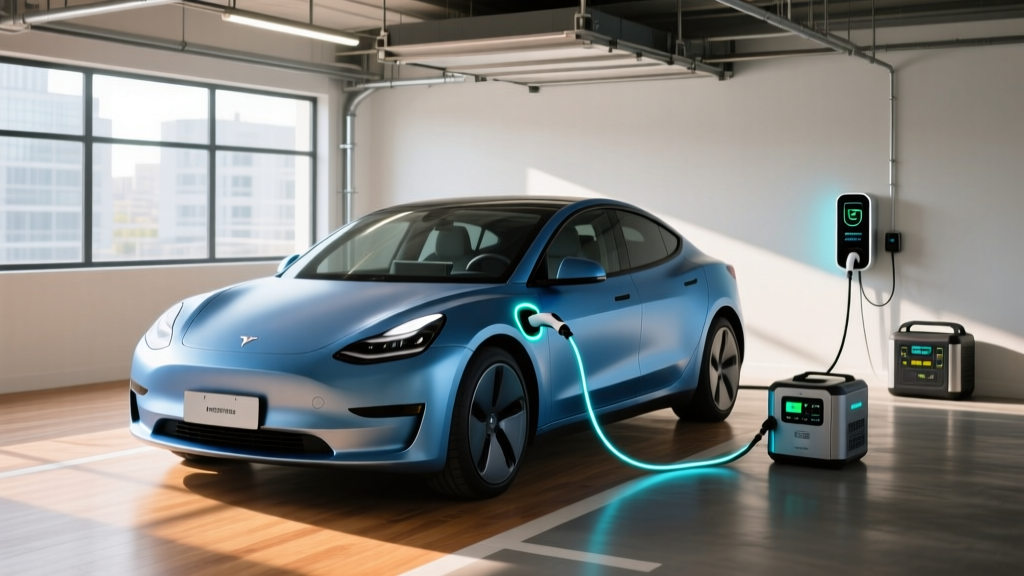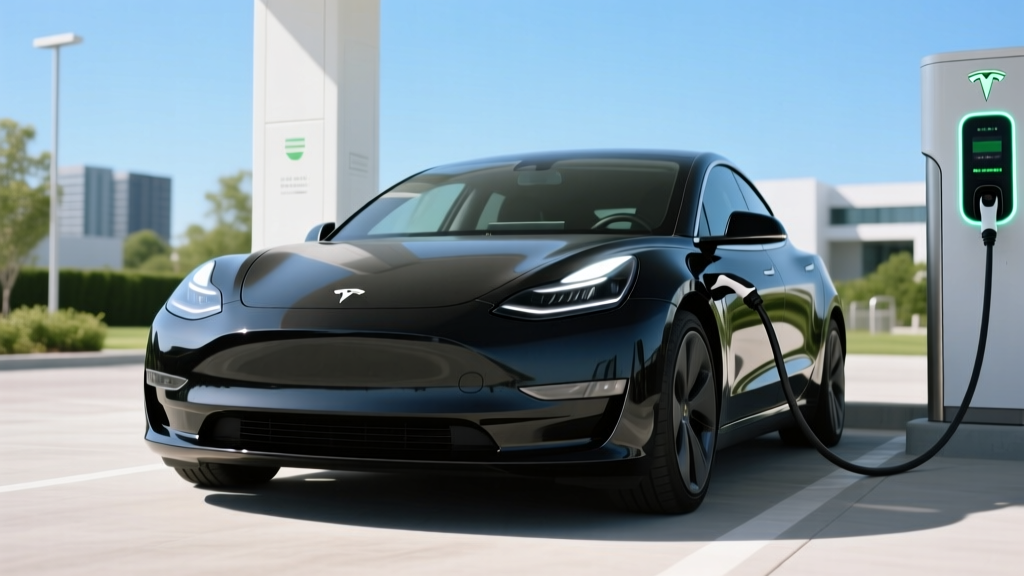
Rumor surfaces every few months: Tesla offers free Supercharging for new Model 3 buyers. In 2026, the honest answer is nuanced. Tesla has intermittently used limited-time referral credits, holiday promotions, and inventory-clearance incentives that include Supercharging miles or credits — but there is no permanent, blanket free-Supercharging program attached to the Model 3 as of the current model year. Any promotion is time-bound, region-specific, and typically delivered as account credits (e.g., 1,000–10,000 free Supercharging miles) rather than unlimited lifetime access, which Tesla discontinued for new vehicles years ago.
Before you time a purchase around a rumored perk, here's the bigger picture most buyers actually need: how much charging really costs at home versus on the road, what equipment your garage needs, and whether a Model 3's 170–250 kW DC fast-charging capability makes "free Supercharging" worth rearranging your life for. Let's build that picture with real numbers.
Charging Levels Explained: kW, Miles Per Hour, and Real Charge Times
EV charging is measured in kW (kilowatts — the rate of power flow), while your battery stores energy in kWh (kilowatt-hours). Confusing the two is the single most common mistake new EV owners make. A 75 kWh battery charged at 7 kW takes roughly 10+ hours; the same battery at 150 kW DC can hit 80% in under 30 minutes.
| Level | Voltage / Amps | Power (kW) | Miles of Range Added Per Hour | Typical Use Case |
|---|---|---|---|---|
| Level 1 | 120V / 12A | ~1.4 kW | 3–5 mi/hr | Emergency top-ups, PHEVs, low-mileage drivers |
| Level 2 | 240V / 32–48A | 7.7–11.5 kW | 25–44 mi/hr | Daily home charging, workplace, hotels |
| DC Fast (Level 3) | 400–800V DC | 50–350 kW | 150–1,000+ mi/hr | Road trips, highway corridors, urban fast-fill |
Real-world charge times for a 2026 Tesla Model 3 Long Range (75 kWh usable, LFP or NMC depending on build):
- Level 1 (1.4 kW): 0–100% in ~50+ hours — impractical except as a trickle.
- Level 2 at 11.5 kW (48A): 10–80% in roughly 4.5 hours; overnight is plenty.
- DC Fast at 250 kW V3 Supercharger: 10–80% in about 25–30 minutes with proper battery preconditioning. Peak rate only sustains below ~50% SoC, then tapers — a critical nuance marketing materials omit.
- DC Fast at 150 kW CCS station (with adapter): 10–80% in roughly 35–40 minutes.
Home Charger Installation: What It Actually Costs in 2026
How much does it cost to install a home EV charger? The honest answer spans a wide range because your electrical panel, conduit run length, and local permitting drive the final number far more than the charger hardware itself.
| Line Item | Low End | High End | Notes |
|---|---|---|---|
| Level 2 charger hardware (hardwired or NEMA 14-50) | $350 | $750 | Tesla Wall Connector, ChargePoint Home Flex, Emporia, Grizzl-E |
| Electrician labor (short run, subpanel adjacent) | $400 | $900 | 240V/50A circuit, ~20 ft conduit |
| Electrician labor (long run, attic/crawlspace) | $900 | $2,200 | 60–100+ ft runs, difficult access |
| Permit and inspection | $75 | $300 | Varies by municipality |
| Electrical panel upgrade (100A → 200A) | $1,800 | $4,500 | Required on older homes near capacity |
| Total (no panel upgrade) | $825 | $4,150 | Most homeowners land $1,200–$2,000 |
| Total (with panel upgrade) | $2,625 | $8,650 | Pre-1990 homes often need this |
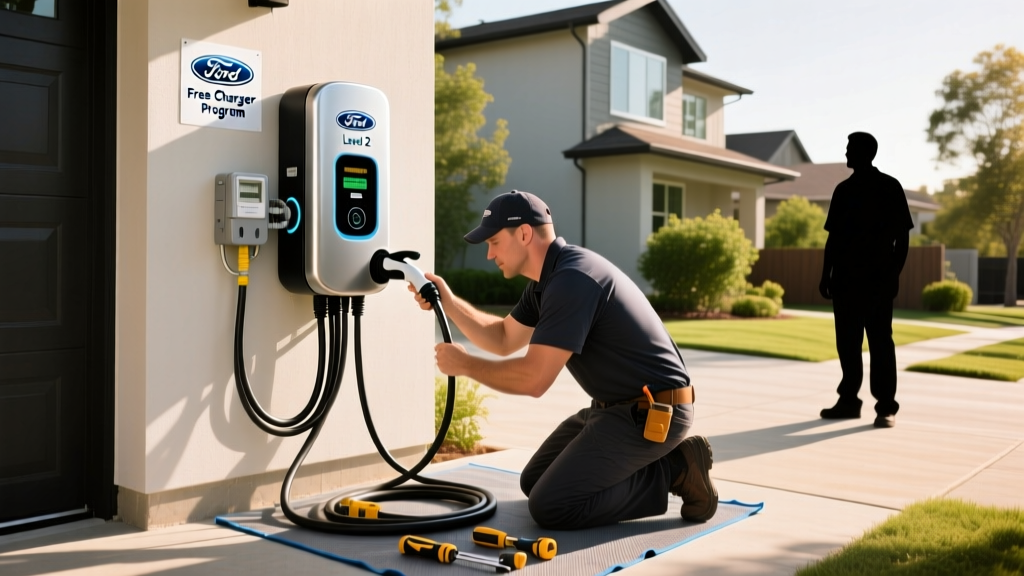
What electrical upgrades might you need? Before booking an electrician, check three things:
- Panel amperage: A 100A panel in a home with electric heat, dryer, and range may not have headroom for a 40–60A EV circuit. A 200A panel is the modern baseline.
- Circuit capacity: A 48A continuous EV load requires a 60A breaker per NEC 80% rule. Don't undersize.
- GFCI and outdoor rating: Outdoor installs require a weather-rated enclosure (NEMA 4) and GFCI protection on receptacle-based units; hardwired units sidestep this requirement.
The federal §30D tax credit does not cover home charger hardware anymore — that was §30C, which was modified under recent energy legislation. Some utilities still offer $250–$1,000 rebates and off-peak rate plans; check with your local provider and a tax professional for current-year eligibility. IRS rules change frequently, so always verify at irs.gov.
Connectors and Compatibility: NACS, CCS1, CHAdeMO in 2026
Which connector/charger is compatible with my EV? The North American market has largely converged on NACS (Tesla's connector, now standardized as SAE J3400). As of 2026, Tesla vehicles ship with NACS ports, and most legacy CCS1 vehicles (Ford, GM, Rivian, Hyundai, Kia) can use Tesla Superchargers via a CCS-to-NACS adapter. CHAdeMO is effectively end-of-life for new passenger EVs in North America.
| Brand / Platform | Native Connector | Tesla Supercharger Access | Adapter Needed? |
|---|---|---|---|
| Tesla Model 3 / Y / S / X | NACS | Native | No (need CCS adapter for non-Tesla DCFC) |
| Ford F-150 Lightning, Mustang Mach-E | NACS (2025+) | Native on new builds | Older builds need adapter |
| GM Ultium (Equinox EV, Blazer EV, Silverado EV) | NACS (2025+) | Native on new builds | Older builds need adapter |
| Hyundai Ioniq 5/6, Kia EV6/EV9 | CCS1 | Via adapter | Yes, CCS-to-NACS |
| Rivian R1T / R1S | NACS (2025+) | Native on new builds | Older builds need adapter |
| Nissan Leaf (legacy) | CHAdeMO | No | No viable adapter |
If you're buying a 2026 Model 3, your NACS port unlocks the Supercharger network natively — no adapter needed. That's a genuine usability advantage over CCS vehicles relying on third-party networks like Electrify America, where uptime and payment friction remain common complaints.
Cost Per Mile: Home Charging vs. Supercharger vs. Gas
How much does charging cost per mile vs gas? The math depends heavily on where you charge, not just whether you charge.
| Scenario | Price per kWh | Cost per Mile | Annual Cost @ 12,000 mi |
|---|---|---|---|
| Home off-peak (utility TOU plan) | $0.12 | $0.034 | $408 |
| Home standard rate | $0.18 | $0.051 | $612 |
| Tesla Supercharger (avg US) | $0.35 | $0.10 | $1,200 |
| Electrify America / EVgo DCFC | $0.45 | $0.13 | $1,560 |
| Gas car @ 28 MPG, $3.40/gal | — | $0.12 | $1,440 |
Key takeaway: home-charged EVs cost 70–80% less per mile than gasoline. Exclusive Supercharger users pay roughly the same per mile as a 28 MPG gas car — which is why "free Supercharging" promotions feel valuable, but only if you actually road-trip frequently. For daily driving, a Level 2 home install pays for itself within 12–24 months through fuel savings alone.
Equipment Recommendations: Level 2 Chargers Worth Buying
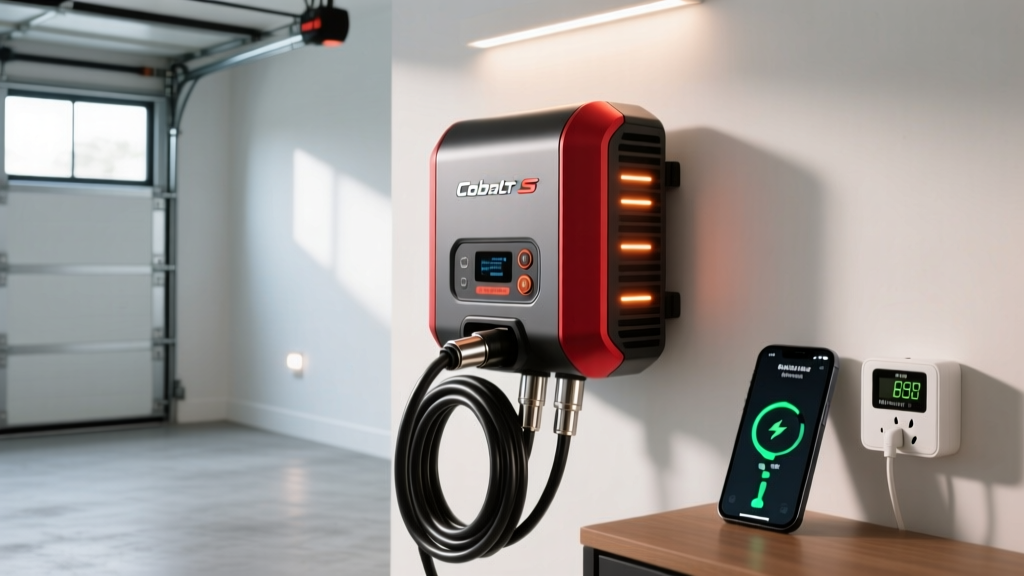
Tesla Wall Connector (Gen 3)
- Power: Up to 11.5 kW (48A on 60A circuit)
- Connector: NACS native, 24-ft cable
- Smart features: Wi-Fi, OTA updates, load sharing for multi-unit installs
- Price: ~$475
- Best for: Tesla owners wanting native integration and clean aesthetics
ChargePoint Home Flex
- Power: Configurable 16–50A (up to 12 kW)
- Connector: J1772 (NACS vehicles need adapter) or NACS variant
- Smart features: App scheduling, utility demand-response, Alexa
- Price: ~$699
- Best for: Multi-EV households, utility rebate qualification
Emporia Level 2 EV Charger
- Power: Up to 11.5 kW (48A)
- Connector: J1772 (26-ft cable)
- Smart features: Deep energy monitoring, solar integration
- Price: ~$399
- Best for: Budget buyers with solar panels or whole-home Emporia monitoring
Grizzl-E Smart
- Power: Up to 10 kW (40A)
- Connector: J1772, 24-ft cable
- Smart features: OCPP-compatible, works with many utility apps
- Price: ~$549
- Best for: Cold-climate durability (Canadian-built, -40°F rated)
Safety, Code, and the Panel-Upgrade Gotcha
EV charging is a continuous load — NEC Article 625 requires the circuit be rated at 125% of the charger's maximum draw. A 48A charger needs a 60A breaker, 6 AWG copper wire, and a dedicated circuit not shared with other major appliances. Skipping this invites nuisance trips and, in worst cases, overheated conductors.
The overlooked cost driver is the panel upgrade. Homes built before 1990 often have 100A service, which may already be near capacity with electric resistance heat, a dryer, range, and AC. Adding a 60A EV circuit pushes demand past safe margins, triggering a mandatory upgrade to 200A service — a $2,000–$4,500 job. Always have a licensed electrician perform a load calculation before committing to a charger spec.
For outdoor installations, insist on a NEMA 4-rated enclosure, a GFCI-protected receptacle if using a plug-in unit, and a drip loop on the conduit entry. Hardwired chargers eliminate the GFCI requirement and are generally more reliable in wet climates.
So — Should You Buy a Model 3 Waiting for Free Supercharging?
If Tesla announces a limited-time Supercharging credit promotion in 2026, treat it as a bonus, not a decision driver. At typical Supercharger pricing (~$0.35/kWh), 10,000 free miles is worth roughly $1,000 in credits — a nice offset but less than the value of negotiating a lower purchase price or securing favorable financing.
The stronger economic argument for Model 3 ownership is home charging infrastructure. A $1,500 Level 2 install paired with a utility off-peak plan delivers $0.03–$0.05 per mile for years, which no Supercharger promotion can match long-term. Check current Model 3 specs, EPA range (~341 miles for Long Range RWD per fueleconomy.gov), and pricing directly on Tesla's configurator before assuming any promotion applies to your order window.
Frequently Asked Questions
Does Tesla currently offer free unlimited Supercharging on the Model 3?
No. Unlimited free Supercharging ended years ago for new vehicles. Tesla occasionally runs limited-time credit promotions (e.g., 1,000–10,000 free miles) tied to referrals, end-of-quarter pushes, or inventory clearance. Always verify current offers directly on Tesla.com before purchase.
How much does it cost to install a home EV charger?
Most homeowners spend $1,200–$2,000 for a Level 2 install without a panel upgrade. Older homes with 100A service may need a $2,000–$4,500 panel upgrade, pushing totals to $3,000–$6,000. Always get a licensed electrician's load calculation first.
How fast will each charging level add range to a Model 3?
Level 1 adds 3–5 miles per hour. Level 2 at 11.5 kW adds ~40 miles per hour. A 250 kW V3 Supercharger adds up to ~175 miles in 15 minutes with proper battery preconditioning, though the charge curve tapers significantly above 50% SoC.
Is home charging cheaper than Supercharging?
Yes, dramatically. Home off-peak charging runs ~$0.03/mile versus ~$0.10/mile on Superchargers. Over 12,000 annual miles, that's roughly $400 vs. $1,200 per year — an $800 difference that pays for a home install in under two years.
Do I need a panel upgrade for a Level 2 charger?
Possibly. Homes with 100A service and multiple large electric loads often need a 200A upgrade. A licensed electrician can perform a NEC-compliant load calculation to confirm. Newer homes (post-2000) with 200A service rarely need one.
Which connector will my 2026 Model 3 use?
The 2026 Model 3 uses the NACS connector natively, giving you direct access to the Tesla Supercharger network without an adapter. For non-Tesla DC fast chargers using CCS1, you'll need a NACS-to-CCS adapter.