The Truth About Tesla Free Supercharging in 2026
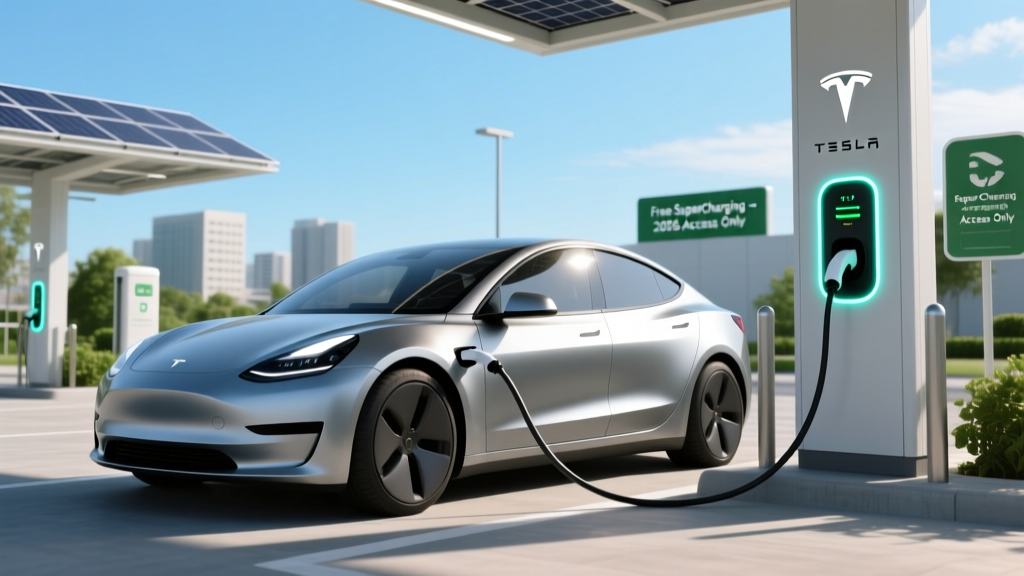
If you've searched for Tesla free Supercharging lately, you've likely hit a maze of outdated blog posts, expired referral links, and forum rumors. Here's the current reality: Tesla discontinued unlimited free Supercharging for new vehicle purchases back in 2017, and the referral-program free-Supercharging credits ended in 2023. Today, free Supercharging exists only in narrow pockets — legacy vehicles with transferable credits, select promotional events, and destination-charging partnerships at hotels and resorts.
For the vast majority of Tesla owners buying in 2026, Supercharging is a paid service, typically priced between $0.25 and $0.50 per kWh depending on location and time of day. But that doesn't mean charging has to be expensive. A properly set-up home Level 2 charger delivers electricity at roughly $0.04–$0.15 per kWh (depending on your utility rate), making it dramatically cheaper than both Supercharging and gasoline. This guide covers exactly what free-Supercharging options remain, how to set up cost-effective home charging, and what you'll actually spend per mile.
Where Tesla Free Supercharging Still Exists
Free Supercharging credits in 2026 come from three sources, each with significant limitations:
- Legacy transferable credits: Model S and Model X vehicles originally purchased before January 2017 with "free unlimited Supercharging for the life of the car" — these credits transfer with the vehicle on private sale but are increasingly rare and add a premium to used-car pricing.
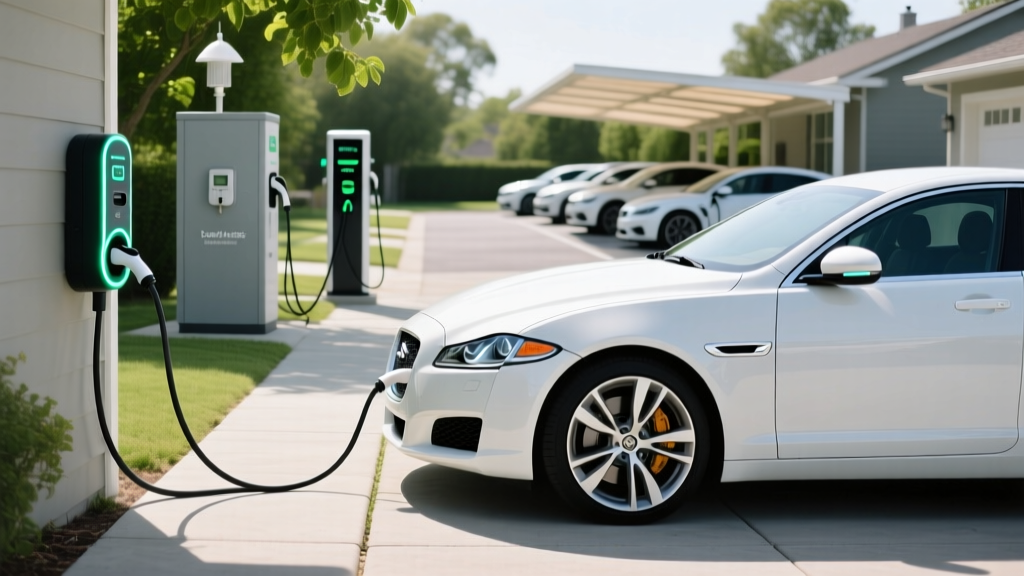
- Destination Charging partners: Hotels, resorts, and restaurants with Tesla Wall Connectors often provide free Level 2 charging to guests or patrons. These are Level 2 (typically 11.5–22 kW), not Superchargers, but the energy is free.
- Promotional events: Tesla occasionally offers limited-time free Supercharging during holiday travel periods or new-model launches, but these are unpredictable and temporary.
For daily driving, relying on free Supercharging is not a viable strategy. The smart approach is home charging with a Level 2 setup, supplemented by paid Supercharging on road trips.
Charging Levels Explained: Speeds, Power & Real-World Times
Understanding the three charging levels is essential for planning both your home setup and road-trip stops. Here's how each level performs with a typical 75 kWh battery (Tesla Model Y Long Range):
| Level | Voltage | Power (kW) | Miles of Range Added/Hour | 10–80% Time (75 kWh Battery) | Best Use Case |
|---|---|---|---|---|---|
| Level 1 (Standard Outlet) | 120V | 1.0–1.4 kW | 3–5 miles | ~45–50 hours | Overnight trickle, PHEVs, emergencies |
| Level 2 (Home/Public AC) | 240V | 7.2–19.2 kW | 22–58 miles | 4–10 hours | Daily home charging, workplace, destinations |
| DC Fast Charging (Supercharger/CCS) | 400–800V DC | 50–350 kW | 150–1,000+ miles (peak) | 15–30 minutes | Road trips, rapid top-ups |
Charging curve reality check: DC fast chargers don't sustain their peak rate. A Tesla V4 Supercharger rated at 250 kW will peak near 250 kW only between roughly 10–30% State of Charge (SoC), then taper progressively. Expect a real 10–80% session on a V3/V4 Supercharger to take about 25–30 minutes for a Model Y, not the "15 minutes" marketing sometimes implies. Above 80%, charging slows dramatically to protect battery health — plan your stops to charge to 80%, then move on.
Home Charger Installation: Requirements, Costs & Panel Upgrades
Installing a Level 2 home charger is the single highest-impact upgrade for EV ownership. Here's what's involved electrically and financially:
Electrical Requirements
A Level 2 charger requires a dedicated 240V circuit. Common configurations:
- 40-amp circuit / 32A continuous: Delivers 7.7 kW — sufficient for overnight charging of most EVs (adds ~220 miles in 8 hours to a Model Y).
- 50-amp circuit / 40A continuous: Delivers 9.6 kW — recommended for larger batteries like the Model S/X or F-150 Lightning.
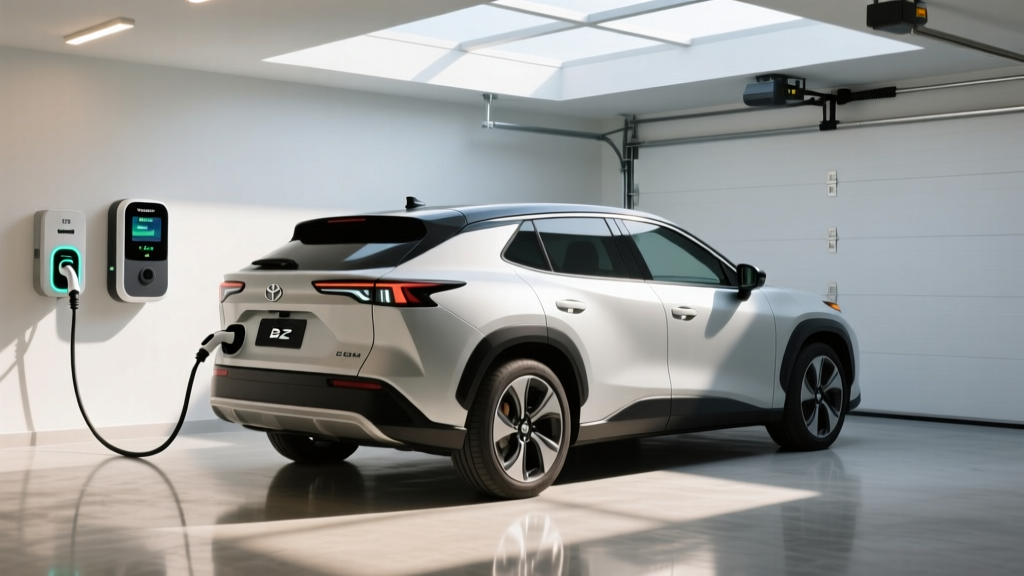
- 60-amp circuit / 48A continuous: Delivers 11.5 kW — matches the Tesla Wall Connector's maximum output on a hardwired install.
Per the National Electrical Code (NEC), continuous loads like EV charging cannot exceed 80% of the circuit breaker rating. A 50A breaker supports 40A continuous draw.
Panel Upgrade Considerations
Many homes built before 2000 have 100-amp electrical panels that may already be near capacity. Adding a 50A EV circuit could require a panel upgrade to 200 amps — a significant cost but one that adds home value and future-proofs for additional electrification (heat pumps, solar). Ask your electrician for a load calculation before committing to a circuit size.
| Item | Low-End Cost | High-End Cost | Notes |
|---|---|---|---|
| Level 2 Charger (Equipment) | $300 | $700 | Tesla Wall Connector, ChargePoint Home Flex, Emporia Vue |
| Electrician Labor (standard install) | $400 | $1,200 | Varies by run length from panel to garage |
| Electrical Permit | $50 | $250 | Required in most jurisdictions |
| Panel Upgrade (if needed) | $1,500 | $4,000 | 100A → 200A service upgrade |
| Total (no panel upgrade) | $750 | $2,150 | Typical scenario for modern homes |
| Total (with panel upgrade) | $2,250 | $6,150 | Older homes with 100A service |
The IRS Residential Clean Energy Credit (§25D) covers 30% of home EV charger equipment and installation costs up to $1,000 through 2032, which can offset $150–$300 of a standard install. Note: this is separate from the §30D vehicle purchase credit.
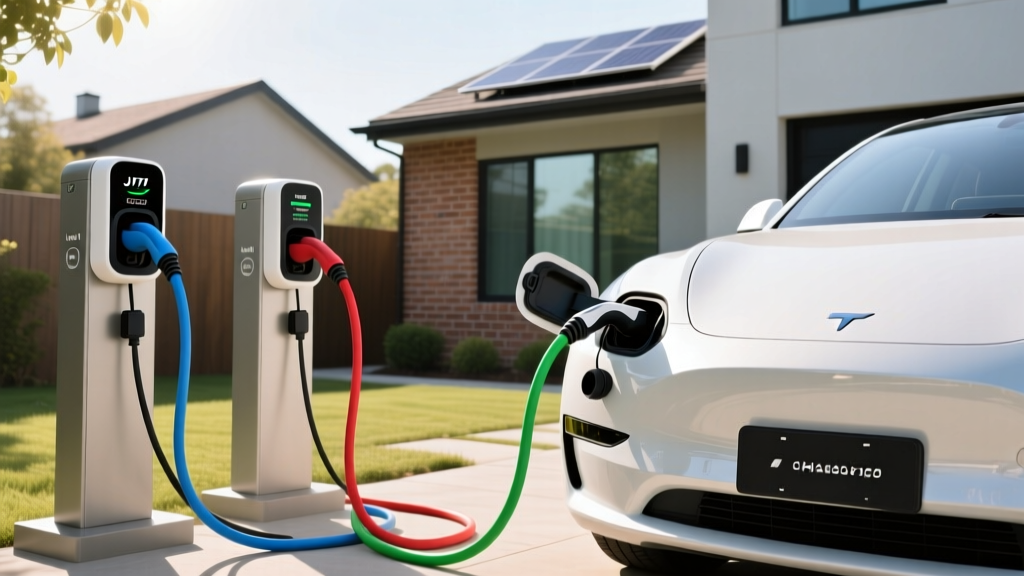
Connector Compatibility: NACS, CCS1 & Adapter Needs
The North American Charging Standard (NACS), originally developed by Tesla, has become the dominant connector in the US as of 2025–2026. Here's where things stand:
| Connector | Brands Using It (2026) | Adapter Needed for Tesla Superchargers? | Notes |
|---|---|---|---|
| NACS (Tesla) | Tesla, Ford, GM, Rivian, Volvo, Polestar, Mercedes, BMW (select), Hyundai/Kia (select 2026+) | No — native NACS port | Access to Tesla Supercharger network directly |
| CCS1 | VW ID.4 (pre-2026), older Hyundai/Kia, some BMW, Stellantis | Yes — CCS-to-NACS adapter (~$200–$250) | Tesla opened Superchargers to CCS vehicles via adapter; limited stall availability |
| CHAdeMO | Nissan Leaf (legacy) | Not compatible with Superchargers | Network is declining; plan for CCS/NACS adapter or replacement vehicle |
If you drive a non-Tesla EV with a CCS1 port, you can access a growing subset of Tesla Supercharger stalls using a Tesla-approved CCS-to-NACS adapter. However, not all Supercharger stalls support non-Tesla vehicles, and availability varies by region. Check the Tesla app for compatible stations before planning a road trip.
Cost Per Mile: Home Charging vs Supercharging vs Gasoline
Let's compare real fueling costs using a Tesla Model Y Long Range (75 kWh battery, EPA-rated 310 miles, real-world highway ~270 miles) and a comparable gas SUV averaging 28 MPG combined:
| Charging/Fueling Scenario | Cost per kWh or Gallon | Cost for Full "Tank" (75 kWh / 15 gal) | Cost Per Mile |
|---|---|---|---|
| Home Level 2 (national avg electricity, off-peak) | $0.13/kWh | $9.75 | $0.036 |
| Home Level 2 (California, peak TOU rate) | $0.35/kWh | $26.25 | $0.097 |
| Home Level 2 (Texas, low rate) | $0.10/kWh | $7.50 | $0.028 |
| Tesla Supercharger (avg 2026 pricing) | $0.35/kWh | $26.25 | $0.097 |
| Electrify America / third-party DCFC | $0.45/kWh | $33.75 | $0.125 |
| Gasoline SUV (28 MPG, $3.40/gal) | $3.40/gal | $51.00 | $0.121 |
Bottom line: Home off-peak charging at $0.03–$0.04 per mile costs roughly one-third of what a gasoline SUV costs per mile. Even Supercharging at $0.35/kWh undercuts gasoline on a per-mile basis in most states. The "free Supercharging" dream isn't necessary when home charging is this cheap.
Recommended Home Level 2 Chargers for 2026
Tesla Wall Connector (Gen 4)
- Power Output: Up to 11.5 kW (48A on 60A circuit)
- Connector: NACS native
- Cable Length: 24 feet
- Smart Features: Wi-Fi updates, power-sharing between two units, Tesla app integration
- Price: ~$475
- Best For: Tesla owners who want seamless integration and maximum home charge speed
ChargePoint Home Flex
- Power Output: Up to 12 kW (50A on 60A circuit); configurable down to 16A
- Connector: NACS or J1772 (select at purchase)
- Cable Length: 23 feet
- Smart Features: ChargePoint app scheduling, Alexa integration, energy reports
- Price: ~$550–$650
- Best For: Multi-EV households or those wanting flexible amperage settings for older panels
Emporia Level 2 EV Charger
- Power Output: Up to 11.5 kW (48A on 60A circuit)
- Connector: NACS or J1772
- Cable Length: 24 feet
- Smart Features: Emporia energy-monitoring ecosystem, solar integration, time-of-use scheduling
- Price: ~$350–$400
- Best For: Budget-conscious buyers and solar-panel owners wanting energy-tracking integration
Safety, Code & Installation Best Practices
EV charging draws sustained high current for hours — unlike any other household appliance. Follow these non-negotiable safety practices:
- Dedicated circuit: Your EV charger must have its own dedicated breaker — never share a circuit with other appliances.
- GFCI protection: NEC 2023+ requires GFCI (Ground Fault Circuit Interrupter) protection for outdoor receptacles. Many quality Level 2 chargers include built-in GFCI; hardwired installations may need a GFCI breaker.
- Outdoor rating: If mounting outside, ensure the charger is NEMA 4 rated (weather-resistant). The Tesla Wall Connector and ChargePoint Home Flex both carry NEMA 4 ratings.
- Permit and inspection: Always pull an electrical permit. A city inspector will verify wire gauge, breaker sizing, and grounding — this protects your home insurance coverage.
- Wire gauge: 6 AWG copper for 50A circuits; 4 AWG for 60A circuits. Aluminum wire requires larger gauge. Your licensed electrician will specify per NEC Table 310.16.
Never use extension cords with Level 2 chargers, and avoid plug-in (NEMA 14-50) installations in wet outdoor locations — hardwired is safer and often required by local code for outdoor mounts.
Frequently Asked Questions
How much does it cost to install a home EV charger?
A standard Level 2 home charger installation costs $750–$2,150 when no panel upgrade is needed (equipment + electrician + permit). If your home has an older 100-amp panel that requires upgrading to 200 amps, total costs range from $2,250 to $6,150. The IRS §25D credit covers 30% of equipment and install up to $1,000.
How fast will each charging level add range?
Level 1 (120V) adds 3–5 miles of range per hour. Level 2 (240V, 48A) adds roughly 35–44 miles per hour to a Tesla Model Y. DC fast charging at 250 kW can add up to 200 miles in 15 minutes, but only at low State of Charge — expect 10–80% in about 25–30 minutes on a Tesla V3/V4 Supercharger.
Which connector is compatible with my EV?
All Tesla vehicles use the NACS connector natively. As of 2025–2026, Ford, GM, Rivian, Volvo, and Polestar have switched to NACS. Most Hyundai, Kia, and VW models still use CCS1 but are transitioning. Check your vehicle's charge port — if it's CCS1, you'll need a CCS-to-NACS adapter (~$200–$250) to use Tesla Superchargers.
How much does charging cost per mile vs gas?
Home charging at the national average electricity rate ($0.13/kWh) costs about $0.036 per mile in a Tesla Model Y — roughly one-third the cost of a 28 MPG gas SUV at $3.40/gallon ($0.121/mile). Even paid Supercharging at $0.35/kWh ($0.097/mile) is cheaper than gasoline in most states.
What electrical upgrades might I need?
Homes with 100-amp electrical panels may need a panel upgrade to 200 amps ($1,500–$4,000) to safely support a 50–60A EV circuit. Your electrician will perform a load calculation per NEC Article 220 to determine if your existing panel has capacity. Homes built after 2005 typically have 200A panels and can accommodate a Level 2 charger without upgrades.
Is Tesla free Supercharging ever coming back?
Tesla has not announced any return of free Supercharging as a purchase incentive. The company ended unlimited free Supercharging in 2017 and referral-based credits in 2023. Occasional holiday promotions may offer limited free charging, but these are not predictable or reliable for ownership planning.